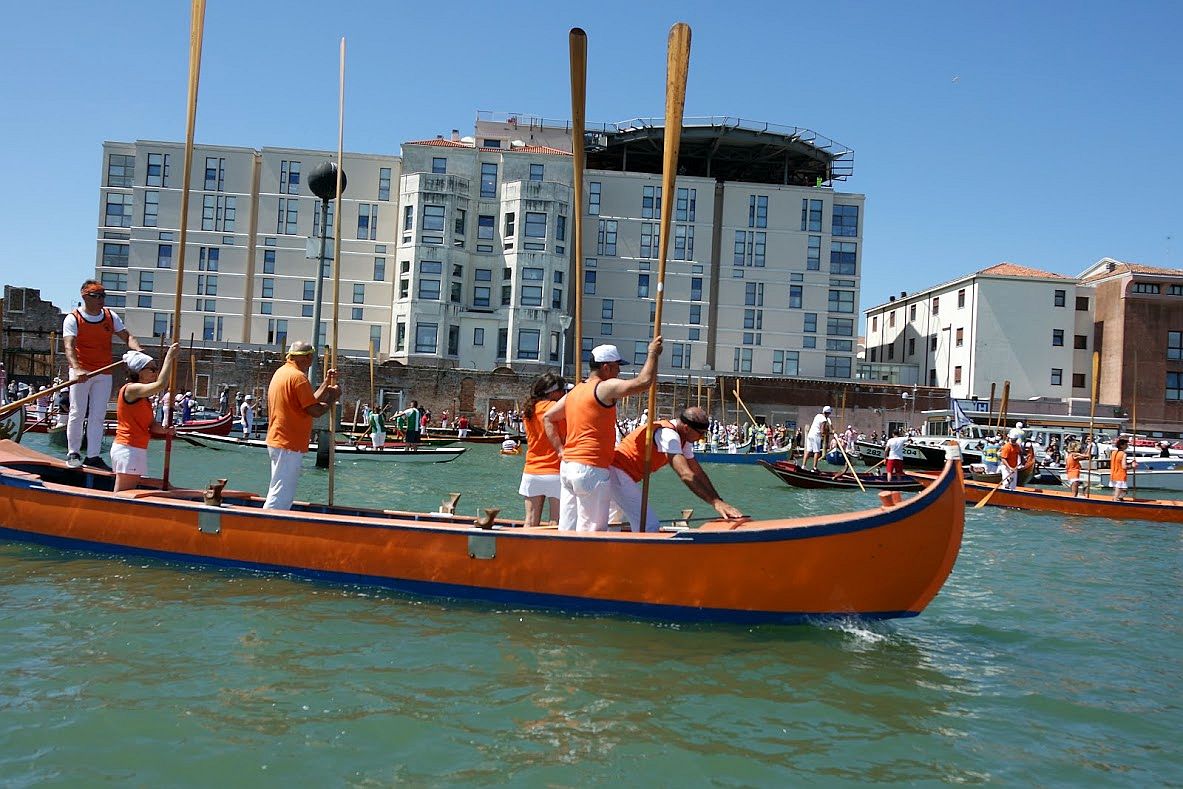
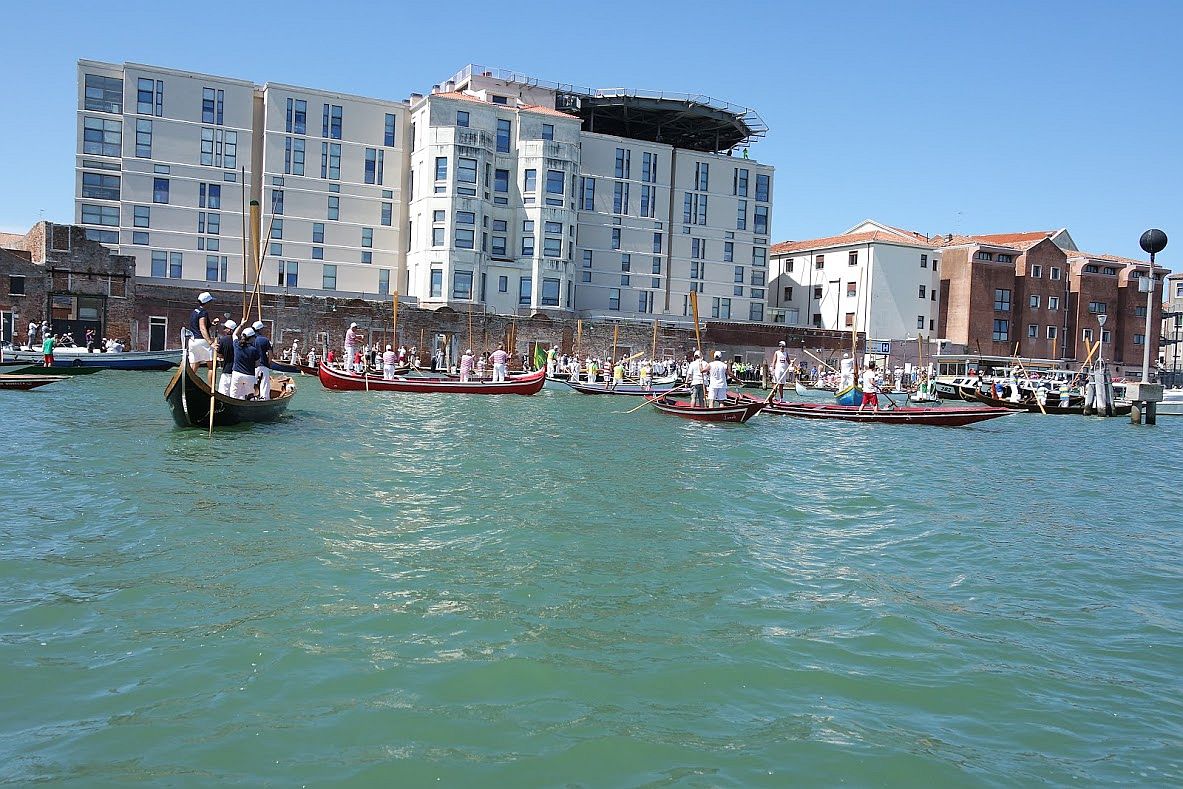
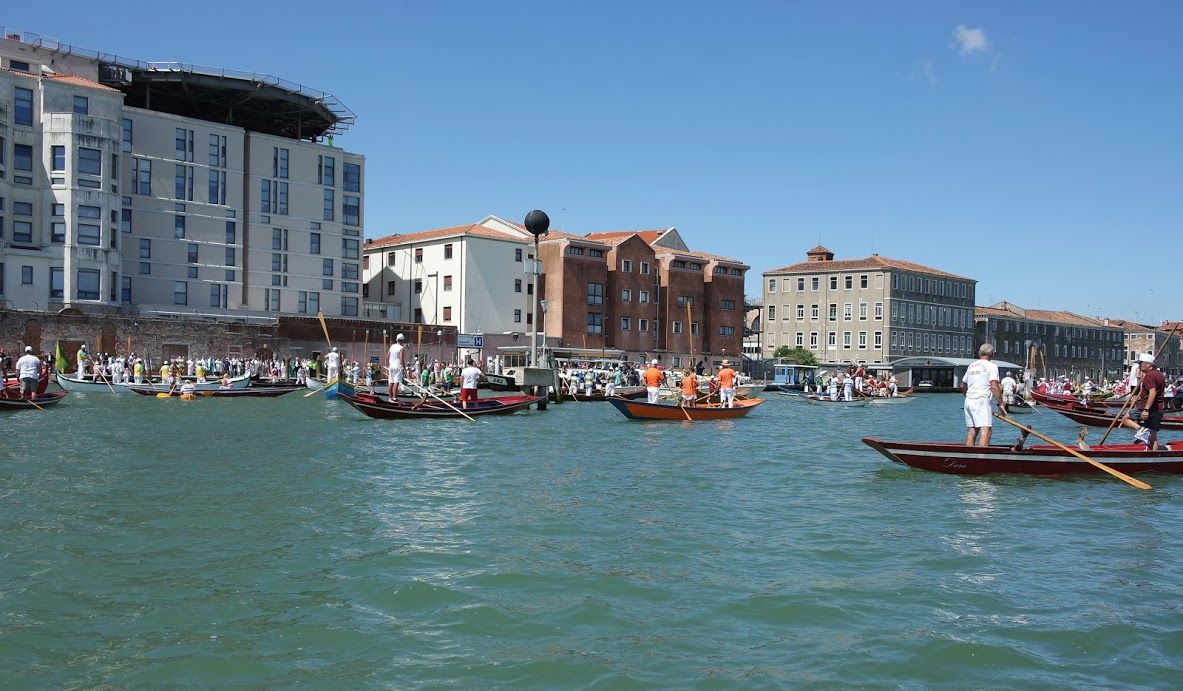
Reports written the day after said there were 150 (or even 200) boats in this gathering. It was really fun to see everybody out again, not to mention the doctors, etc. on the fondamenta in front of the hospital.
Last Sunday morning there was quite the boating event, after three months without either boats or events. Everybody was more than ready for it.
Seeing that the city is on the verge of complete reopening after the three-month lockdown, the moment was right for the “Vogada de la Rinascita” (Row of the Rebirth). The morning afloat was emotional (the worst is over, we hope; the day is glorious; finally we’re all out rowing again) and a tangible way of expressing group gratitude to the medical personnel of the hospital, as well as a gesture of respect to the victims.
The event was organized by the Panathlon Club, Venice chapter (fun fact: Panathlon International, now numbering some 300 chapters scattered across 30 countries, was founded in Venice in 1951), with the collaboration of the Comune.
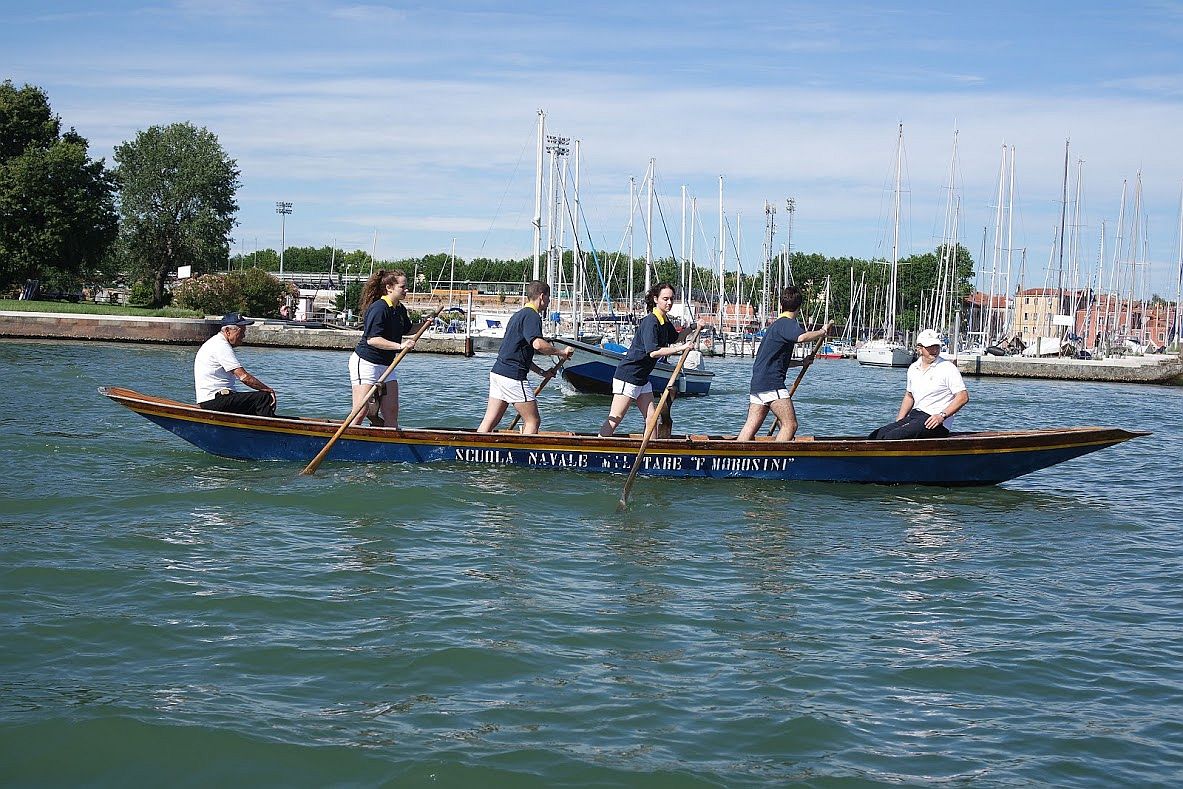
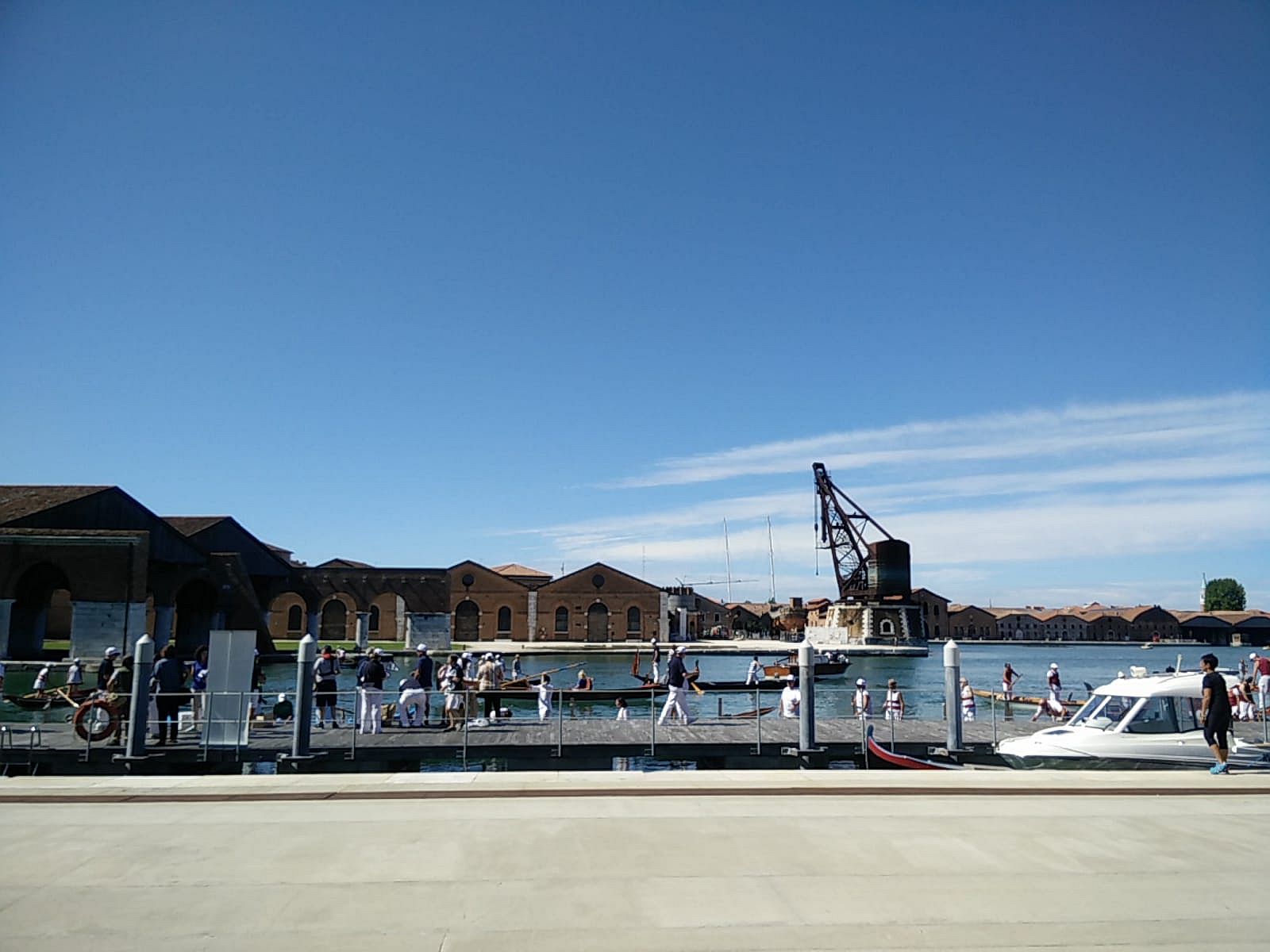
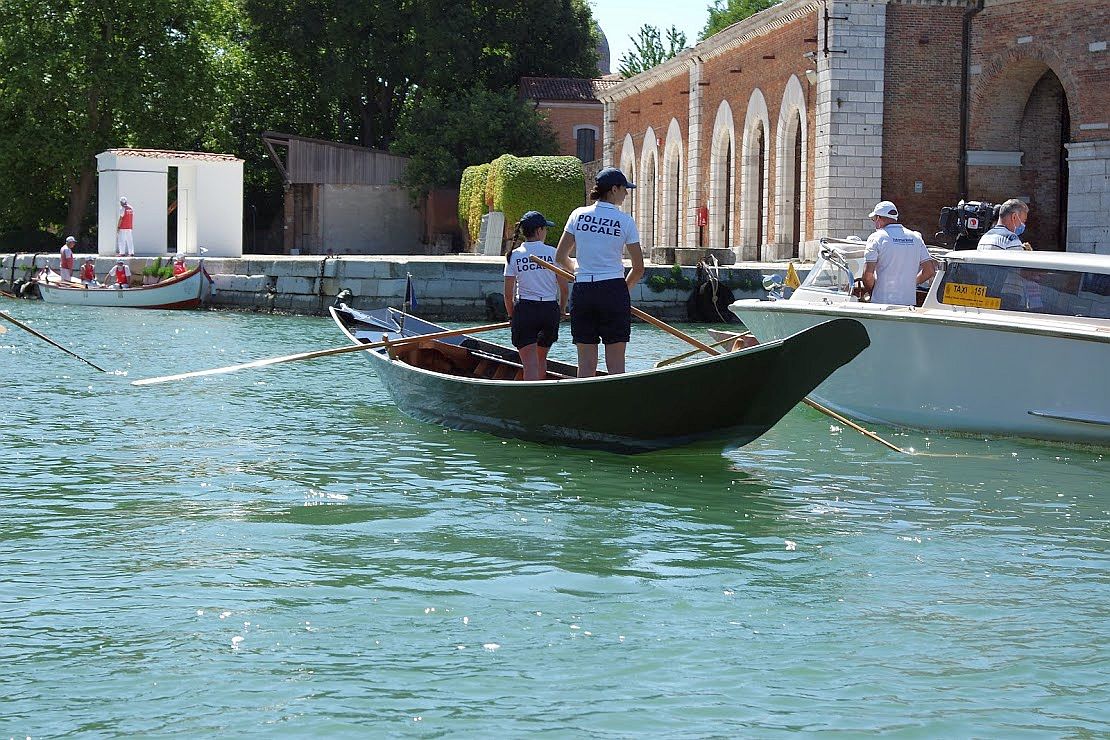
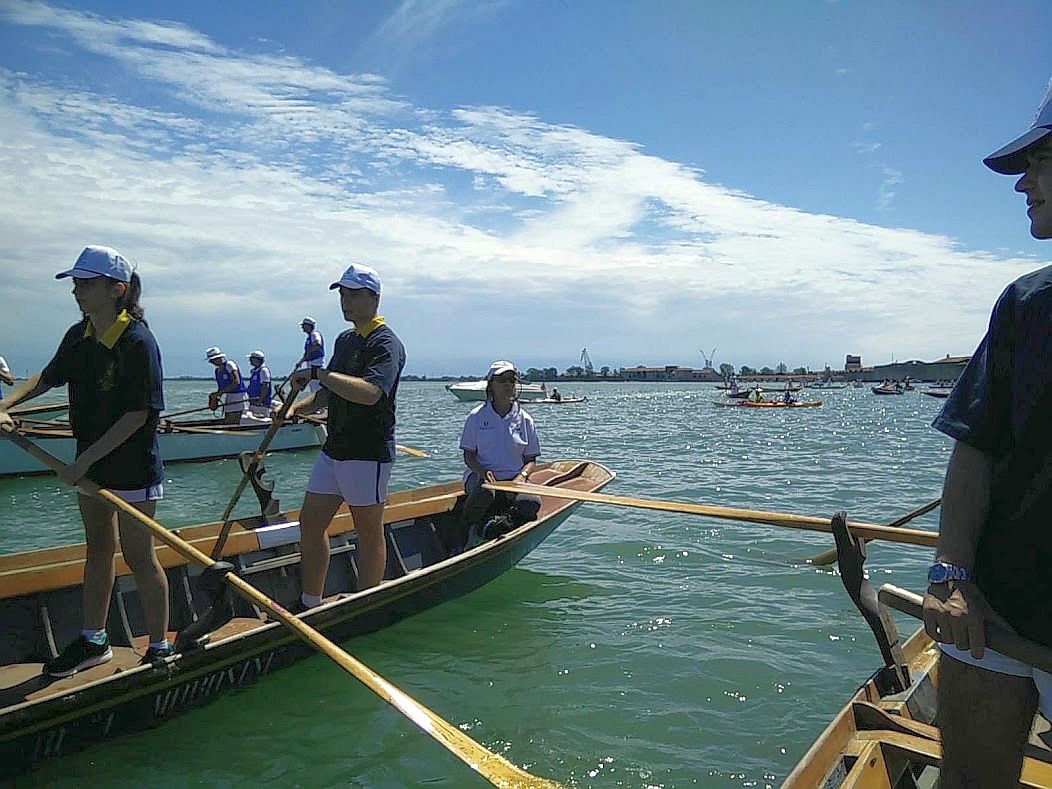
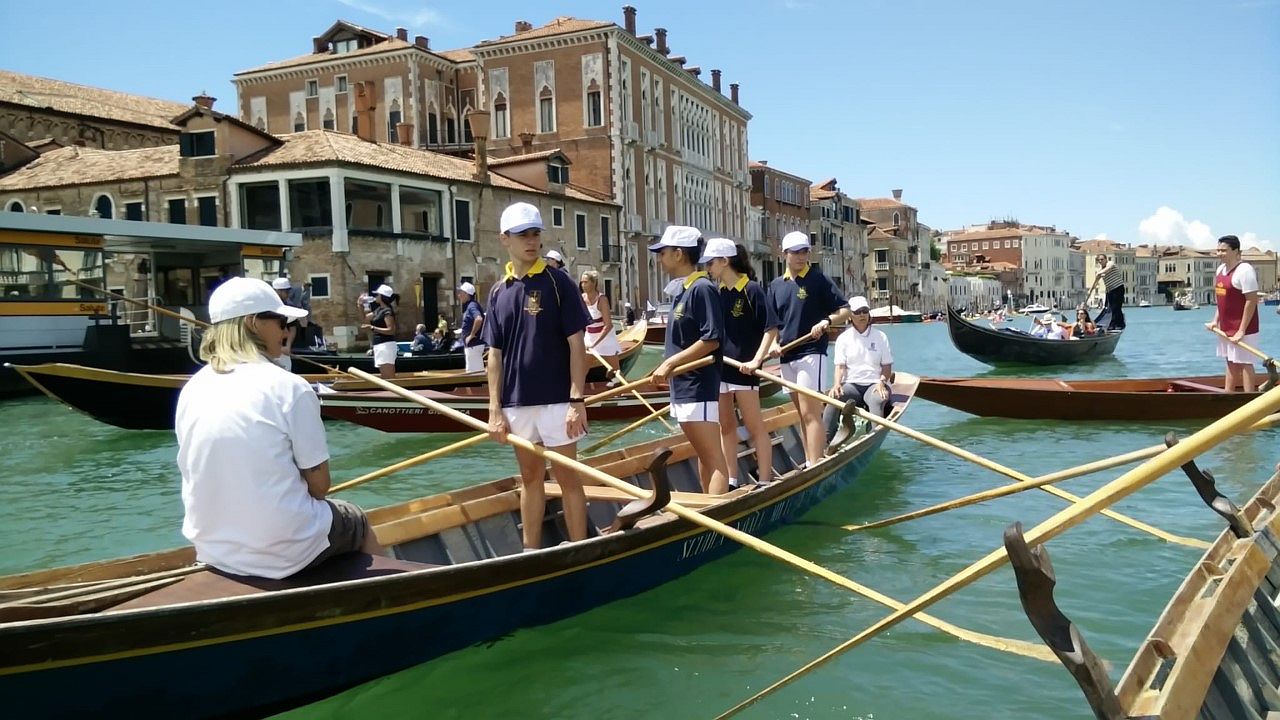
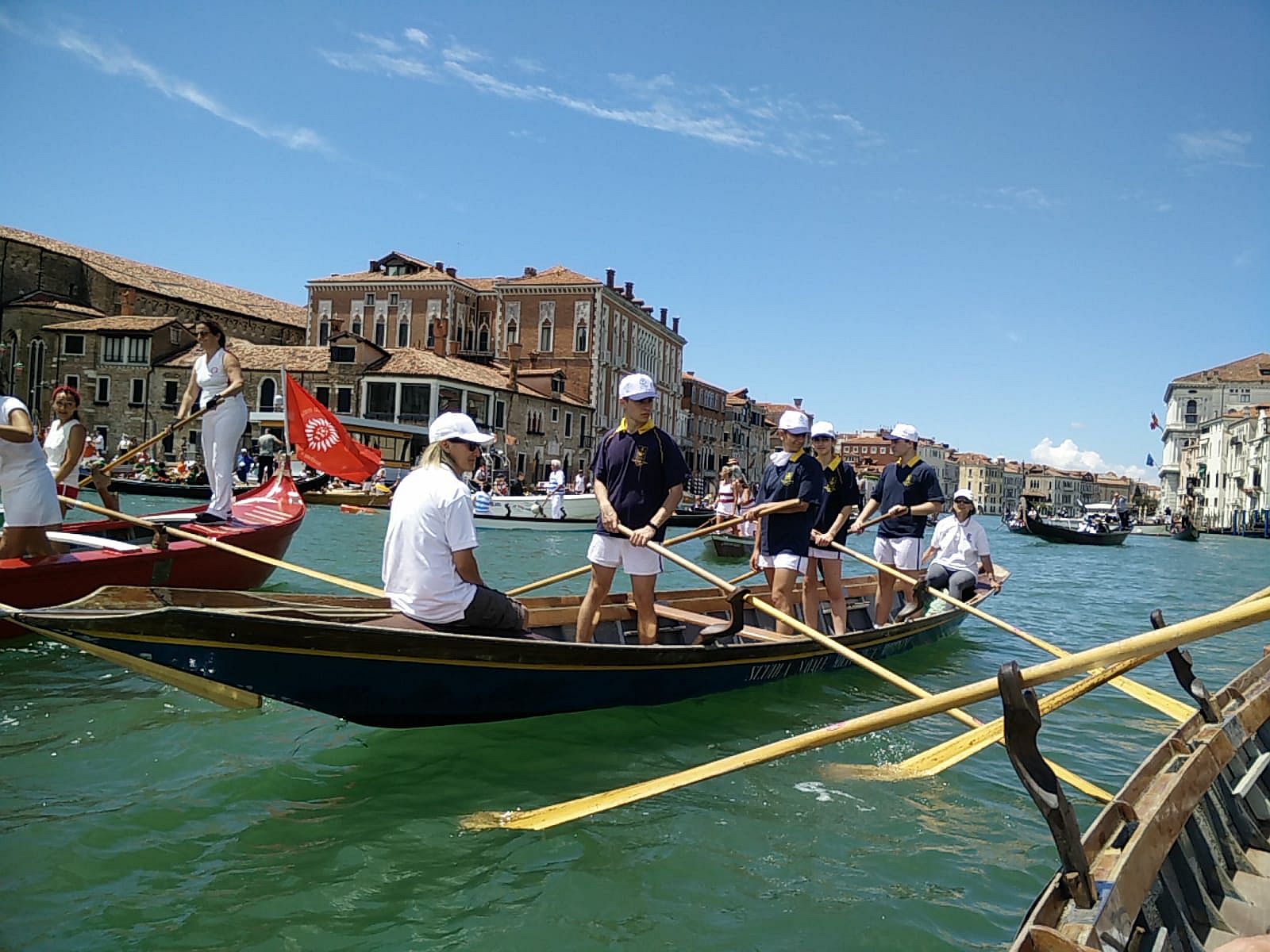
We were there with two sandolos from the F. Morosini Naval Military School, where Lino teaches Venetian rowing. Cadets and passengers are looking good on the way from the school to the Arsenal (Lino astern, a friend on the bow). Going with the tide just added to that happy feeling. (I was on the other boat, obviously.)The boats began slowly to assemble in the Great Basin of the Arsenal. Allow me to draw your admiring attention away from the boats for a moment to the enormous Armstrong Mitchell hydraulic crane, installed here in 1883. At the end of the 19th century there were nine of these behemoths in the world, but this is the only one left and is designated a historic monument by the Superintendency of Archaeology, Fine Arts and Landscape. It could lift up to 160 tons of weight, primarily naval artillery and sheets of steel for the cladding of battleships.At the head of the procession, departing from the Arsenal, was a gondola carrying Luigi Brugnaro, the mayor, in the bow, and making a video amidships is Giovanni Giusto, president of the Coordinating Association of Rowing Clubs as well as the municipal delegate tasked with keeping up with Venetian rowing. Be cynical if you want to, but seeing the mayor rowing (and he did the whole thing) was unusually cool.The “local police,” otherwise known as the “vigili,” have their own sandolo Buranello. There was an effort a while ago to reinstate their once-normal patrols of the canals by oar-power, but I think that rapidly faded away.
The corteo departed the Arsenal at 11:00 AM, and we all wended our way toward the hospital, where we stopped and gave the traditional “alzaremi” salute to the assembled doctors, nurses, and other medical personnel gathered on the fondamenta. Much clapping, many smiles. Much noontime sun scorching our skulls.
We weren’t practicing social distancing, but it just so happened that we were in an open space at that moment.
After executing the “alzaremi” twice, people just sort of hung around for a minute or so before the corteo got moving again. I’m seated astern with what looks like an oar in my lap. Of course it’s an oar, but I don’t remember it being that close.
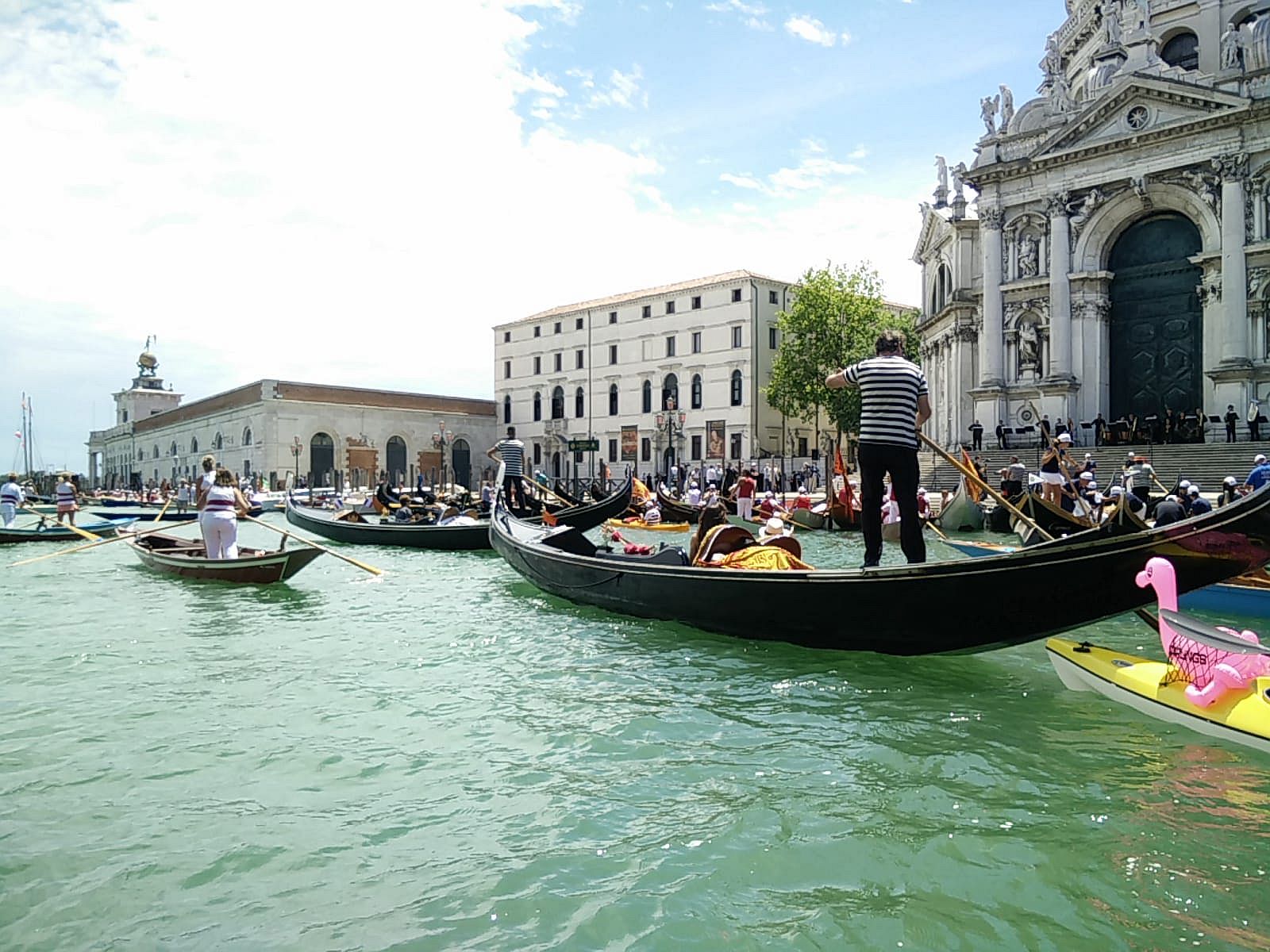
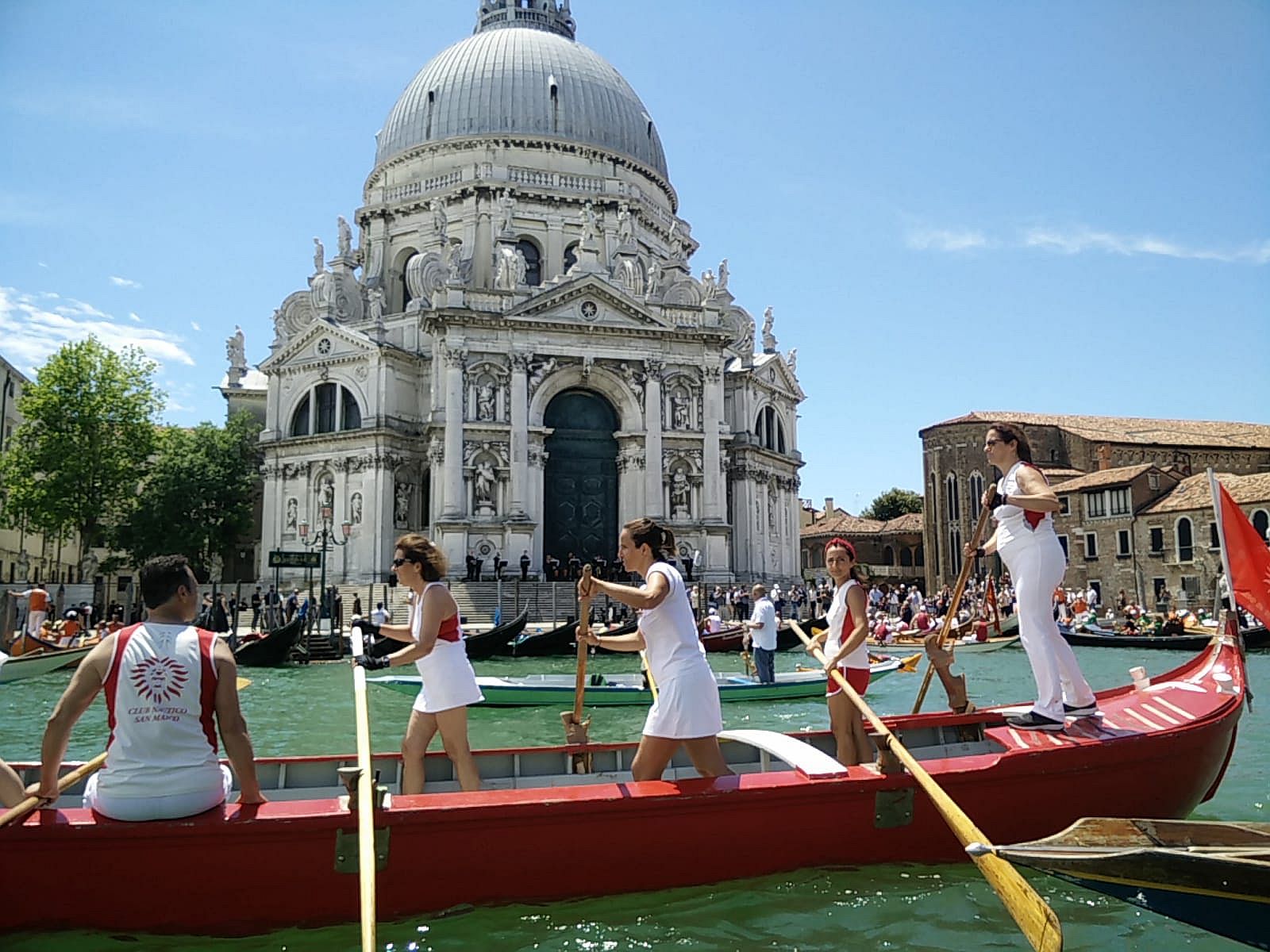
Down the Cannaregio Canal, and the Grand Canal, to a pause in front of the basilica of the Salute (dedicated to Our Lady of Health, appropriate in this case), where members of the chorus of La Fenice and musicians of the Benedetto Marcello conservatory performed assorted wonderful pieces. We didn’t linger — by that point it was almost 1:00 PM and the heat and the hunger were singing their own little duet in our brains: “Shade…food…water…food…shade…”.
Considering how lavishly this was reported in the foreign press — and we were hugely photogenic, it’s true — not only was the corteo lovely to look at, but it conveyed the message that Venice is alive and has come out of its pharmacological coma. Translation: Get traveling, people. We’re ready for you.
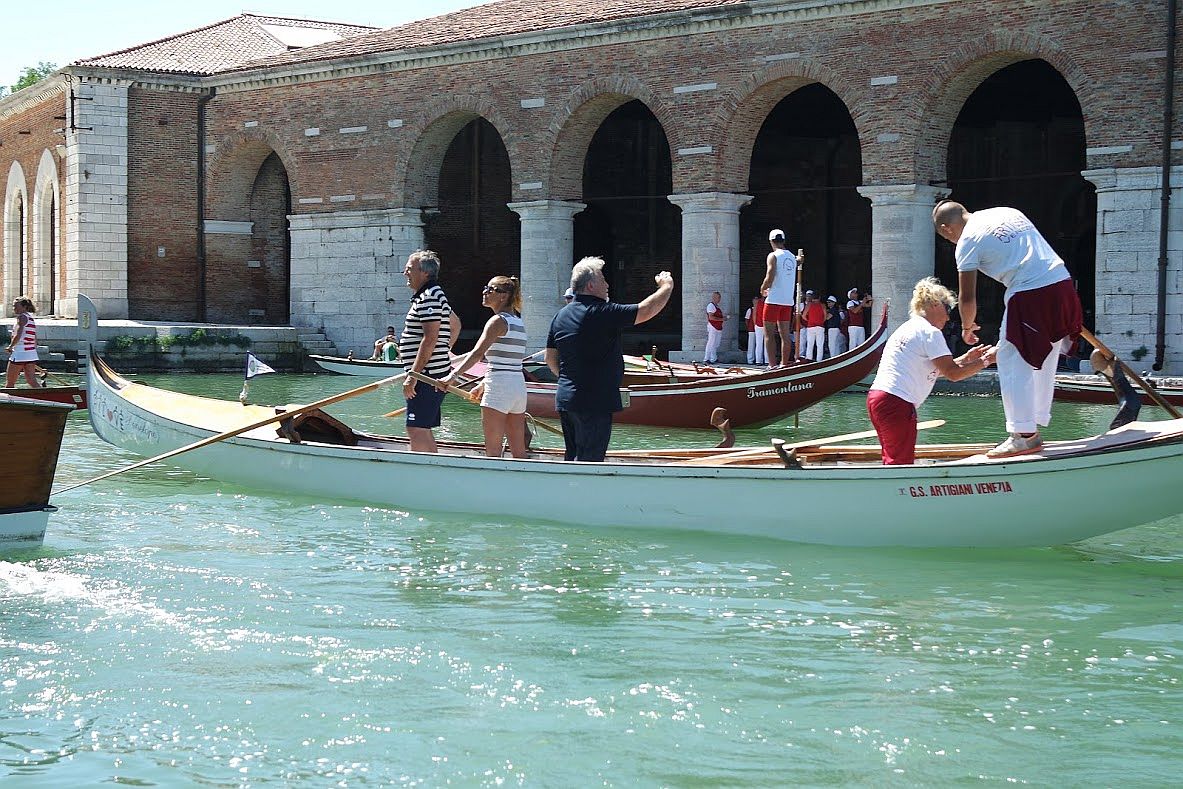
Gathering at the bottom of the Grand Canal, me still astern, me still dreaming of glaciers and permafrost.
Yes, the row was open to anyone with a boat with oars. So yes, a yellow kayak with a pink inflatable — is that a dinosaur? — had a perfect right to join in. The gondolas were not carrying tourists, as I thought at first. Each carried a guest of honor: The ambassadors to Italy from the USA, Japan, and France, The American ambassador reciprocated via an article in the Gazzettino the next day by enthusing about Venice and recommending that all Americans come here forthwith. It’s not clear when that might be, considering that at the moment Americans aren’t permitted to enter Italy because of the virus. But let’s be hopeful.The “people of the oar,” as we are called in a sort of Paleolithic clan nomenclature, come in every sort of shape and size. Tradition dictates that women wear a white skirt on special boating occasions though, as you see, the definition of “skirt” is open to interpretation. But whatever you were wearing (or rowing) it was a splendid occasion in every way.
Contains information related to marketing campaigns of the user. These are shared with Google AdWords / Google Ads when the Google Ads and Google Analytics accounts are linked together.
90 days
__utma
ID used to identify users and sessions
2 years after last activity
__utmt
Used to monitor number of Google Analytics server requests
10 minutes
__utmb
Used to distinguish new sessions and visits. This cookie is set when the GA.js javascript library is loaded and there is no existing __utmb cookie. The cookie is updated every time data is sent to the Google Analytics server.
30 minutes after last activity
__utmc
Used only with old Urchin versions of Google Analytics and not with GA.js. Was used to distinguish between new sessions and visits at the end of a session.
End of session (browser)
__utmz
Contains information about the traffic source or campaign that directed user to the website. The cookie is set when the GA.js javascript is loaded and updated when data is sent to the Google Anaytics server
6 months after last activity
__utmv
Contains custom information set by the web developer via the _setCustomVar method in Google Analytics. This cookie is updated every time new data is sent to the Google Analytics server.
2 years after last activity
__utmx
Used to determine whether a user is included in an A / B or Multivariate test.
18 months
_ga
ID used to identify users
2 years
_gali
Used by Google Analytics to determine which links on a page are being clicked
30 seconds
_ga_
ID used to identify users
2 years
_gid
ID used to identify users for 24 hours after last activity
24 hours
_gat
Used to monitor number of Google Analytics server requests when using Google Tag Manager