As I noted in my last post, the poet/philosopher/Viking raider/diamond cutter/prima ballerina assoluta (who knows if it’s a woman?) “Anon” mentioned the three sublime elements that have remained to us from paradise. The second is flowers.
If anyone were to imagine that Venice is made only of stone, brick and water, I’d like to correct that notion. Here is a very limited assortment of flowers I’ve seen in or near Venice over the years and seasons. Does it seem like a lot? I could have done more. They say that when “War and Peace” was on the verge of being published, Tolstoy suddenly cried out “A yacht race! I left out a yacht race!” In this case, I have left out the magnolia and plum and pomegranate and daisies…. I had to stop somewhere, as Tolstoy must also have regretfully realized.
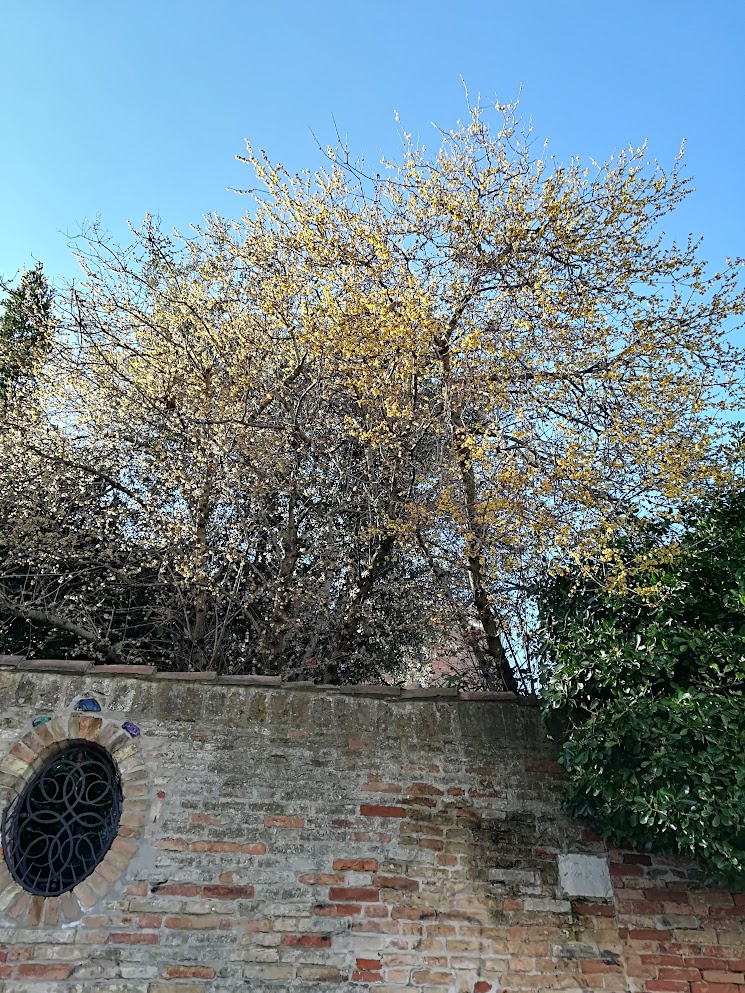
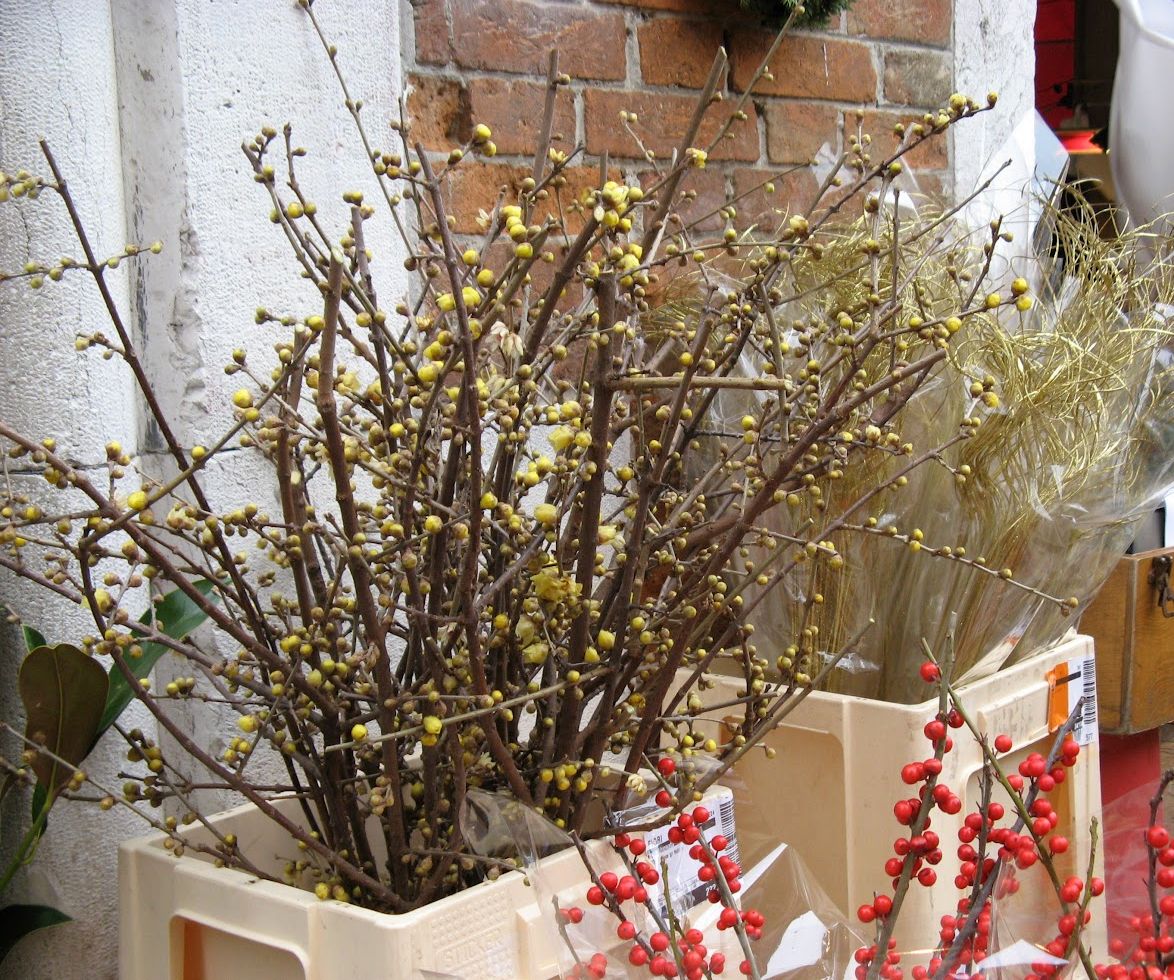
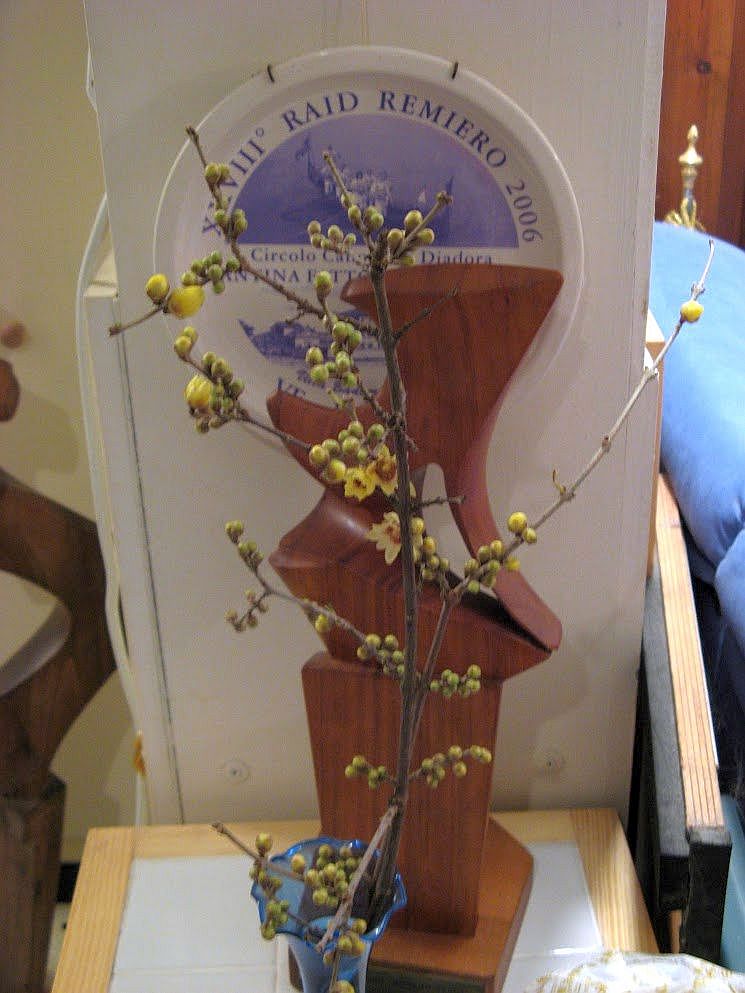
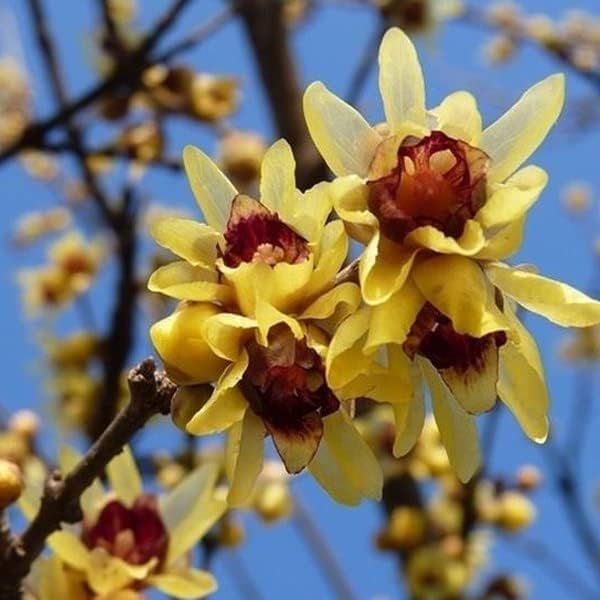
Winter flowers sounds like a contradiction (experts know it’s not) but I was astonished one freezing winter day years ago to find myself walking through a cloud of perfume. That was my introduction to what Lino calls calycanthus — I discovered later that it is “Chinese winter bloom” (Chimonanthus praecox). This is not that particular tree; the one I discovered was almost completely hidden behind a different wall which only made the moment even more magical. If the fragrance wafts past you some frigid night, it verges on celestial. I read that this essential oil is used in some “quality perfumes.” It’s sheer quality all by itself.It begins to bloom in December. Break off a little low-hanging branch, and in the few brief days before the flowers start dropping off your house will smell divine. No, I’m not exaggerating.Lino knew a few places where the shrubs were easy to reach, so he would bring me a few twigs.
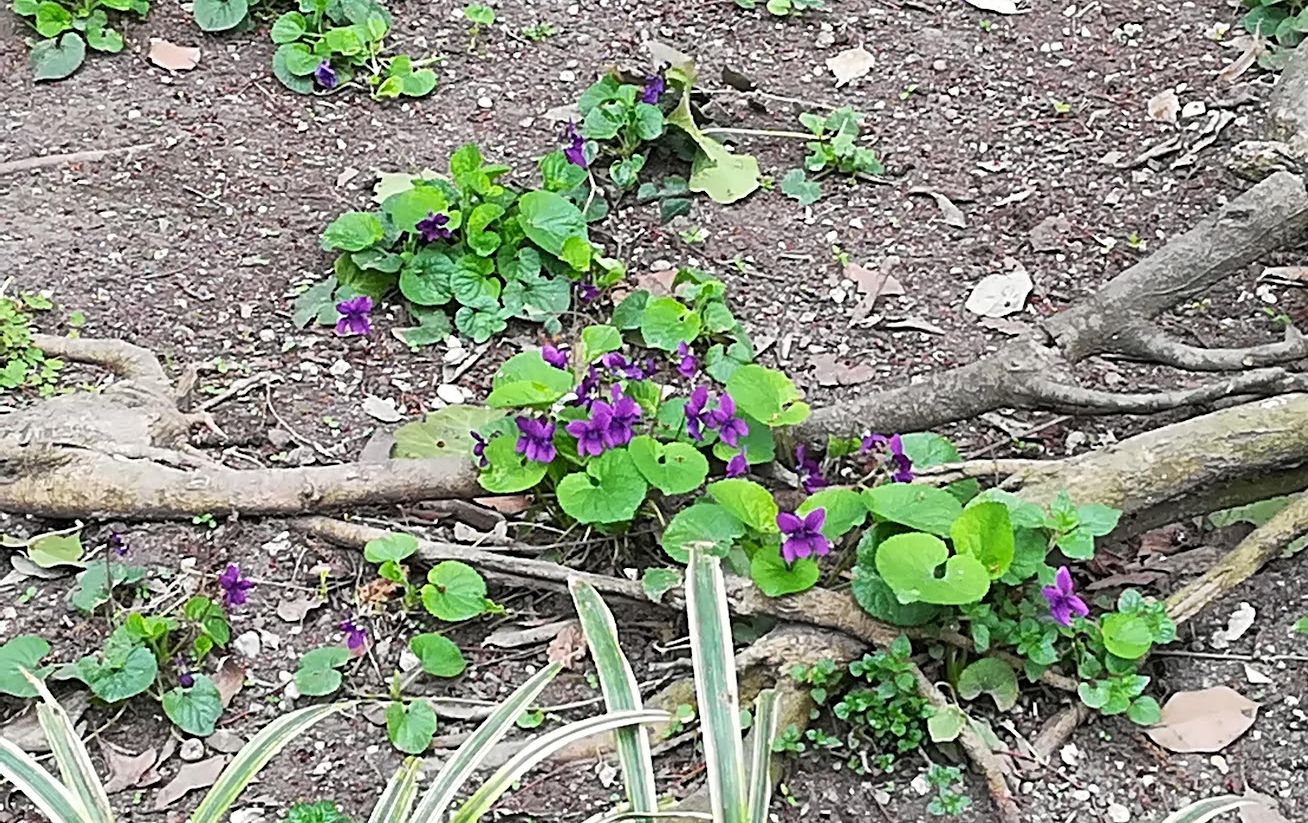
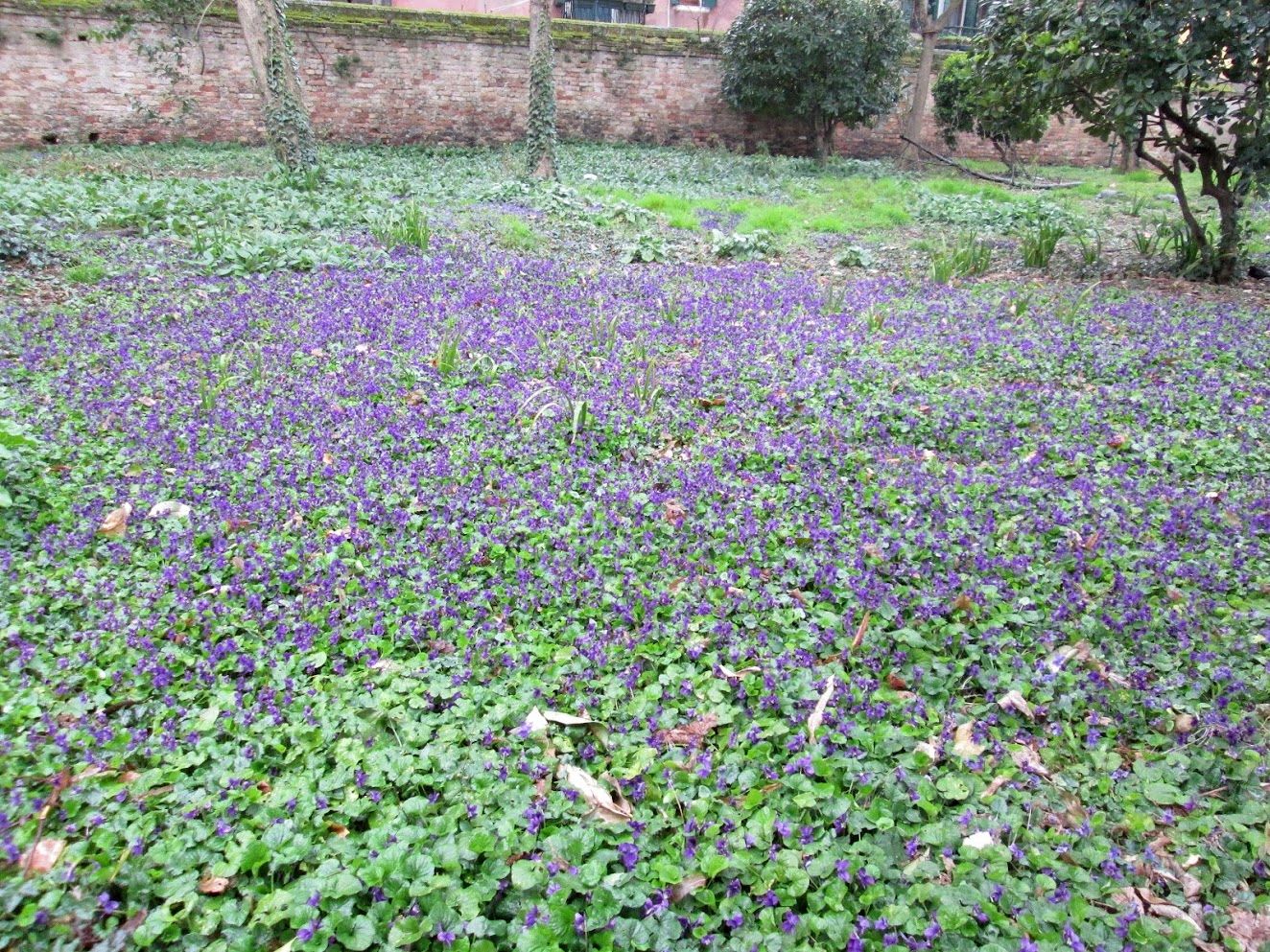
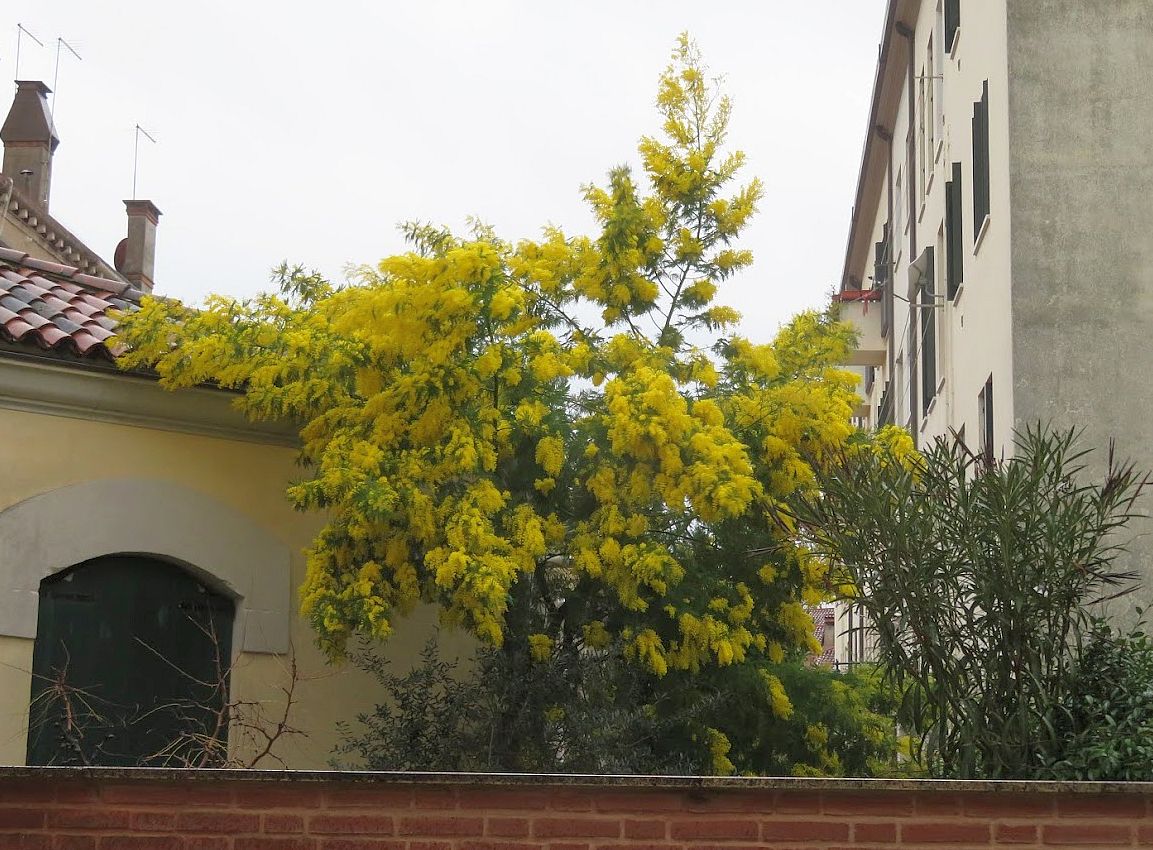
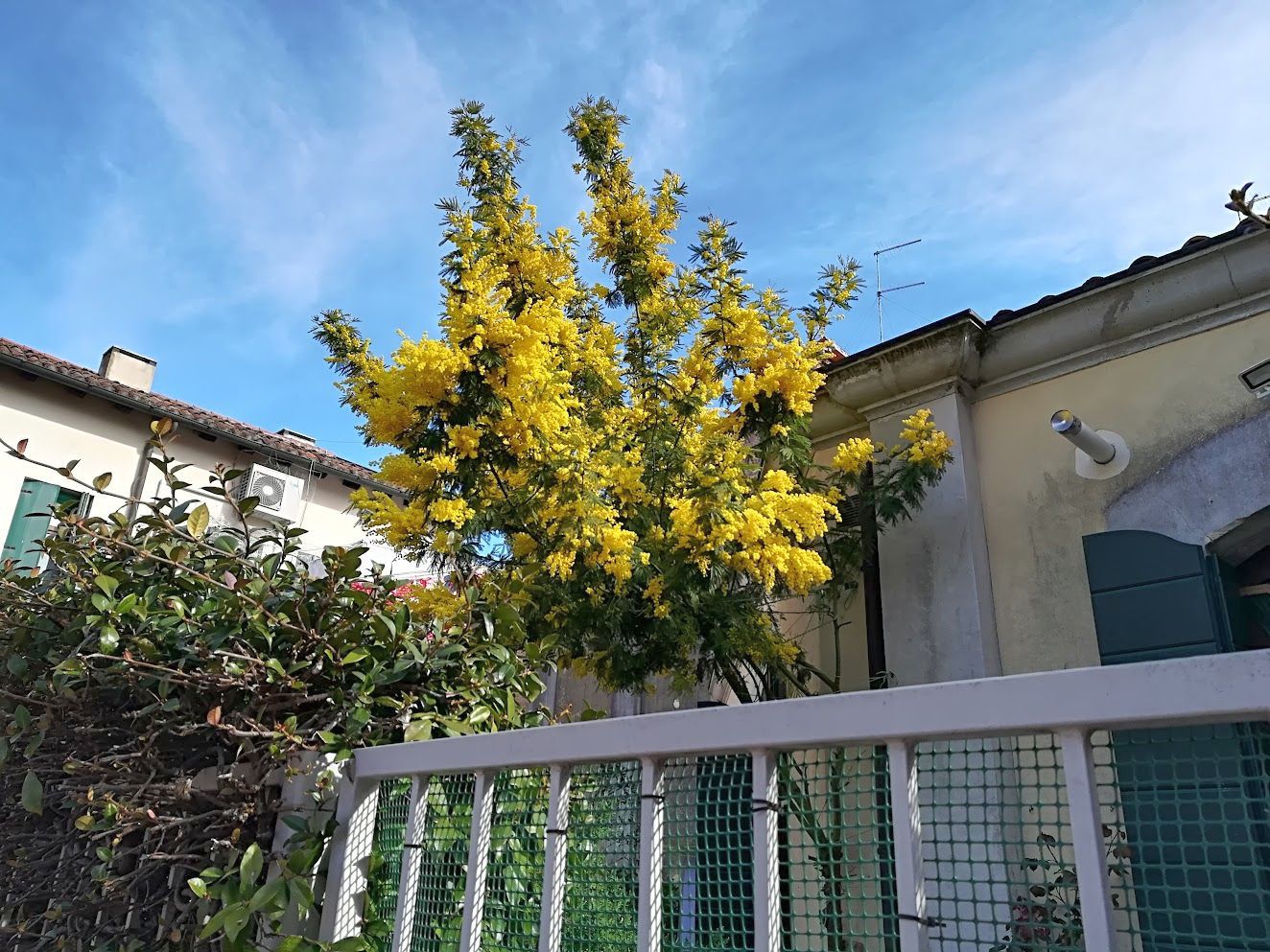
The violets make their first appearance lurking among the spring shadows.Then everybody wants to get into the act.Late February and early March bring mimosa.
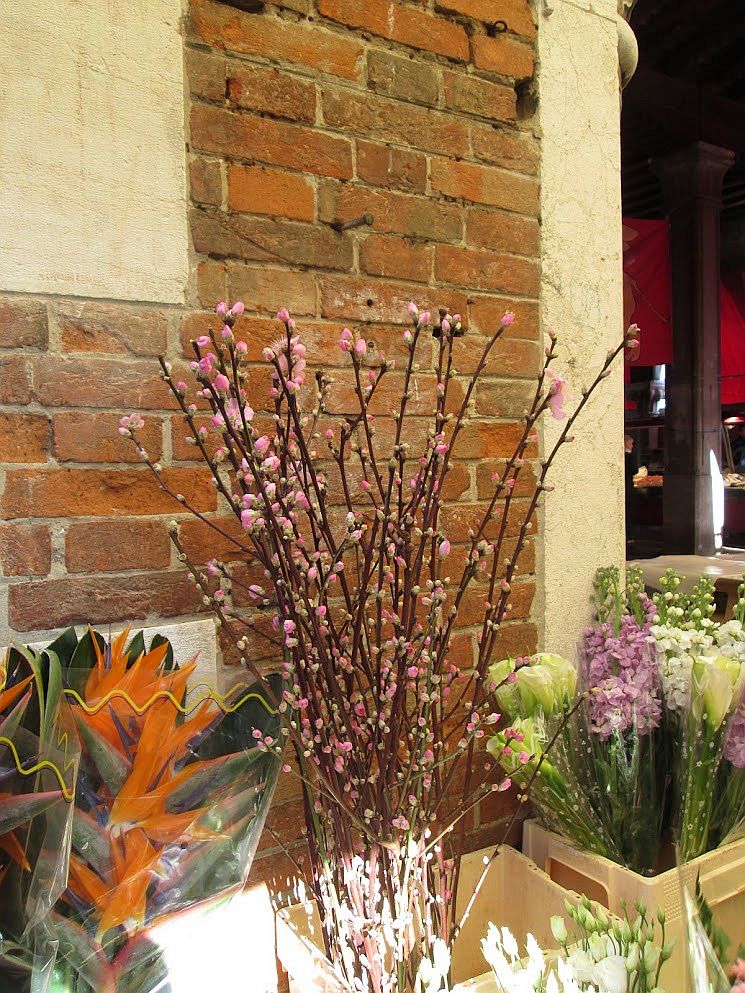
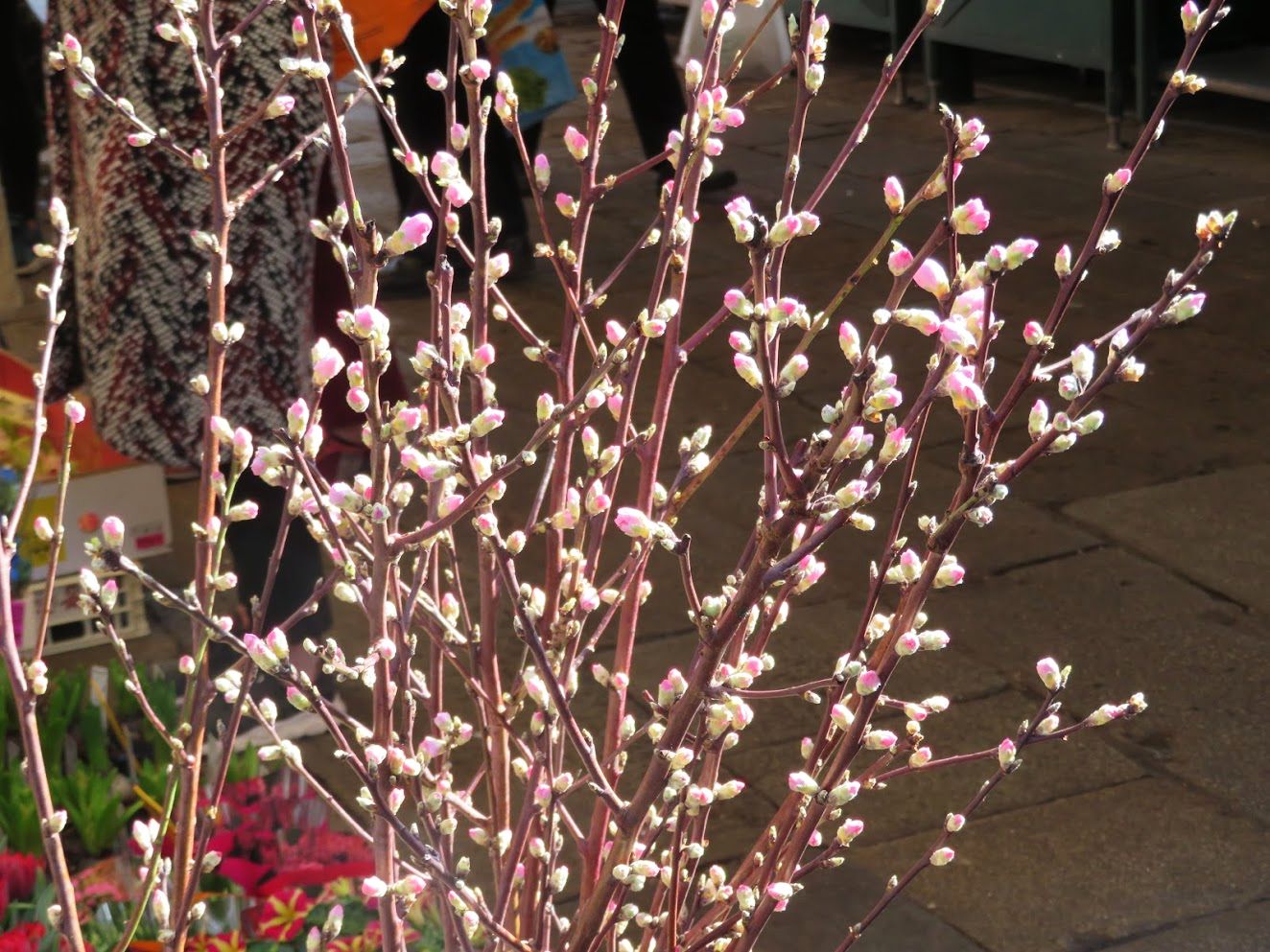
Moving toward Easter (which also moves every year, try to keep up), the peach blossoms arrive, often from Sicily, or even from somewhere in the Veneto. It must depend on the weather. I only see them at the Rialto market.
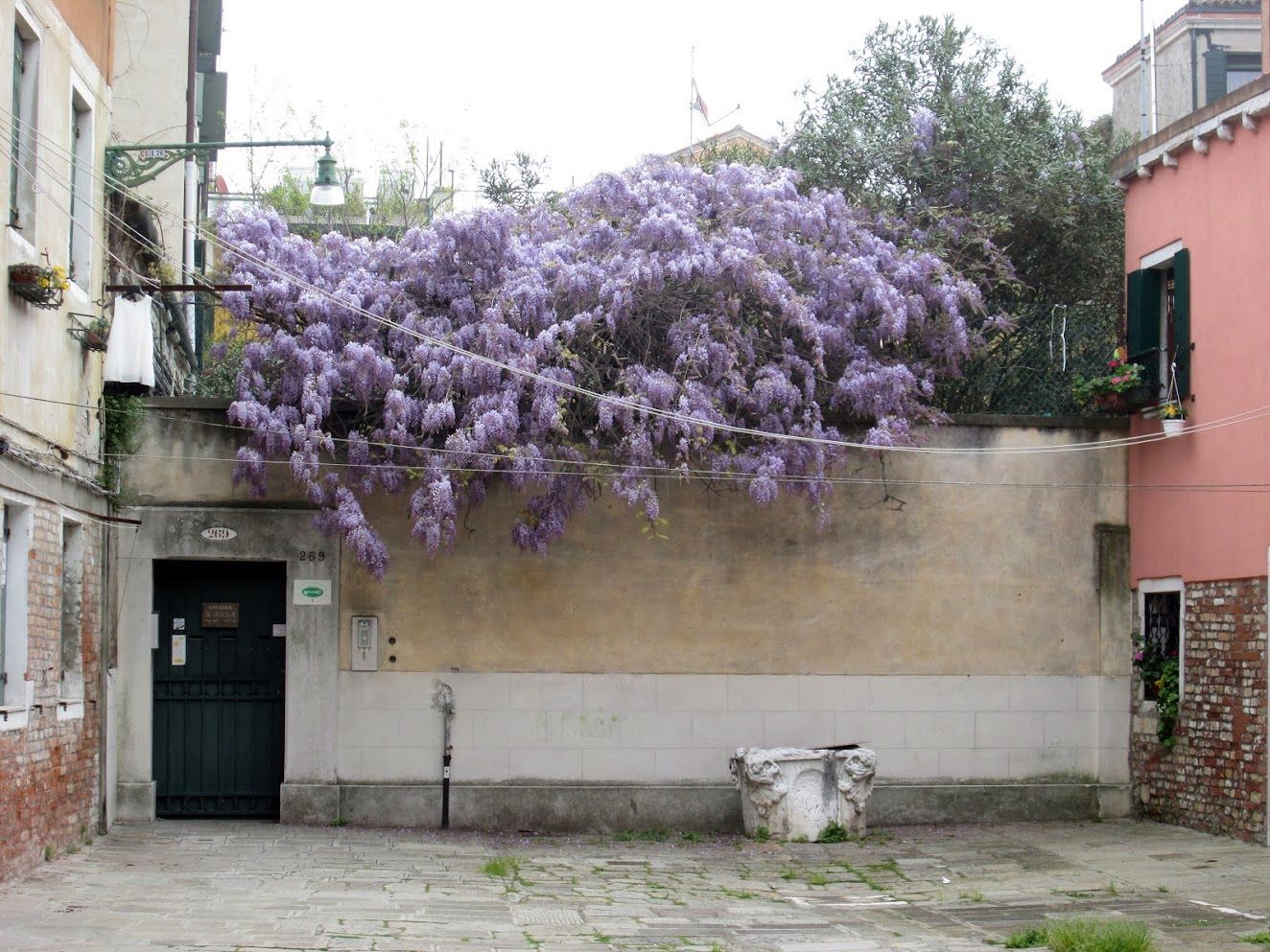
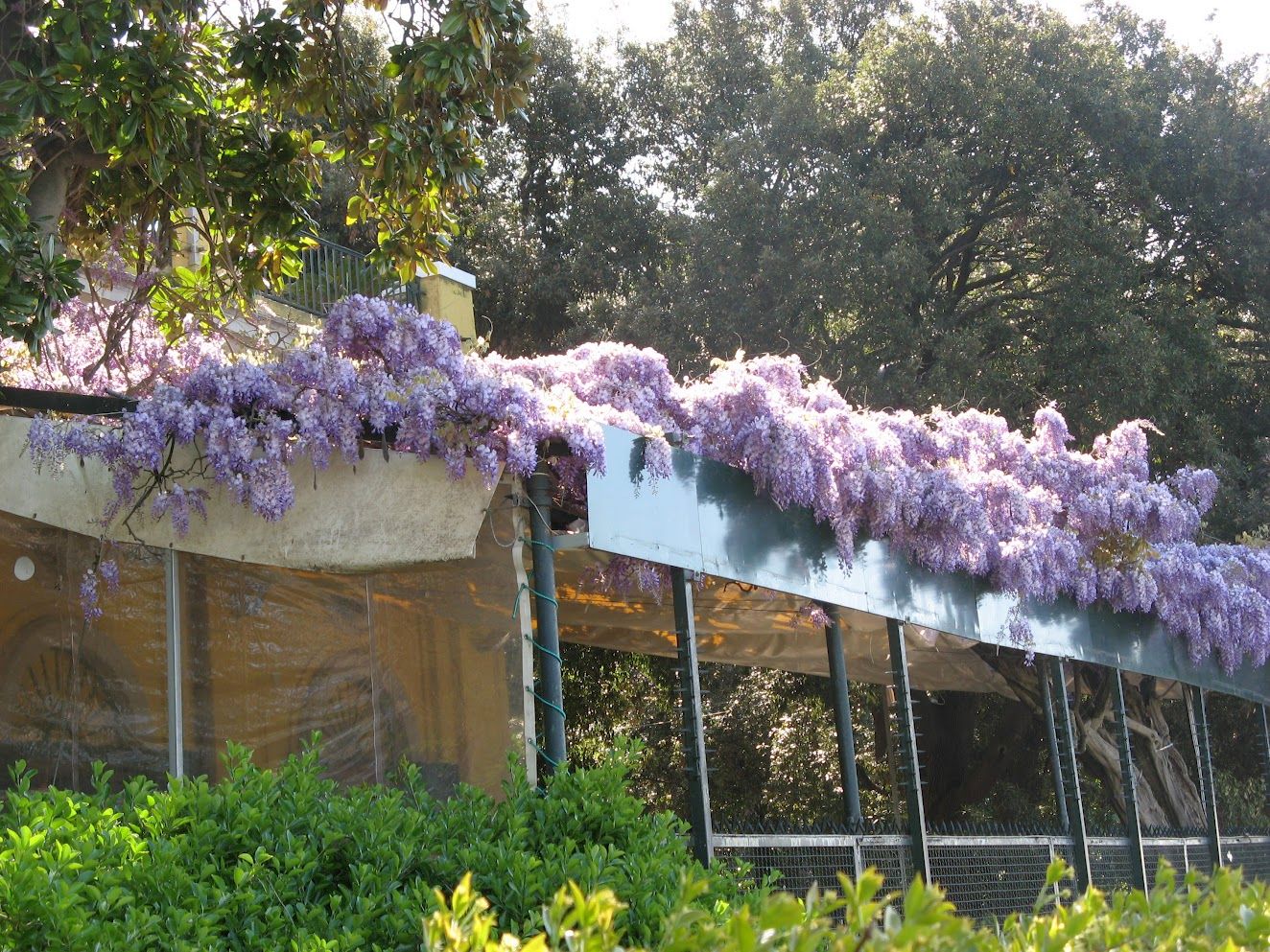
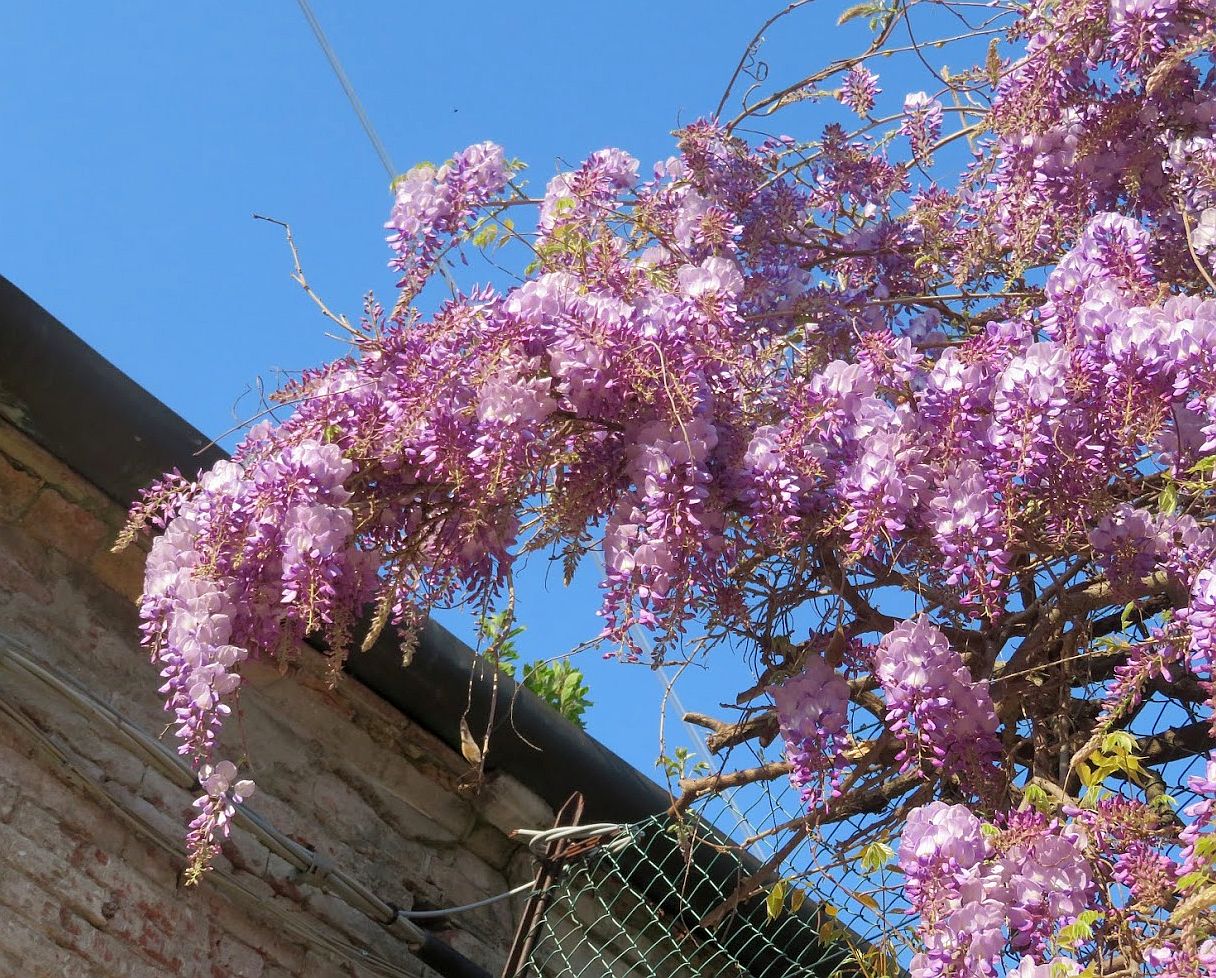
Then the wisteria steps into the spotlight. It seems to be everywhere but I count on seeing it in the little campo behind us.The Ristorante in Paradiso in the Giardini facing the lagoon never disappoints where its wisteria is concerned. I don’t know about the food.
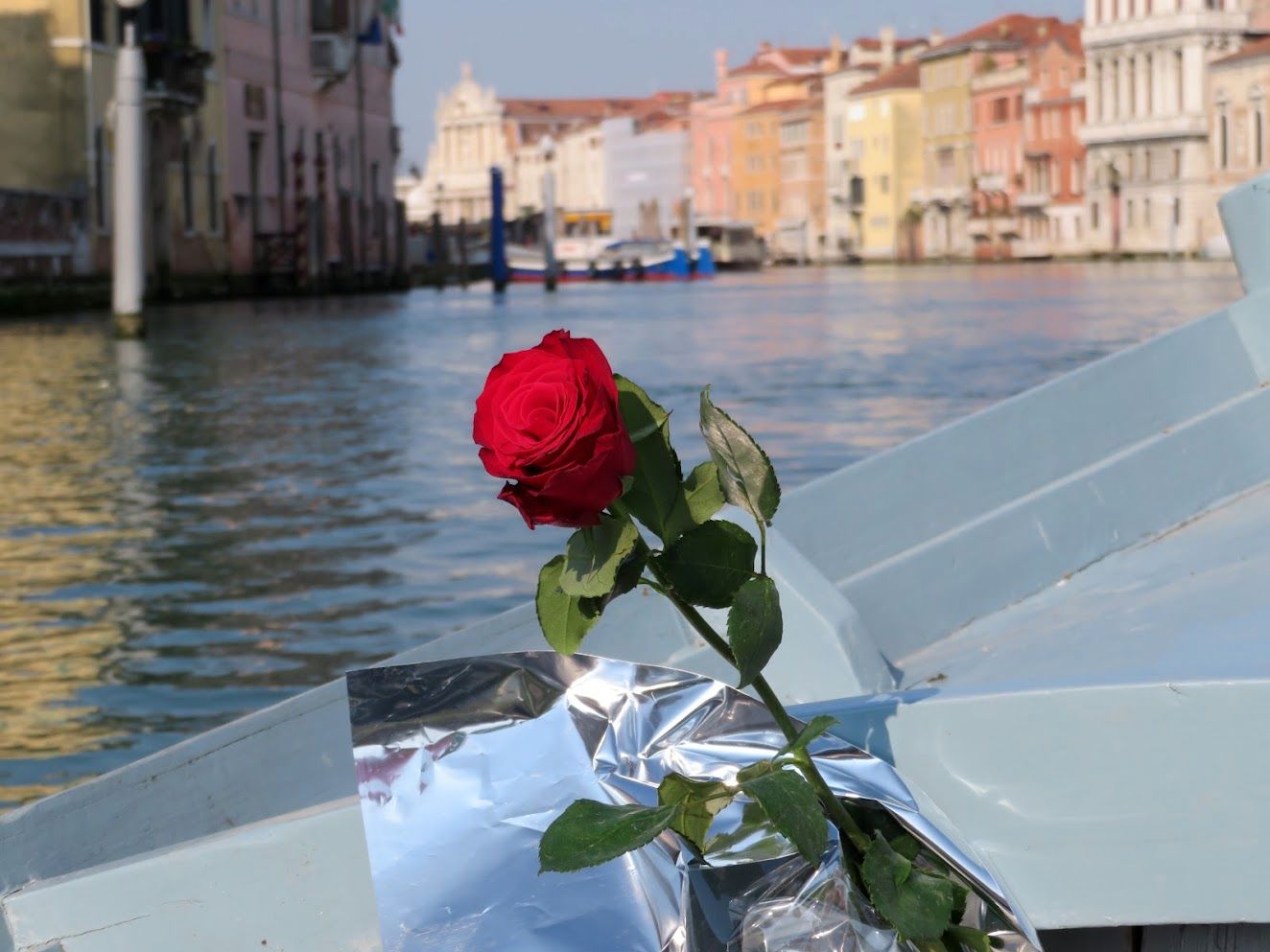
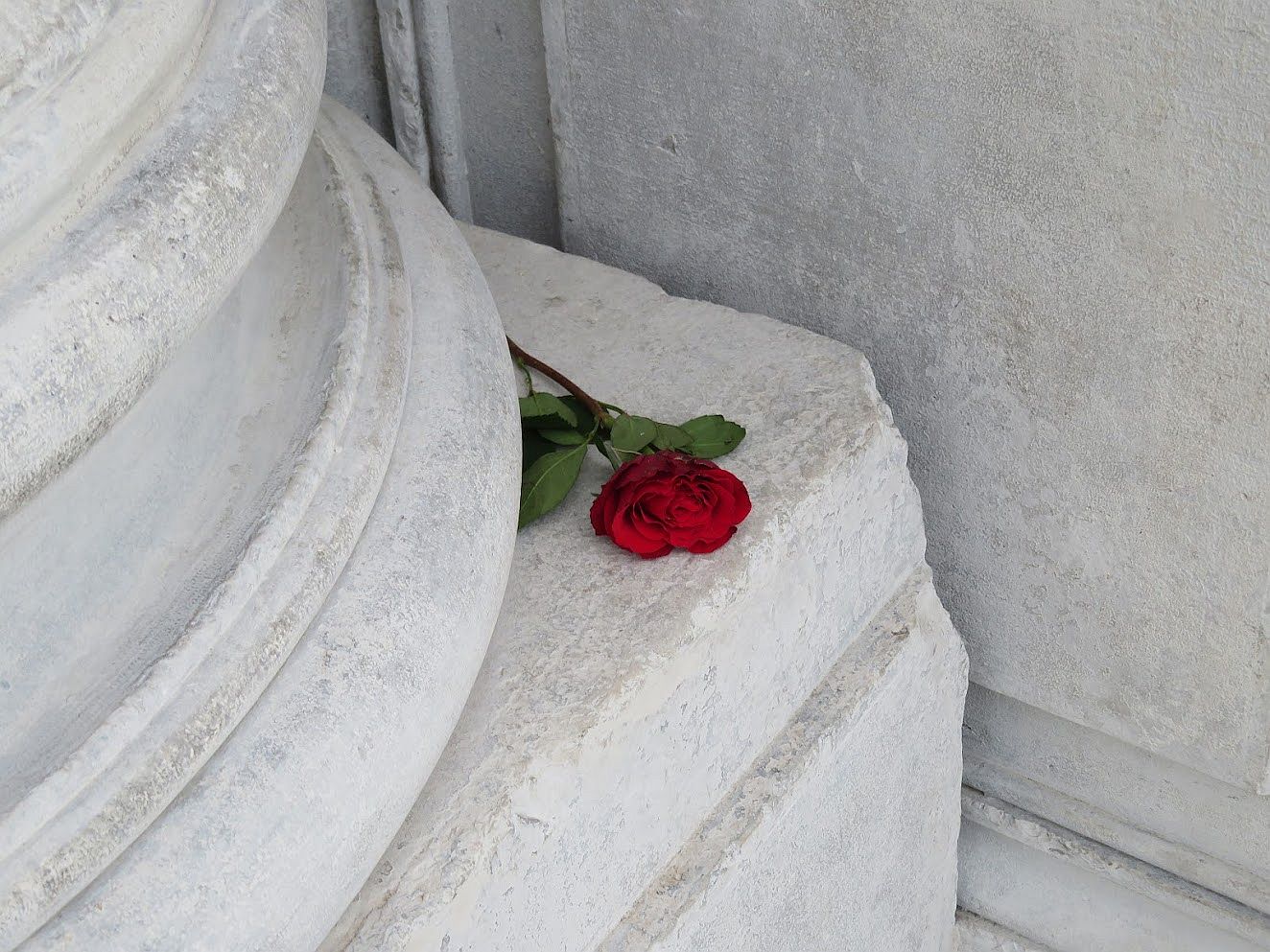
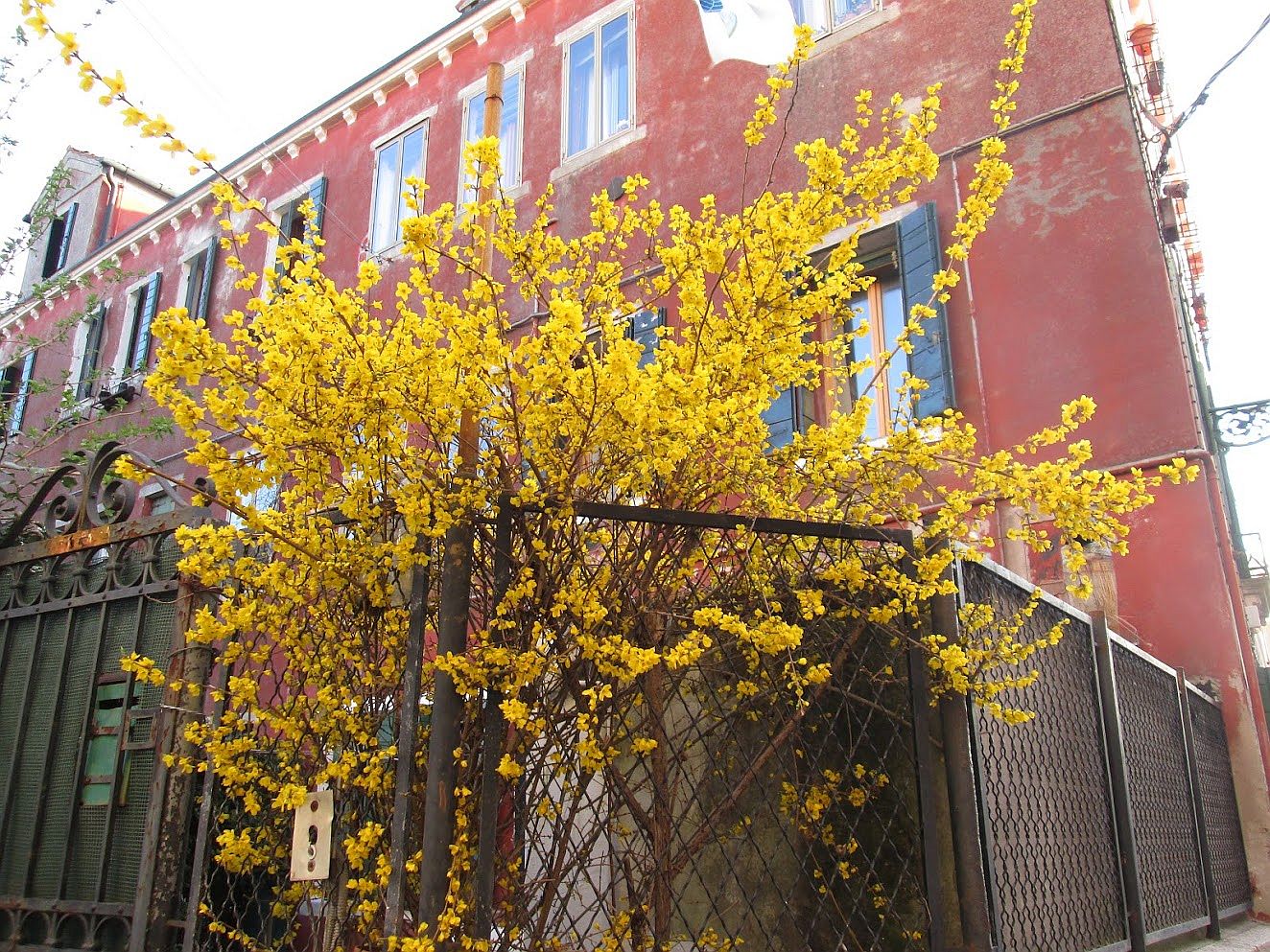
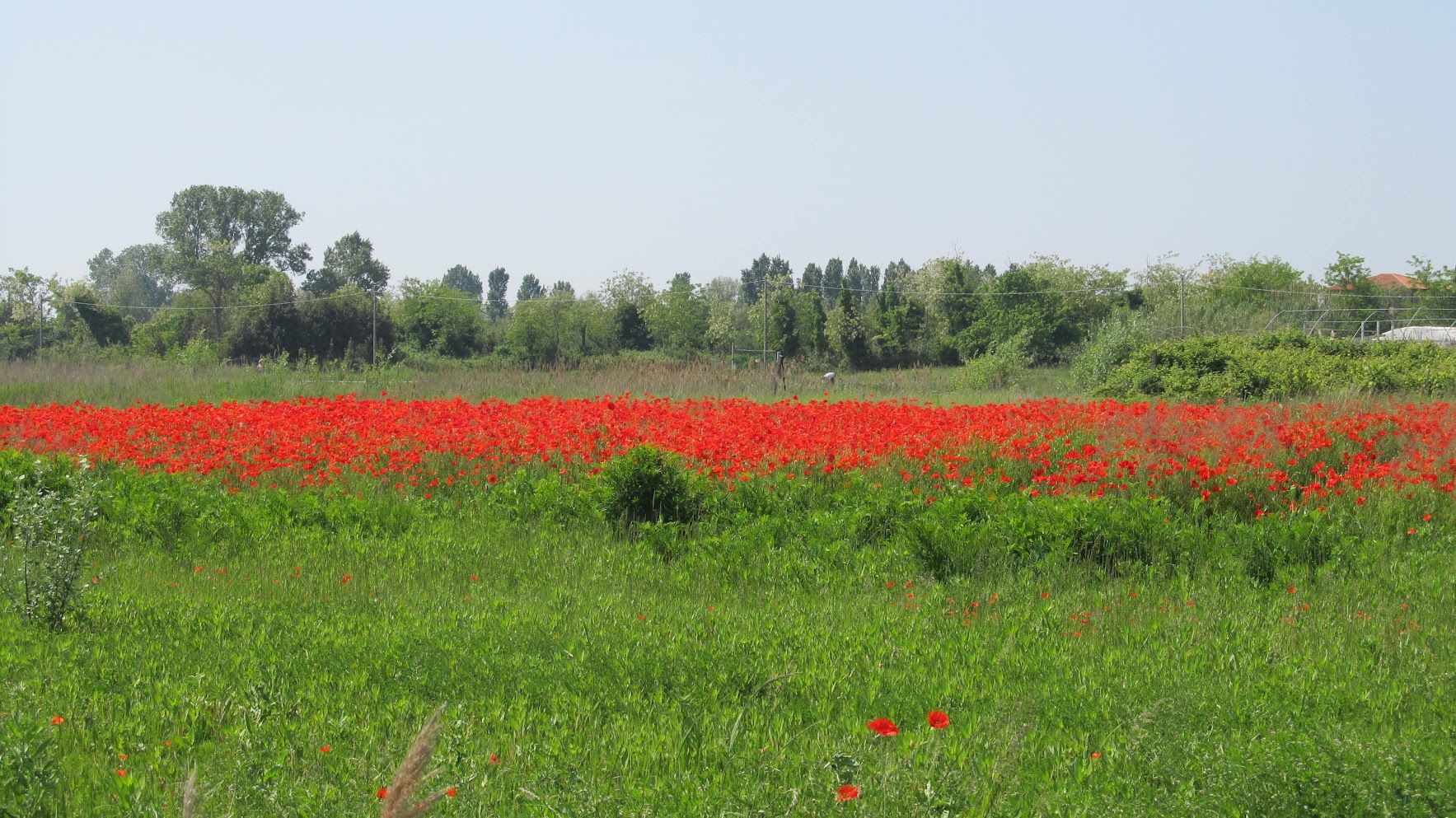
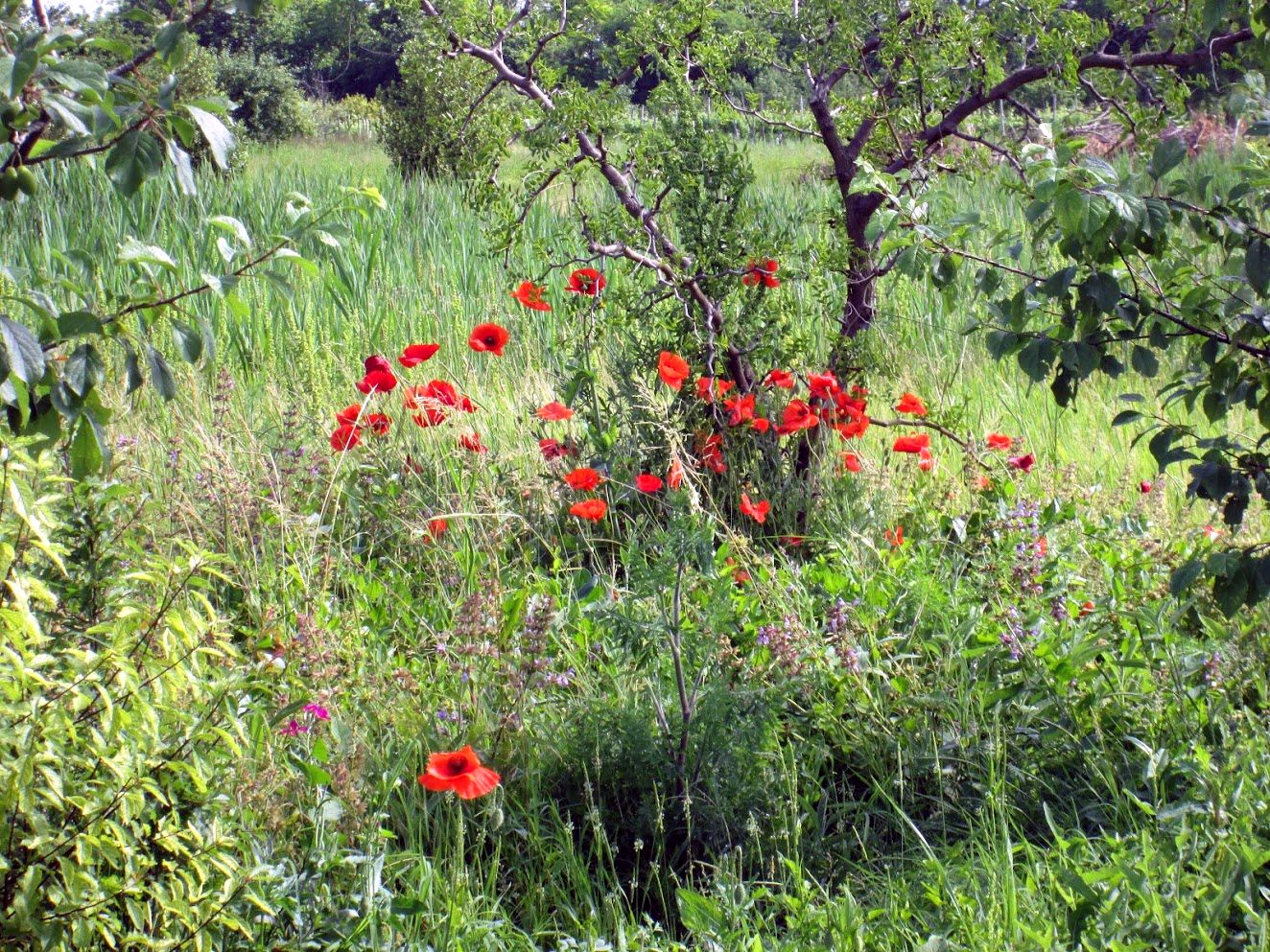
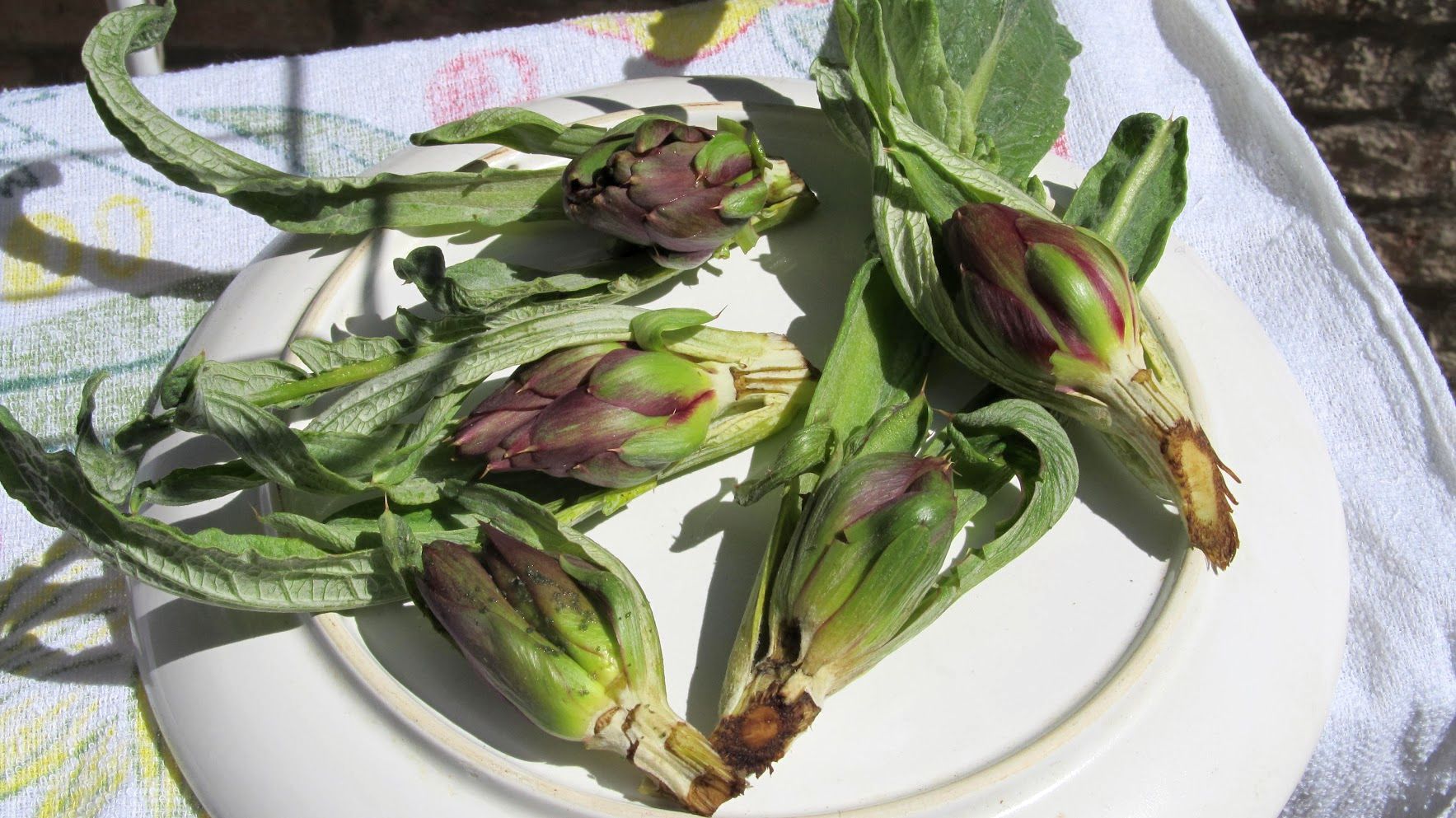
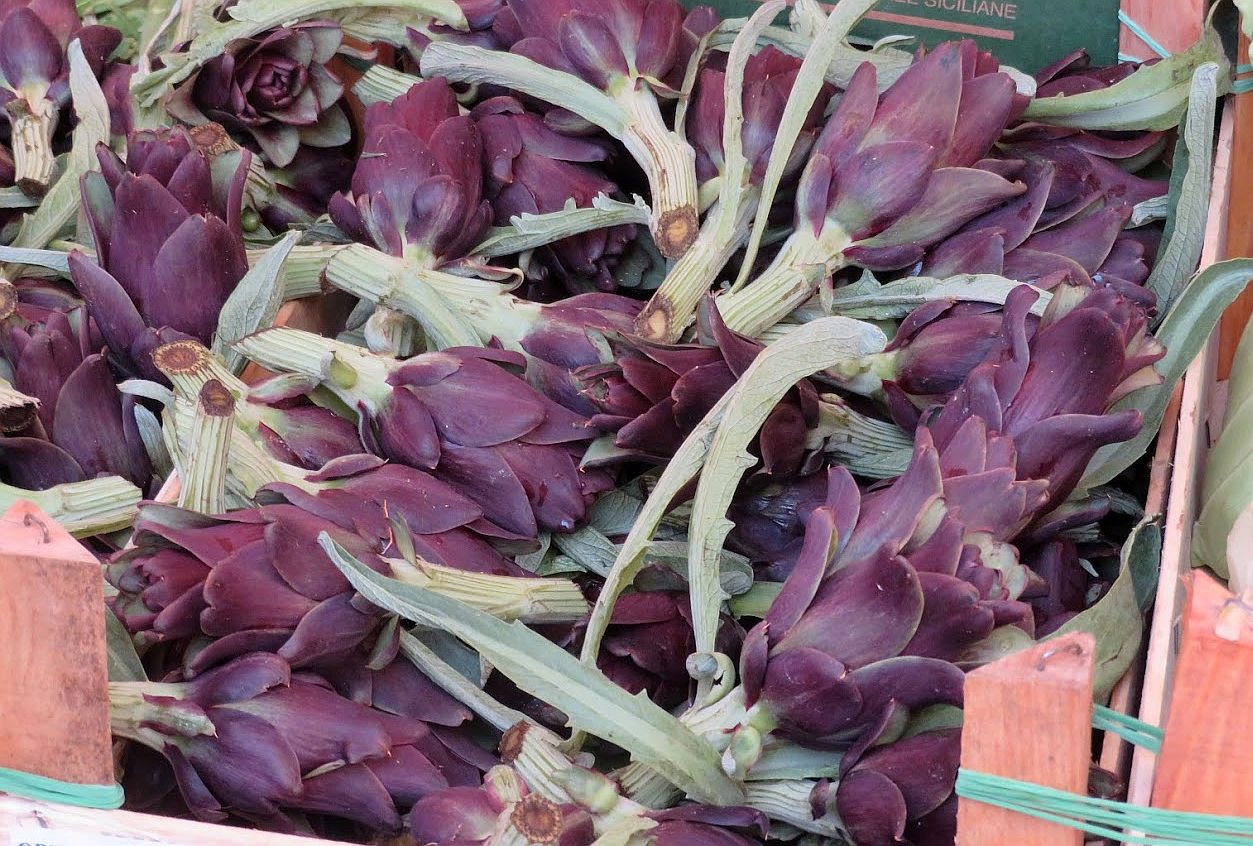
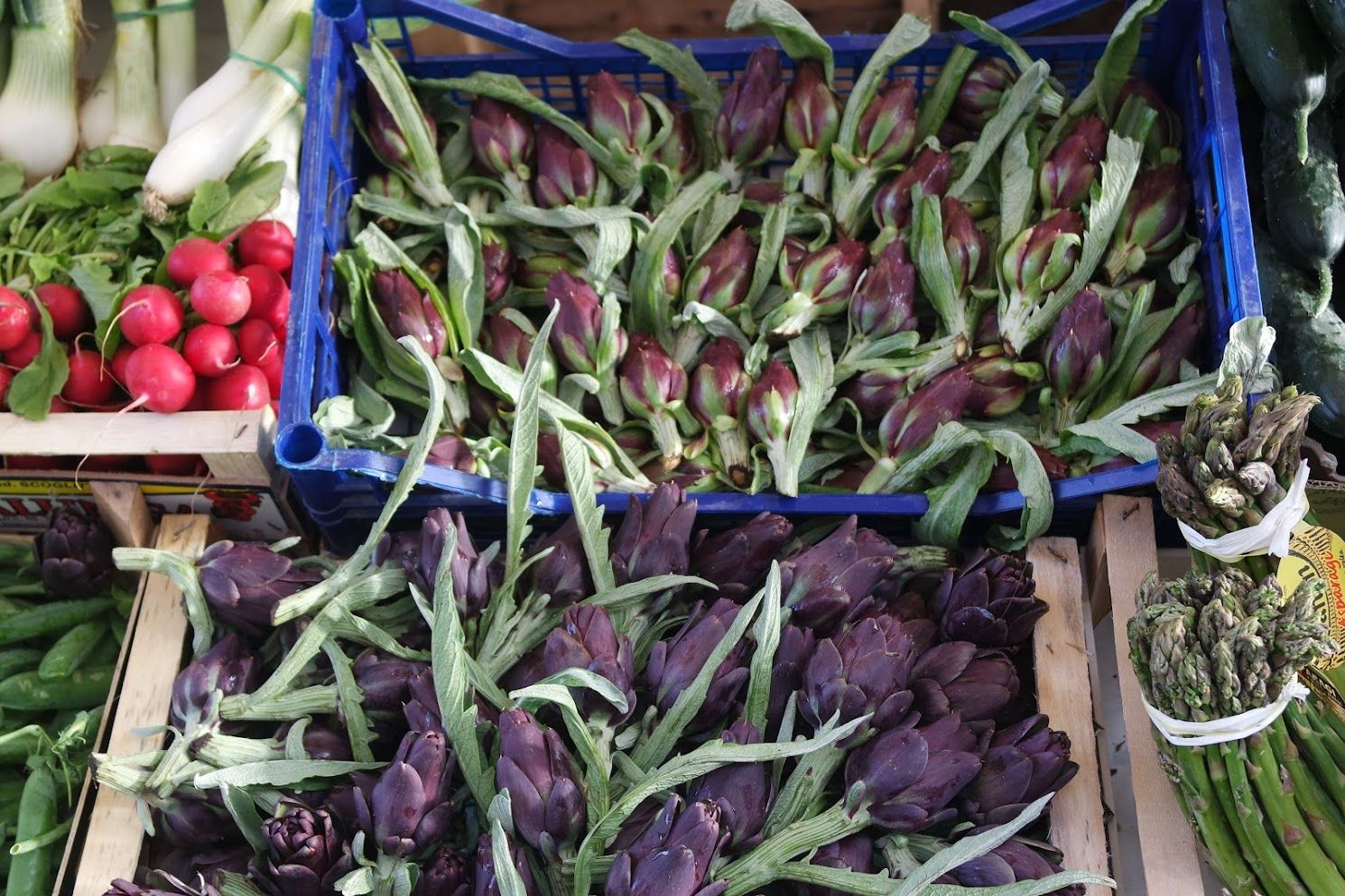
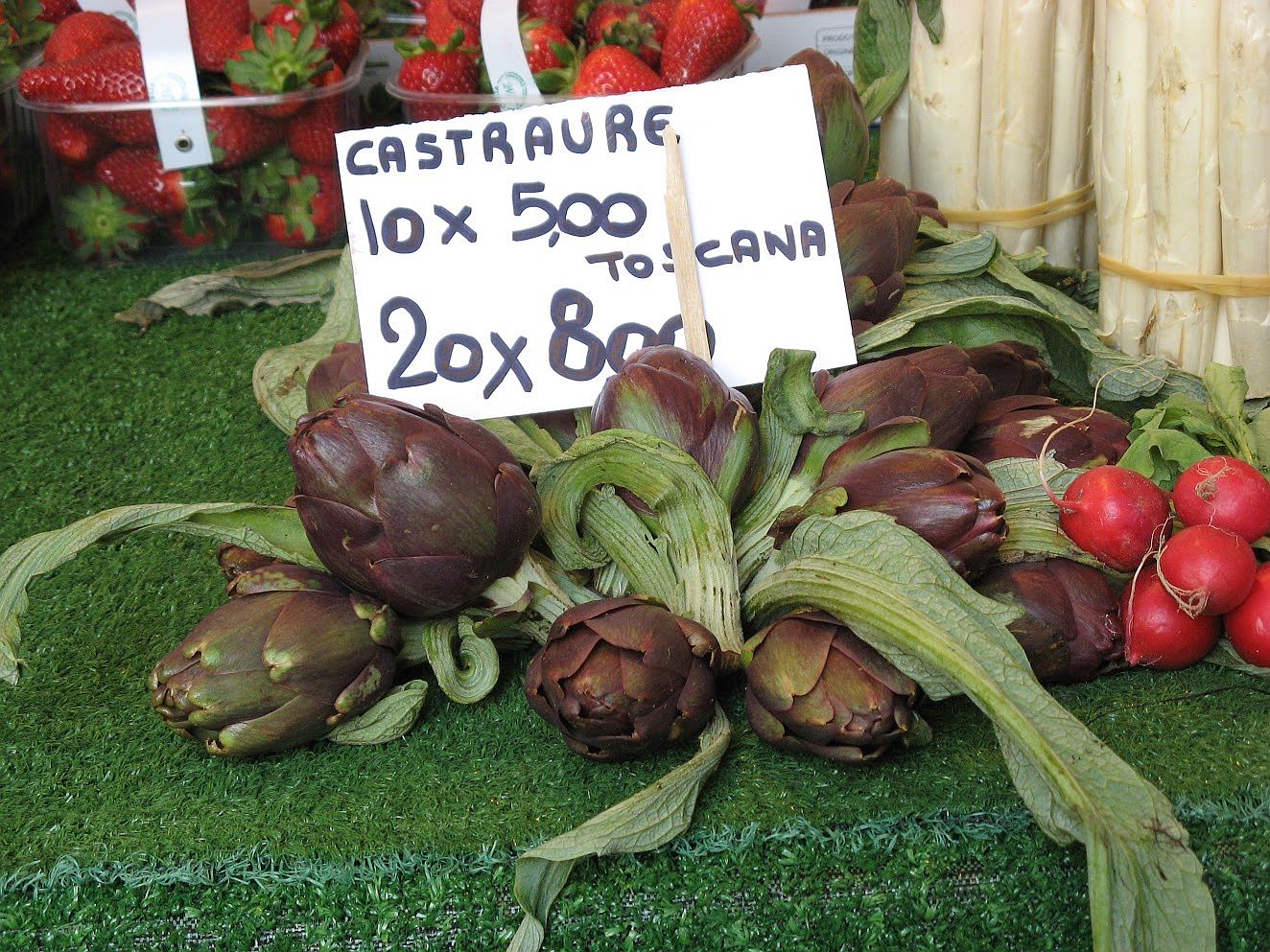
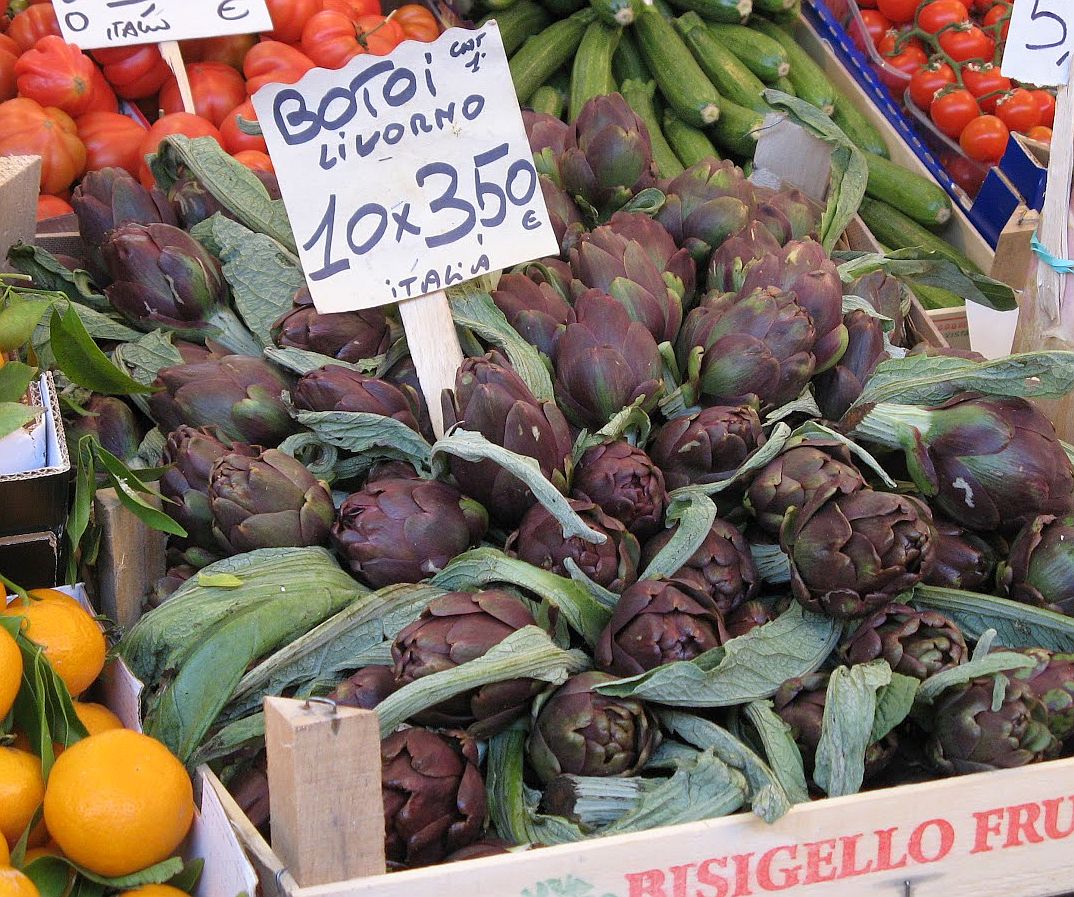
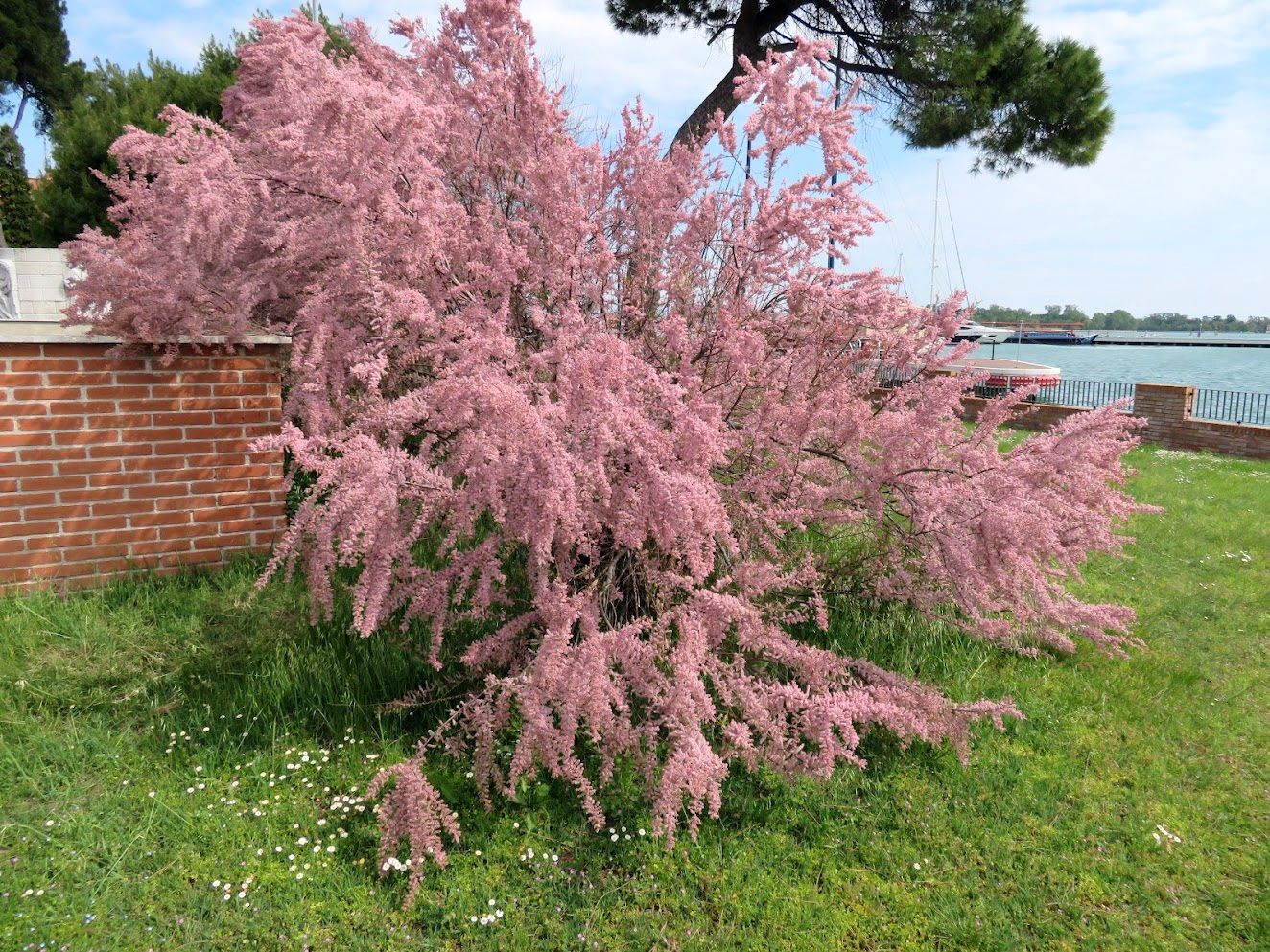
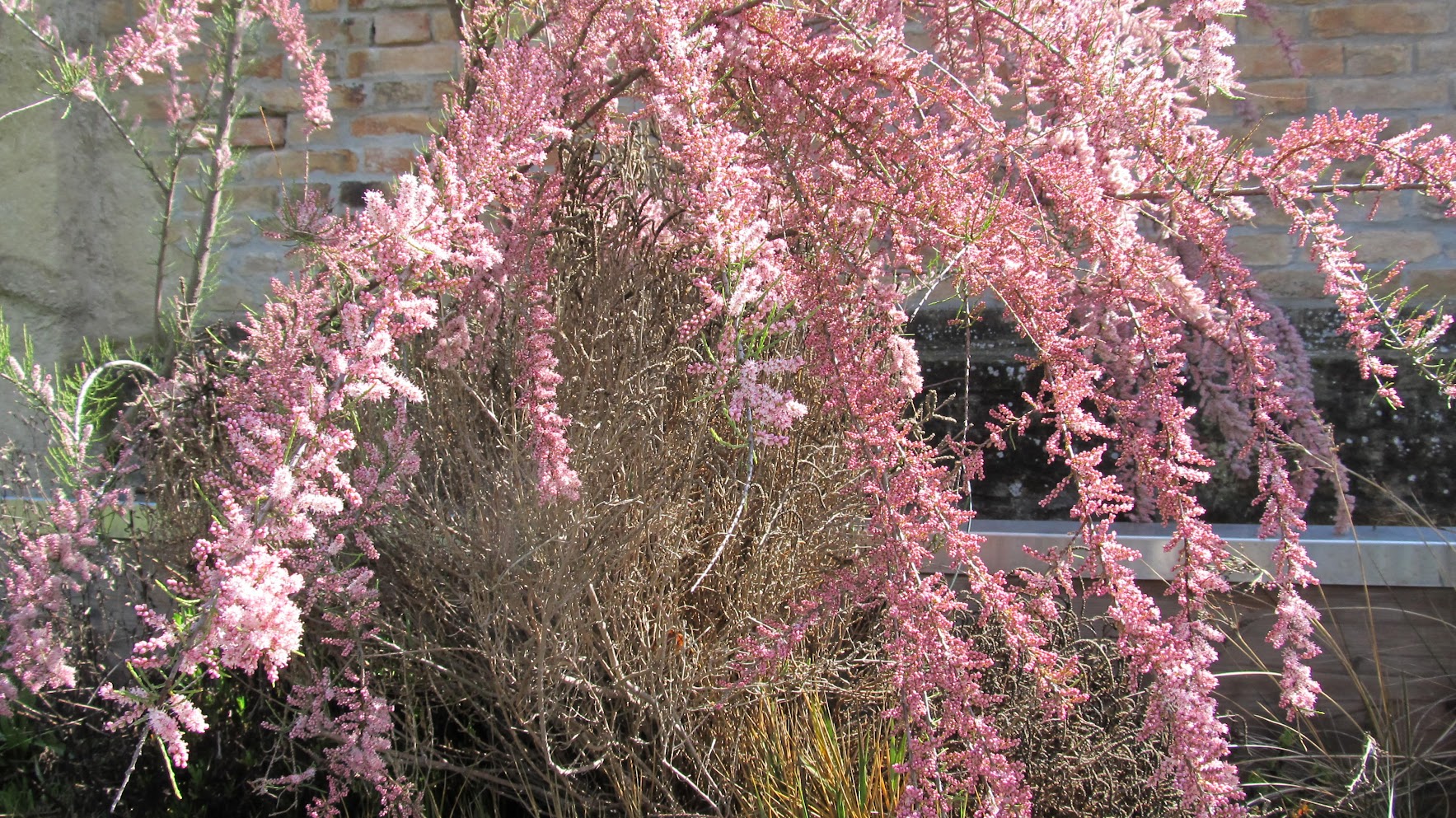
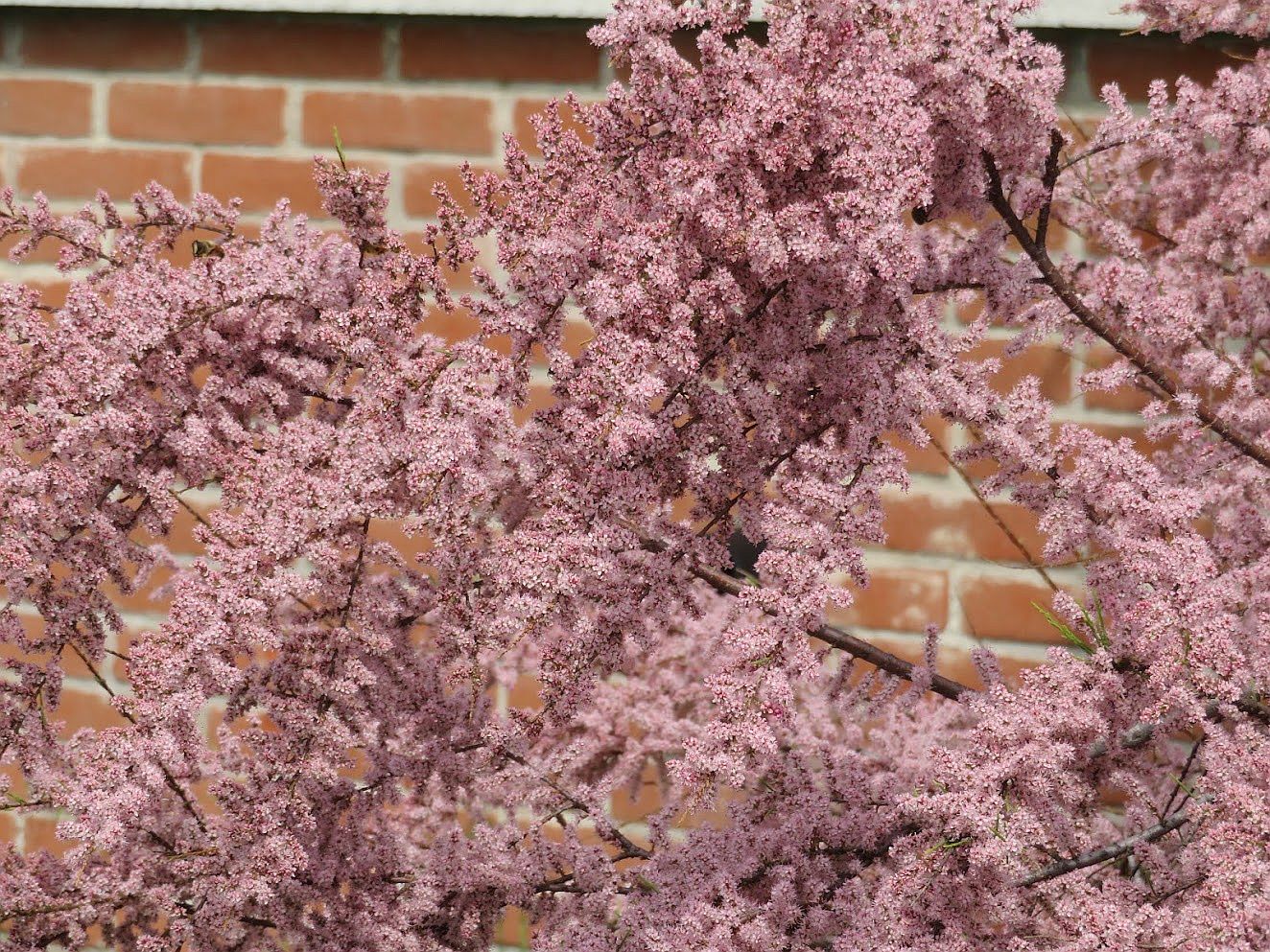
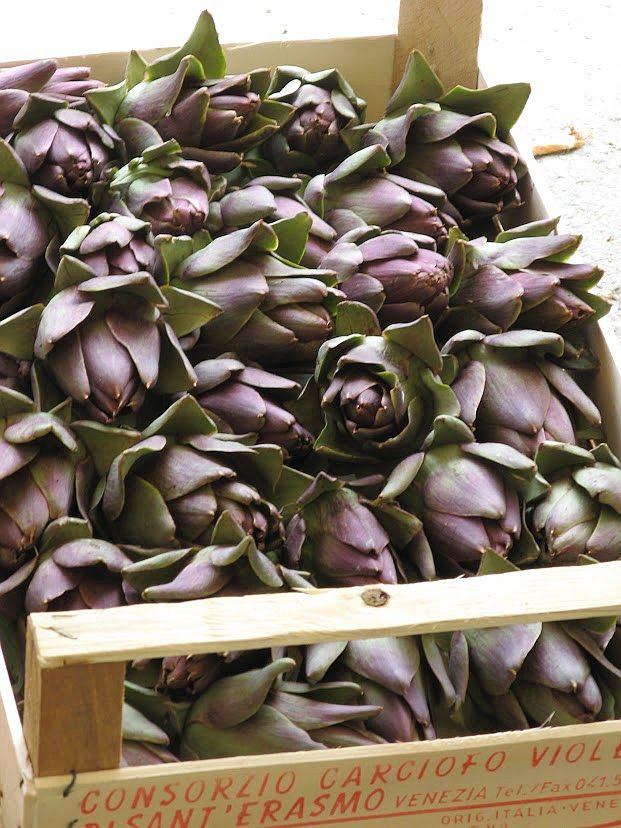
On April 25, San Marco’s feast day, Venetian men go for the rose — the “bocolo” of a rose — and the longer the stem and redder the petals, the better. Your lady-love has to have one. Or else. One year we decided to take mine for a ride.An abandoned bocolo does not bode well,either for the couple or for the rose.Toward the end of April the forsythia takes center stage. This is an approximate date, of course; it comes out when it’s good and ready to come out.May: Poppies on Sant’ Erasmo.Poppies are everywhere for too brief a time.Yes, artichokes are flowers. These are a few castraure (cahs-trah-OO-reh) of the renowned Violet Artichoke of Sant’ Erasmo. Each is the very first bud that appears at the apex of the artichoke plant. People await their appearance sometime between April and May as if a special esoteric treasure is about to be bestowed. Because they now have reached a sort of cult status, it’s truly amazing how many castraure somehow show up in the market. After all, just one per plant … There are various recipes for them, of course, but considering that their primary attribute is their tender youth, they are especially delectable raw, sliced extremely fine and enhanced simply by salt, pepper and the best olive oil you can find. The supply only lasts a mere two weeks or so, then the botoi (BOH-toe-ee) move in.Botoi are the flowers that bloom after the castraura has been removed. They are more flavorful, but they have no PR agent to rhapsodize about them so nobody makes a fuss about botoi the way they do about castraure. Also, there are many more botoi than there are castraure, so they don’t seem quite so exceptional. More than one expert prefers them to castraure, but to each his own mania.To review: The upper crate contains castraure, the lower crate has botoi. They are both delectable.Before we move on, let me alert you to the fact that Italy is rife with artichokes. You will find these on sale in Venice: Castraure from Tuscany. At a very reasonable price, too — another hint that you might have left the Sant’ Erasmo sector. (Castraure from that island, at least the first few days, can cost as much as 2 euros each.)Accompanied by their botoi, noted as coming from Livorno (Tuscany). They actually look just the same to me. But the whole point of this interval is that artichokes are flowers.Tamarisks love salty soil. Besides being lovely they are also very useful; on Sant’ Erasmo they serve as windbreaks around the asparagus and peas and other spring treats.
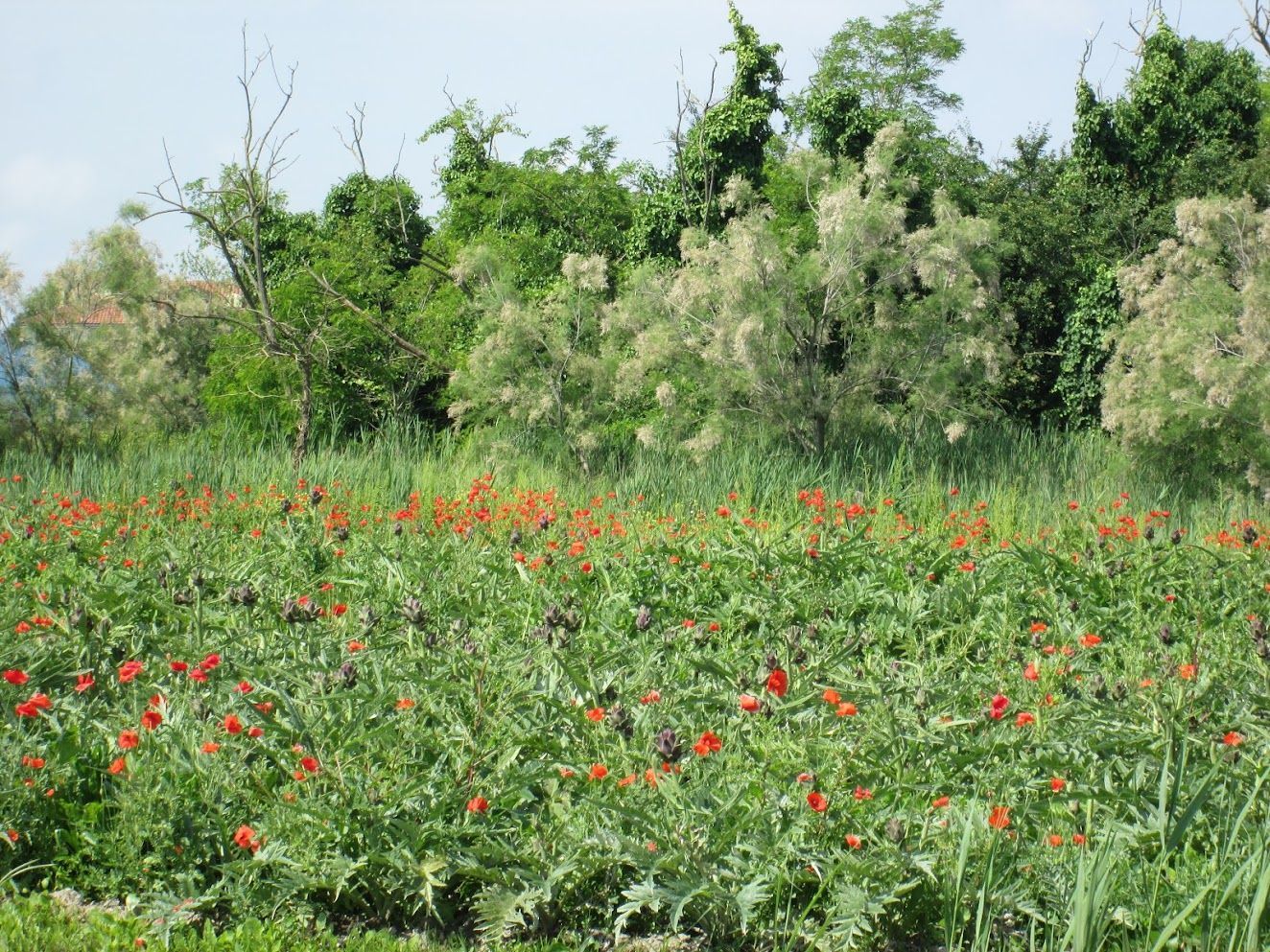
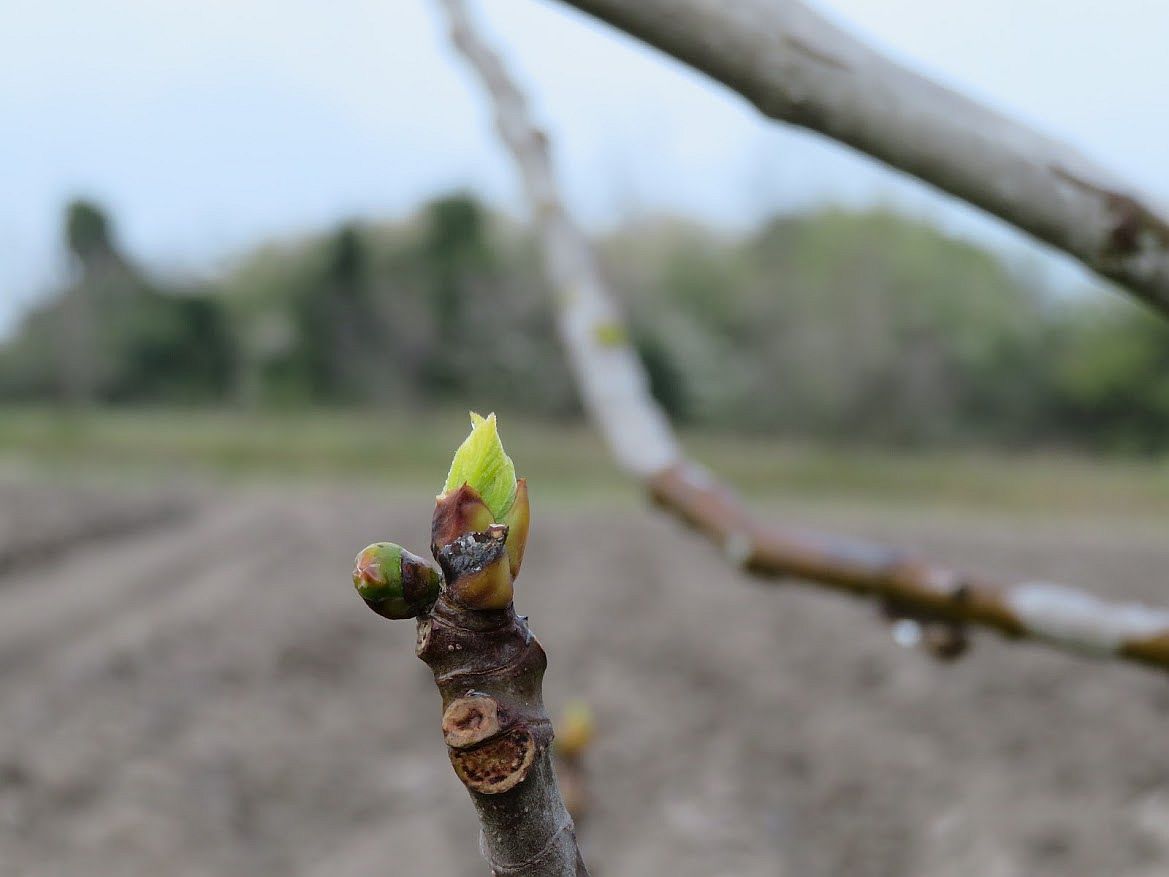
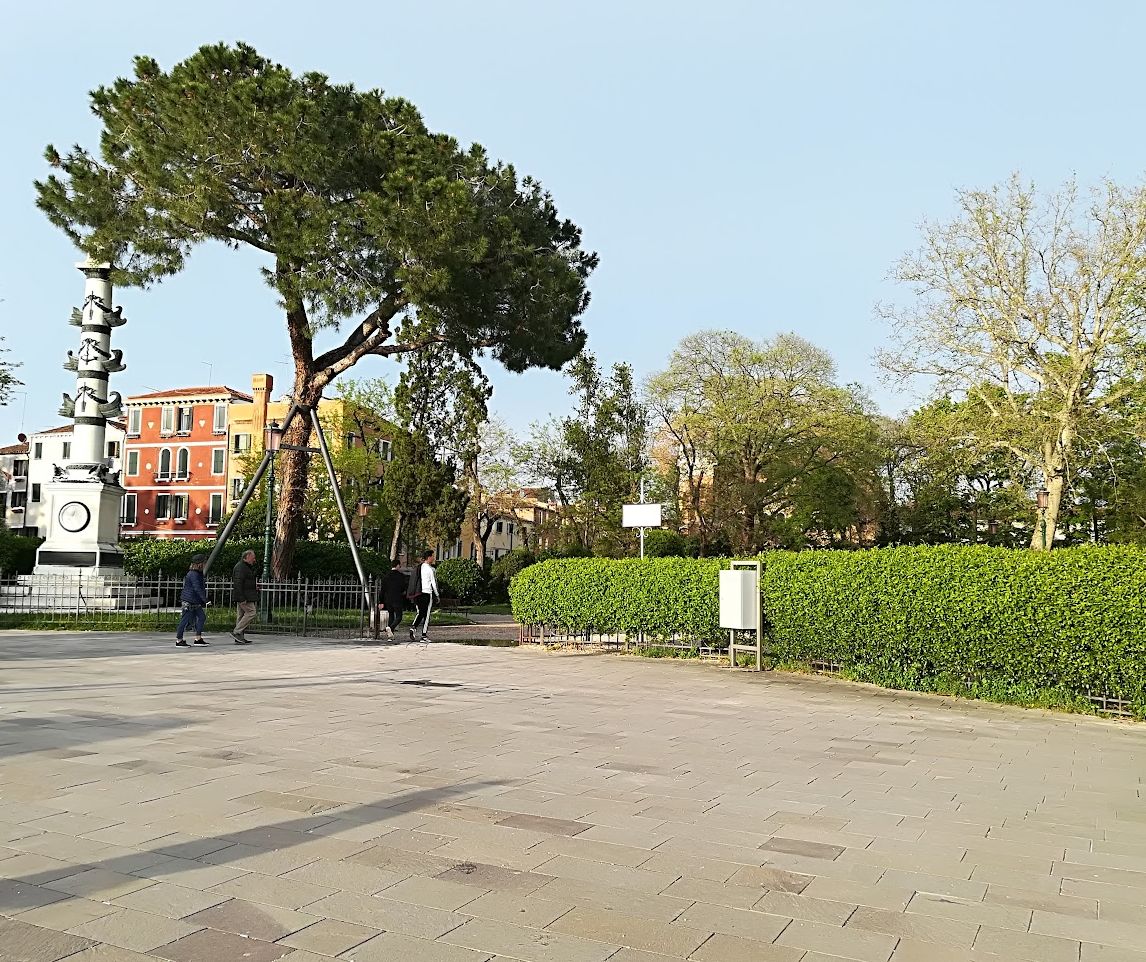
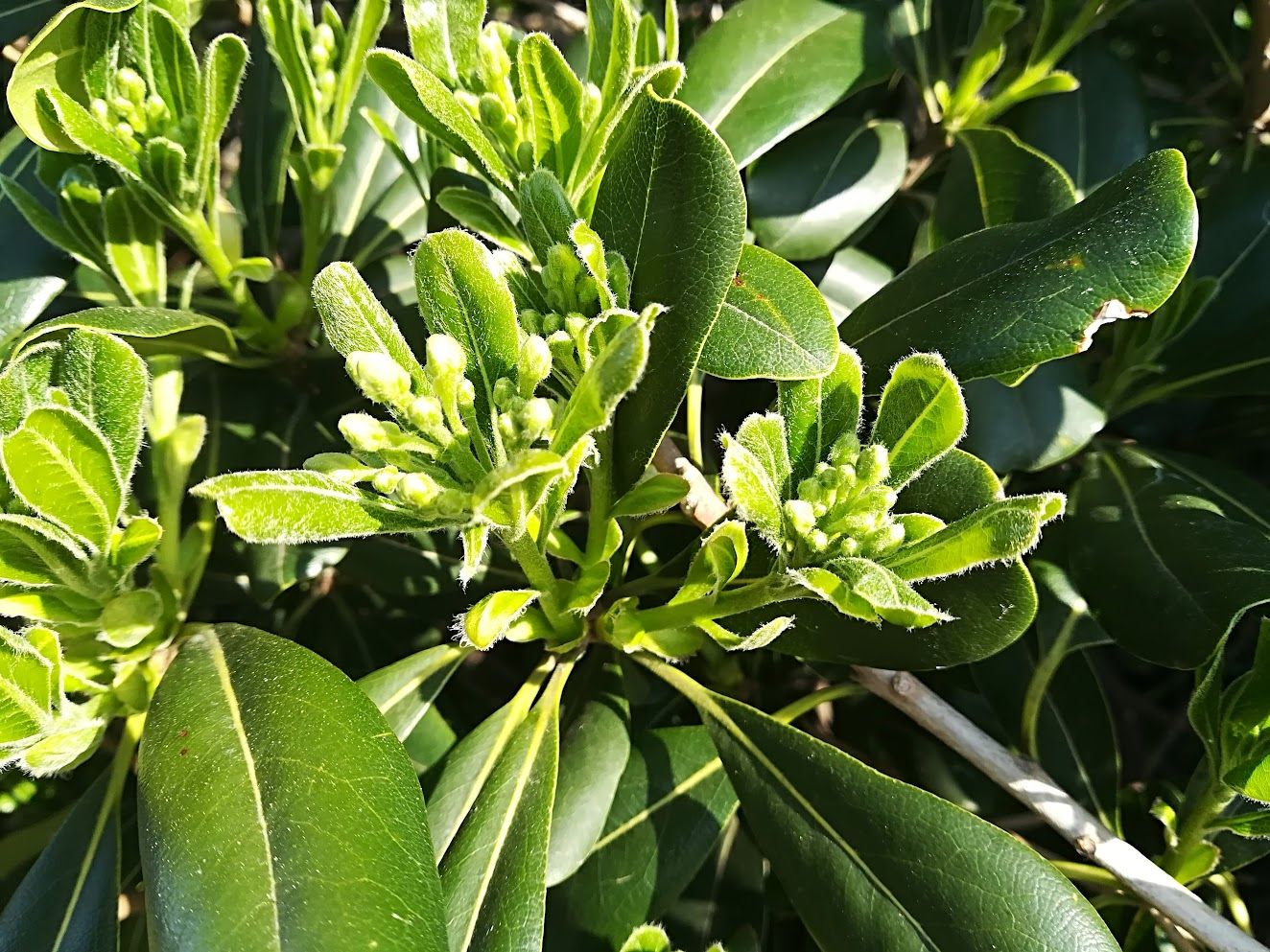
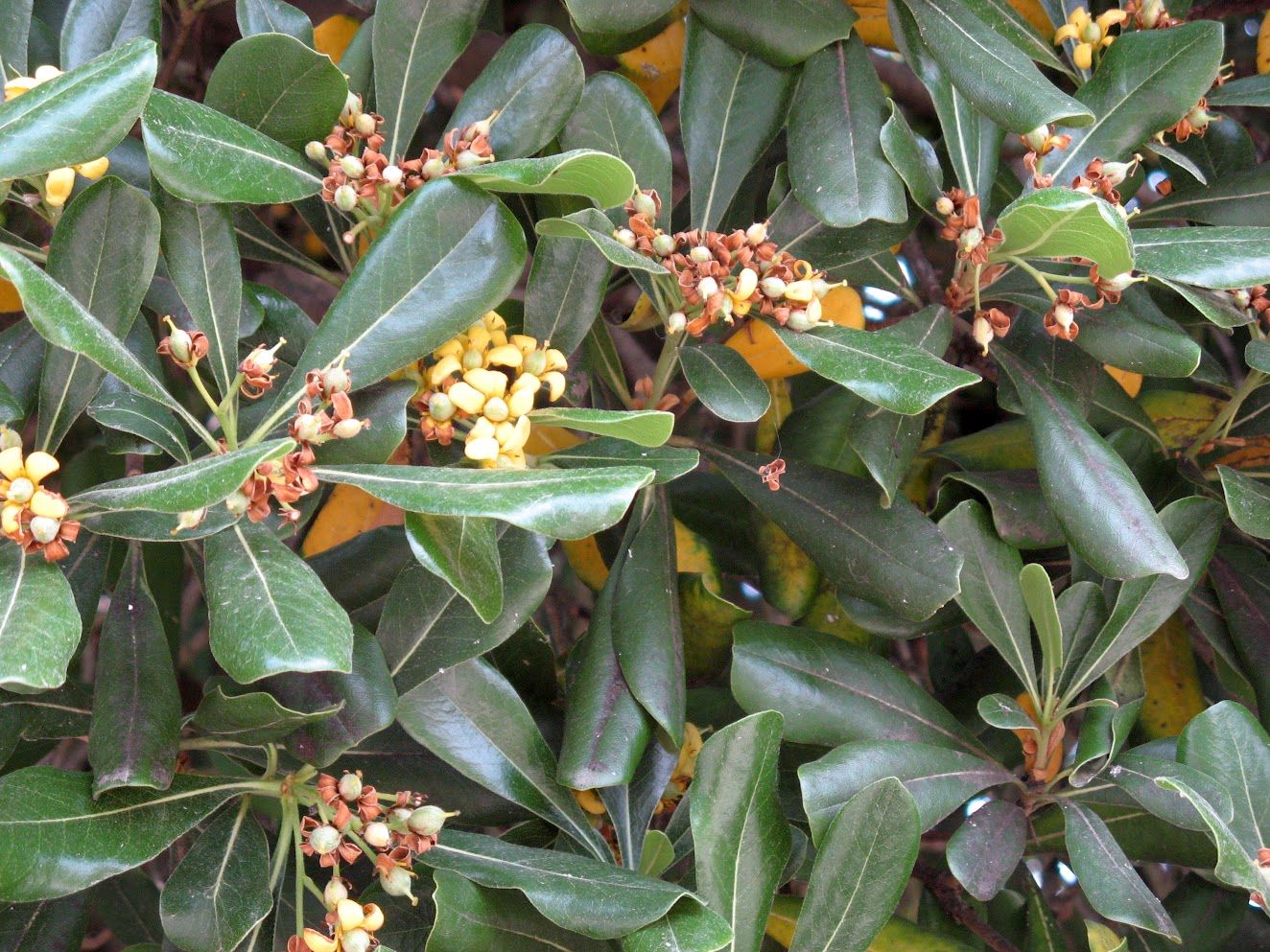
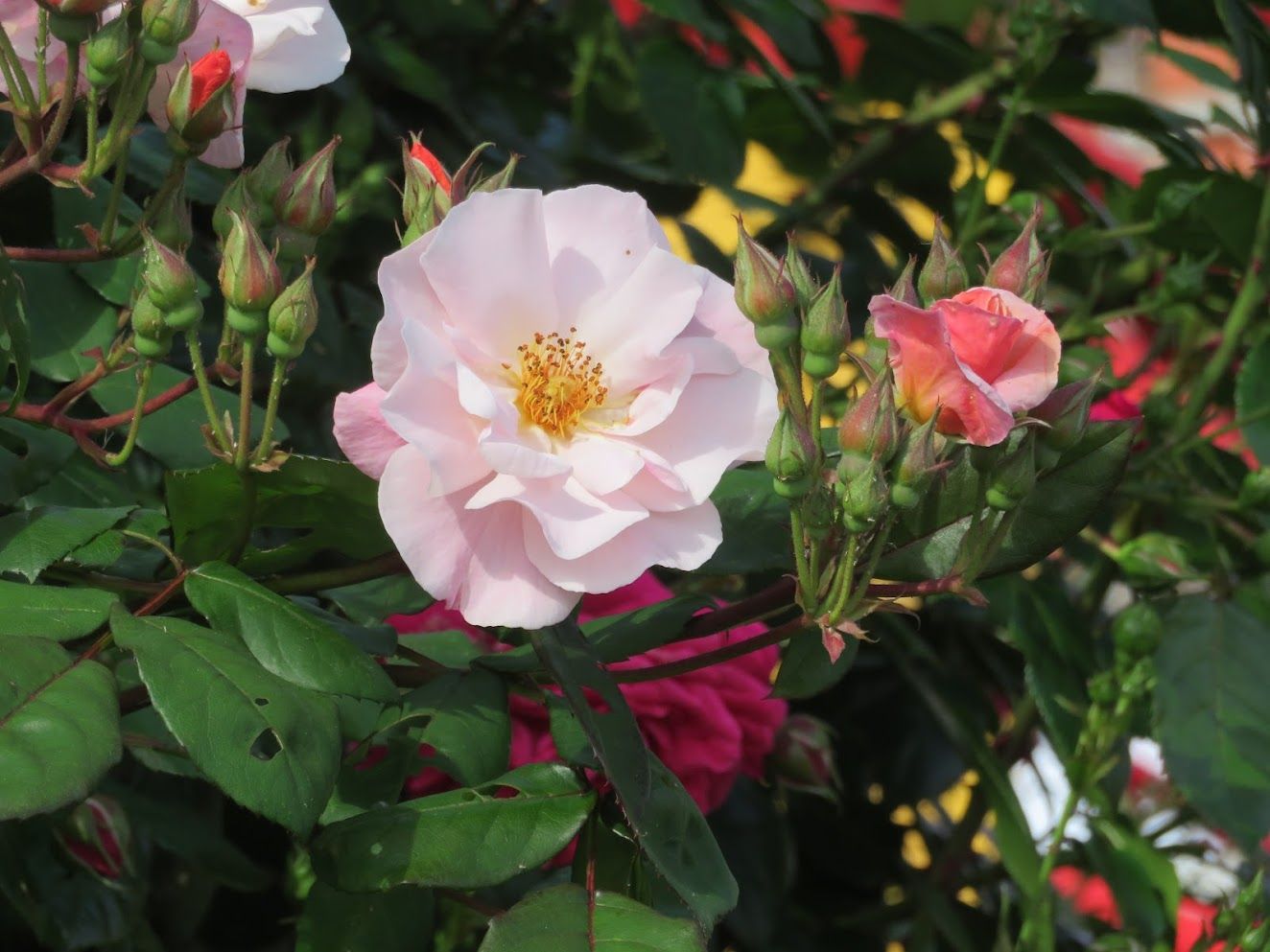
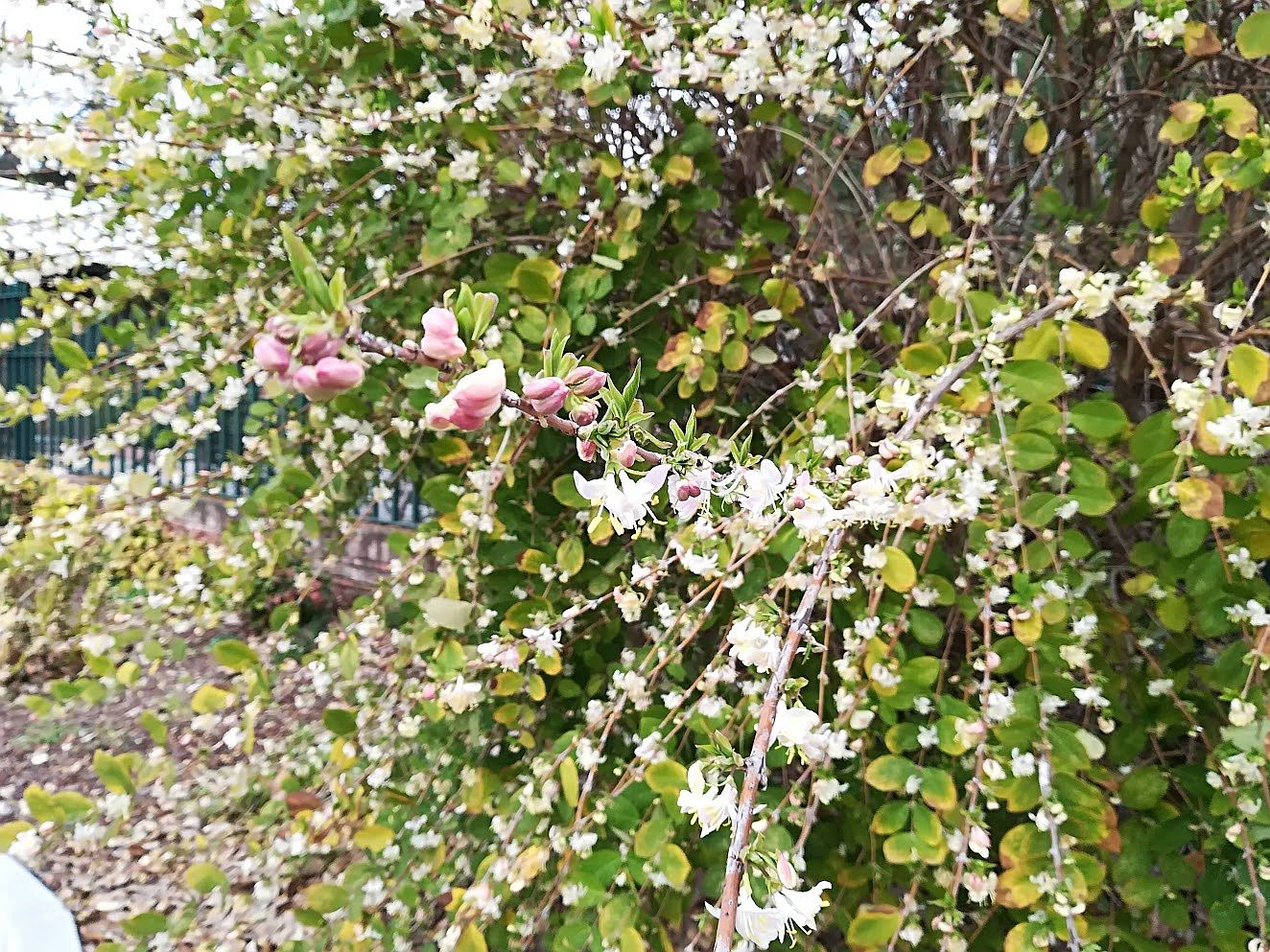
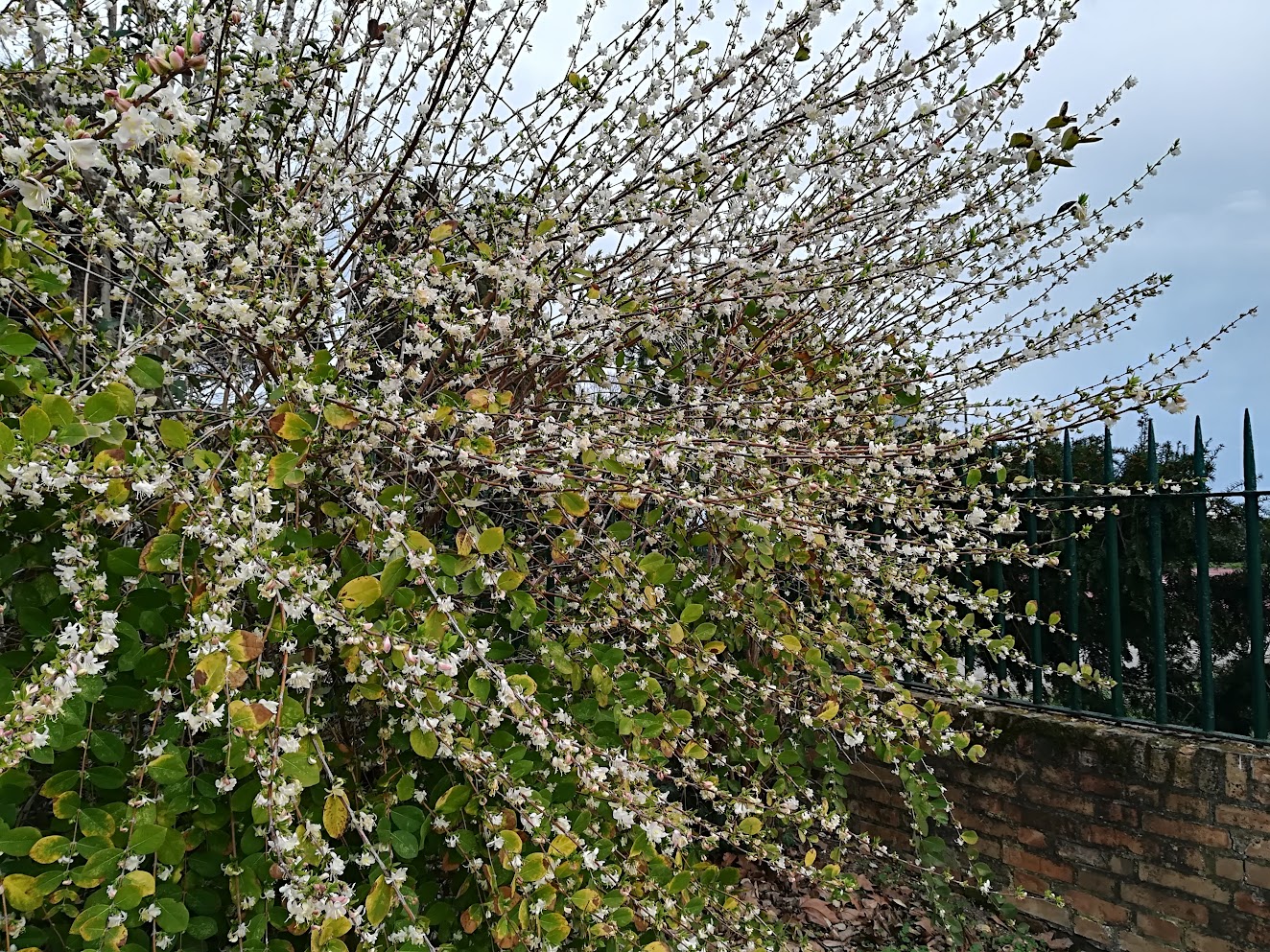
At just the right moment, the artichokes, poppies and tamarisks (here they are not pink, as you see) are all out together. Tamarisks also manage a faint perfume, which is charming.Going to be figs when they grow up. I put this picture in just because I think it’s so cool, but then my rudimentary research reveals that figs have flowers, but are to be found inside the fruit. That seems grotesque but it obviously works so never mind.This luxuriant sweep of shrubbery at the Giardini is Pittosporum tobira. My source says it is “native to eastern Asia and is widely grown as an ornamental plant in Mediterranean climates. The plant produces small, inconspicuous greenish or whitish flowers that grow in clusters in the leaf axils.” Until late May its only virtue is being green. But then the flowers begin to open up and become conspicuous. My source says the flowers are known for their “intense fragrance,” and that is an understatement.Aren’t those little buds lovely? And their first aroma, after the long winter, makes you want to open your arms and invite them to your home and bring them cool drinks and expensive snacks and ask them if they’re happy and insist that they tell you if they need or want anything. That’s the first week or so. But like “The Man Who Came to Dinner,” they settle in, become obnoxiously comfortable, and decide they don’t ever want to leave. As the late spring days pass, they lose their early charm and frankly they don’t care.Time passes, and as the buds mature in the sunshine the fragrance becomes denser, heavier, more aggressive. The perfume that once was so ingratiating begins to evolve into a sort of murmured menace. No longer delightful, the odor verges on nauseating. And that’s not the point at which they fade and die. No, they remain at that stage until they get bored revolting you, and then they stay for a while longer. This extraordinary plant travels the world under various aliases: Australian laurel, Japanese pittosporum, mock orange and Japanese cheesewood. Call it what you will, let it pass by. Turn off the porch light, lower the blinds, pretend you’ve had to leave unexpectedly for Kiribati. Or at least stop using the Giardini vaporetto stop and just walk to wherever you’re going.Roses in the Giardini.Honeysuckle (Lonicera tatarica) at Sant’ Elena.
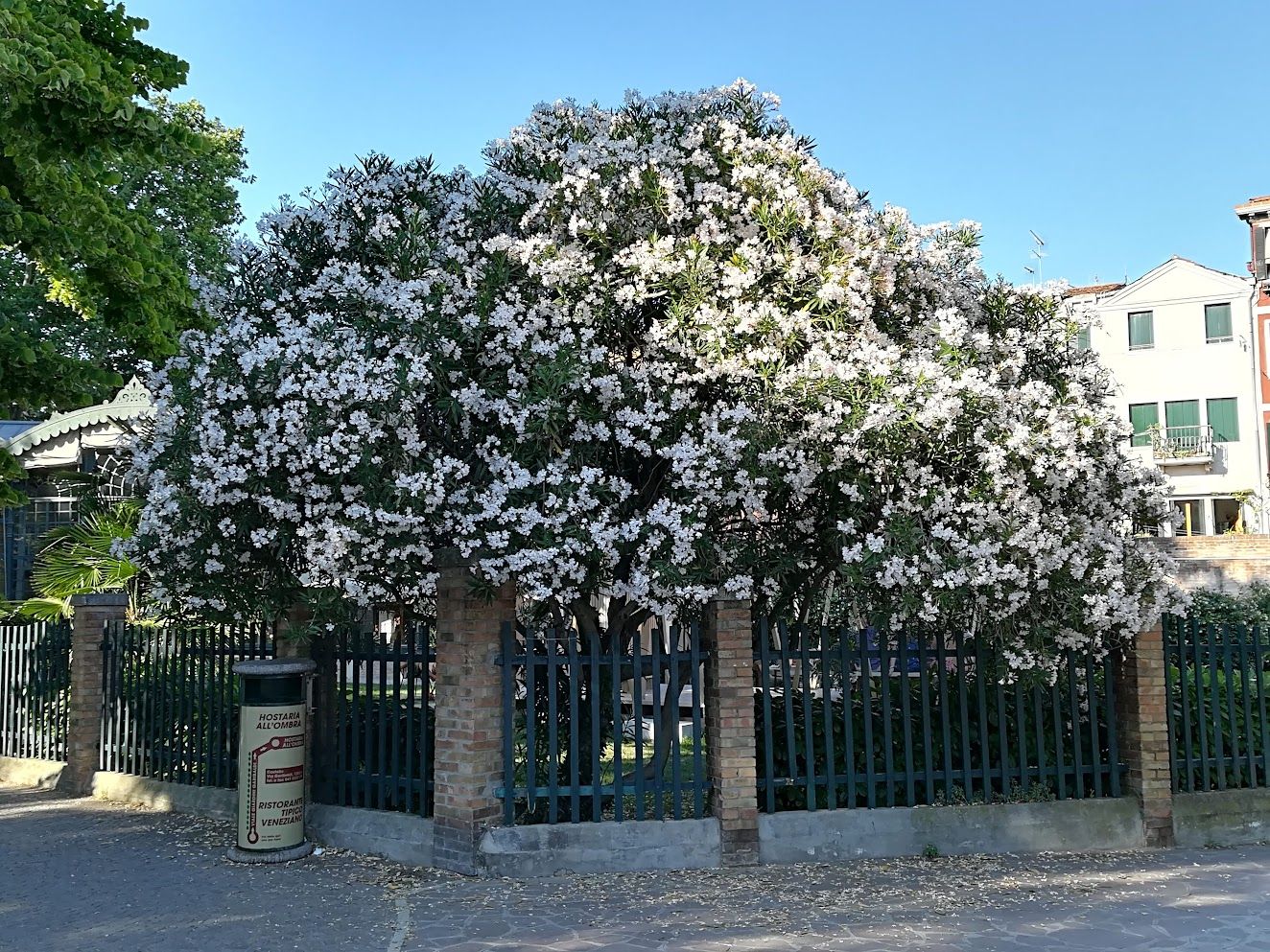
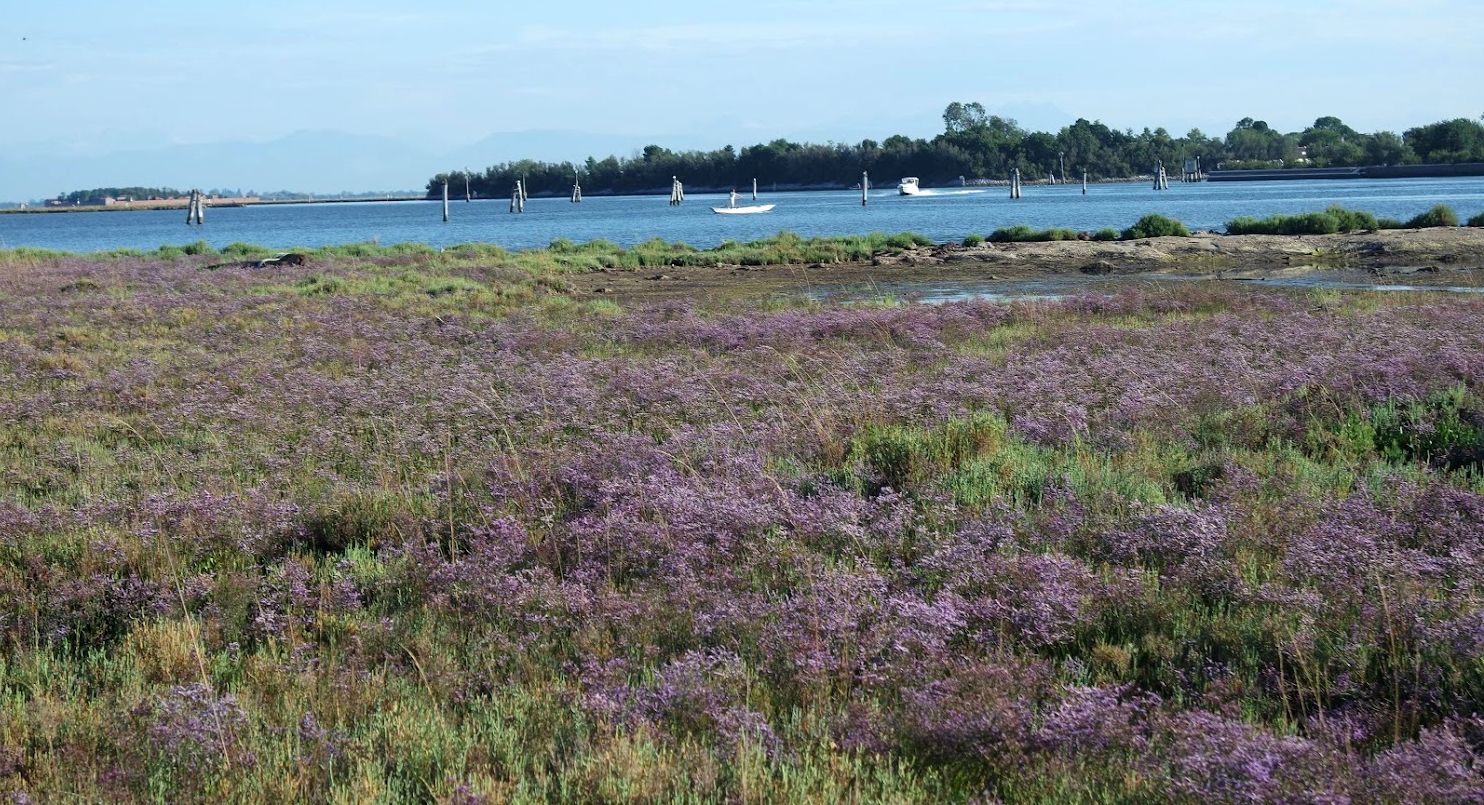
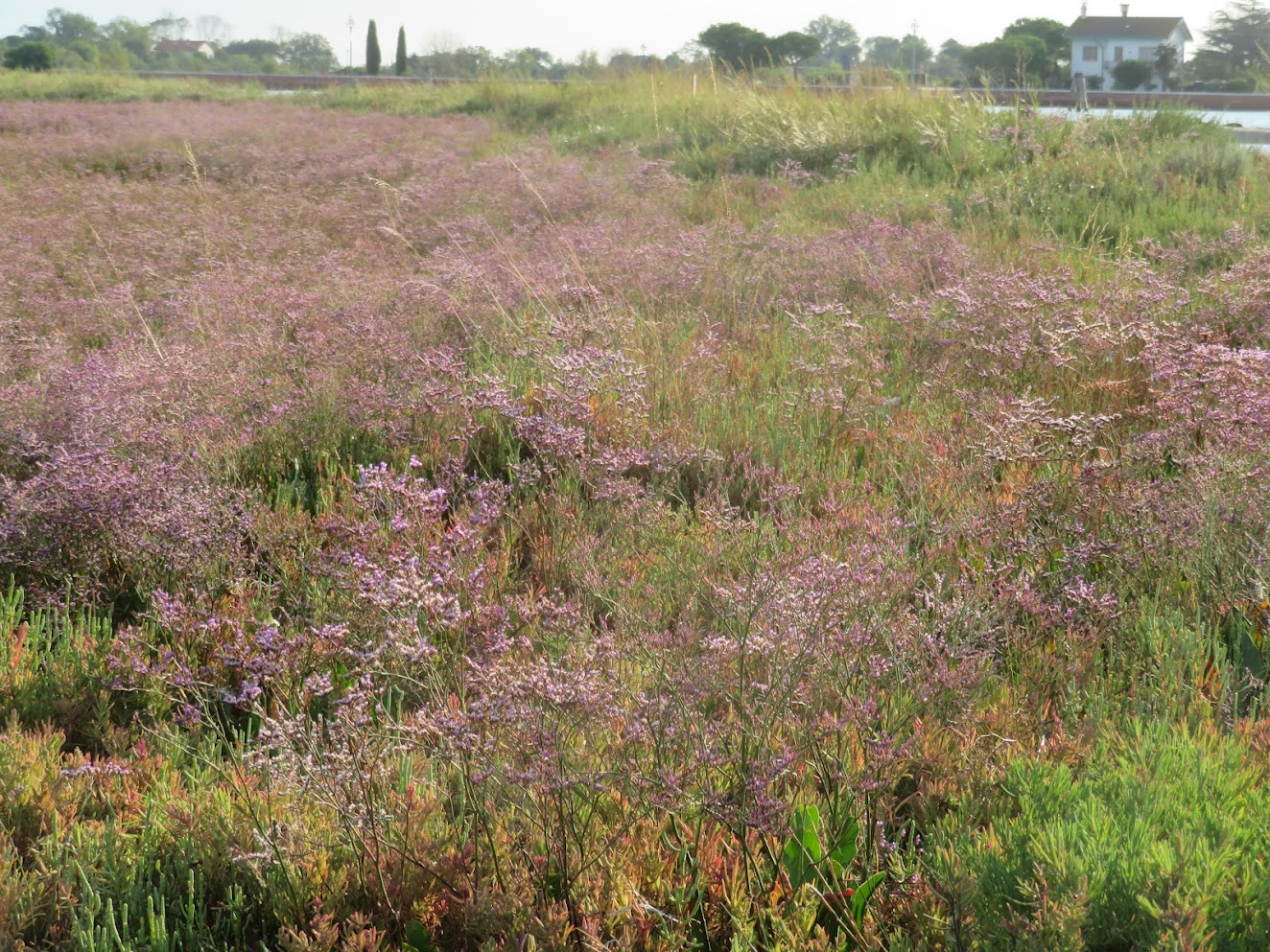
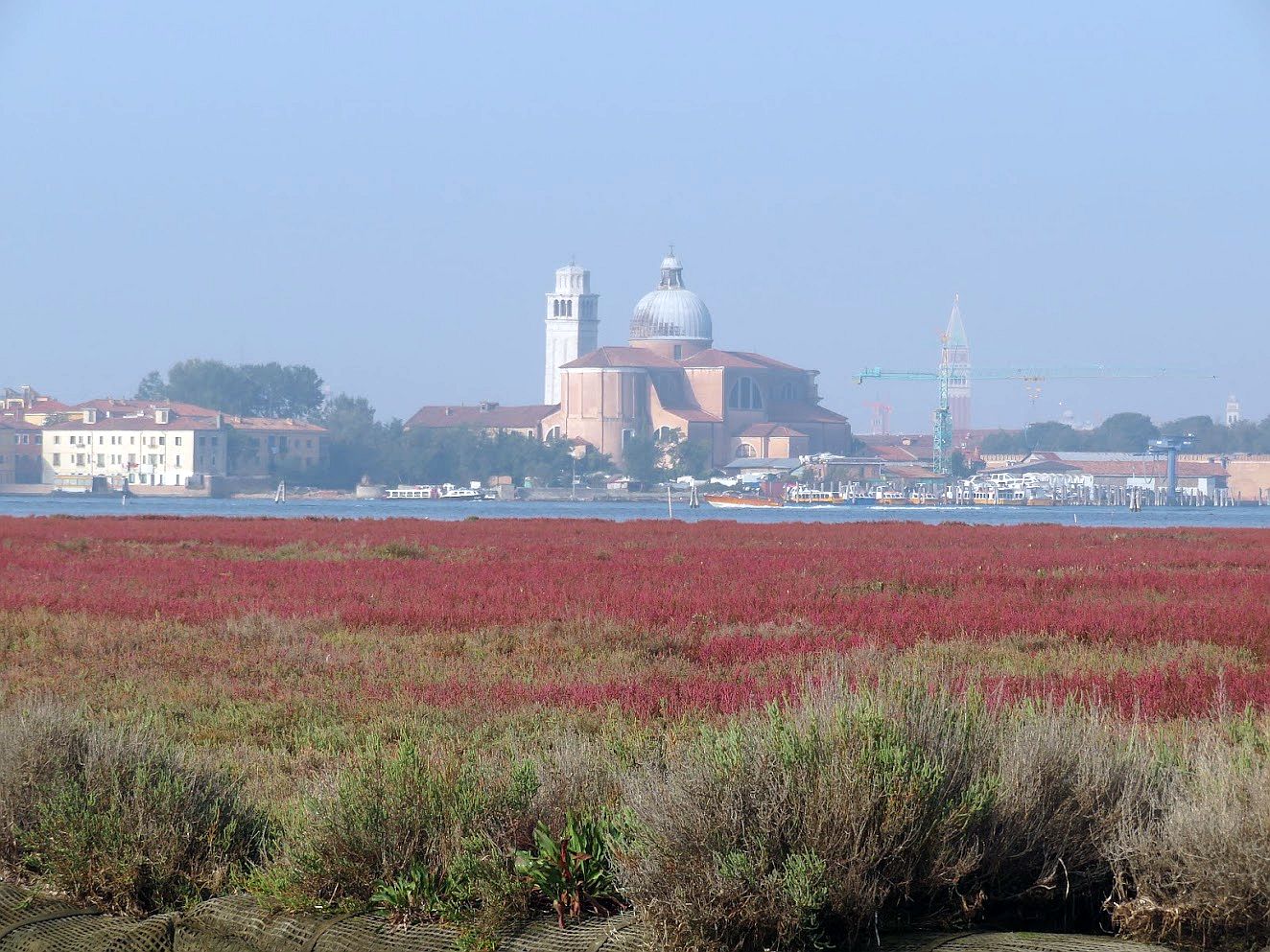
Oleander (Nerium oleander). I hope they leave it alone, it’s perfect just the way it is.Limonium narbonense comes out in mid-August. Various relatives are called sea-lavender, statice, caspia, or marsh-rosemary.
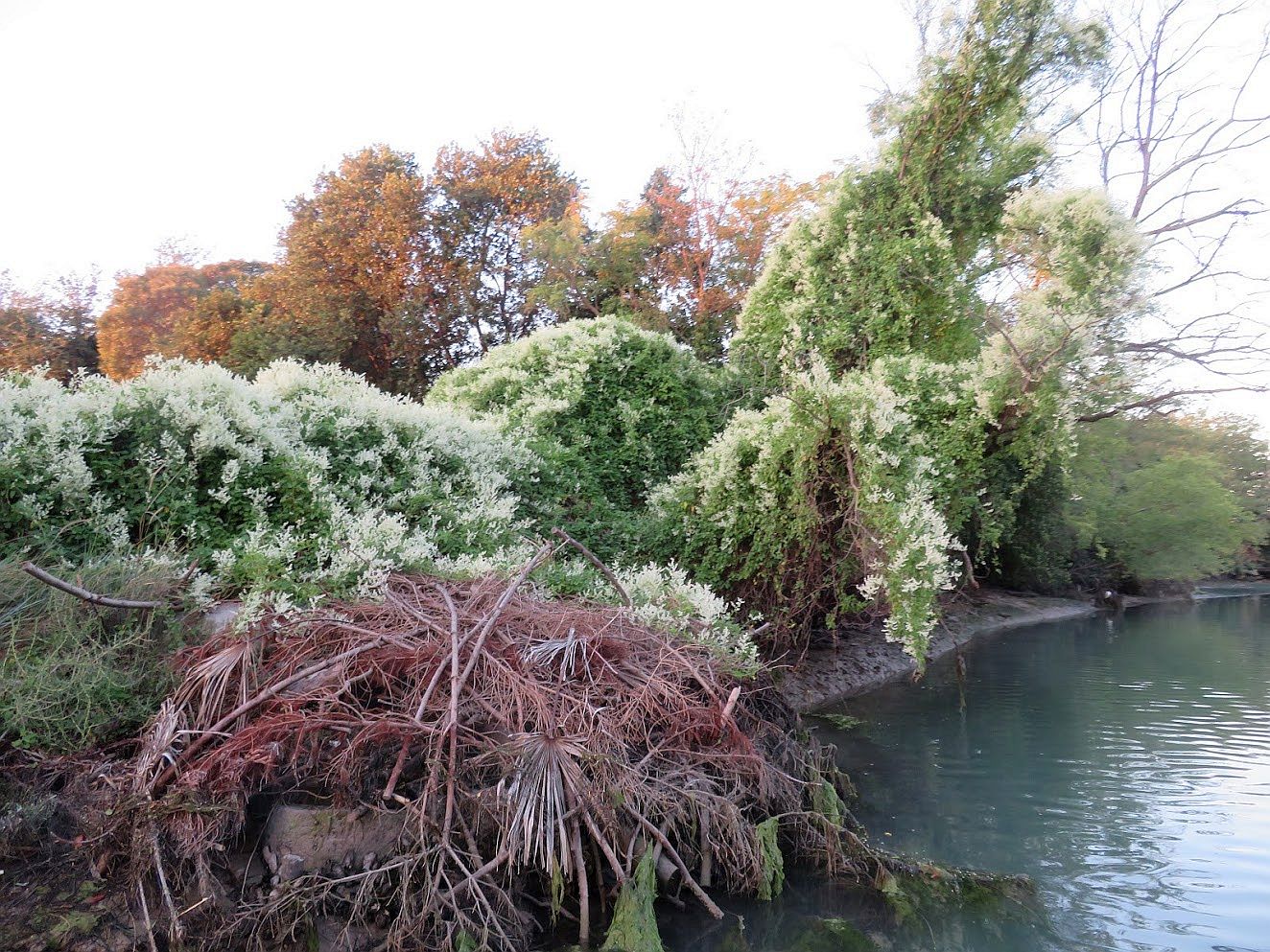
Late summer brings out the Erica; I do not know which of the hundreds of species this one may be. These are generally called “heath” or “heather.” That’s all I can tell you, apart from the fact that they are protected and you really should resist taking any home.This flowering shrub on the Vignole may be fleeceflower, or it may be silver lace vine. I hope some knowledgeable reader will settle this for me. Meanwhile it’s beautiful, and it lasts for weeks. Too bad it’s probably invasive, but we all know people like that. You take the fluffy with the bad.
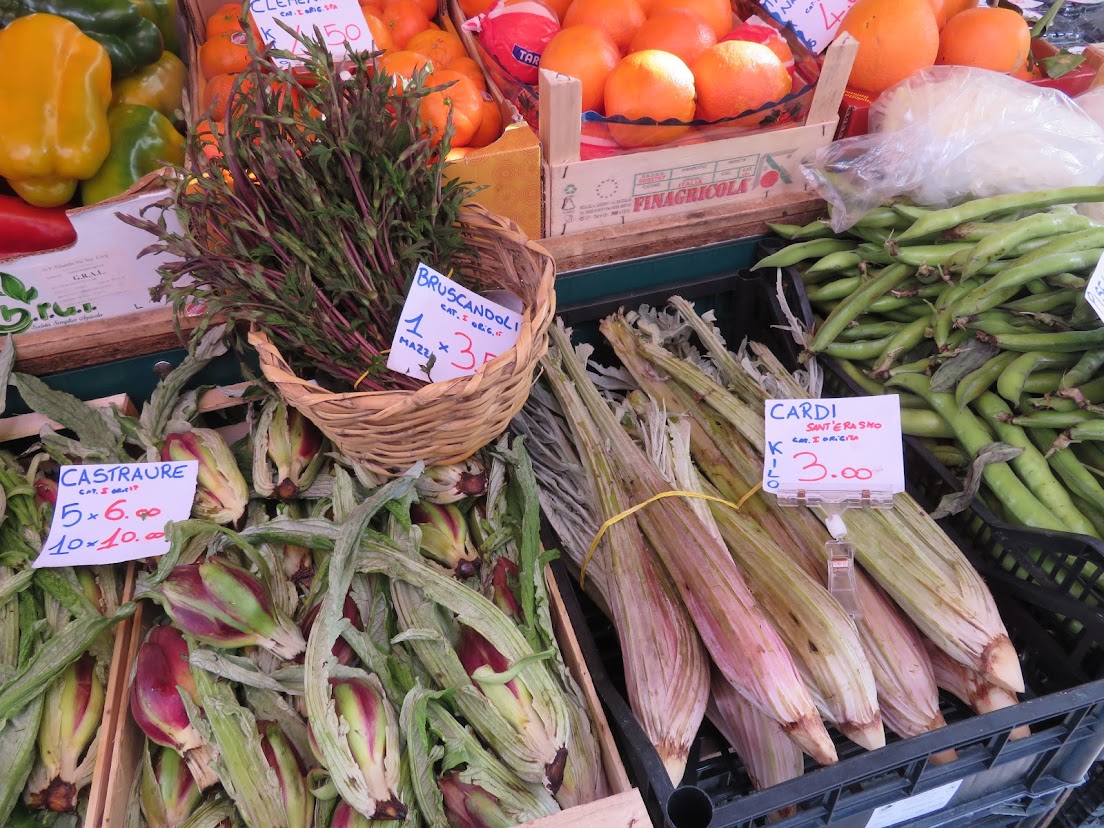
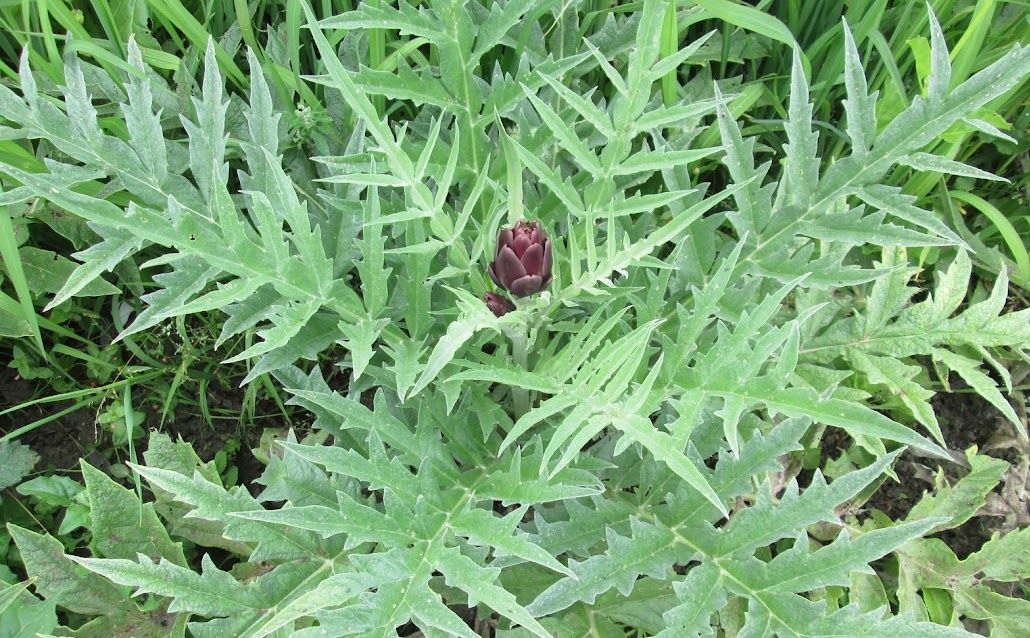
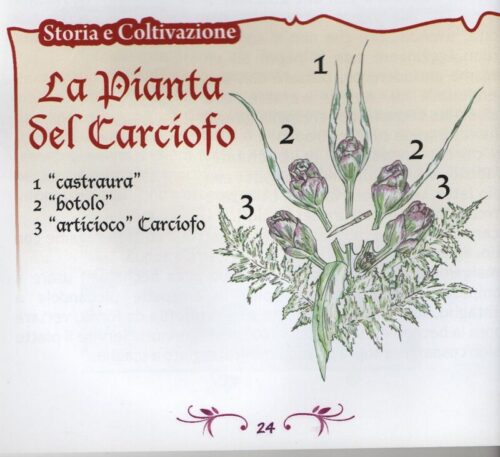
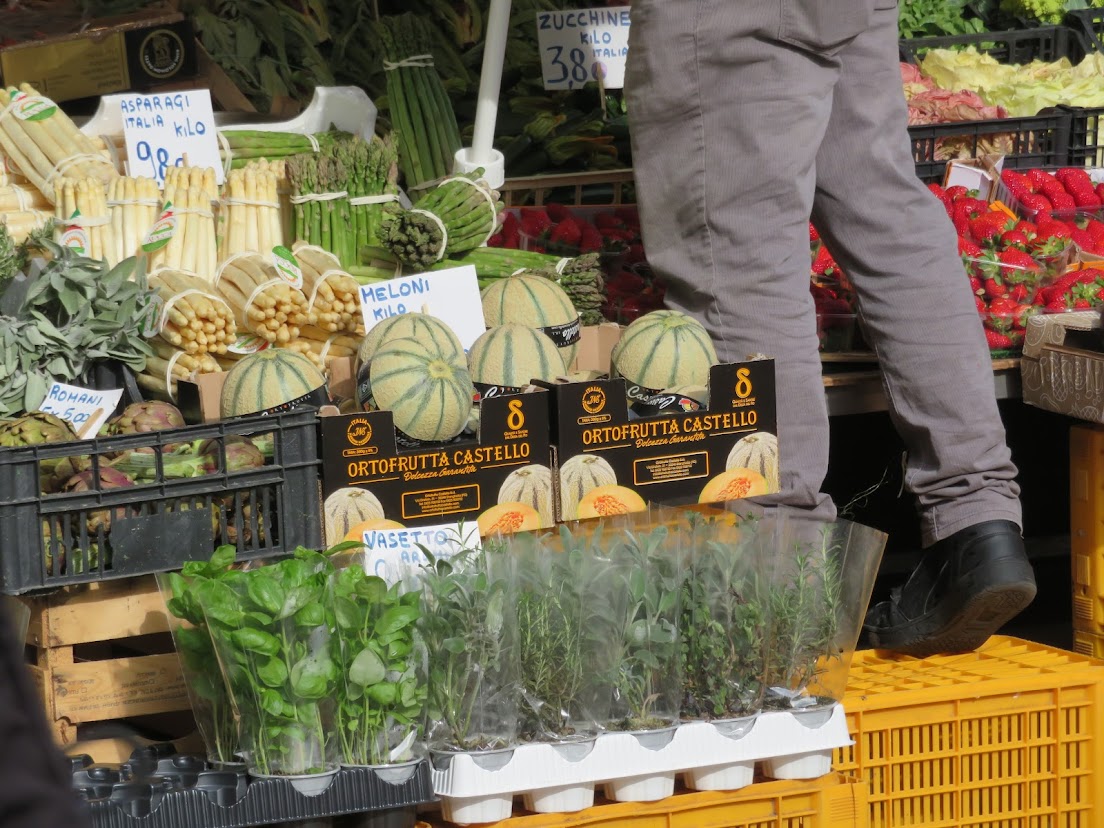
A perfect example of this brief moment between seasons: Bruscandoli (wild hops) in the basket (spring!) and the cardi on the right (a winter relative of the artichoke that soon will be on its way out). Speaking of artichokes, do not be lured by the little sign saying “castraure.” The implication, I think, is that they are the first flower off the extraordinary local plant, the “violet artichoke of Sant’ Erasmo.” If these are castraure (cas-trah-OO-reh) they are most certainly not from Sant’ Erasmo. Supposing these morsels came from Sant’ Erasmo (which they haven’t), they would be botoi (BOH-toh-ee), which are good, but are the second-growing edible flower on the artichoke plant. True castraure of the violet artichoke are tiny, much smaller than these robust characters. Also: It’s far too early for artichokes here anyway — what is on sale comes from hothouses elsewhere. Some vendors label them correctly as botoi, but people have somehow become obsessed by castraure. Eat whatever they’re called these days, by all means, but imagining a true castraura in Venice at the end of March is to imagine the pot of gold at the end of the rainbow.This is a castraura. When it is cut, the plant will produce a number of botoi, the somewhat larger artichokes on sale in the market in the photo above. Here you can just barely make out the baby botolo beneath the castraura.Simple design to show what the artichoke plant brings forth (taken from a little book written by a farmer on Sant’ Erasmo). “Botoi” is the plural of “botolo.” To look at the abundance of “castraure” on sale during the season, there would have to be fields here the size of Nebraska. Or one Nebraska and two Leichtensteins.If all goes well, the “violet artichoke of Sant’ Erasmo” begins to appear in May. Grab them while you can. Watch out for the stabby pointy bit at the tip of each leaf.Another grinding of culinary gears: Asparagus and melons. The local asparagus has just begun to arrive, but the melons are coming from somewhere probably not in Italy. Their moment in northern Italy, and Venice, is July/August. Note that many labels say “Italia,” but don’t name any more particular location. My main question is not where it comes from, but why you would want to eat a melon in April? Not being sarcastic. Your winter mouth wants pears and oranges. Don’t confuse it.
People sometimes ask us where you can eat well and not pay a fortune. To which Lino always replies: “Your house.”
It’s not as much of a pleasantry as it might seem. Unhappily, I am always struck by how routine, predictable, unimaginative, so many of the restaurant offerings are here. Also expensive, especially when you’re looking at the price/value index. Hence Lino’s risposte.
I am sorry that this situation persists, because anyone who has access to a kitchen and the Rialto market can eat like freaking kings. There are so many delectable, unsung, seasonal products on sale that although I realize you do not intend to spend your priceless Venetian vacation toiling in the kitchen, you really ought to be able to try some of these things somehow. And your kitchen seems to be the only option.
Just now is a wonderfully delicate moment in the vegetable realm. We are balanced perfectly between the old winter-long standbys (looking at you, cauliflower), and the glittering spring offerings. This moment of culinary equipoise is even lovelier because, like spring flowers, you know you don’t have much time to enjoy them. I’m forced to say that seasonal food is being elbowed to one side by an ever-increasing number of out-of-season comestibles, which I ignore. Cherries in January? Nope. Melons in March? WHY?
Before we leave winter behind, here are a few delights that are not cauliflower:
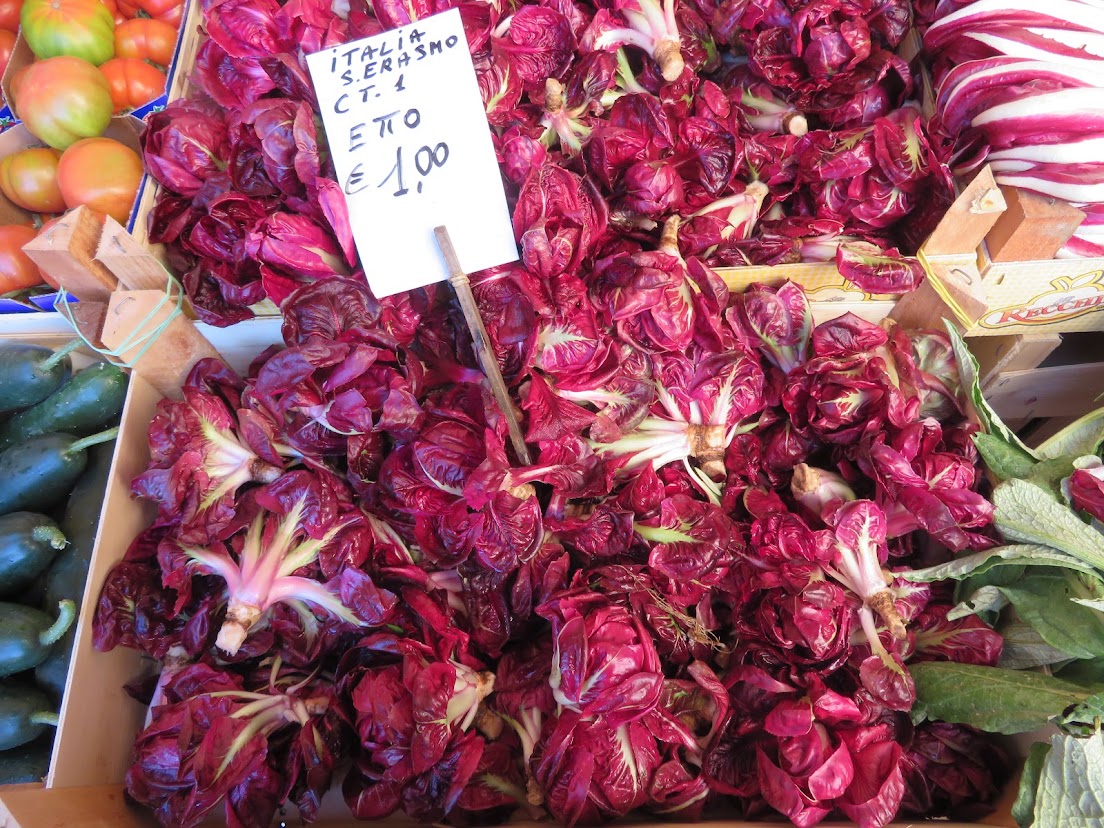
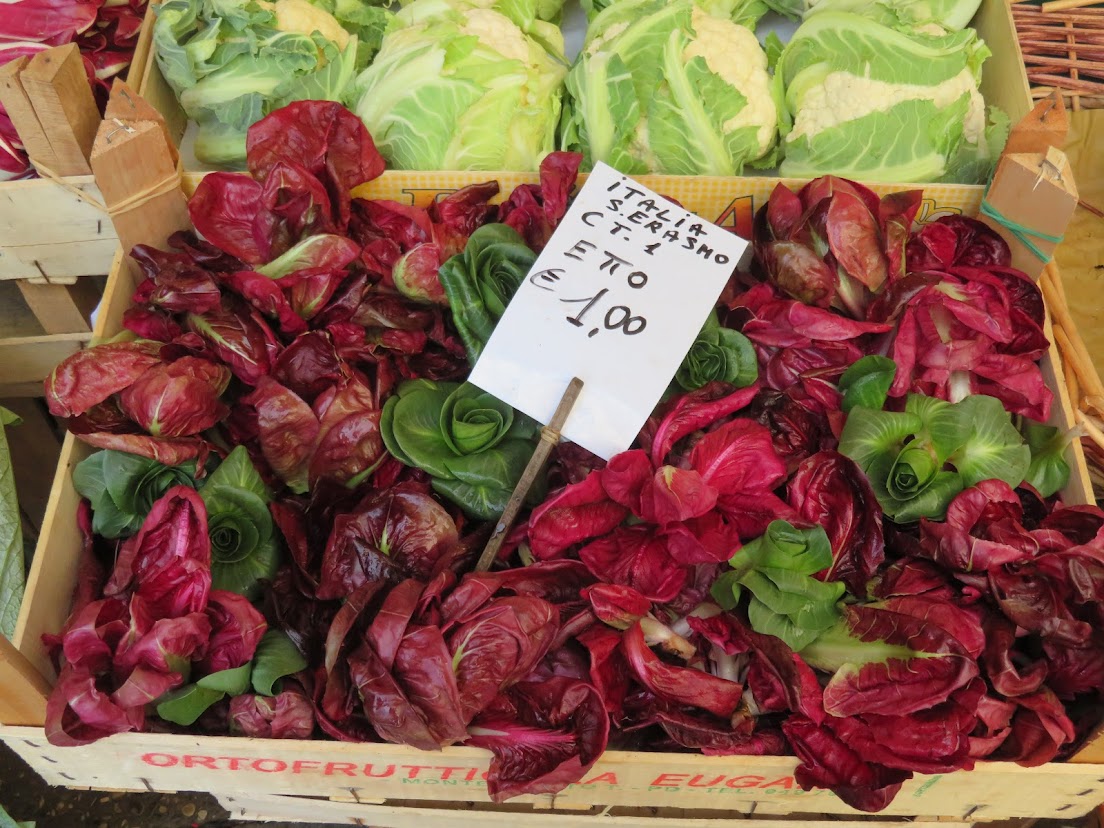
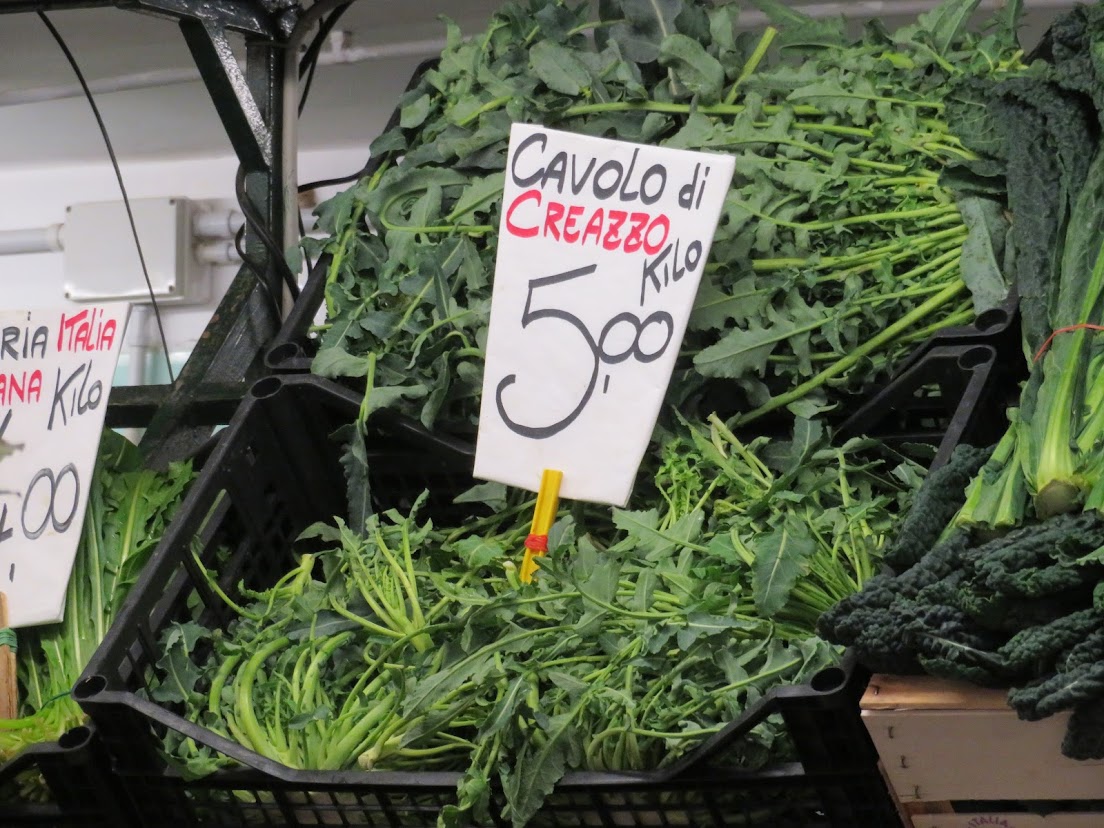
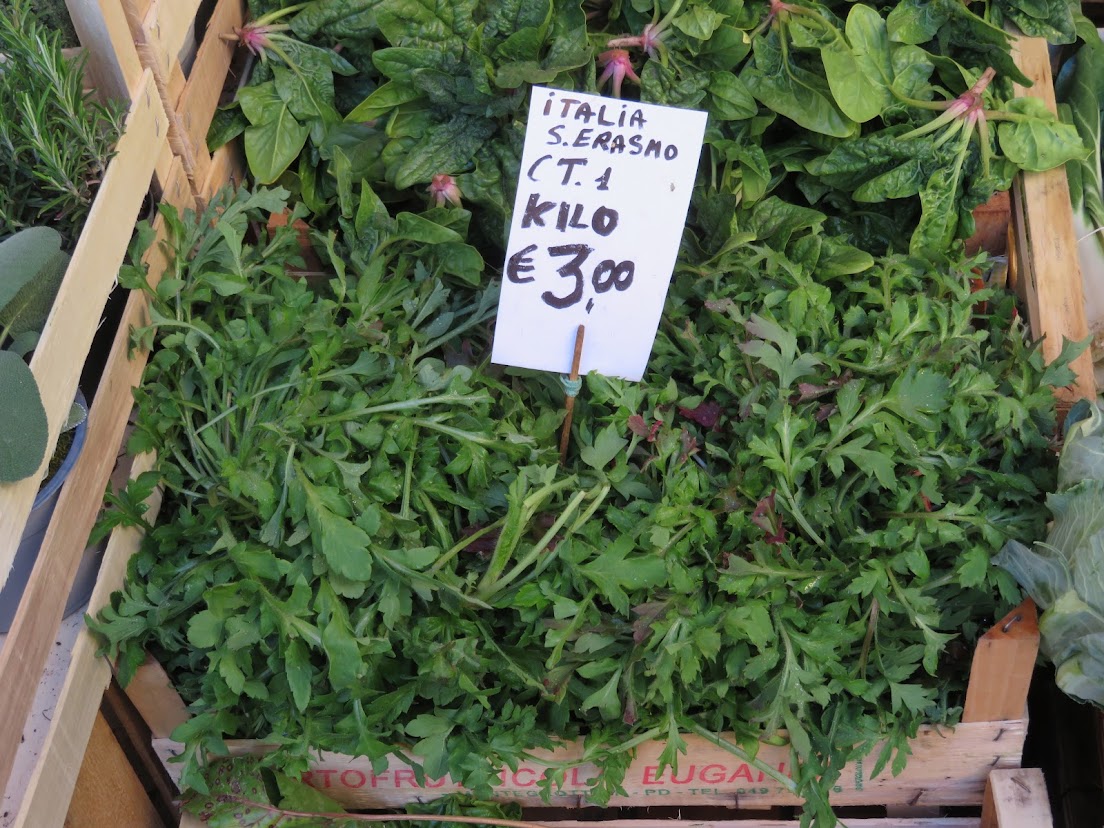
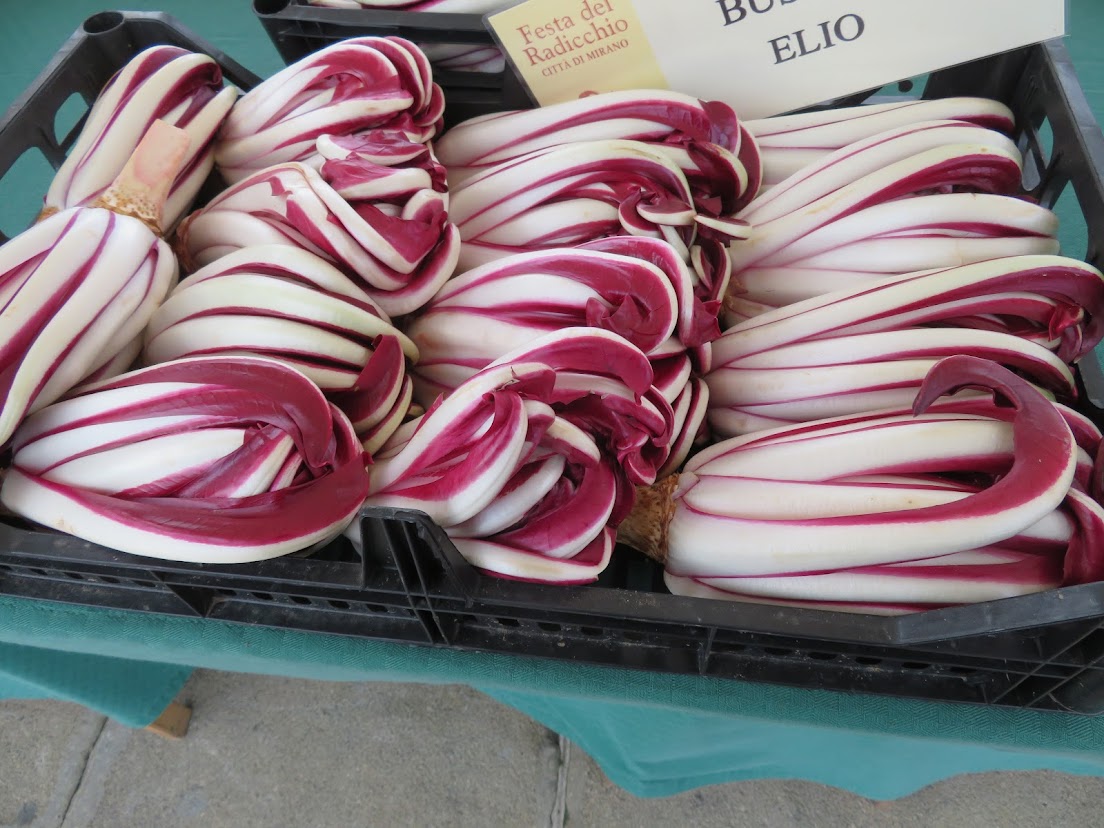
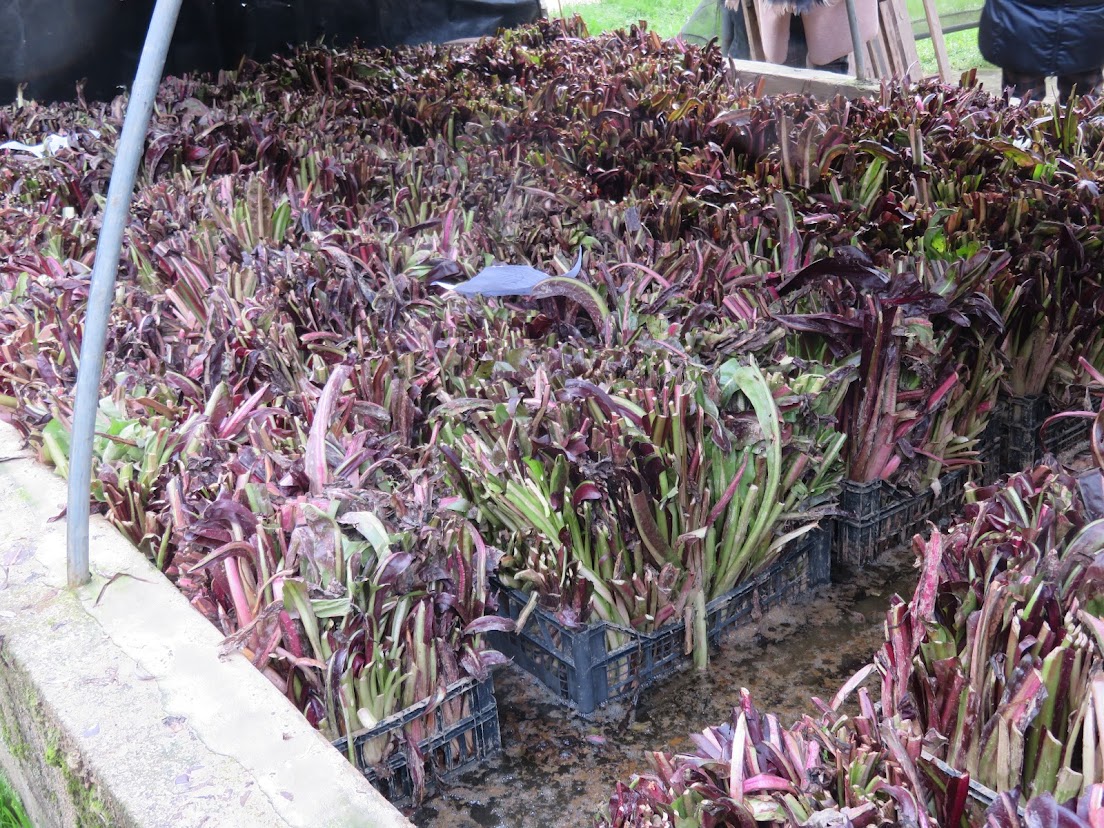
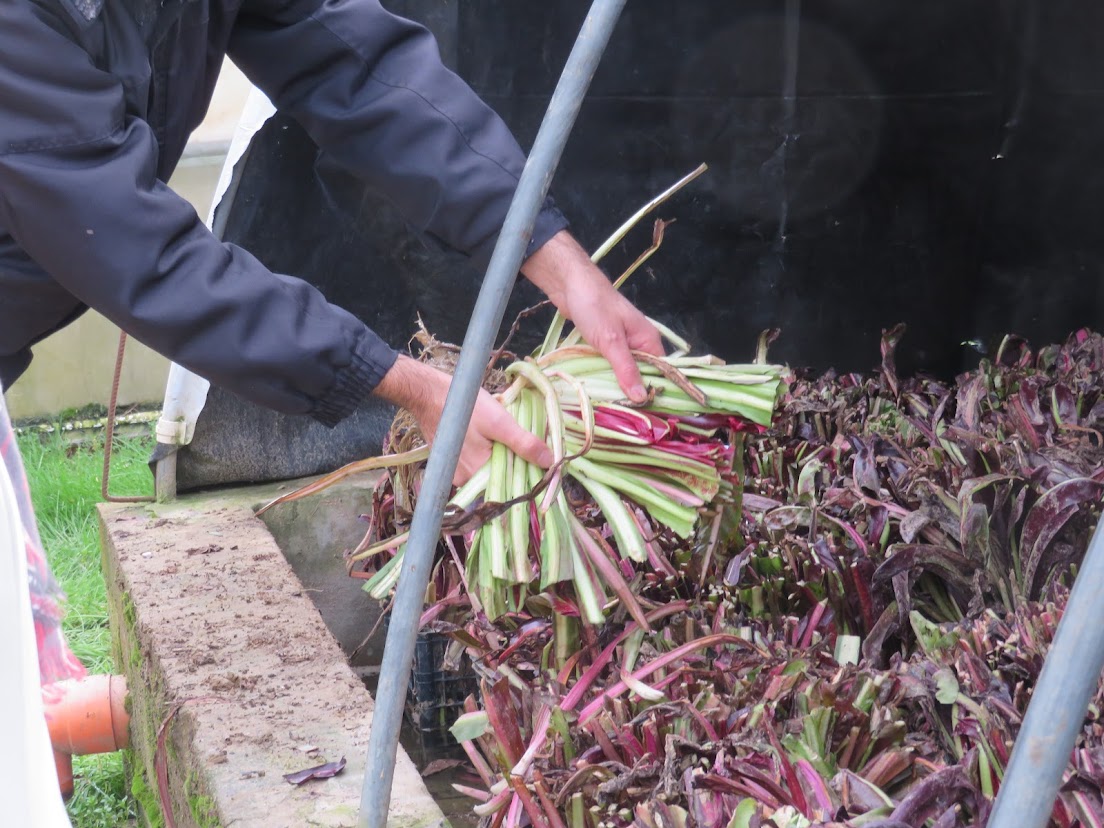
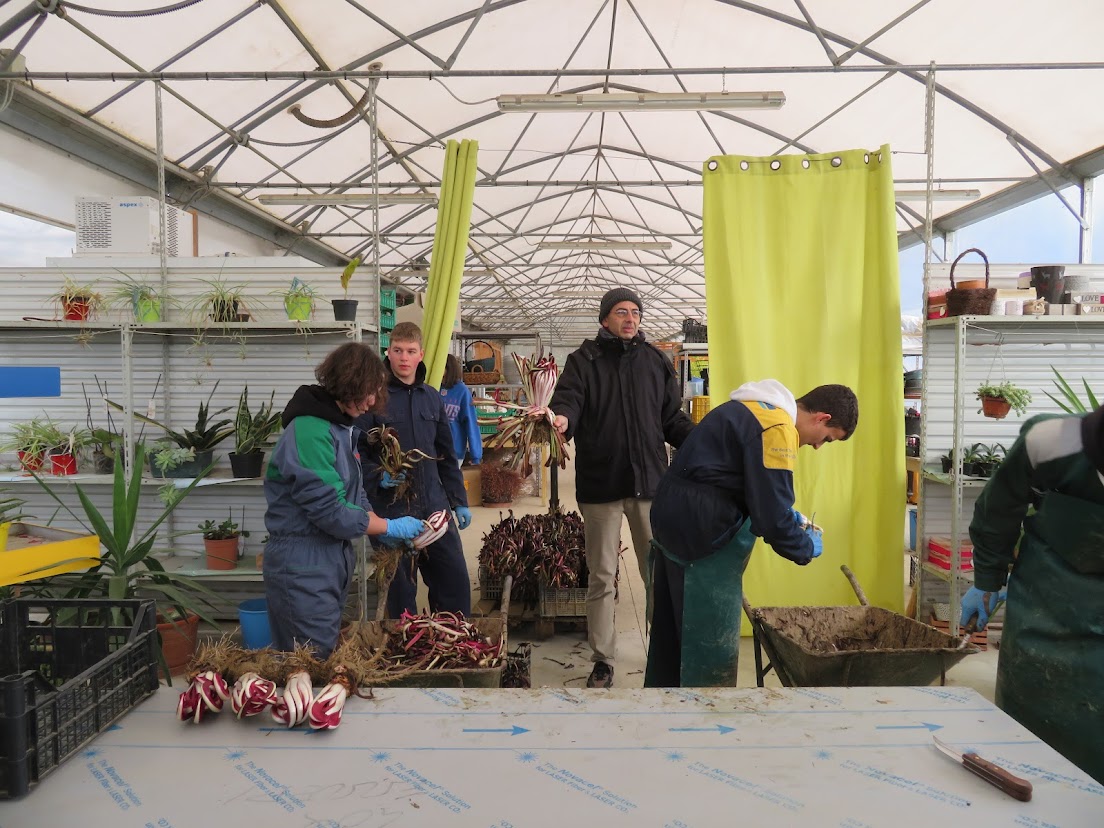
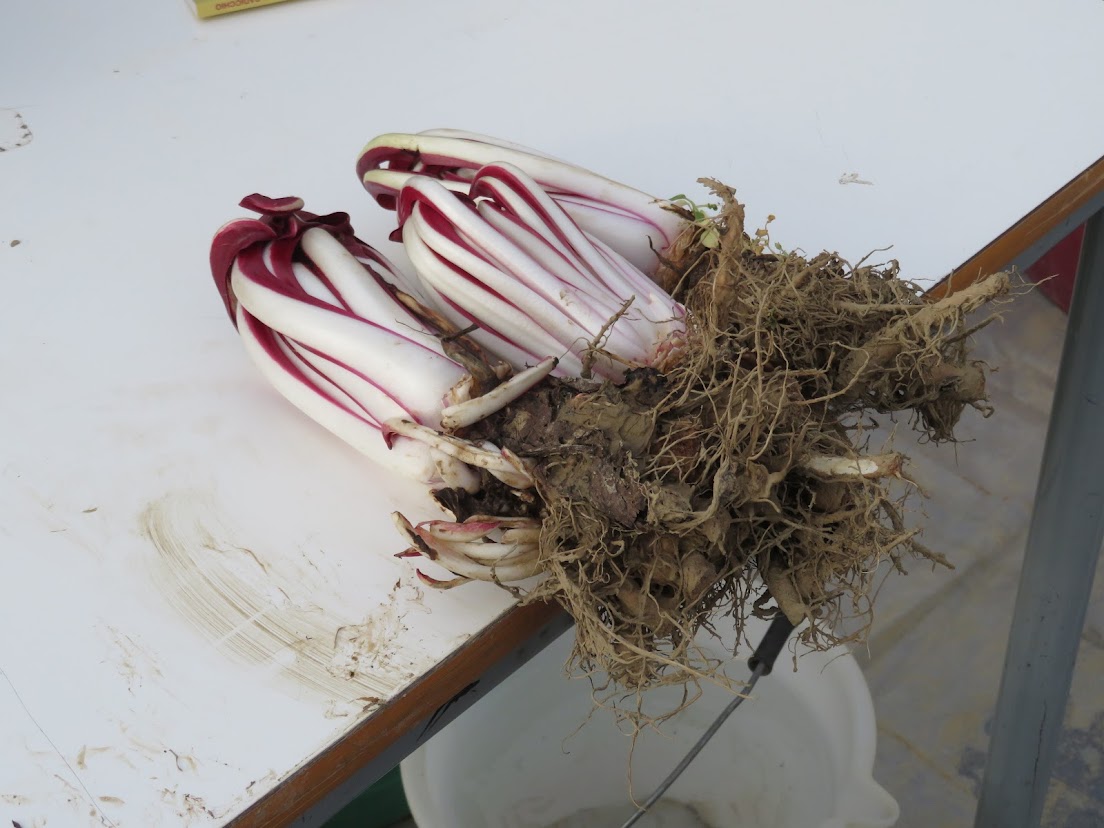
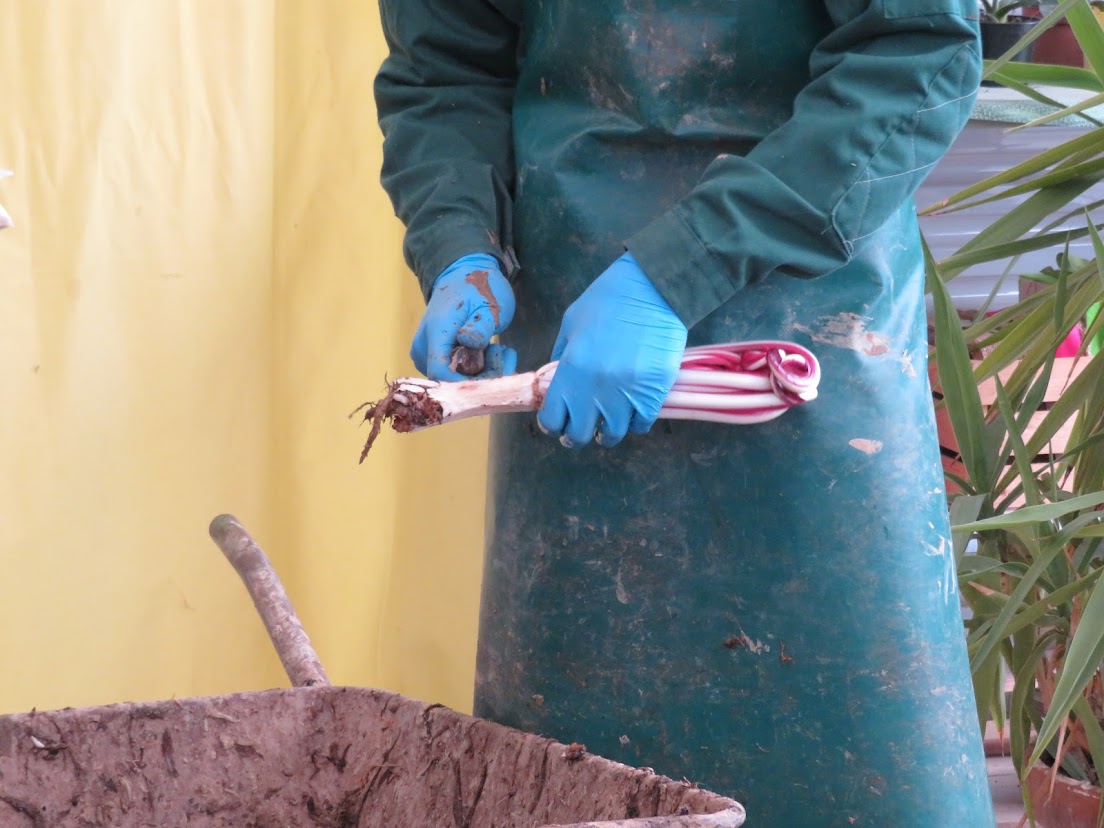
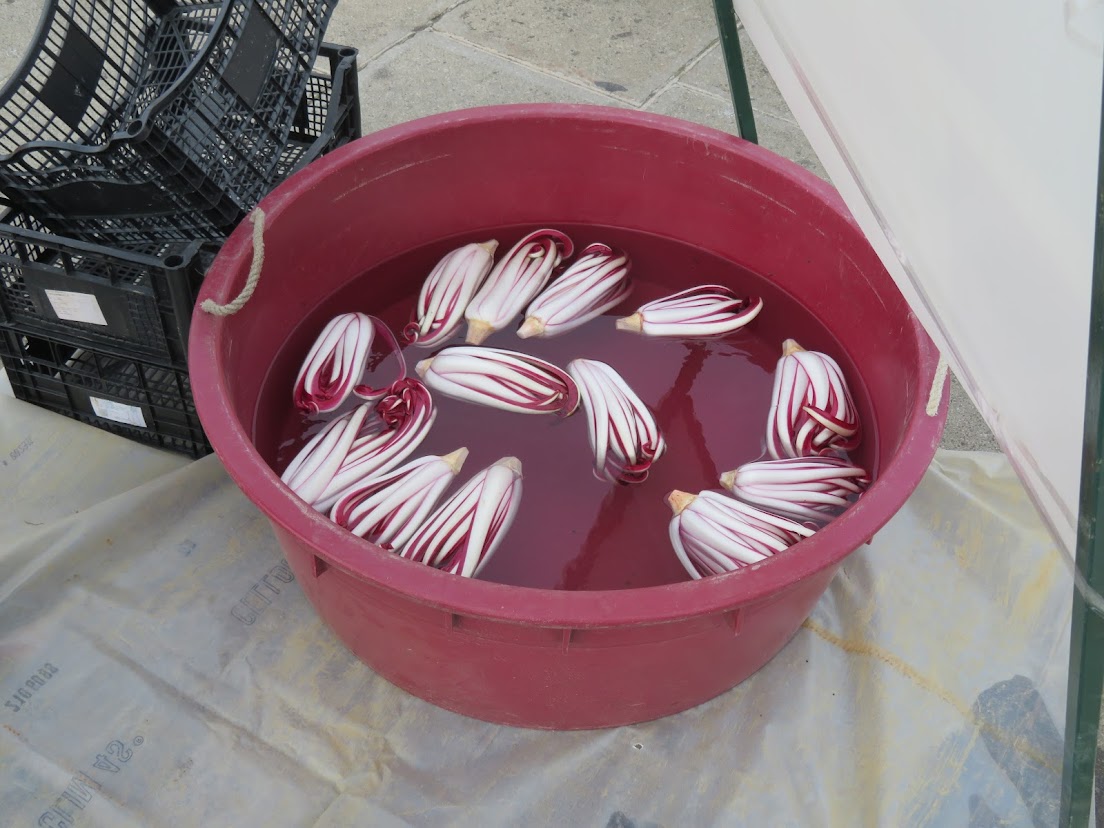
If you like slightly bitter radicchio, reach for these little blossoms. They’re generally called “field radicchio,” but these are cultivated, not wild. In any case they are wonderful.The little green tufts are definitely cultivated, and are also sold independently of their red cousins. They are a special item that are famously grown in the fields near Roncade (a few miles from Treviso). They are known as the ‘verdon di Roncade” (the big green from Roncade). They have a sort of generic lettuce-y flavor, and the leaves are slightly thick. Not so much crunchy as chewy. Really good if you’ve had enough cabbage by now.This shows up briefly in February. The “cavolo” is not literally a cabbage; its more correct name is “broccolo fiolaro” because you eat the tender parts of the plant they call “fioi” (children) in Venetian. Creazzo is in the province of Vicenza. Nothing against spinach, but this is better. Toothier.This mass of greenery appears briefly now. They didn’t even bother to write its name — “rosolina” — perhaps because its stay is so brief. I was told that this is the poppy plant before it flowers. My source said that when the blooms begin to appear May-ish), the leaves become too bitter to eat. Meanwhile, they have a charming little nutty undertone. Note to purists: There is a plant known as rosolina, defined as an “evergreen shrub with white flowers.” That’s somebody else’s rosolina. I could have devoted quite a lot of time to researching this, but have stopped for now.I suppose anyone who has been to Venice in the winter knows the “late” (tardivo) radicchio from Treviso. Delicately bitter, it makes a divine risotto (among other things). In January we went to the Festival of Radicchio in Mirano, near Venice, where the students at the agricultural school “8 Marzo Konrad Lorenz” showed us each step of the production process. I thought it just came out of the ground like this. So very wrong….The plant grows in the field till harvest time, then is brought to the school to be prepared for sale. The water has to be changed several times while the boxes are waiting for the next step. Yes, it looks like this, a mass of botanical clumps run amok. But hidden inside is the radicchio we want.You see the delicate white and red leaves inside the other leaves.The crates are brought indoors where the students demonstrated essentially how you butcher them.At this point they still look pretty grotty.Just slice all that rootage away and trim the stem.A good rinse and they’re just about ready to be boxed and sent to your trusty vegetable vendor. Whatever the price may be, I’d say it’s justifiable.
There are always a few pushy items that want to be considered spring treats, but have anticipated their cue by several acts. They aren’t local, obviously.
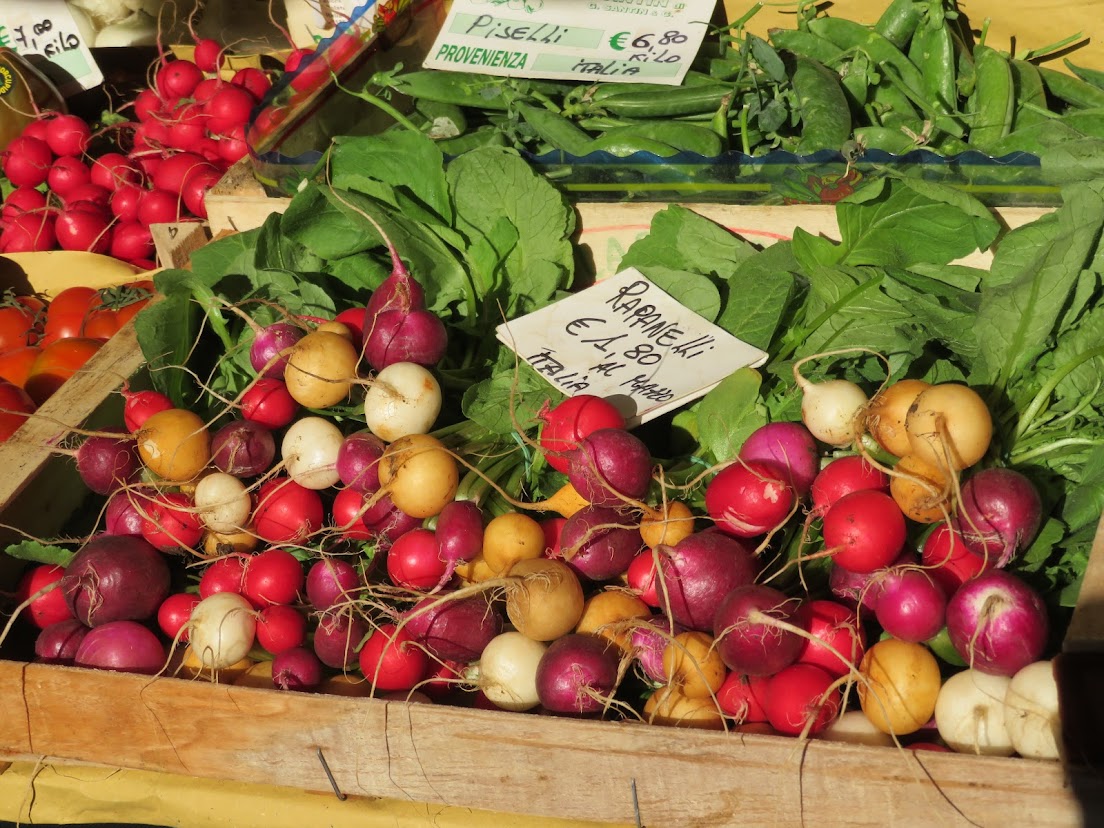
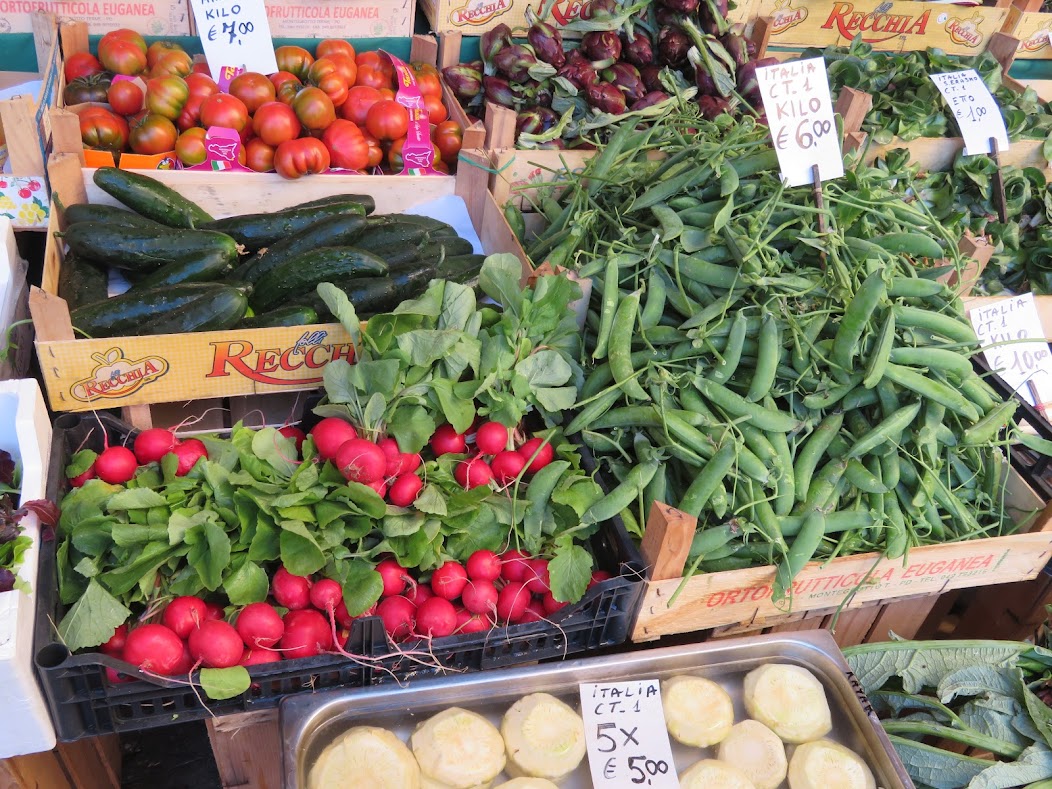
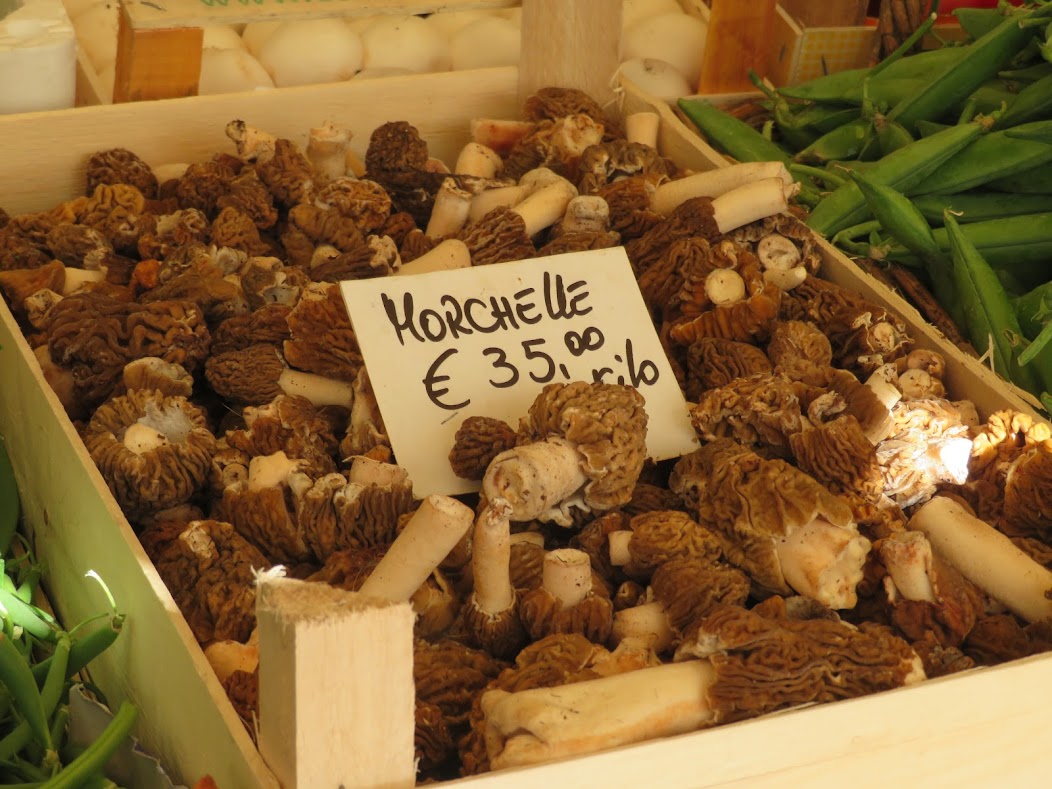
I have no idea where these radishes came from, but while they are trying to impress me with their multicolored marvelousness, they’re still here too early.Even the normal red radishes are upstarts, as are the peas in the crate next to them. We’ll be seeing local peas in May, when we will gorge on that trusty Venetian standby, “risi e bisi” (rice and peas).This is the first time I have ever seen morel mushrooms here in Venice. They are known as a spring mushroom, I discover, unlike the others that come out in the fall. They can be cultivated, but I can’t say that’s the case here. A minor mystery which I will not pursue much.
And the dependable heralds of spring:
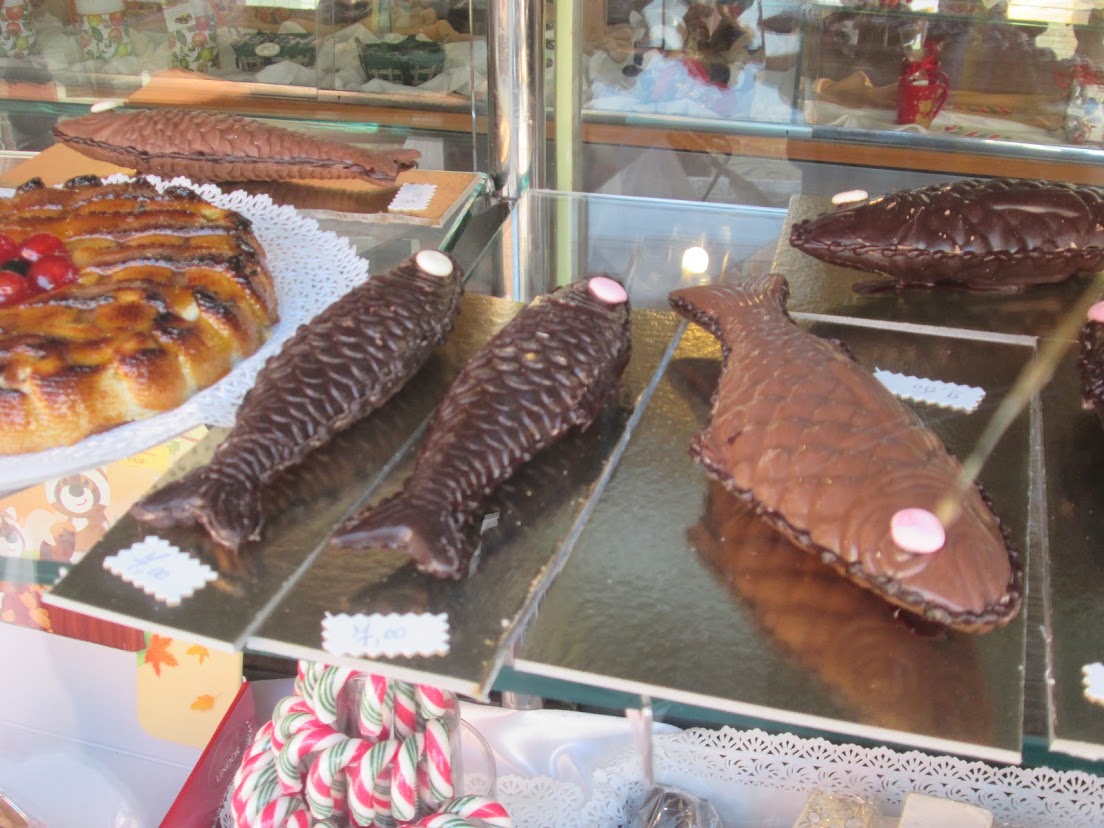
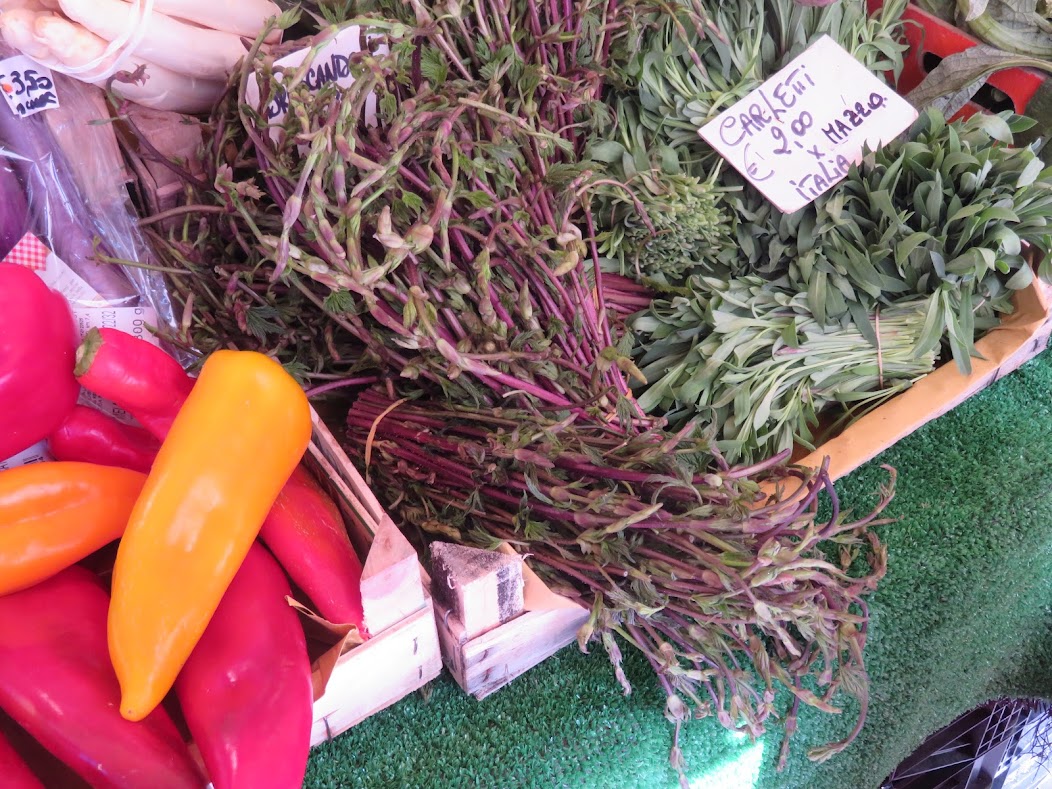
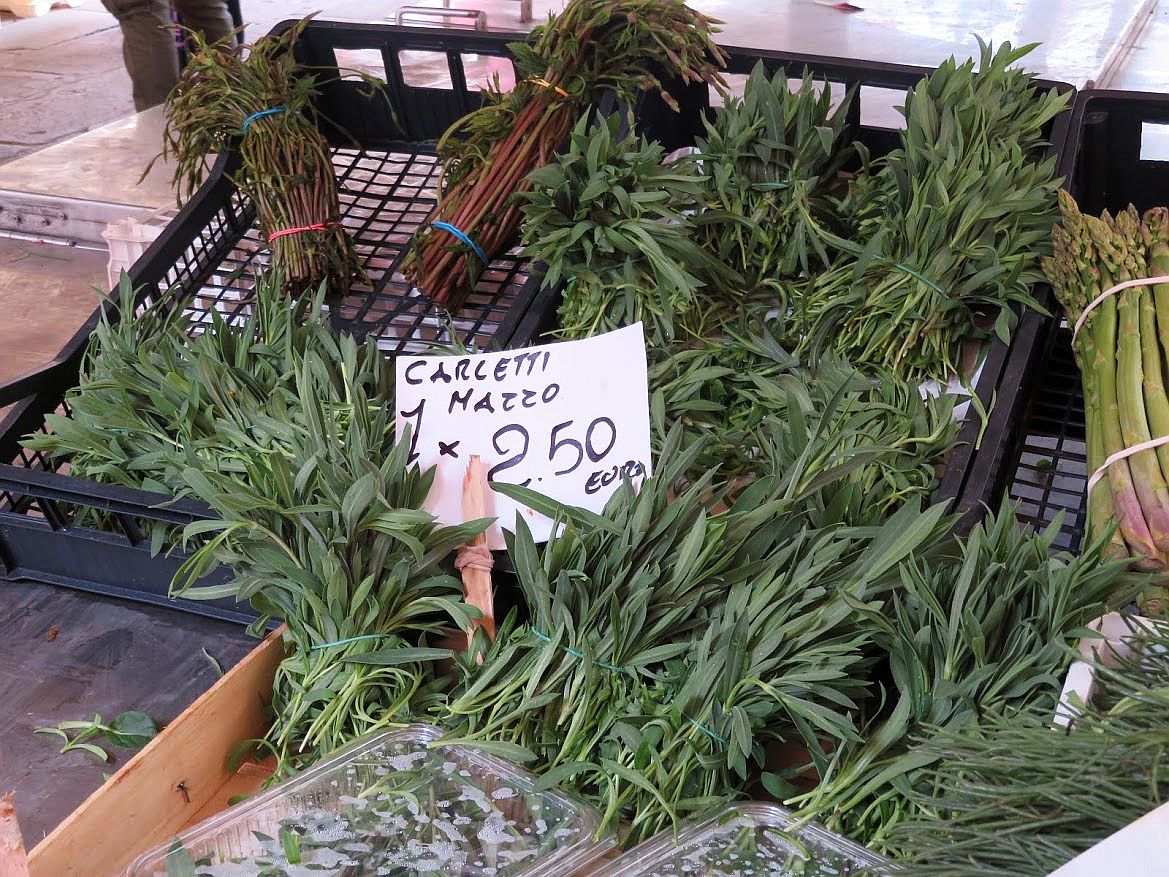
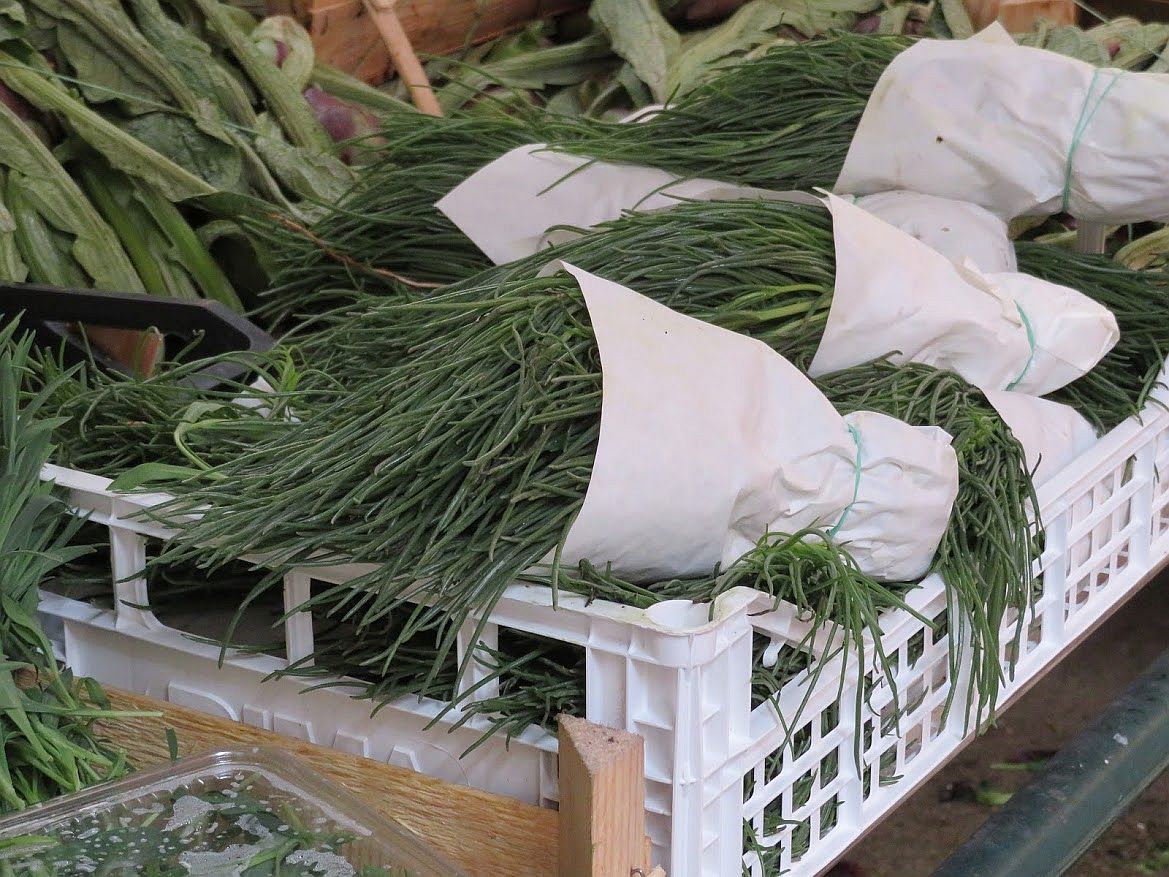
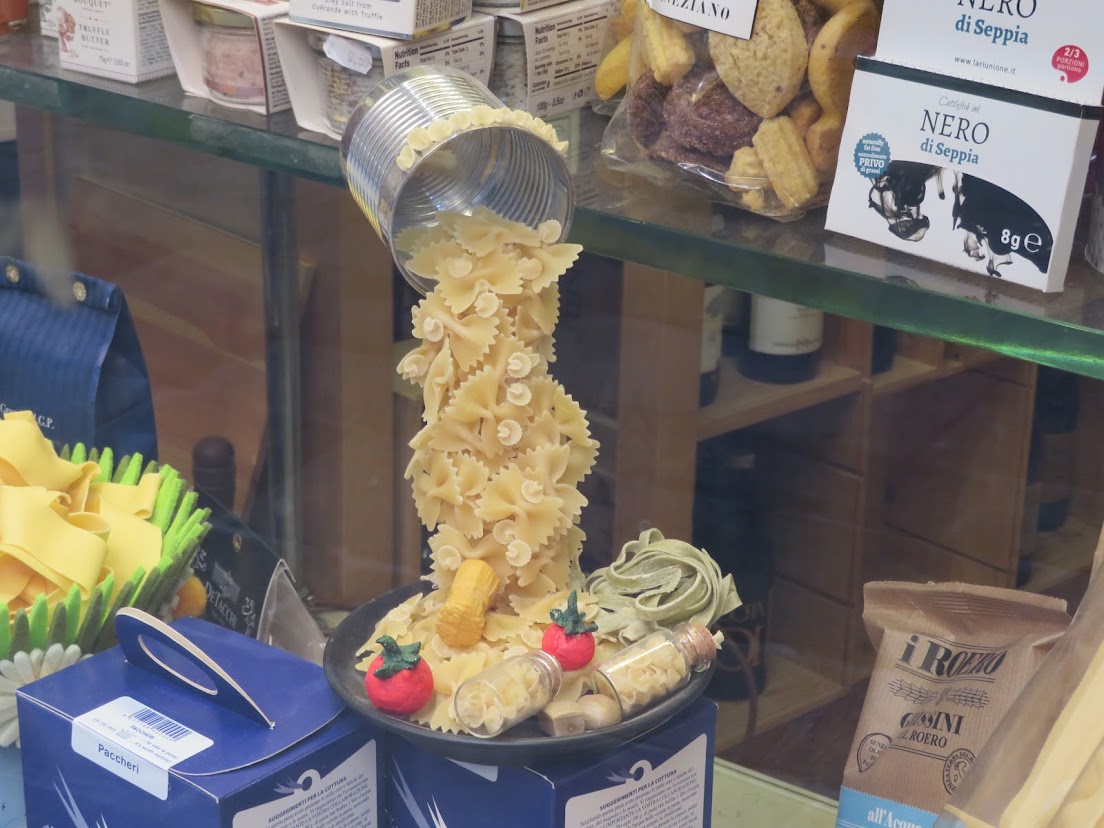
Not a plant, but I couldn’t resist adding this. An April Fool’s Day prank here is called “pesce d’aprile”,” or April fish. I will get to the bottom of this expression some other time, but meanwhile, the wags at the pasticceria Rosa Salva in Calle Fiubera (San Marco) have created just the sort of fish everybody can enjoy. No bones. Too bad they’re not made all year. A tiny note that makes me smile: They bothered putting on eyes. And white eyes. Which technically ought to mean that they’re cooked, because when you boil or grill a fish, you know it’s done when the eyes turn white. Well, I thought it was funny, anyway.Bruscandoli (wild hops) on the left, and carletti on the right.Carletti (Silene rigonfia or Silene vulgaris) are the leaves of a pinkish-whiteish flower that doesn’t take long to appear. These have an almost imperceptible flavor (I’m going to delete “almost”). Lino used to go out and collect them along the Lido shoreline, then throw them into a risotto. I’m all for eating wild but unless they contain some fabulous antioxidant properties I can’t see the point of bothering. Still, man does not live by radicchio alone.Chives, or “barba del frate” (friar’s beard) are usually the first to show up. It used also to be called “sultan’s beard,” but that reference evidently has been retired.This work of culinary art was in the window of the pastificio Serenissima on the Salizzada dei Greci. Fresh pasta is always a delight, and there are fewer and fewer shops making it. They recently were making truffle tagliatelle. We had to imprison the pasta in a covered glass container on the windowsill, otherwise the entire refrigerator would have reeked of truffle. Truffle milk? Why has nobody thought of this?