art that stinks?
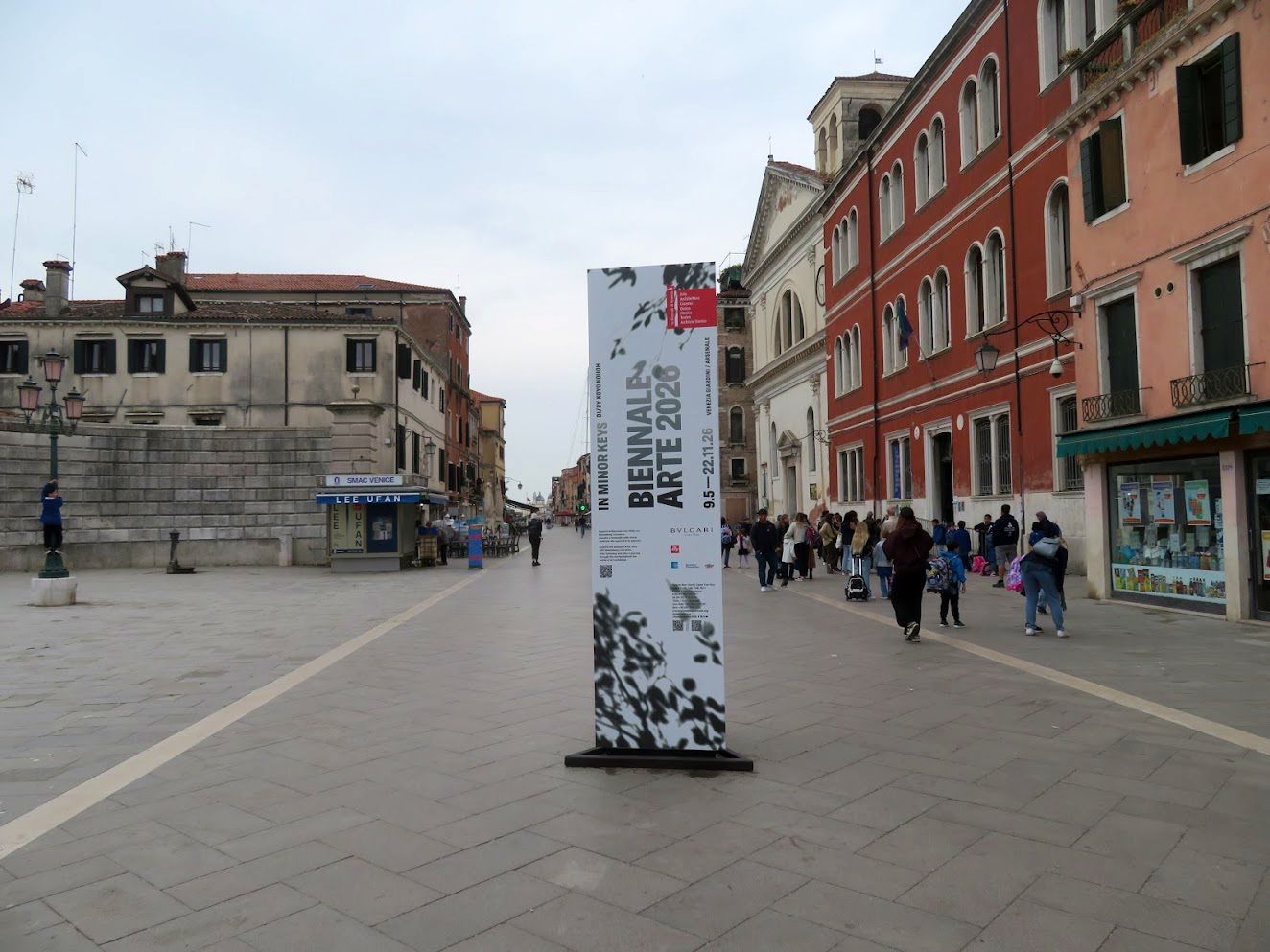
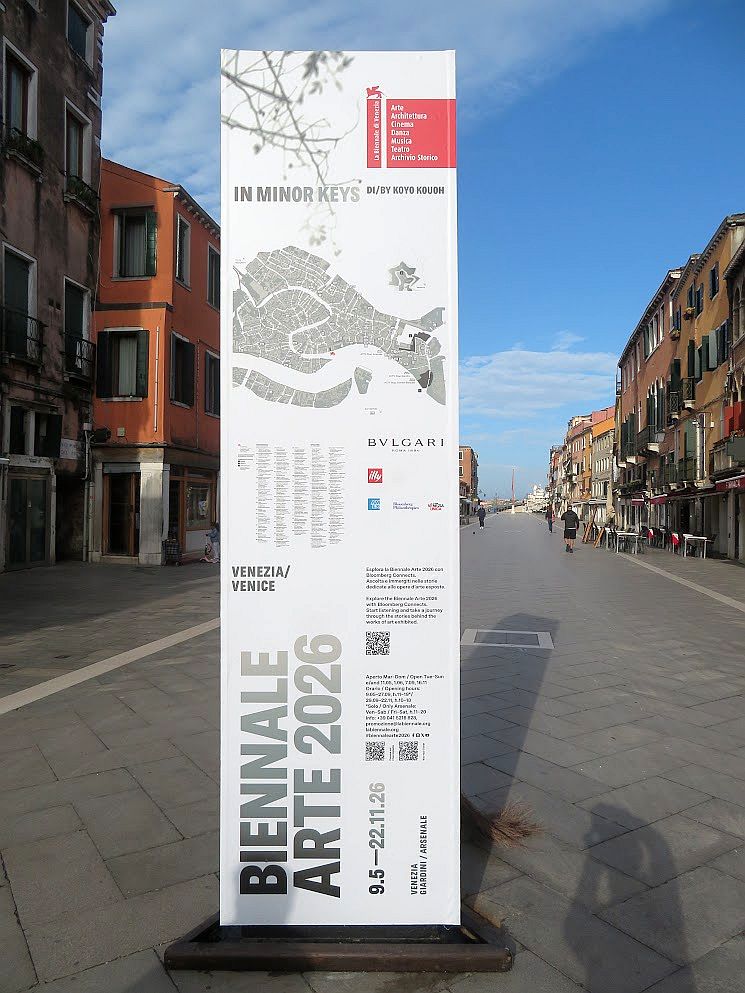
“Art is above politics,” goes the common fantasy here every year when the Biennale international art exposition is about to open. Those who were especially inclined to say (or imagine) it were the directors of the event this year, who invited not only Russia, but Israel, to join the starring lineup.
This struck the public and various political and/or cultural figures or groups as a very bad idea, and they spoke out against permitting Russia and Israel to participate. (“Spoke out” is code for “Pussy Riot made huge scenes with their bare breasts at the Russian pavilion.”) The jury resigned en masse in protest, what with the Russian invasion of Ukraine and the genocide in Palestine and all. They have not been replaced. Off to a great start.
In fact, a new term has appeared to describe the art/politics connection in Venice this year: “Artwashing.” That’s harsh but makes its point. Skipping the politics and heading straight to the art, the critic from The Guardian in London mentioned the “art that stinks.” Not figuratively, but literally. In a world in which pretentious euphemisms stand in for thought and communication, that was an invigorating change. It turns out that some artists were focusing on the excretory, with the addition in some cases of perfumes that reinforce the atmosphere. Belarus, for example, commissioned the creation of a perfume with its artwork that replicated the smell of a “freshly dug grave in the Belarus countryside in late August, laid with rotting flowers.” Is this art? Politics? Their mutant love child?
As far as I can see, politics has long since taken the Biennale hostage. Participants have something to say, and then they call it art. We even had a real protest, complete with riot-geared police and a police helicopter roaring overhead for hours.
But I’m getting ahead of myself.
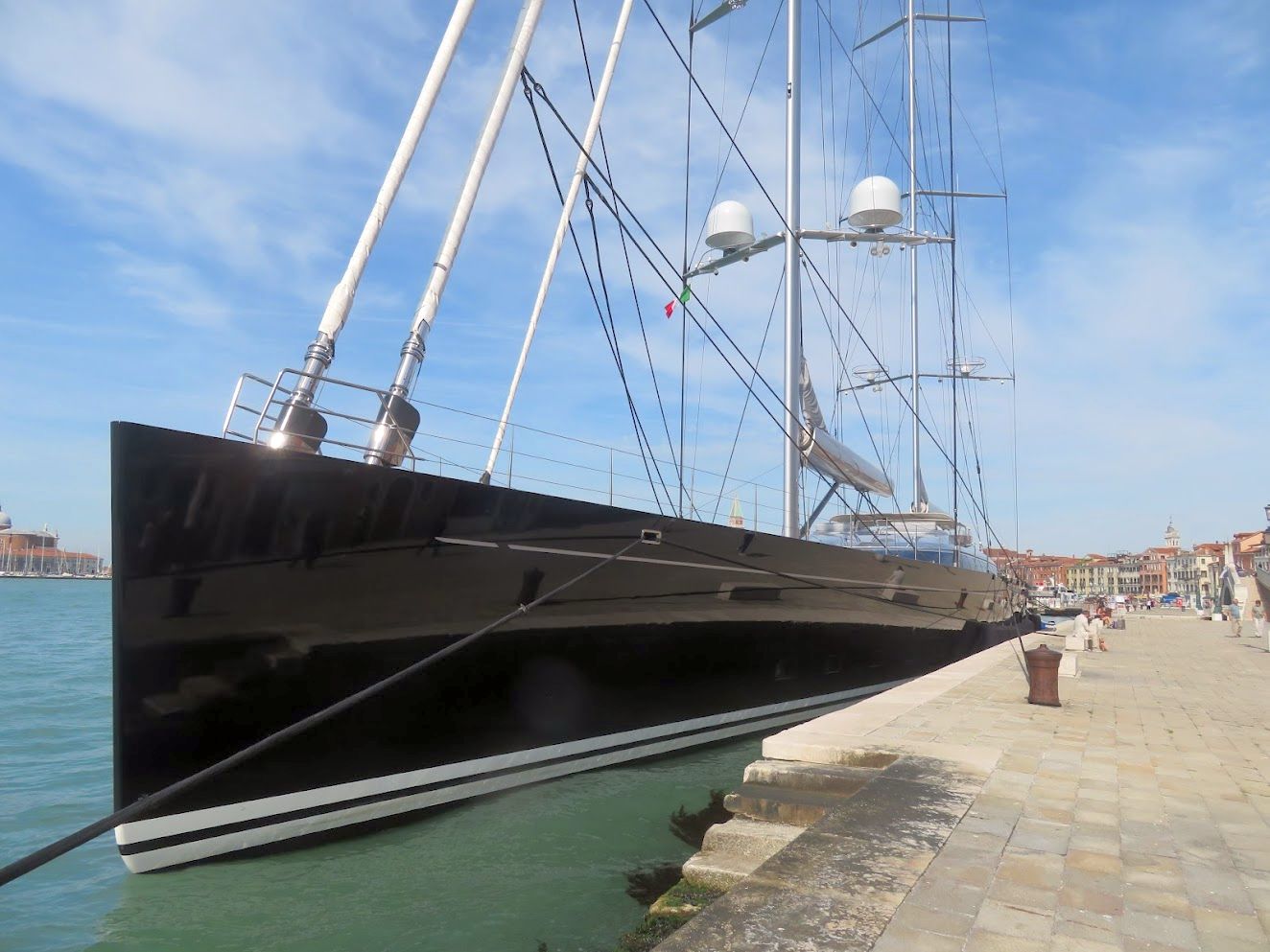
The “pre-opening” week is an experience in itself, protests or no. It began more or less on May 4, with the always entertaining international swarms of journalists, critics, maybe even some artists. They descend in their thousands on Castello for an early look at what is sometimes referred to as “the Olympics” of the art world. I get what they mean, but considering that Italy is currently evaluating the usual damage — financial and environmental — that the Winter Olympics inflicted on the Italian Alps only two months ago, it’s a term I’d suggest avoiding.
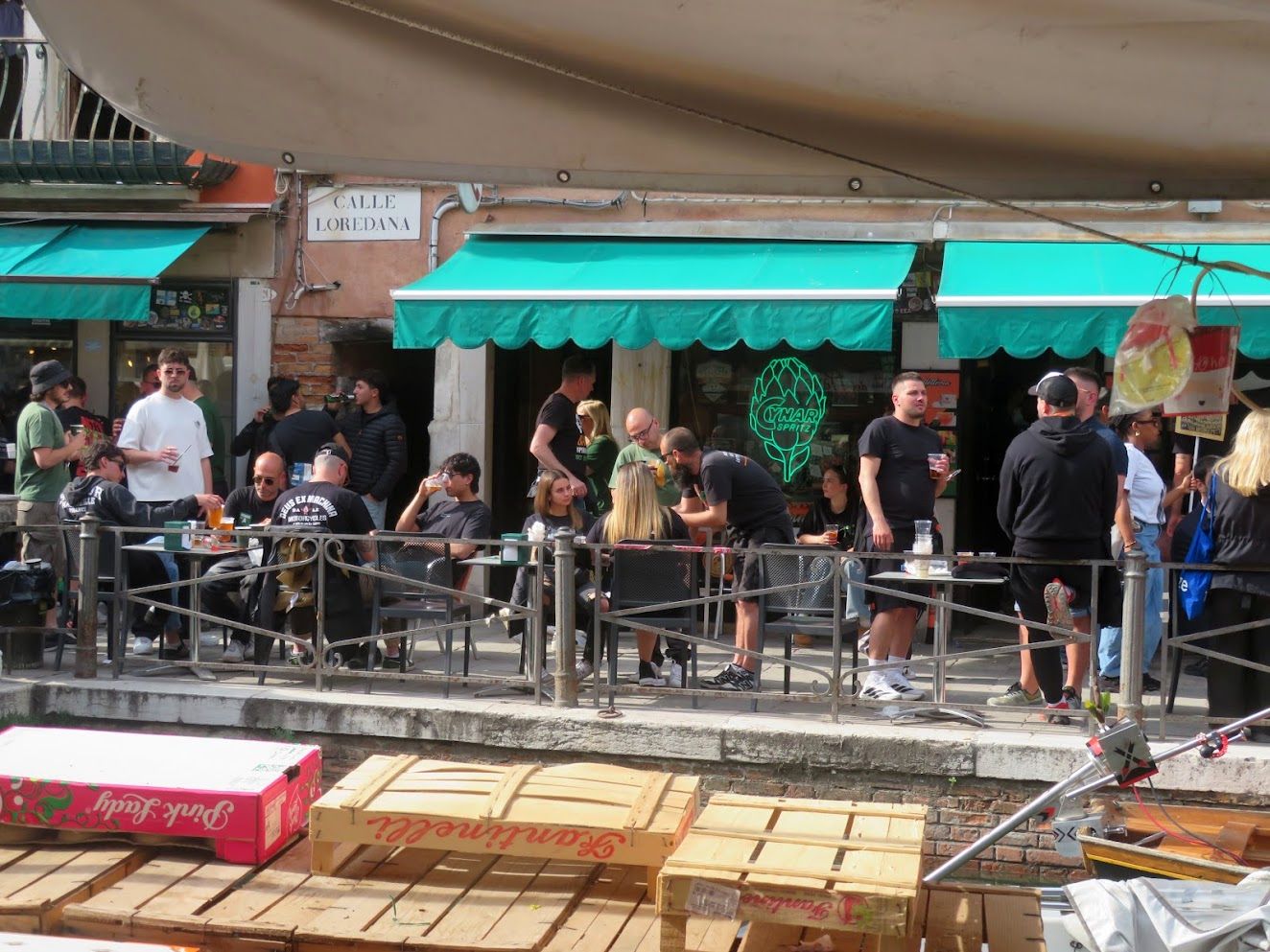
Seeing as much of the activity is concentrated outside our front door, the week is an assortment of sensations brought by streams of journalists and art-world people. The sound of many rolling suitcases at all hours, the plundered supermarket shelves, the clogging of streets and bridges by people who have to stop to talk, to consult their phones, to look at each other, or just look around. You get the feeling that it isn’t that they have stepped into your world, but that you’ve been somehow transported into theirs.
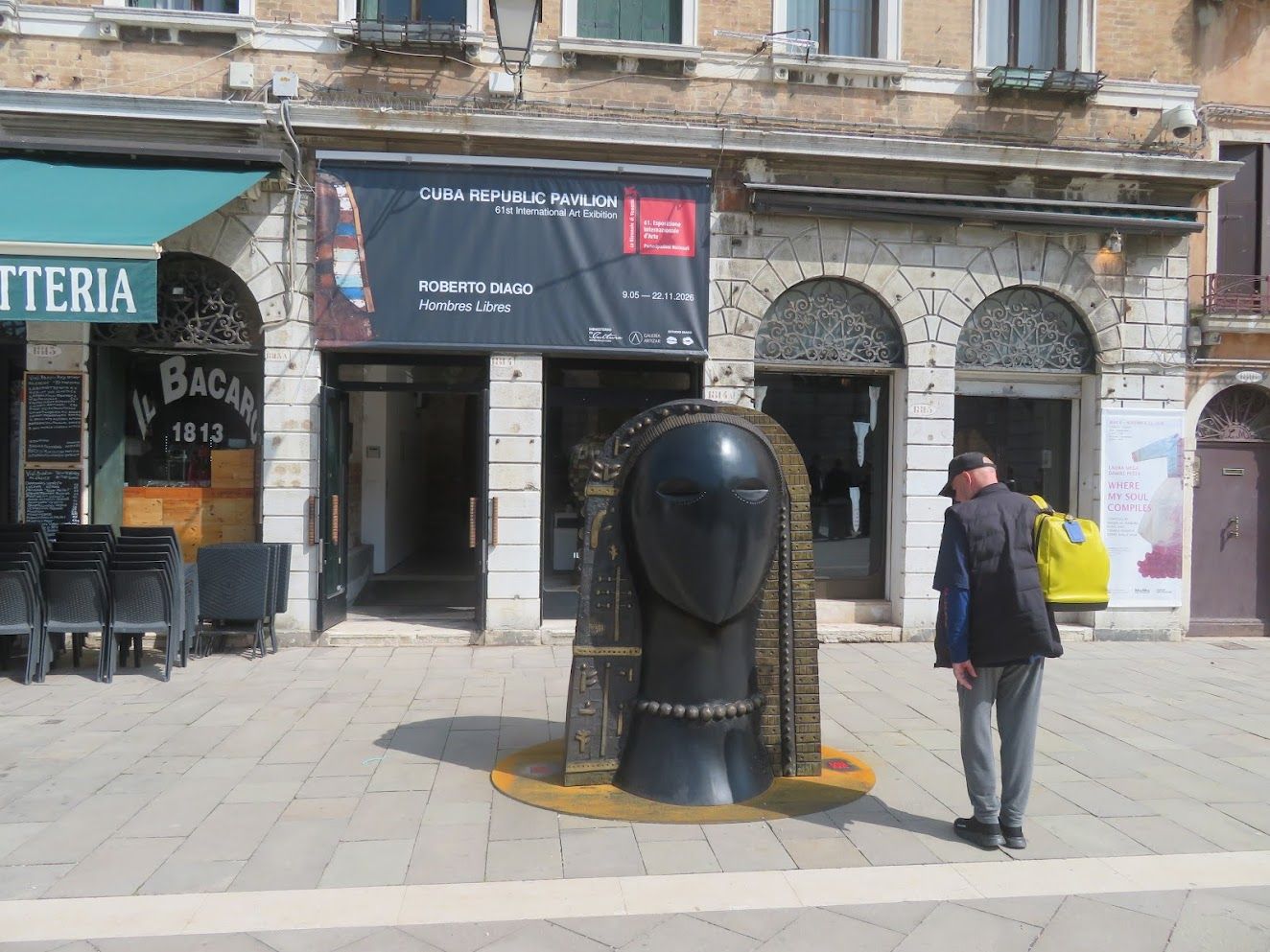
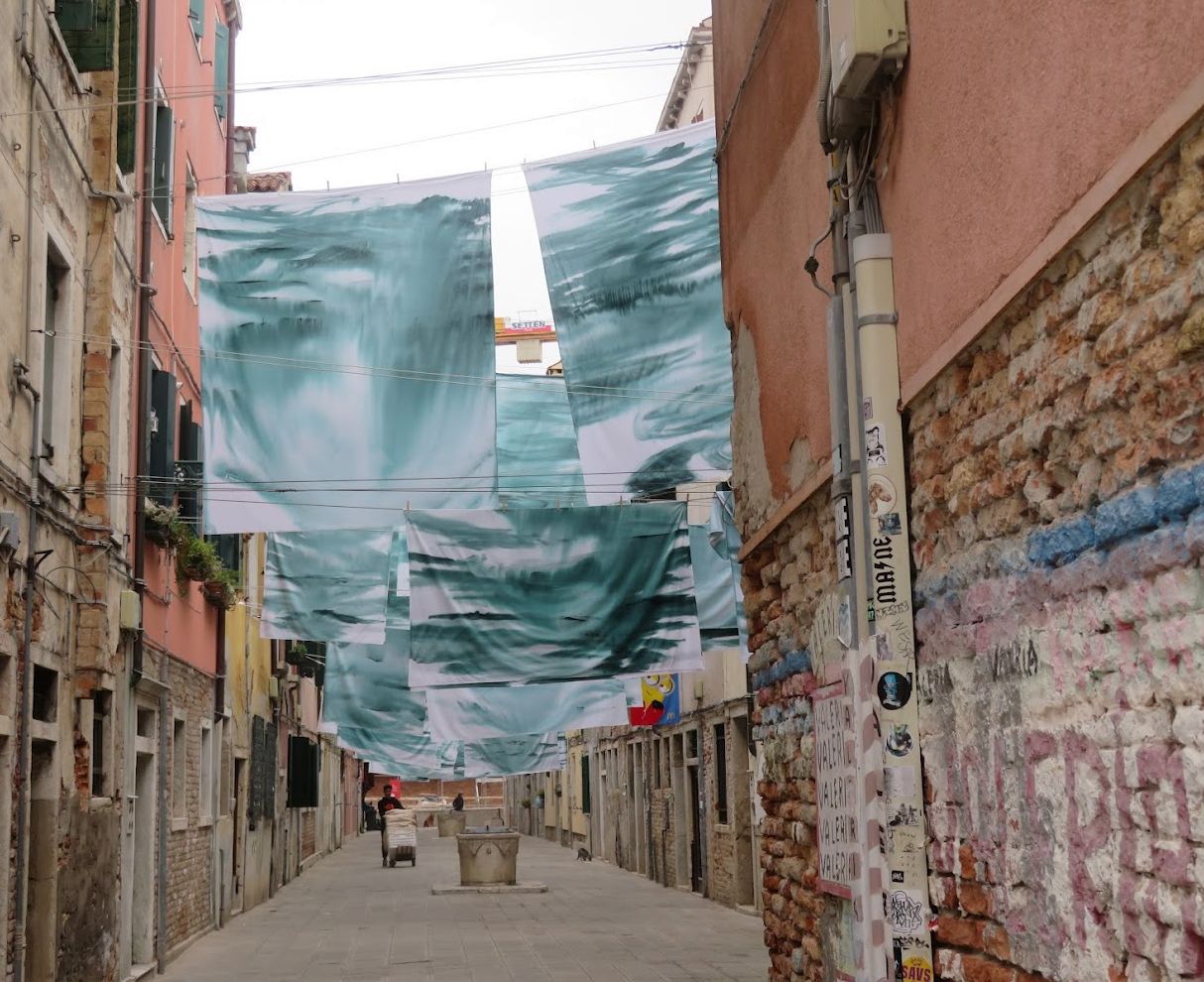
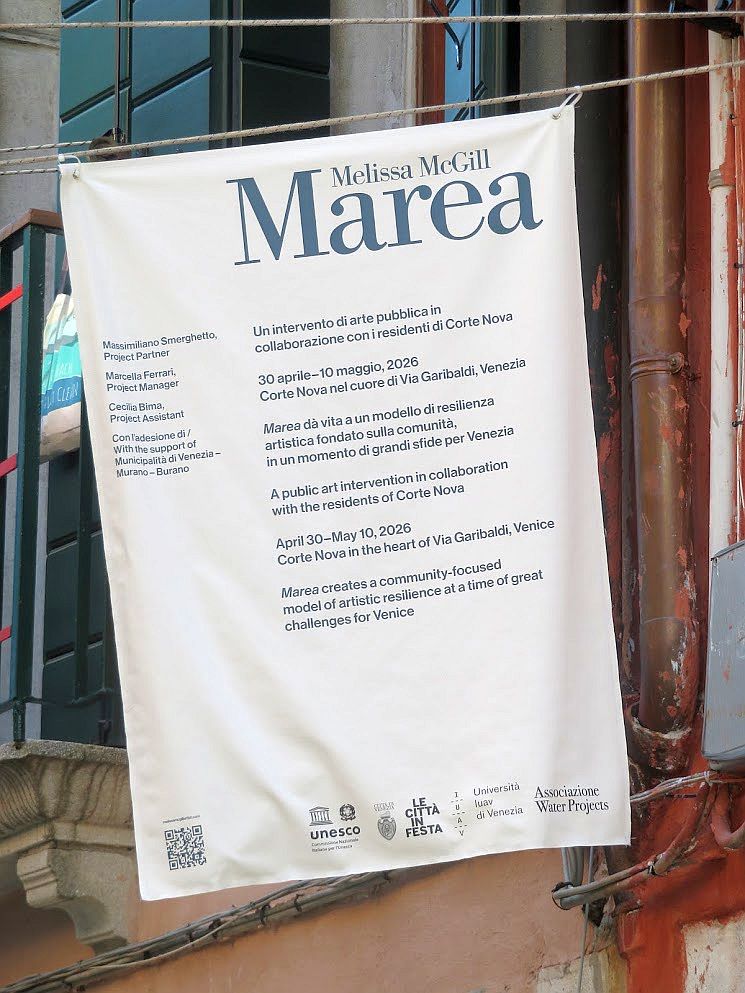
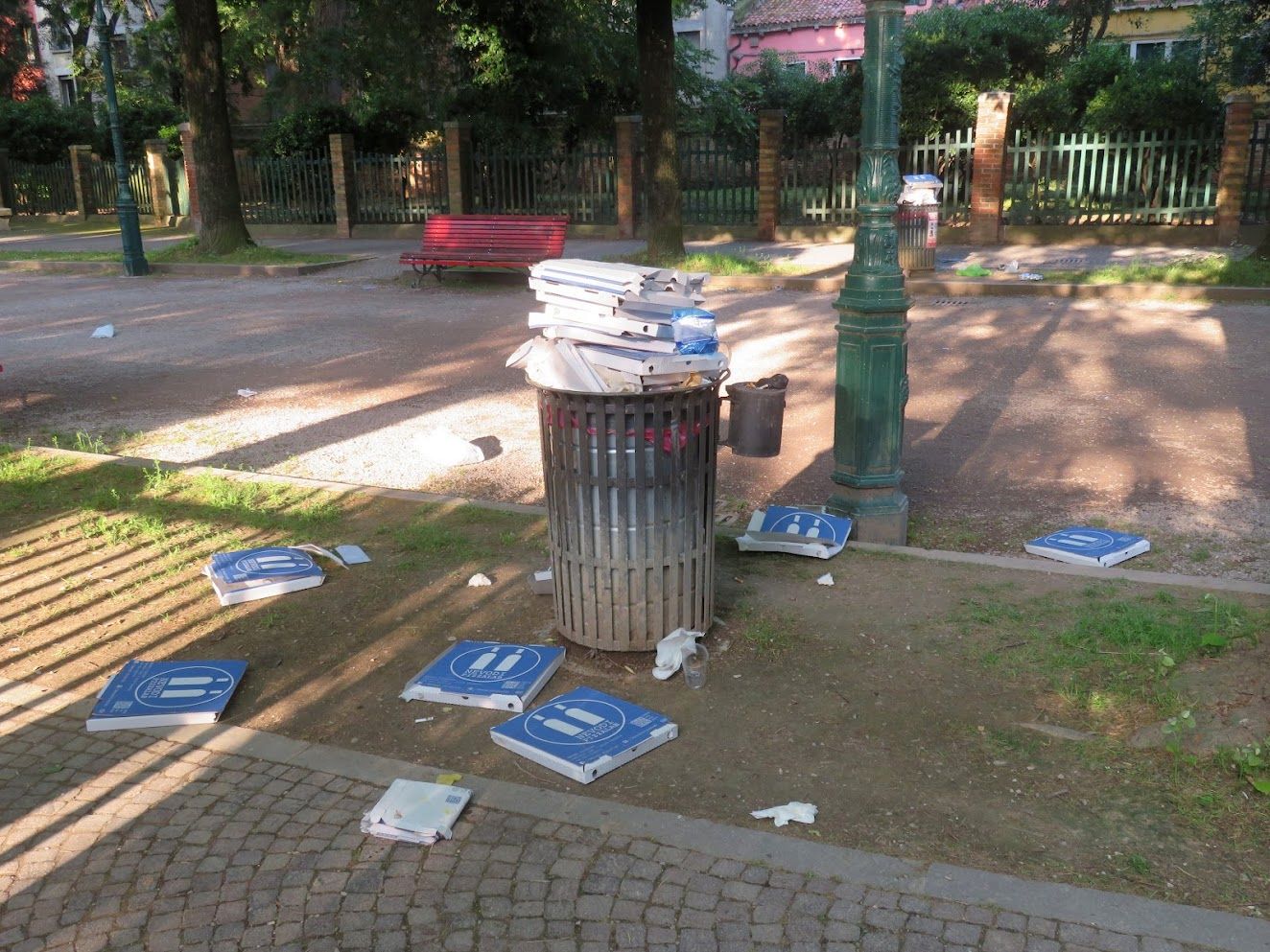
The official inauguration was Saturday, May 9, so for the next seven months (closing November 22) Venice will be chugging along powered by the engine of the Biennale. Here is an assortment of images from the week.
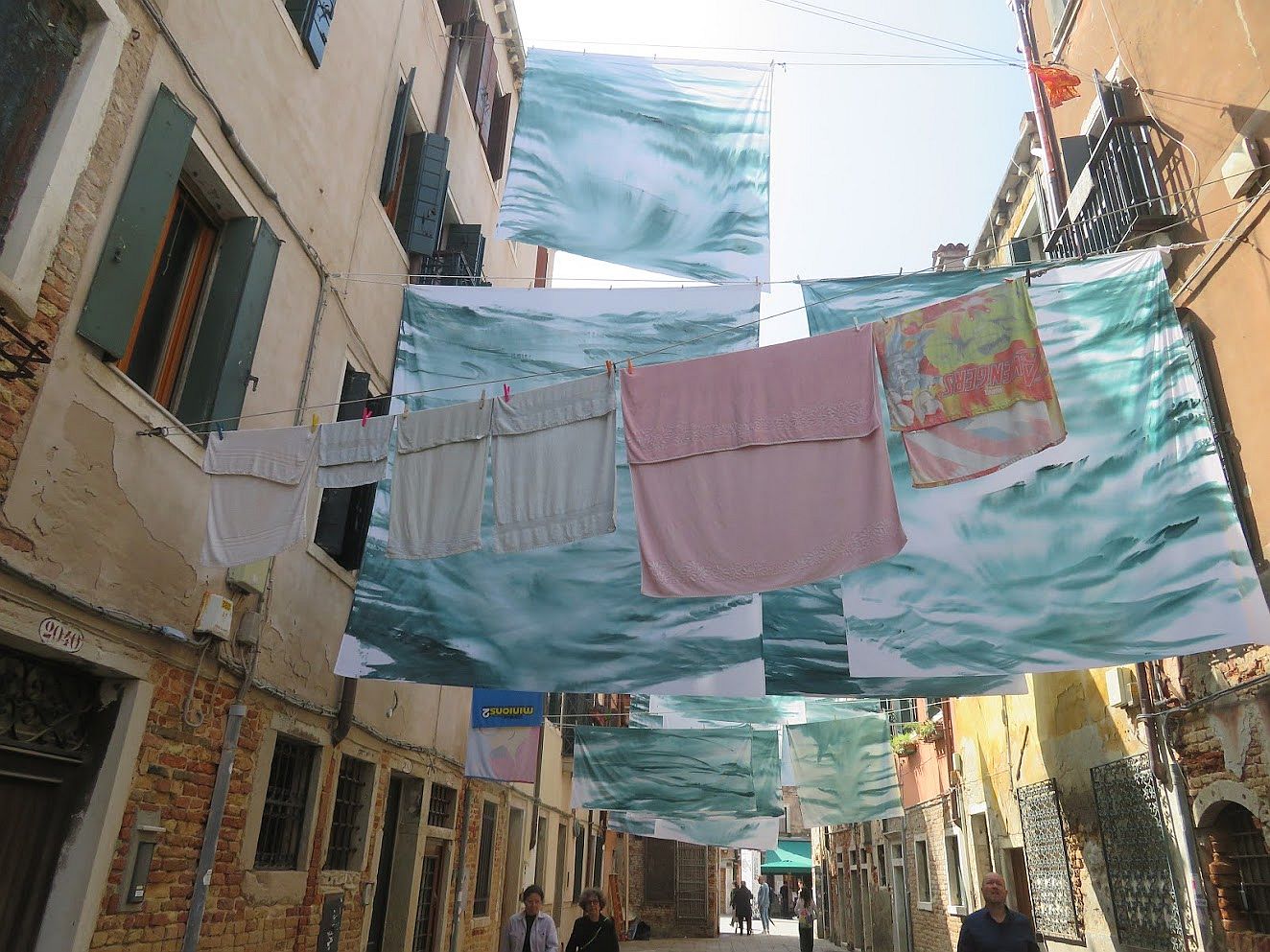
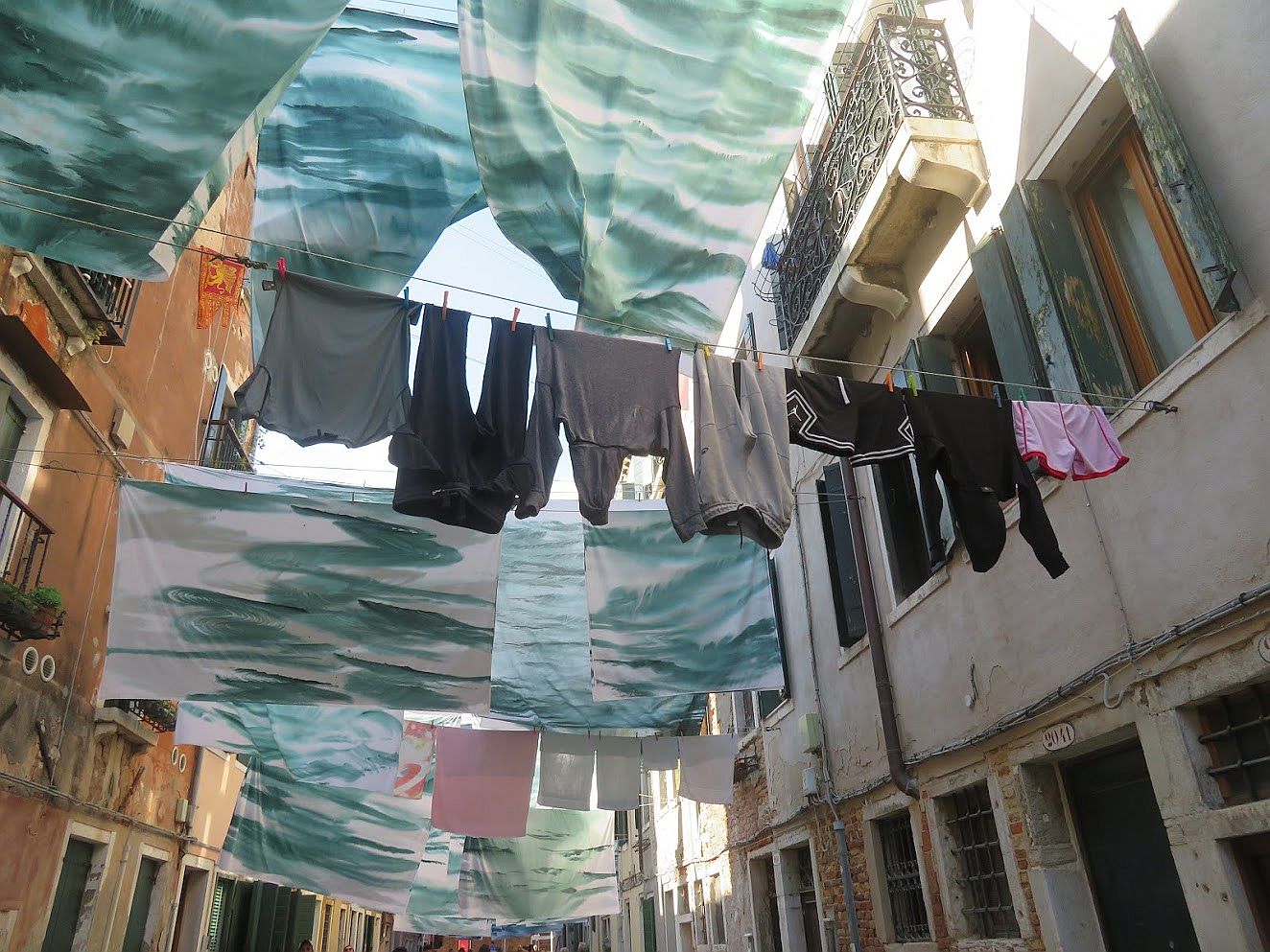
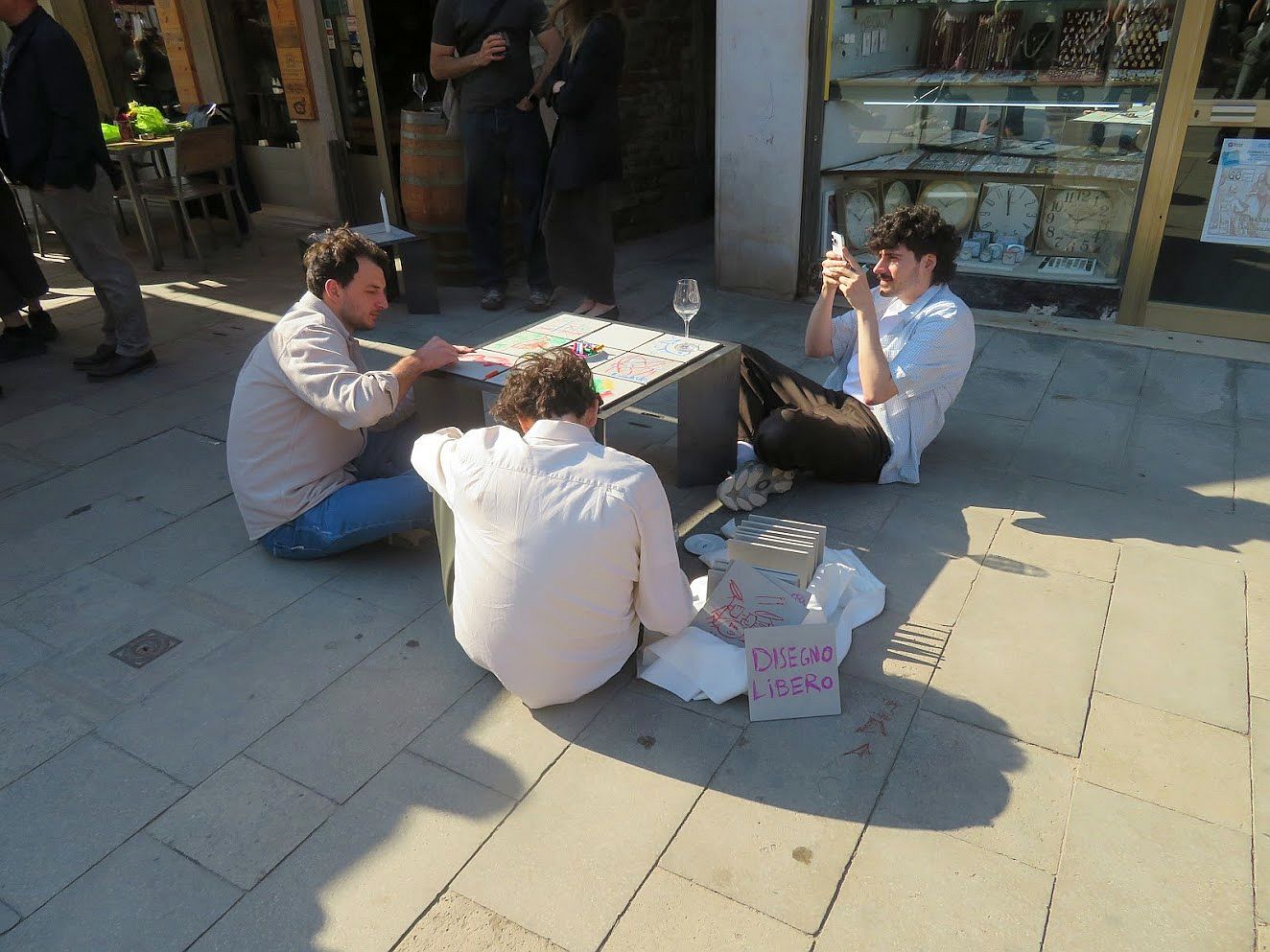
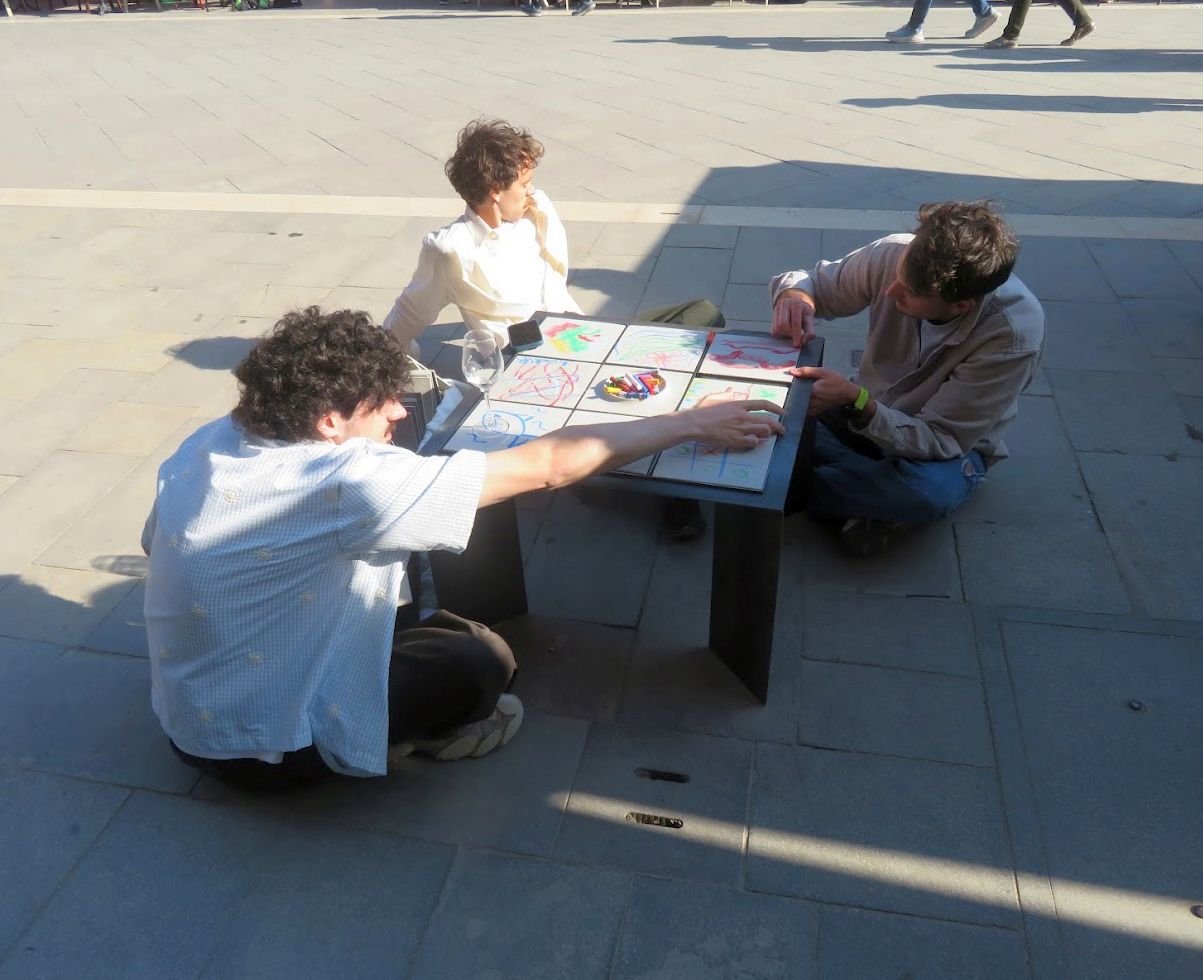
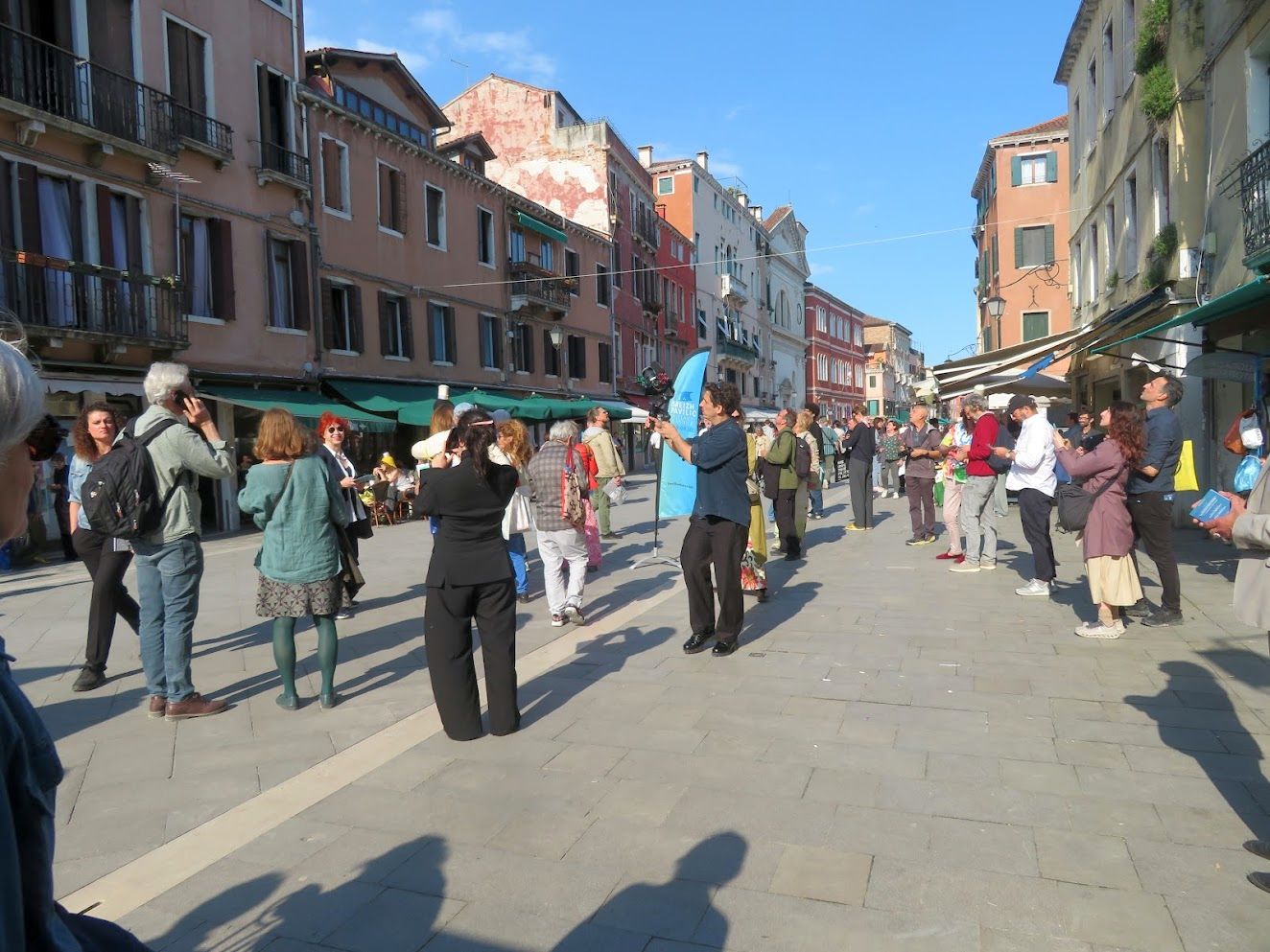
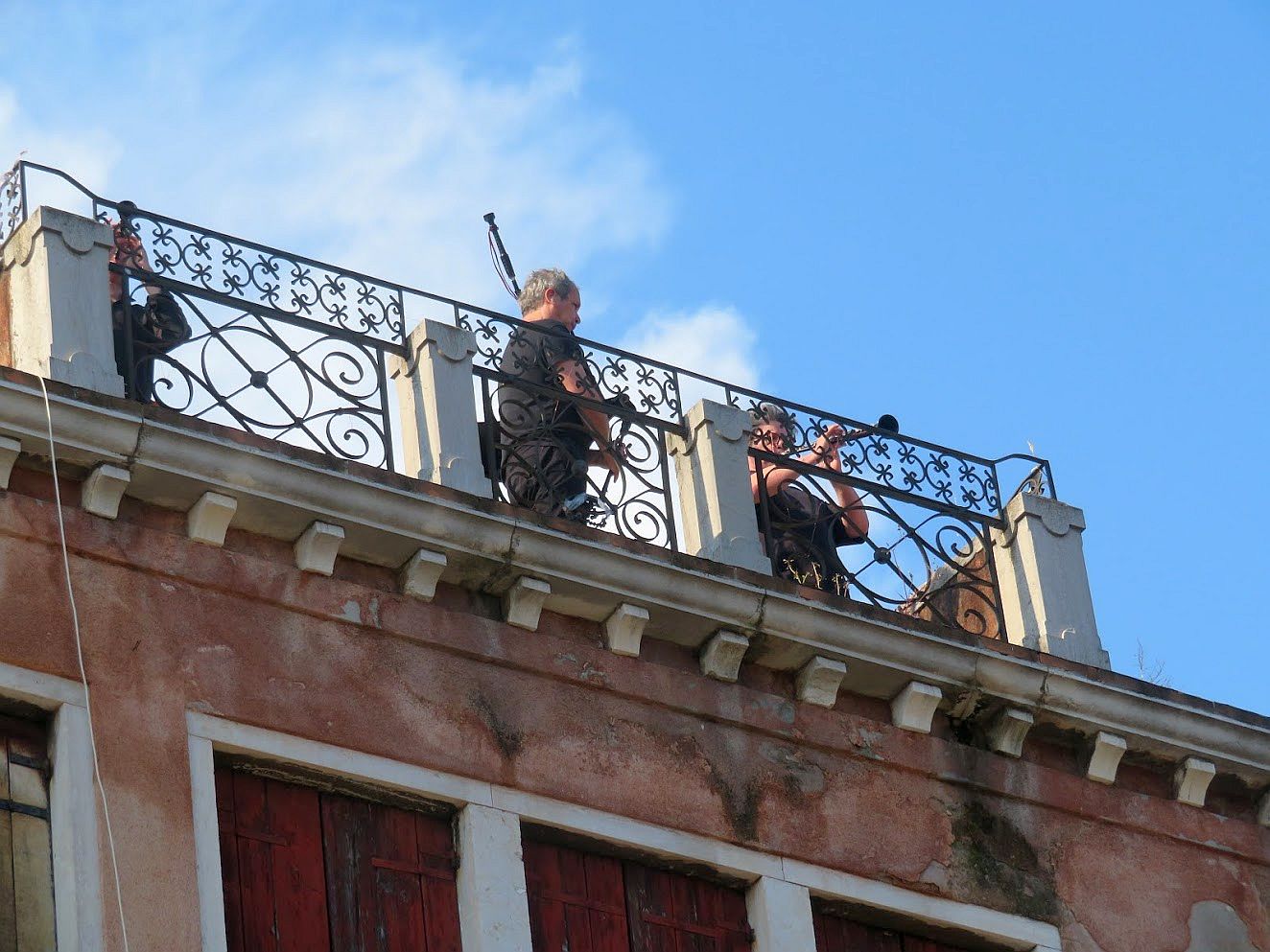
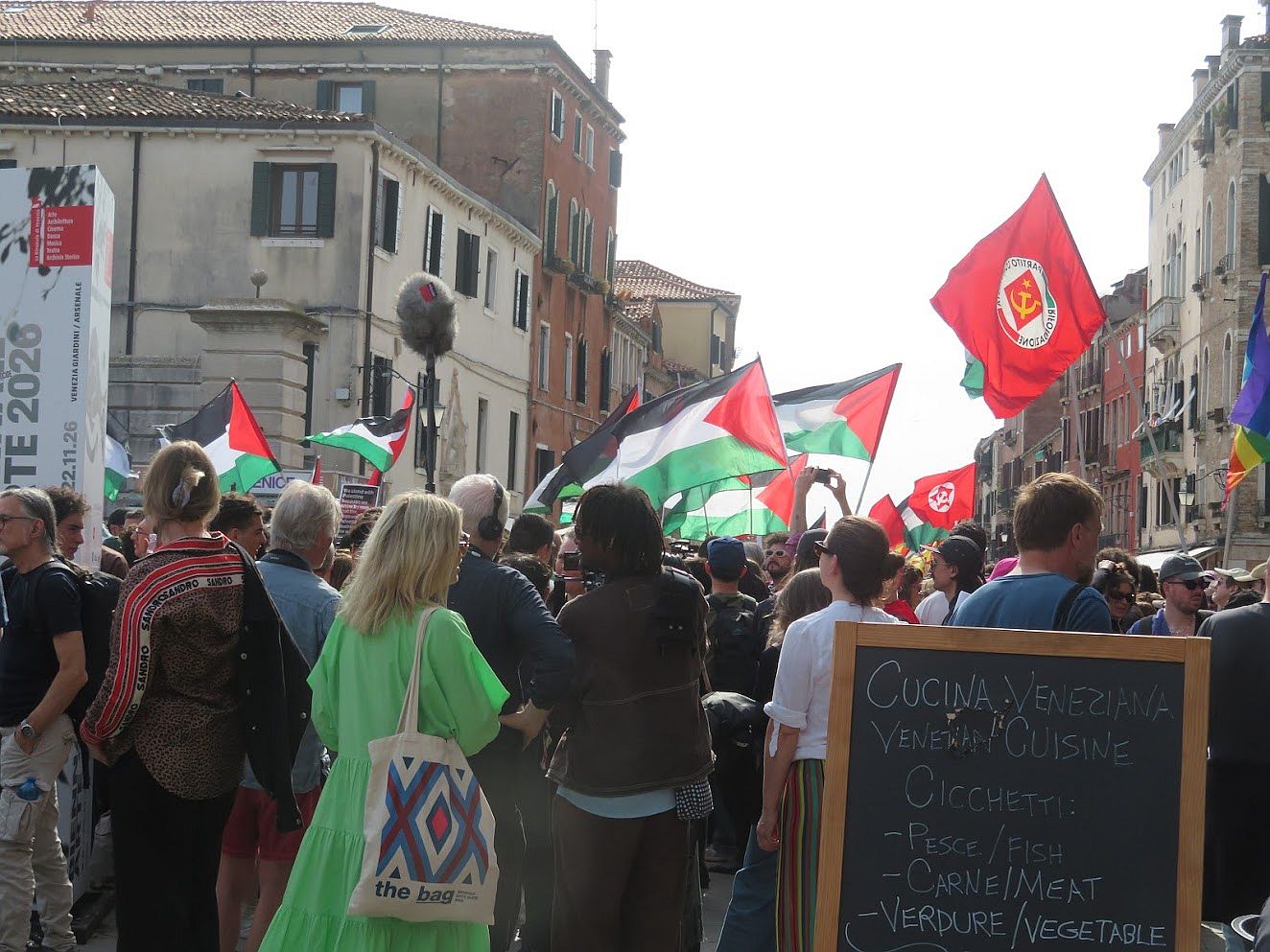
Friday afternoon saw the big protest against Israel’s participation in the Biennale. Not only did we have people here on the street, 20 national pavilions were closed because their staff was on strike in solidarity. For the record, they were Austria, Belgium, Egypt, Lithuania, Catalonia, Luxembourg, Poland, Slovenia, Spain, Switzerland, Turkey, Finland, The Netherlands, Ireland, Qatar, Malta, Cyprus, Ecuador, and the UK.
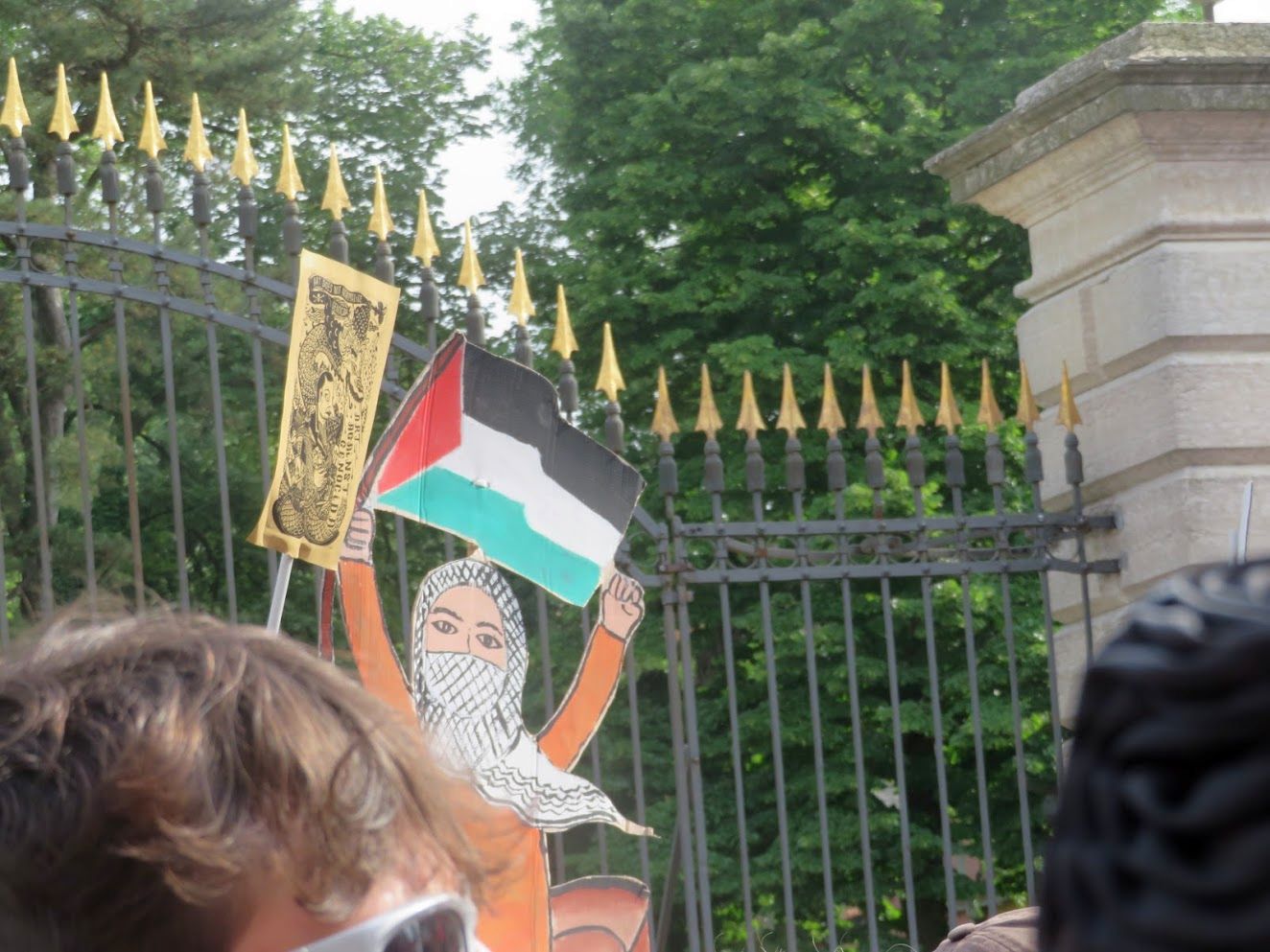
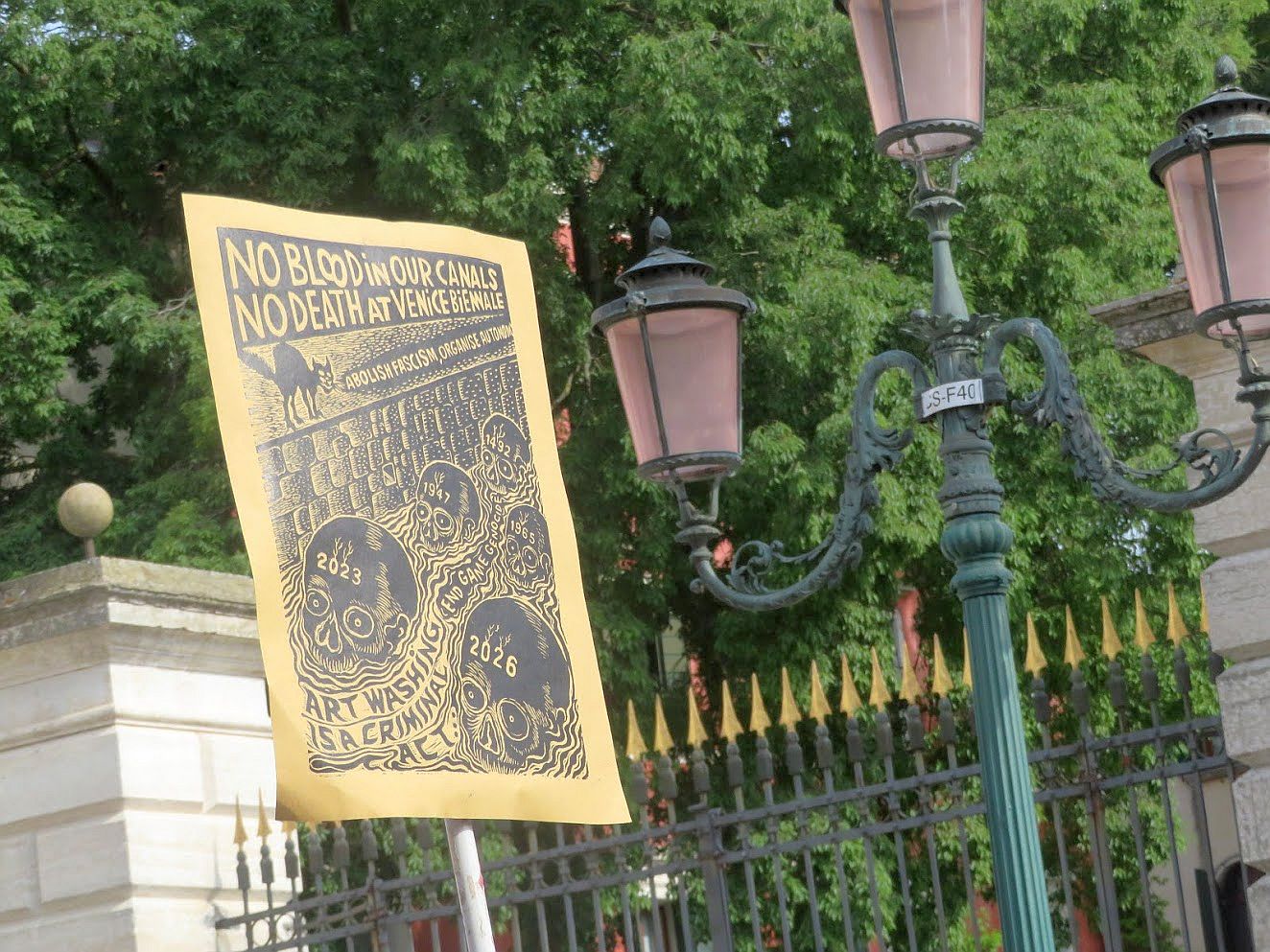
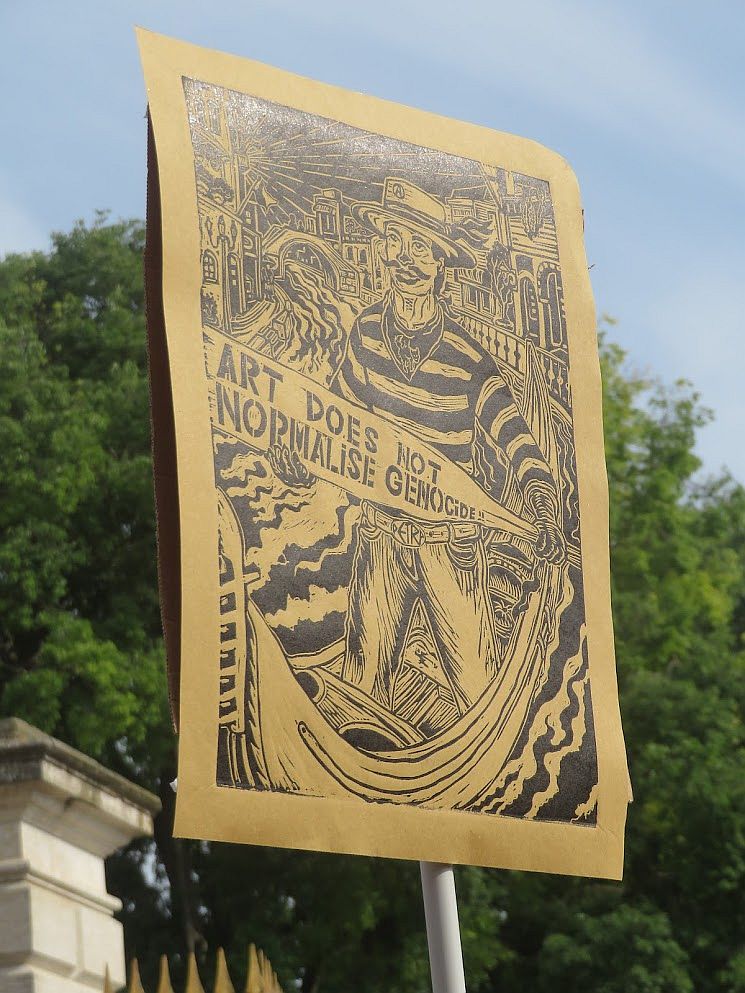
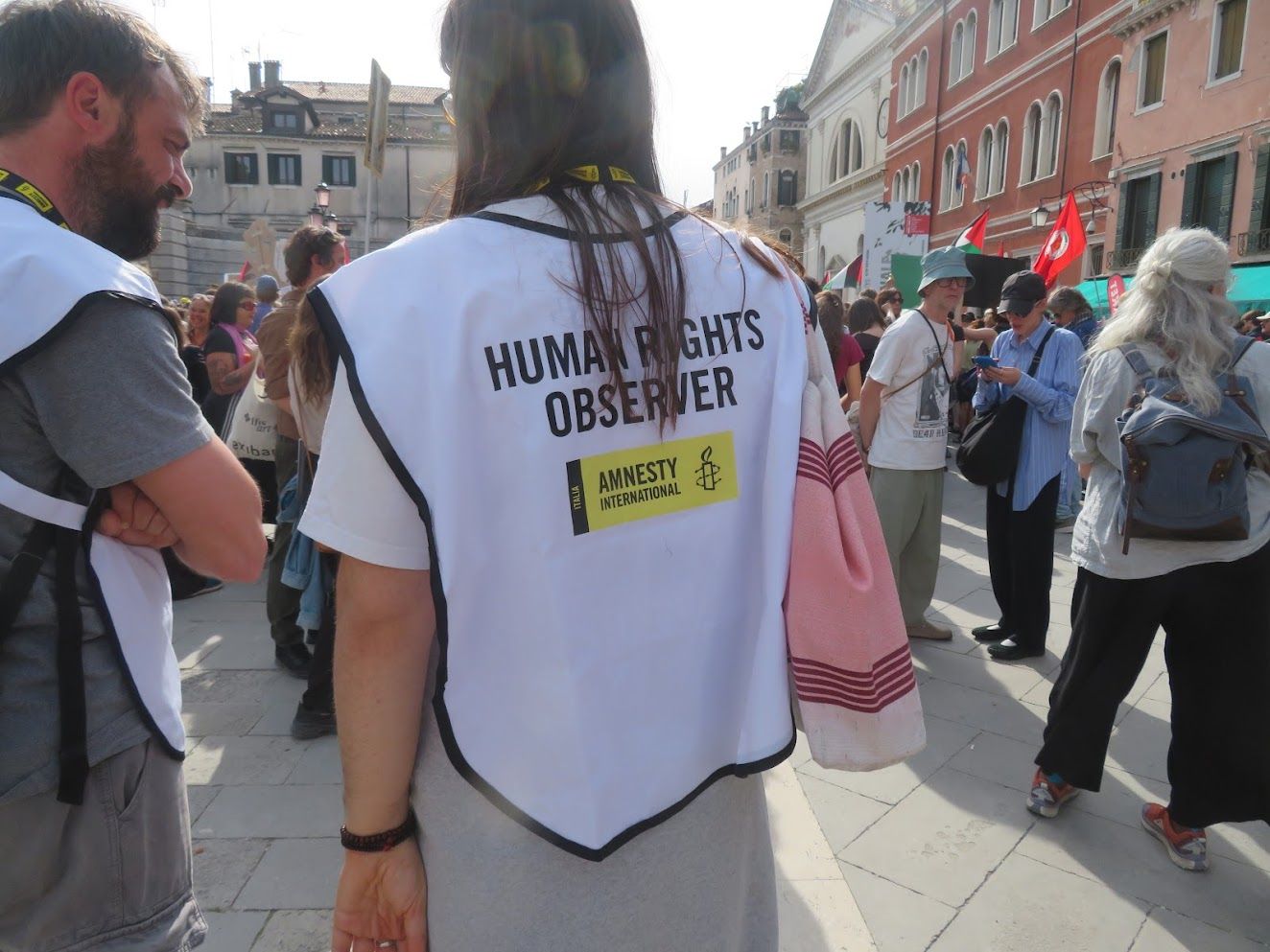
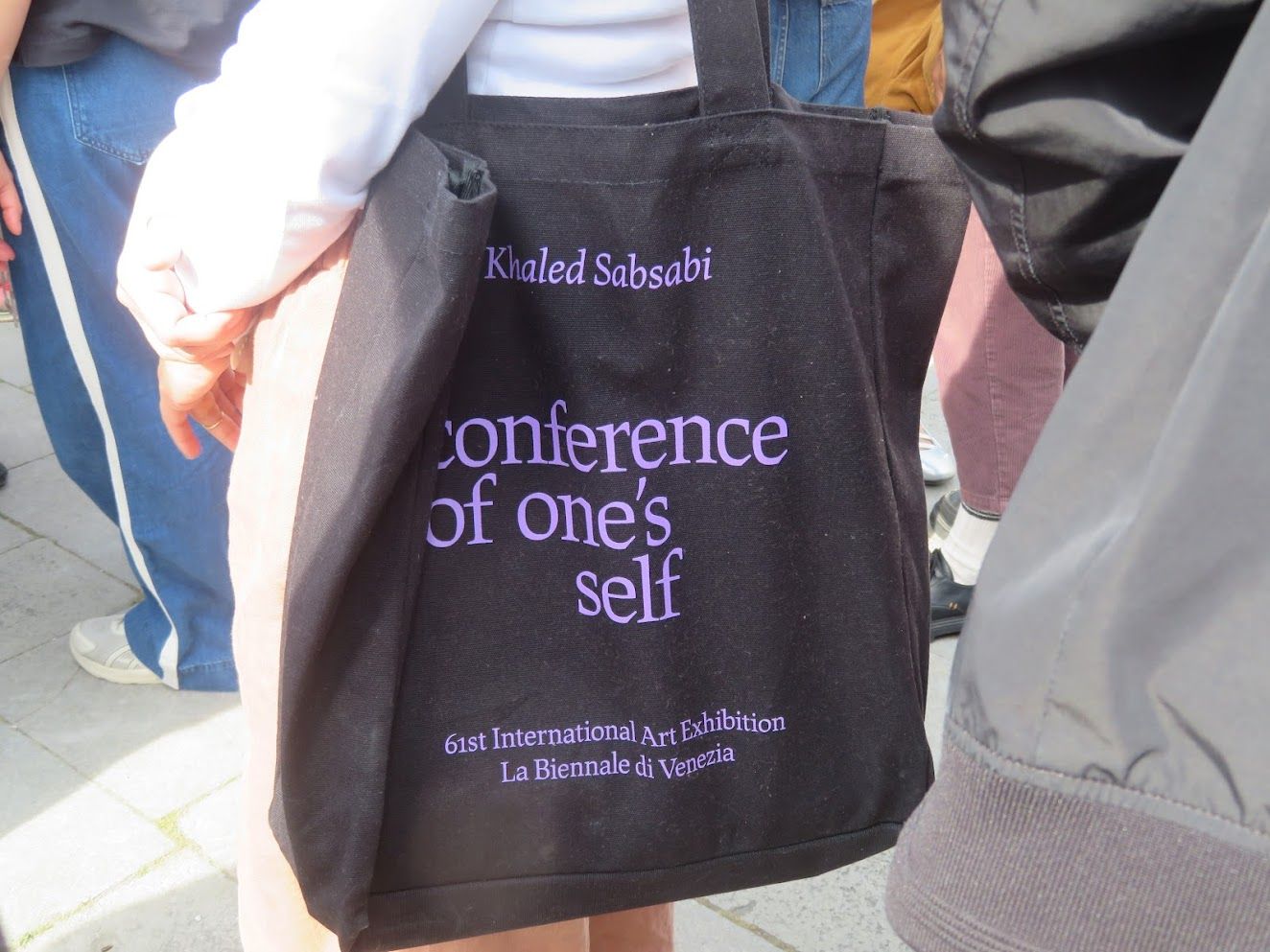
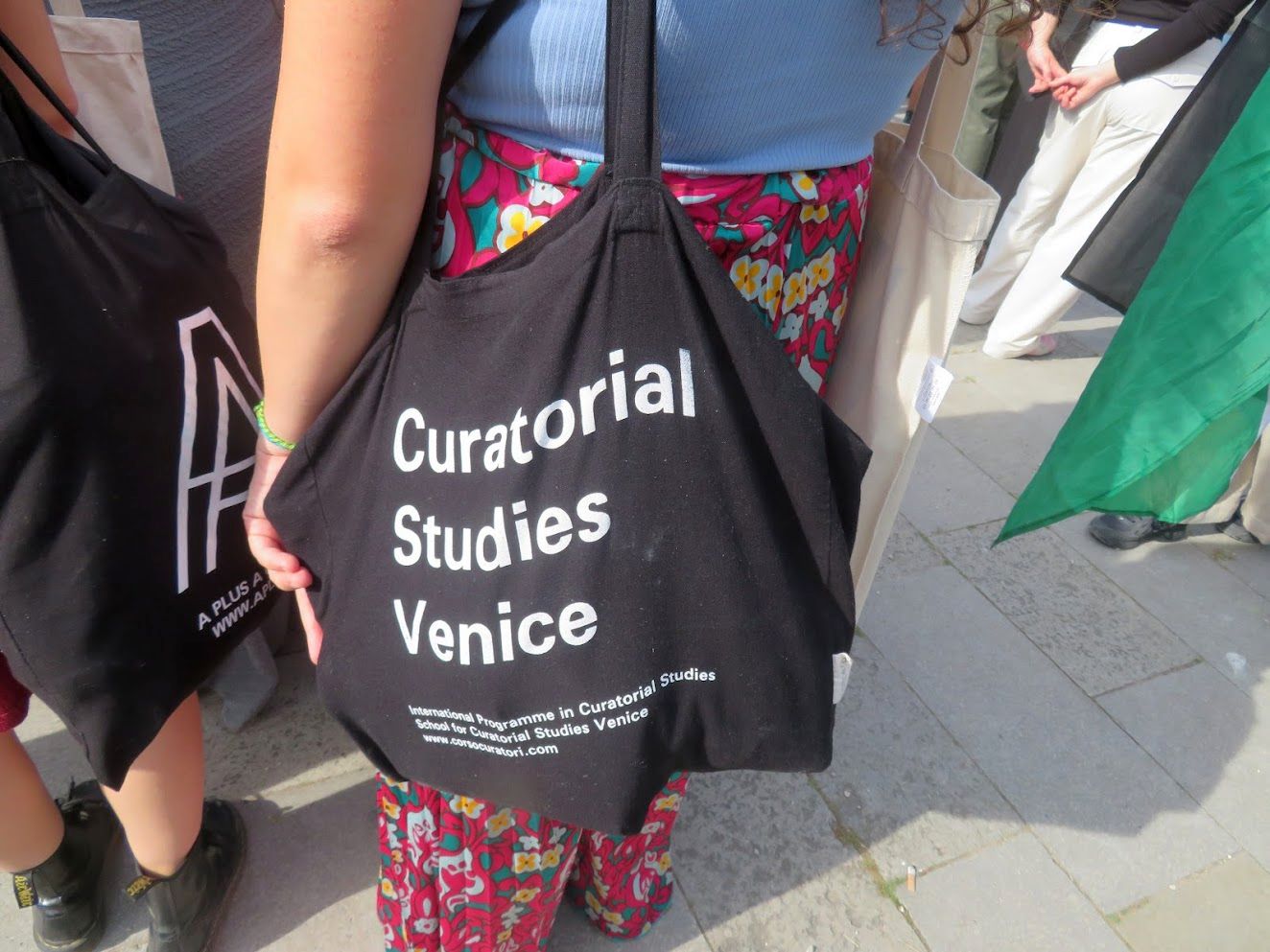
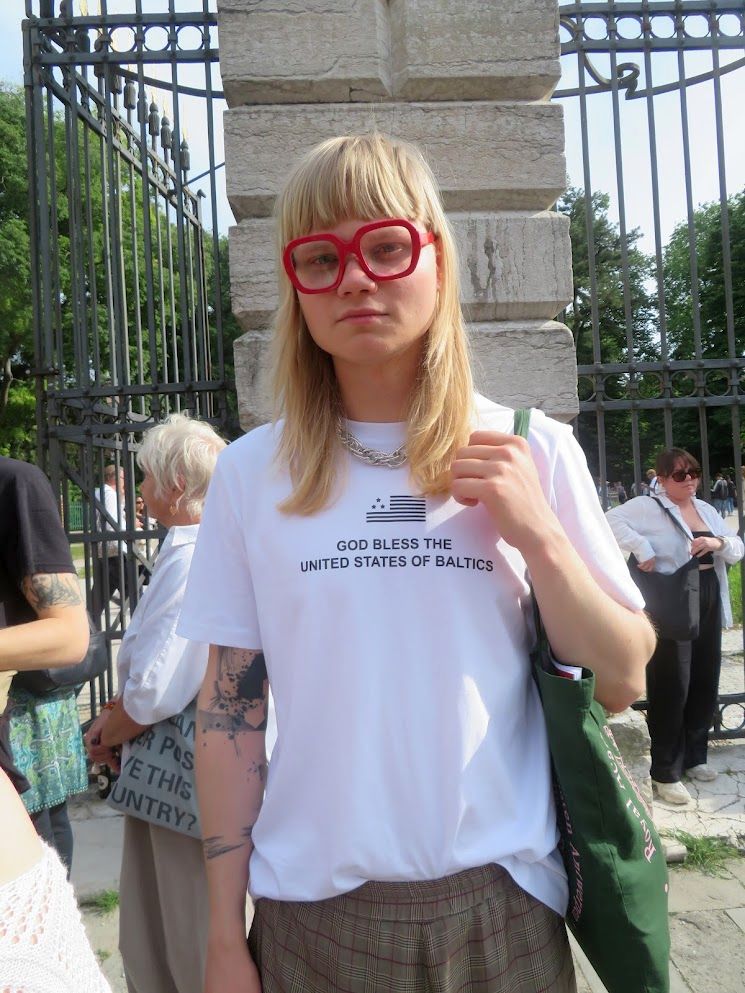
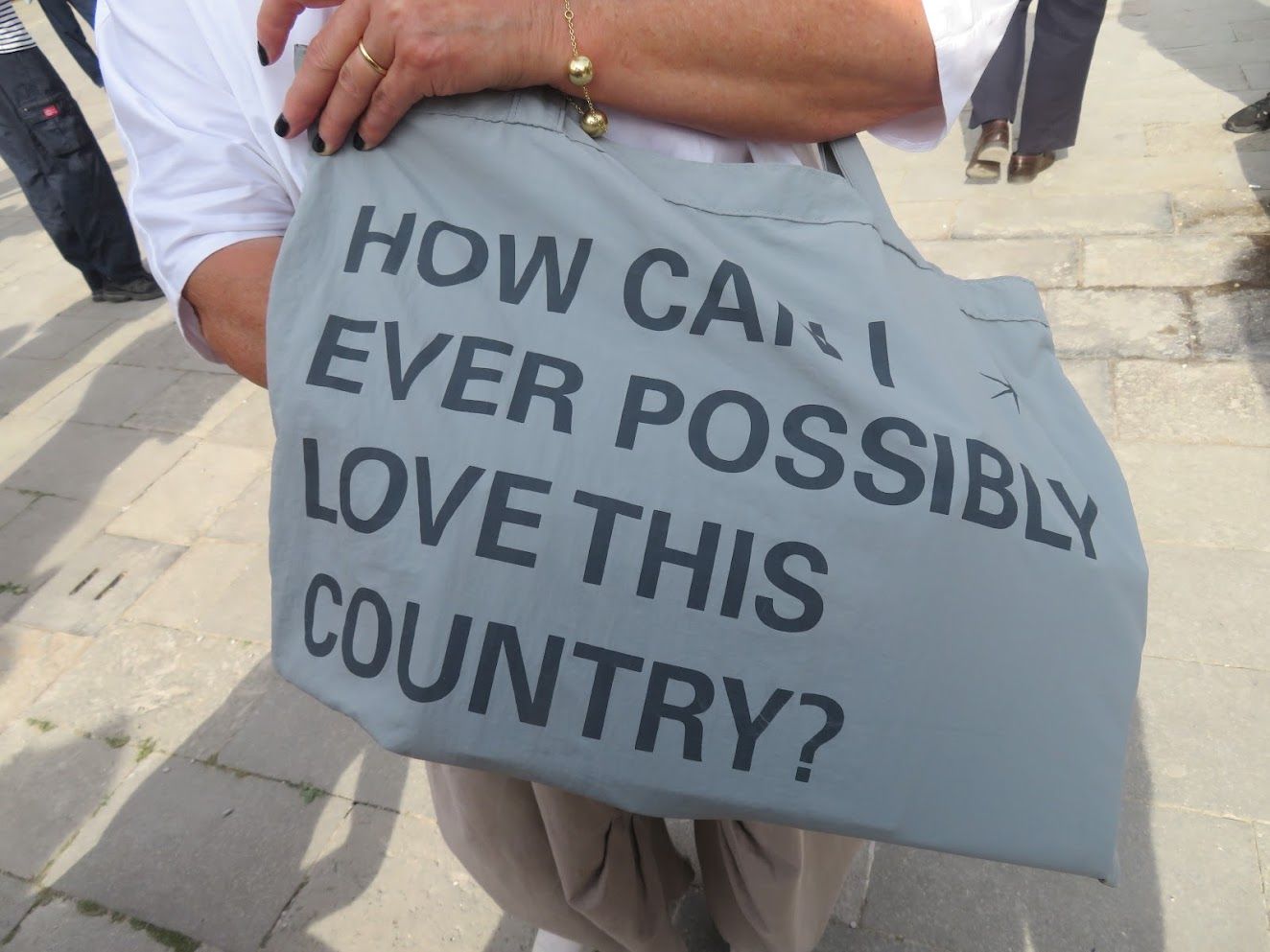
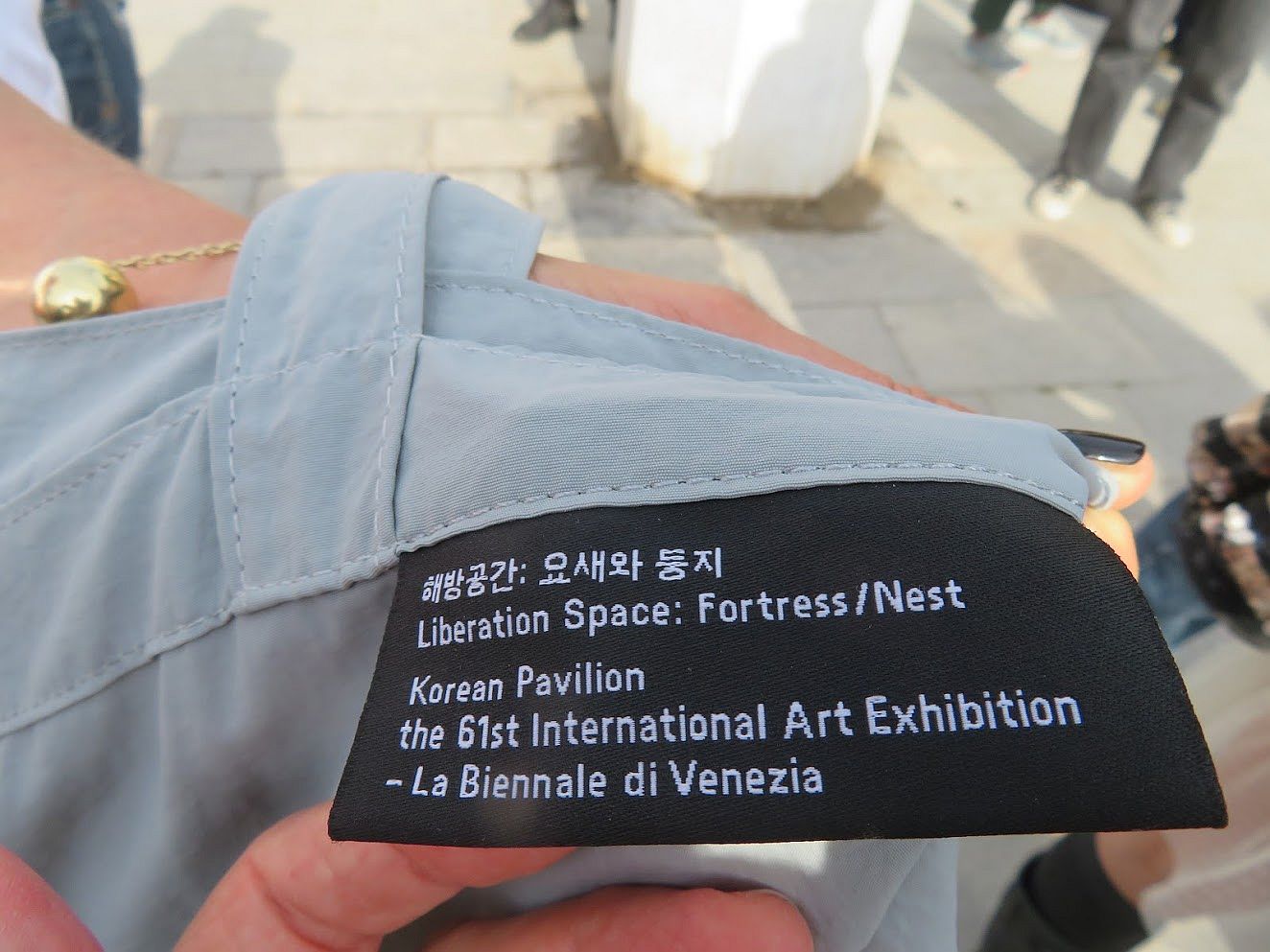
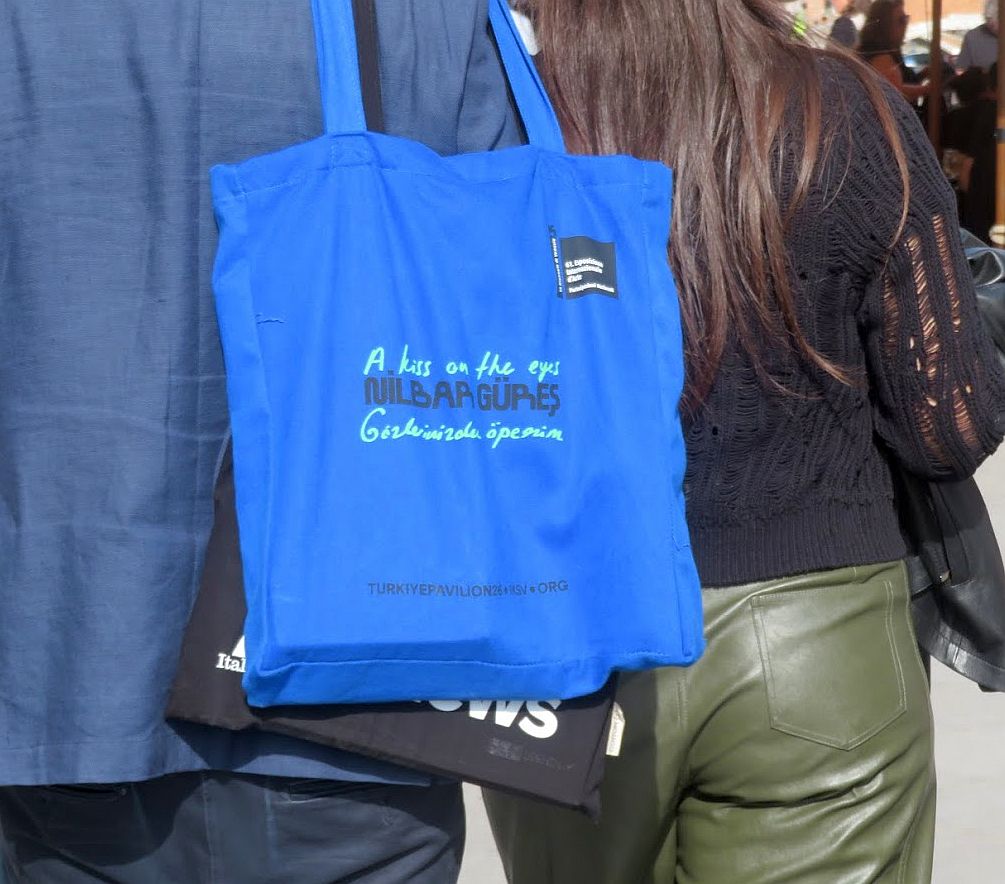
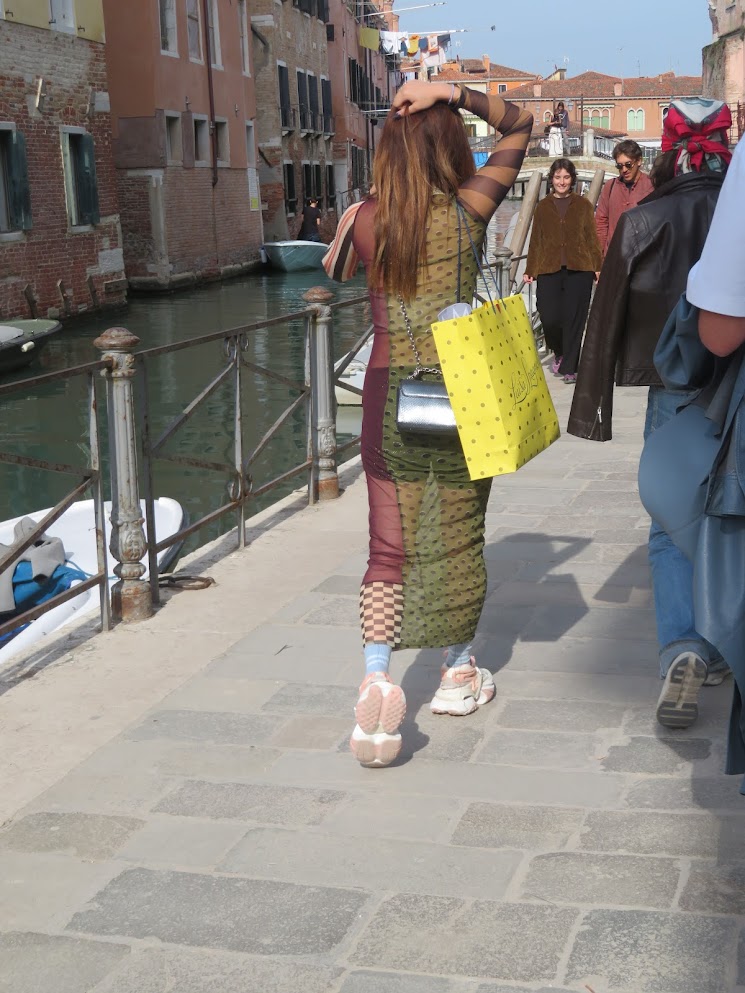
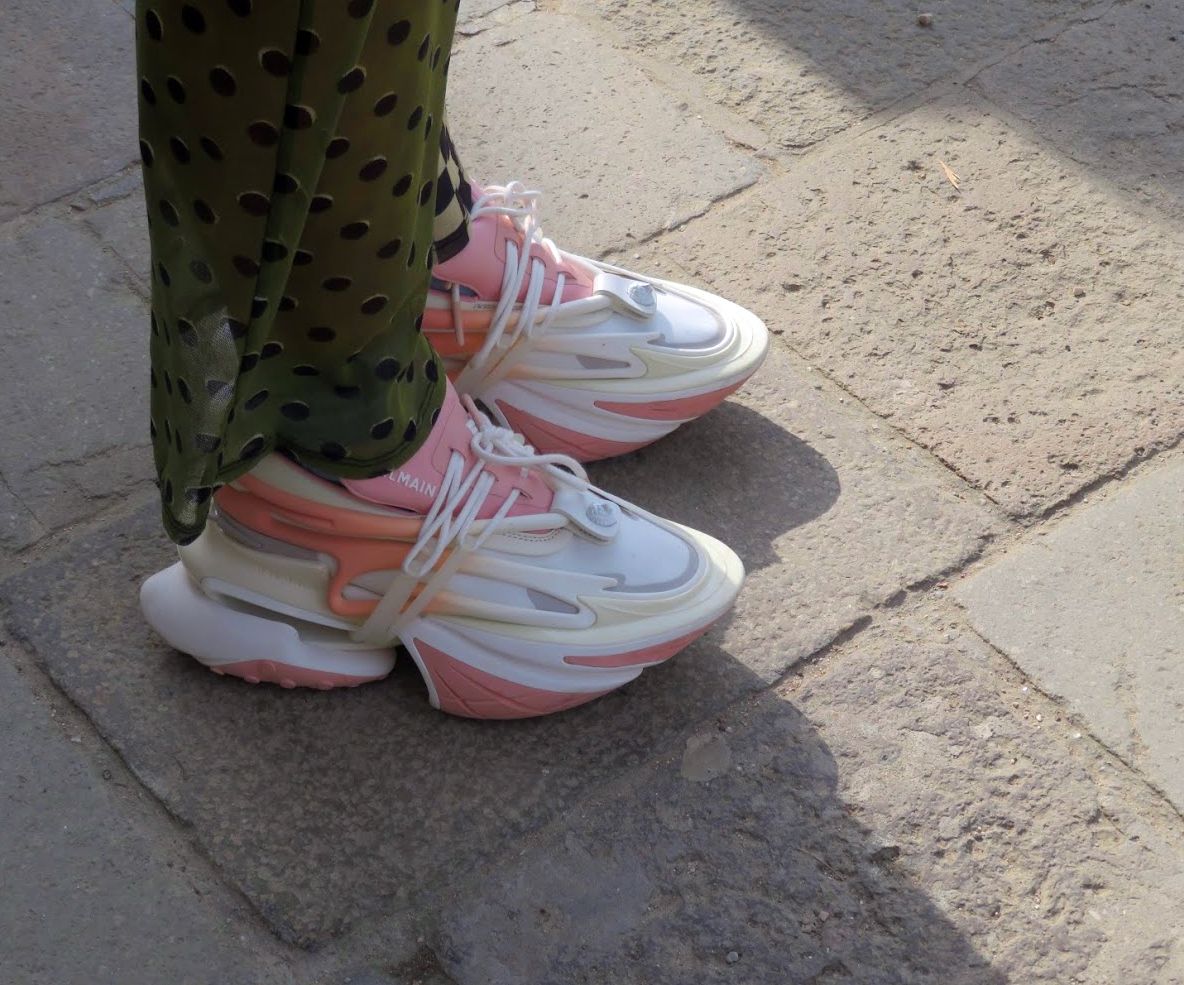
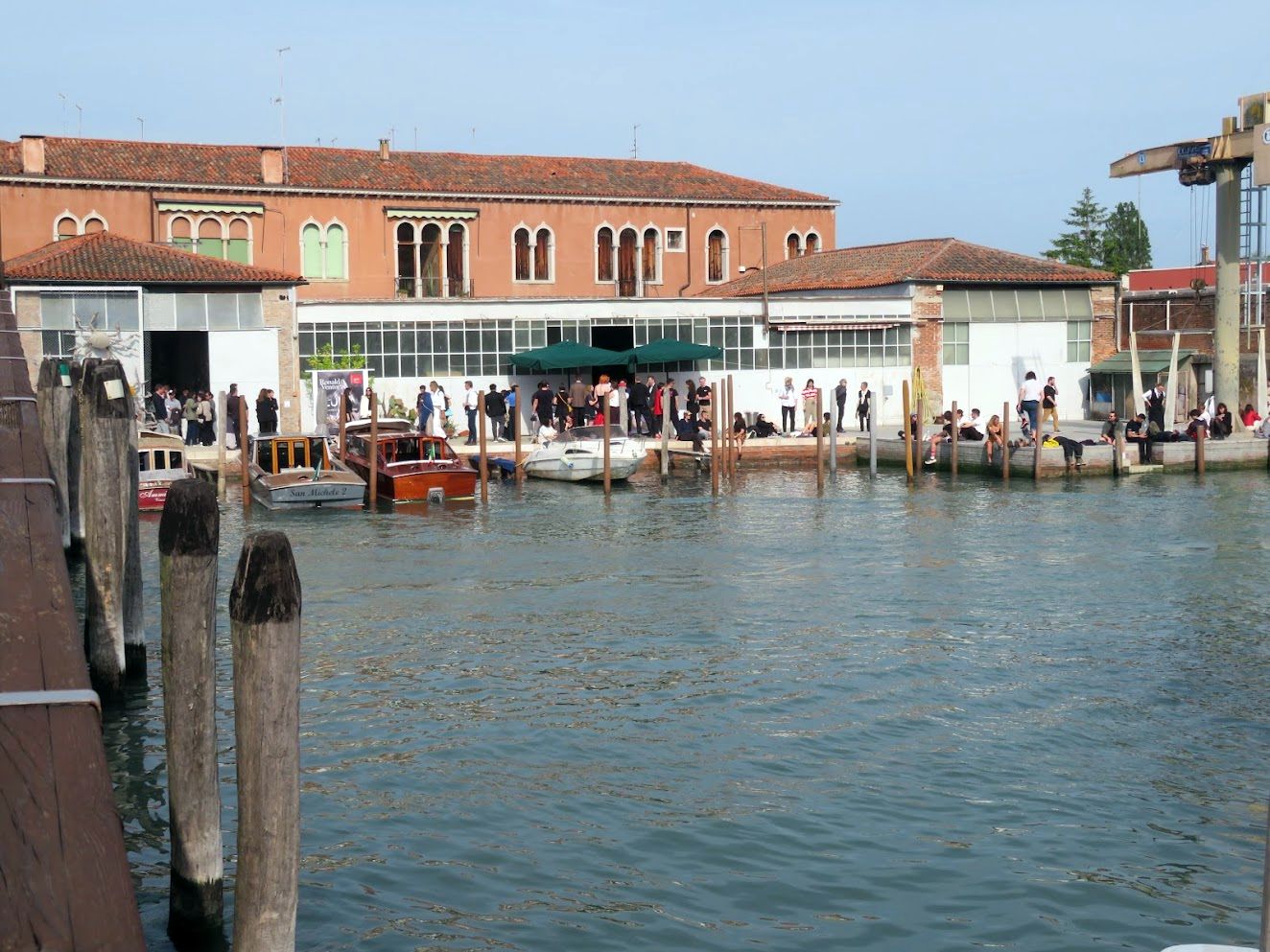
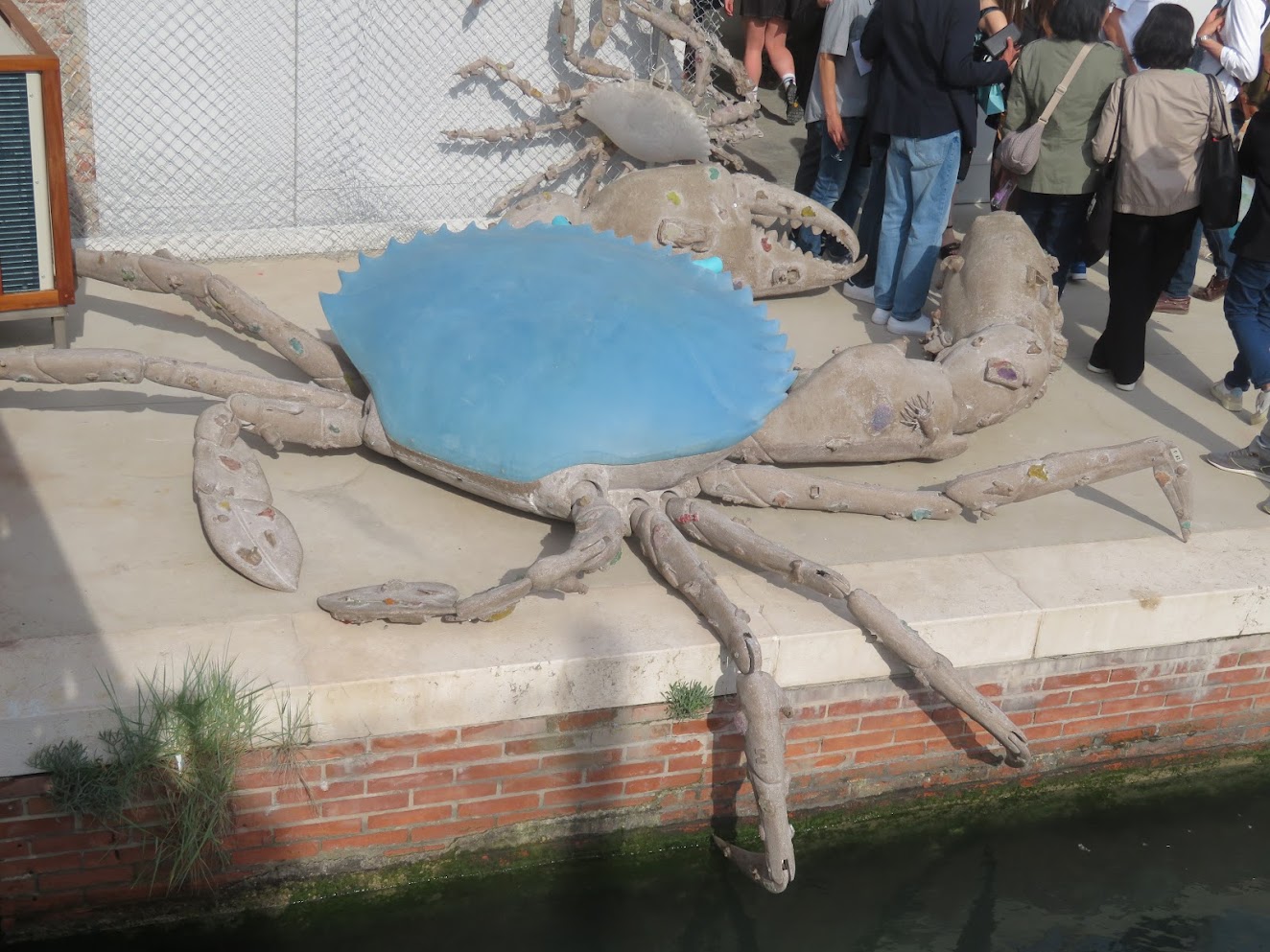
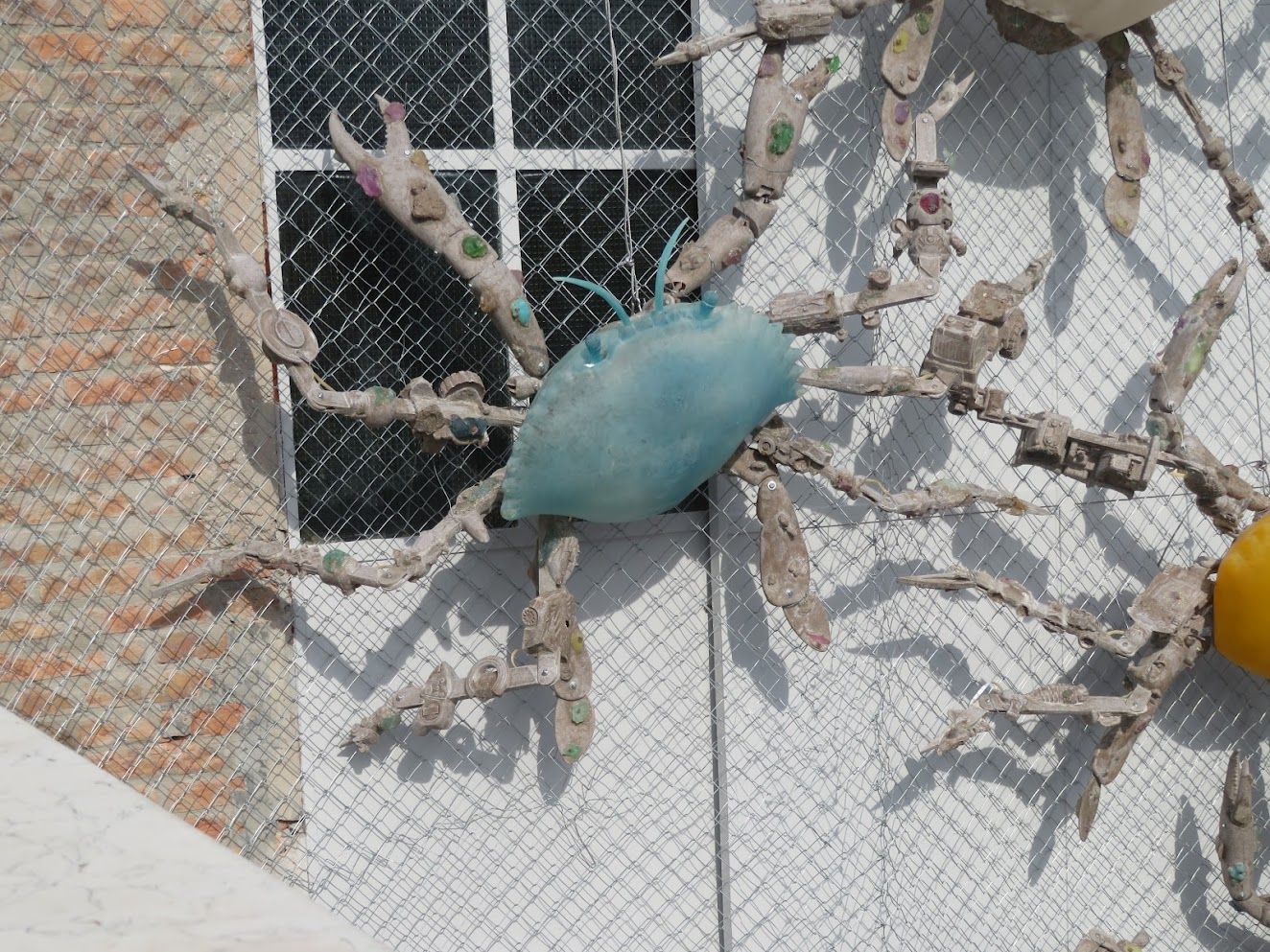
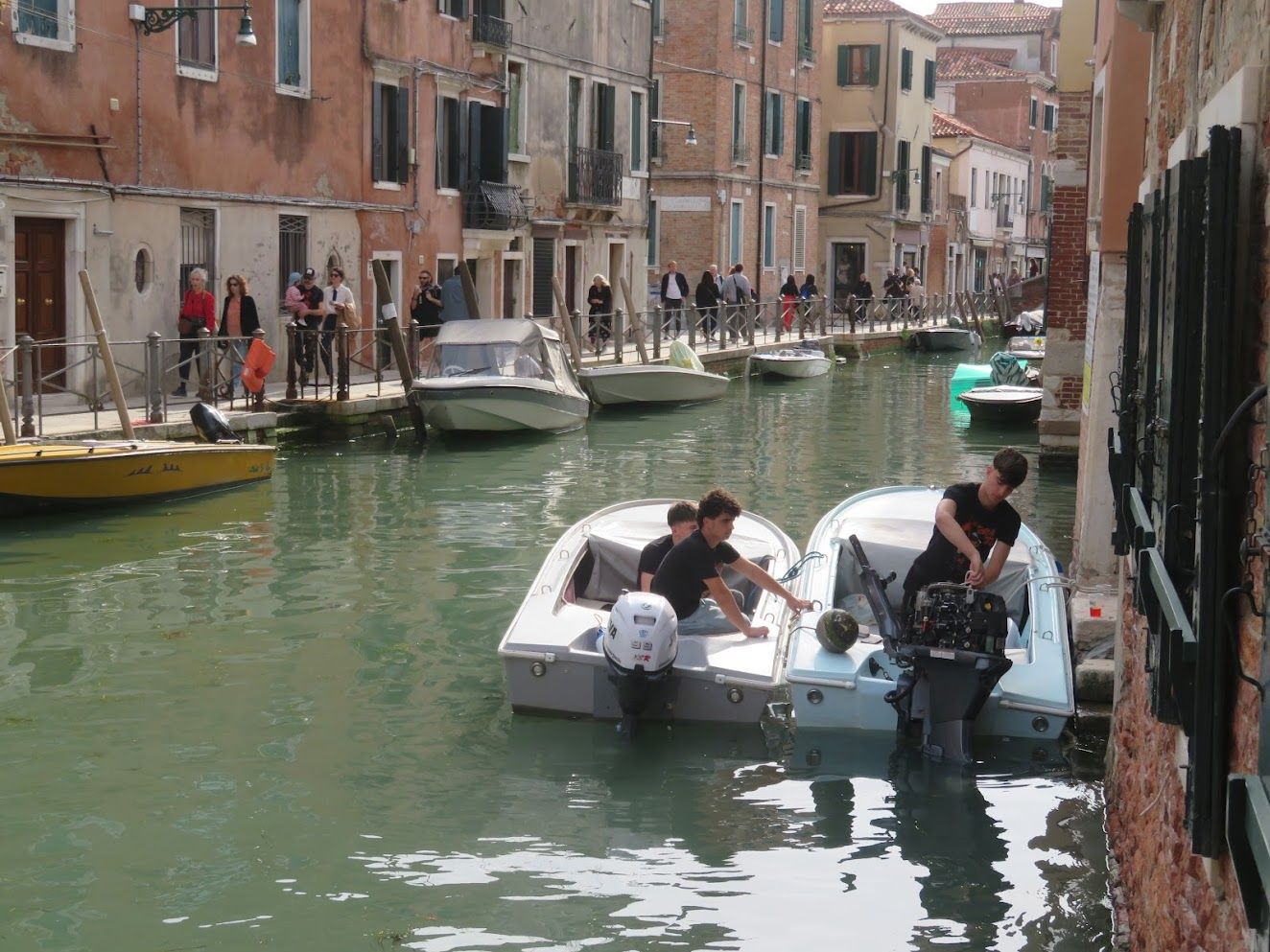
Just remember — and I’m not being sarcastic — the Biennale is better than Carnevale. Because Carnevale is full of people dressing up and pretending to be something or someone they’re not. The Biennale people aren’t pretending anything. They’re absolutely serious about all this.
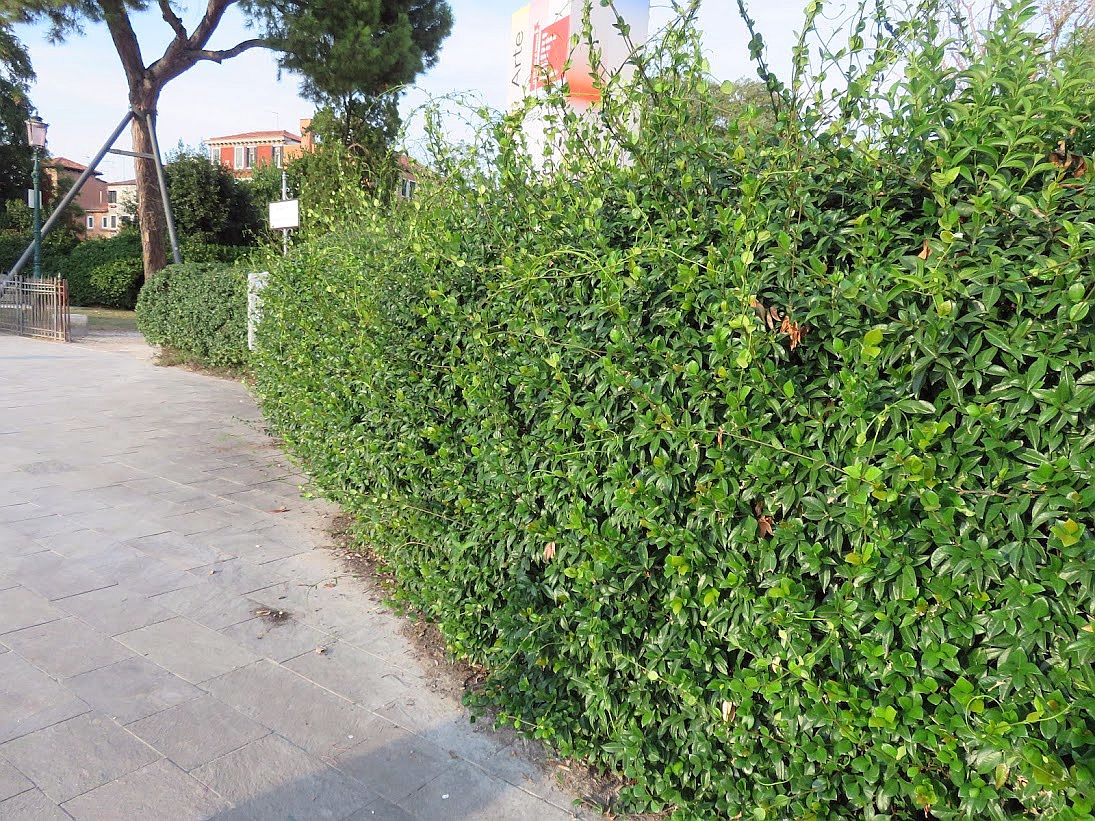
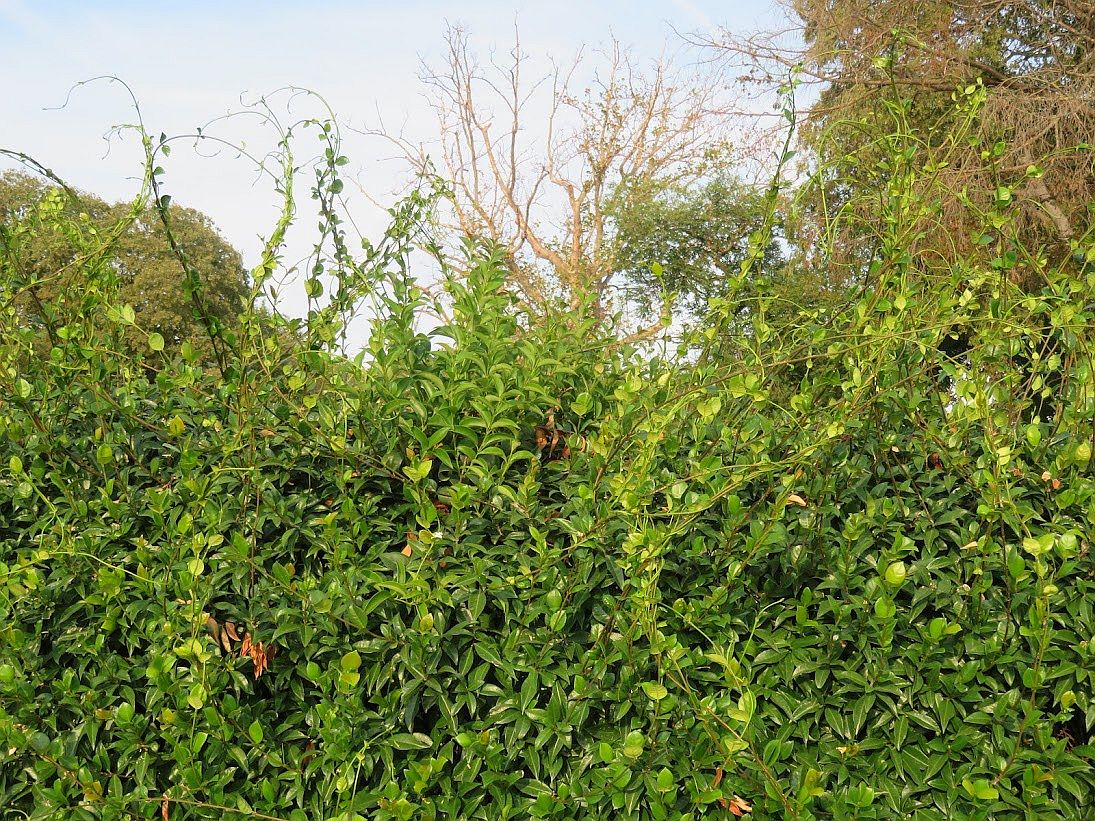
hedge gone wild
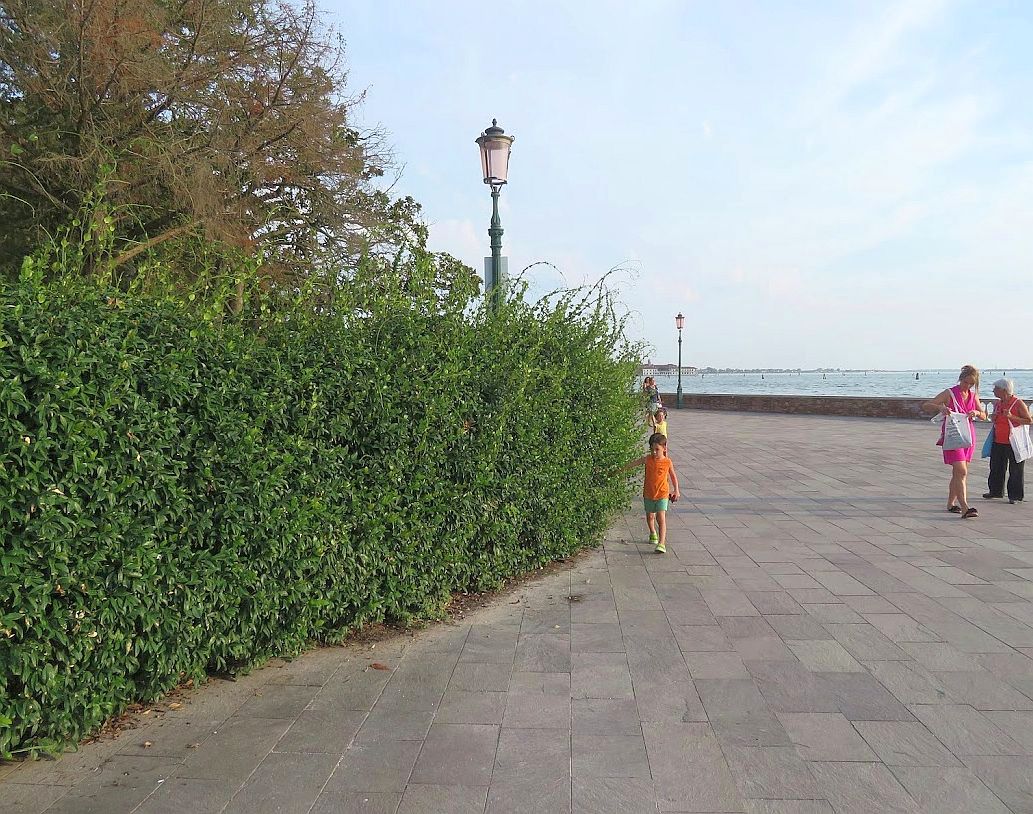
Well, I waited six months to get a haircut, so I suppose I’m not one to criticize a hedge. But I’m confused. Wouldn’t you think that the so-called most beautiful city in the world would do a little more to keep itself presentable? I know my mother would.
Granted, we all know how you just go along thinking everything is fine… you’ll fix your hair/mop the floor/write that thank-you note just any day now…and then suddenly something snaps and you realize that your hair is a freaking mess, etc. etc. The jig is up.
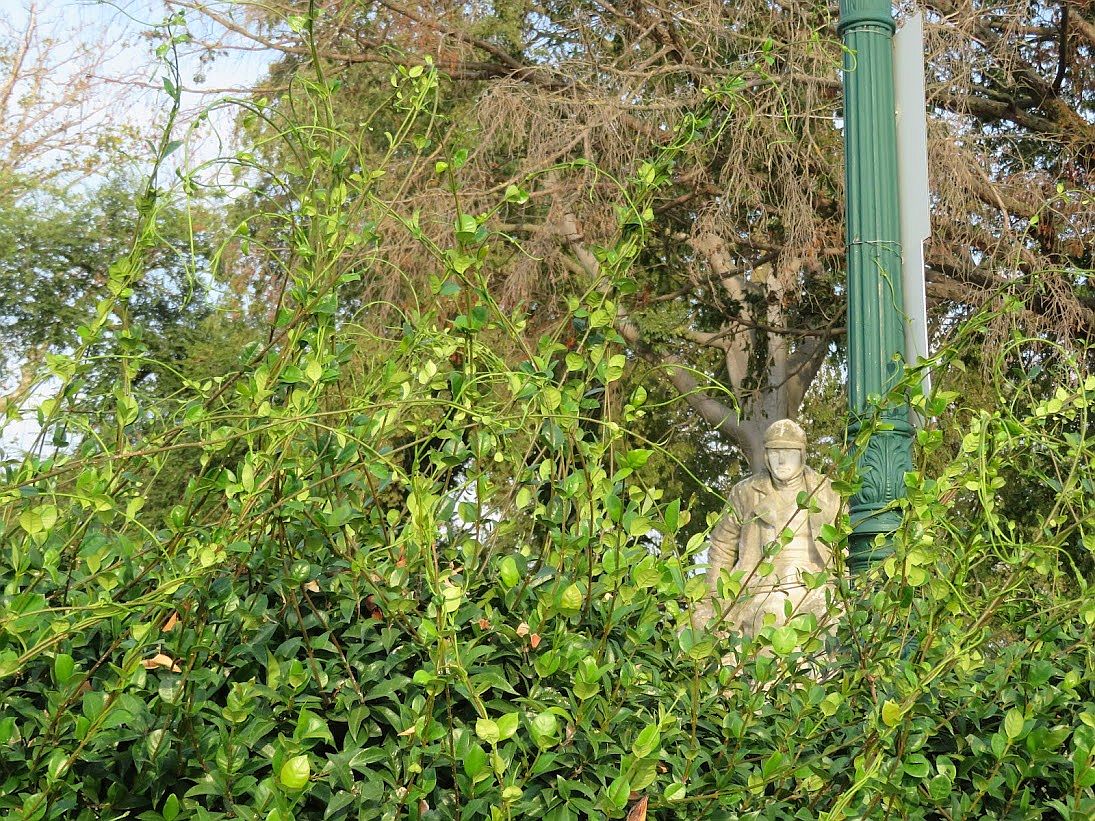
In the case of this hedge, nobody seems to be responding to the jig. Maybe wild-haired hedges are just the latest trend, or something related to the Biennale which is just through the park ahead. But company’s coming to town (and some is already here — I’ve seen the yachts). Tomorrow is the first day of the Venice Film Festival, and if there were ever a time to trim that hedge, I’d think the time would be now. Actually, yesterday. ACTUALLY, a week ago.
But what, as I often ask myself, do I know? I never trimmed my bangs to suit my mother, so it’s clearly just as well I was never responsible for a hedge.
Biennale’s back in town
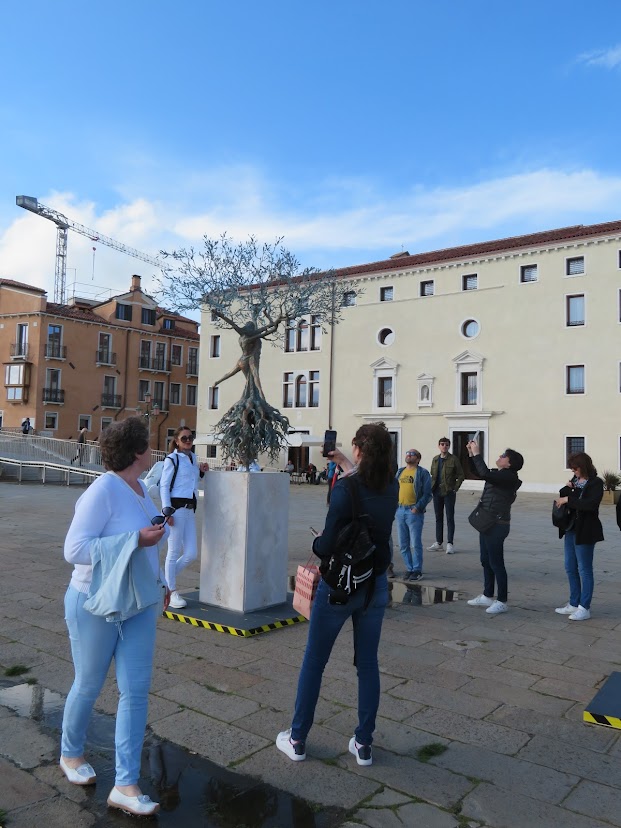
For a thing that essentially doesn’t interest me, I seem to be unable to resist mentioning it. Each year the prologue (fancy word for “the few days preceding the opening”) to the Biennale changes the neighborhood rhythms, not to mention the scenery, as participants, journalists, and assistants of all sorts and levels permeate our corner of Castello. Saturday the sun was finally shining, and there was an atmosphere of a pleasant kind of updraft out and about.
The Biennale — this year it’s dedicated to Architecture — will run from May 20 to November 26. Whether I personally like it or not is absolutely immaterial to everybody, including me. It Is. And if you think art (or this year, architecture) is the point, you may be mistaken. When the city government hits “total” on the municipal calculators six months later — yes, half of the entire year — it’s clear that the Biennale has become one of Venice’s main sources of income.
Venice has survived for centuries by selling things, and this international event is the latest in the very long sequence of commercial activities and products. Basically, Venice now sells itself, or what I call Being in Venice. The subcategories are “looking at things,” “eating food,” “sleeping somewhere.” Sub-subcategory: “getting around in vaporettos and taxis and big lumbering tourist launches or on foot clogging streets and bridges.” Any visitor to Venice is part of this dynamic — the Biennale just concentrates it in a spectacular way. My comments are not opinions. Having an opinion on the Biennale would be like having an opinion on gravity.
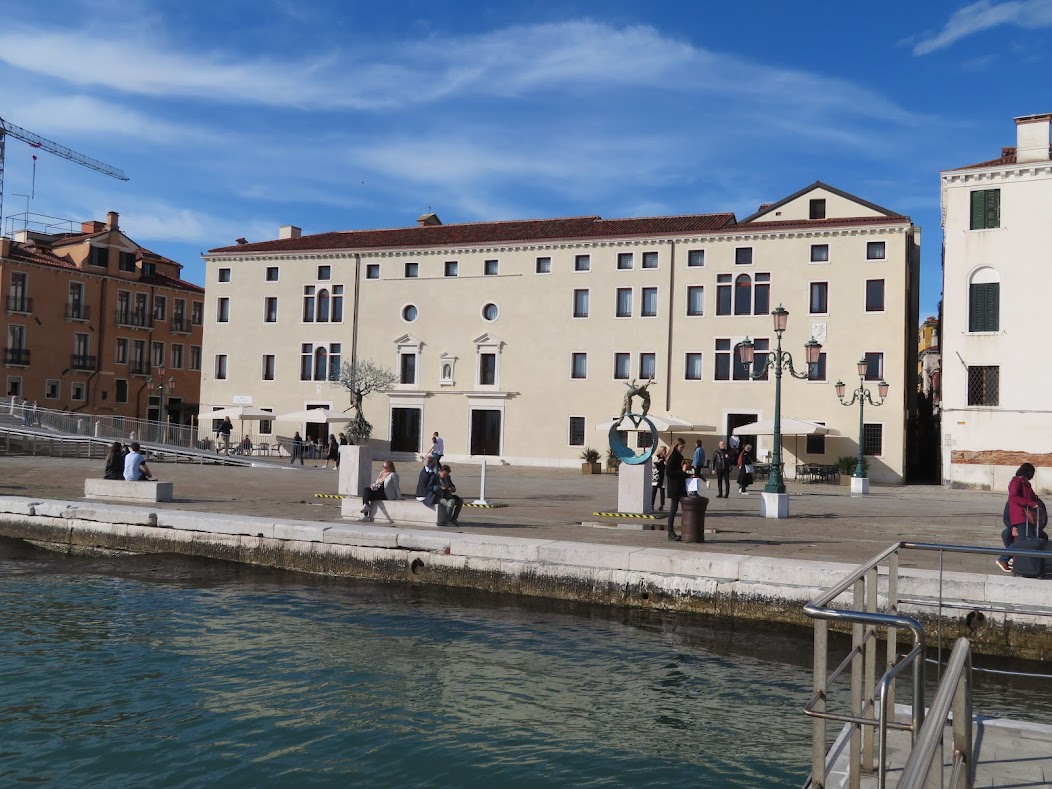
Opening day is May 20 and it will run to November 26. It seems like it just closed and yet somehow here it is again. Last Saturday the neighborhood had a sort of swirly atmosphere. Not entirely unpleasant – at least you see some new people and discover whatever is trending in the world of fashion. One hopes that some of these outfits do not represent actual trends.
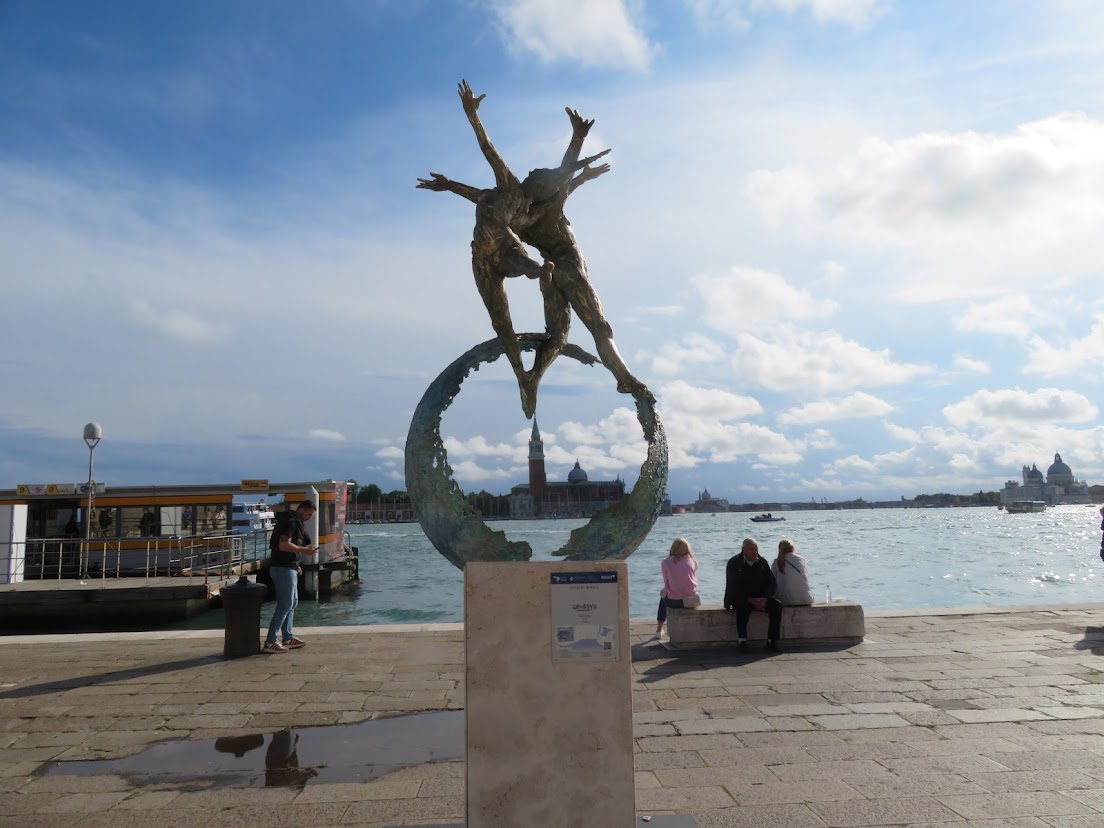
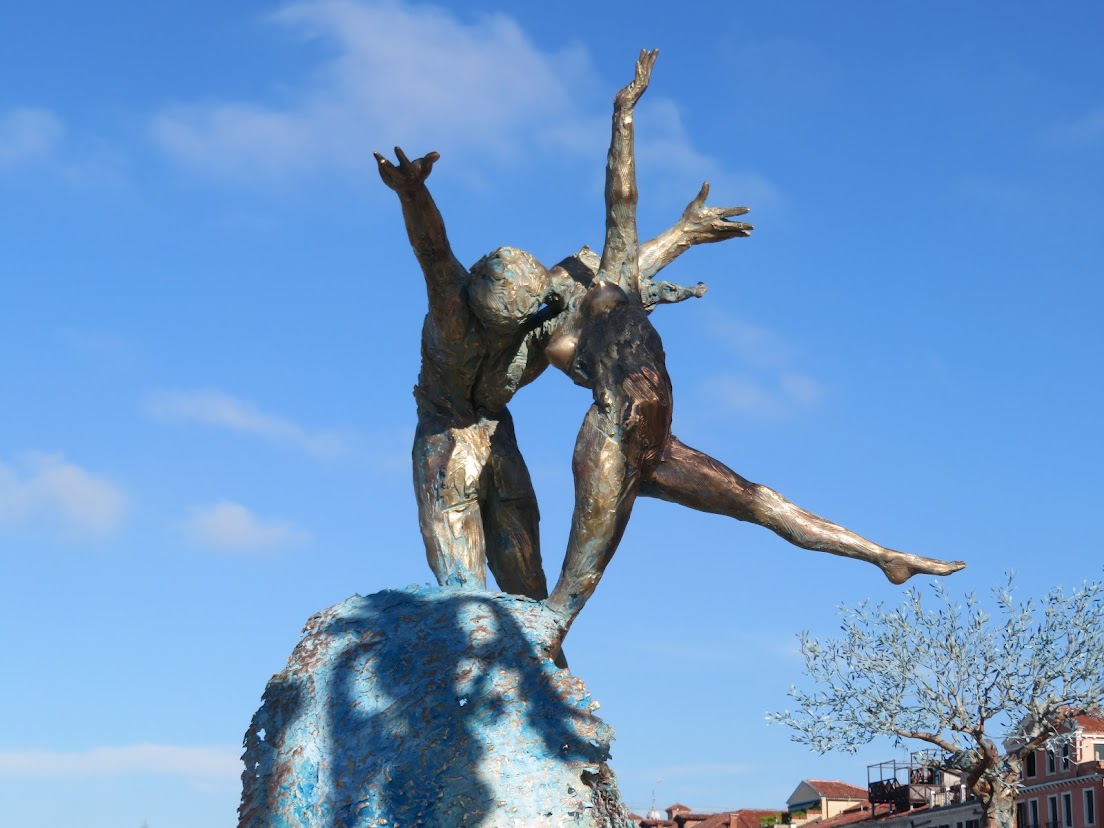
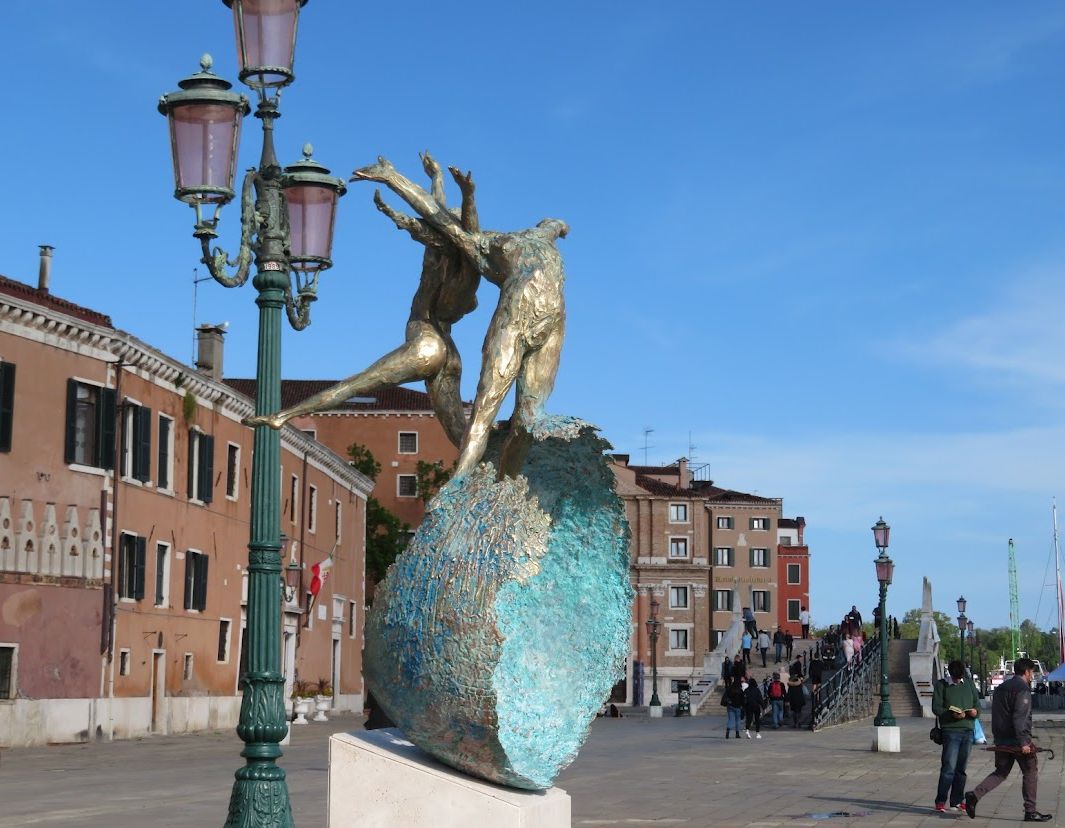
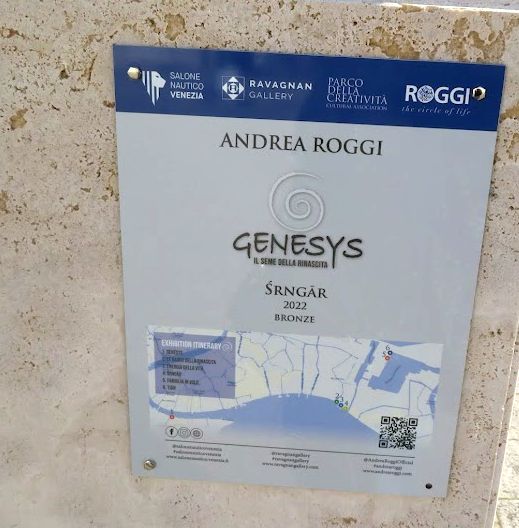
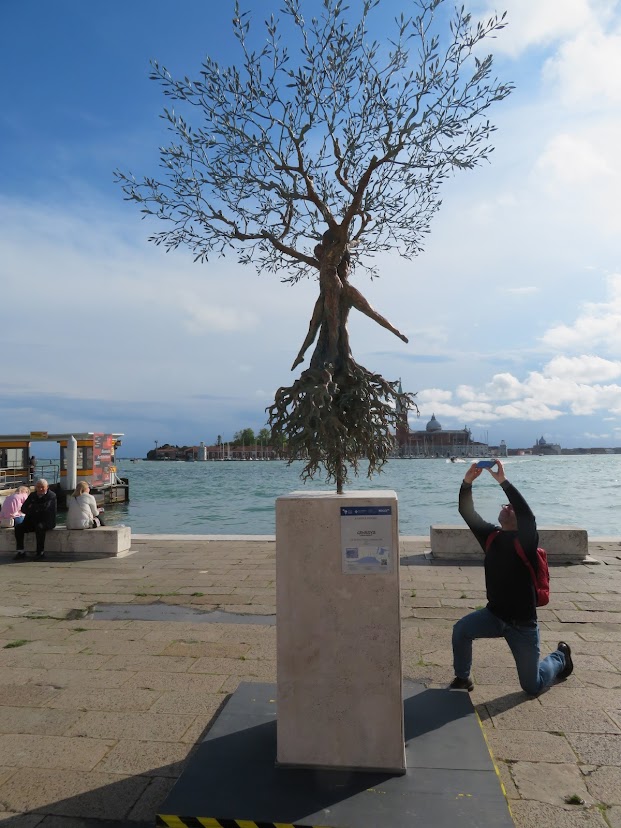
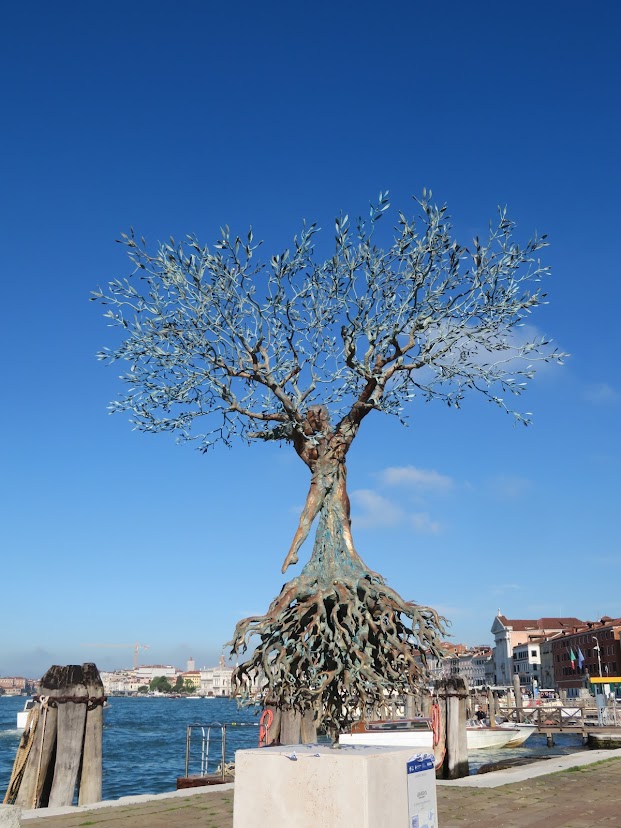
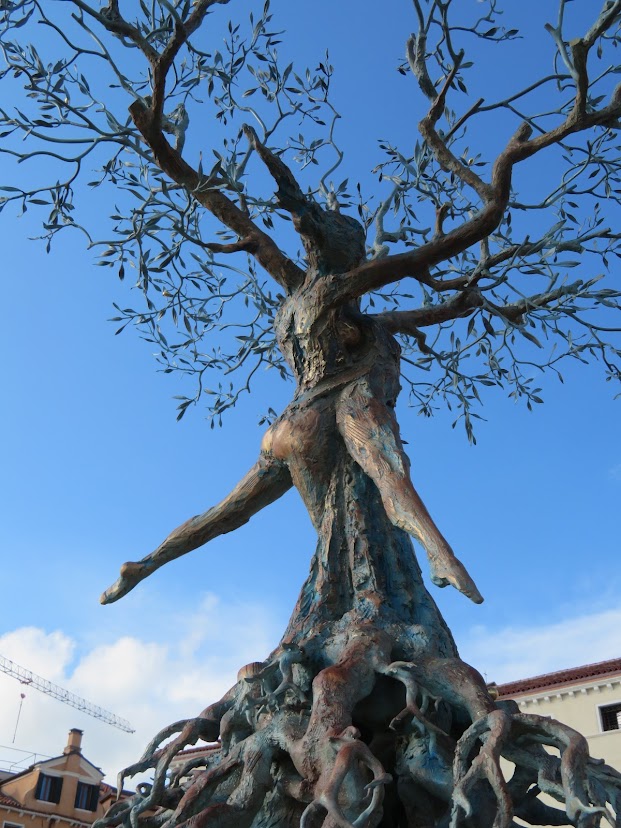
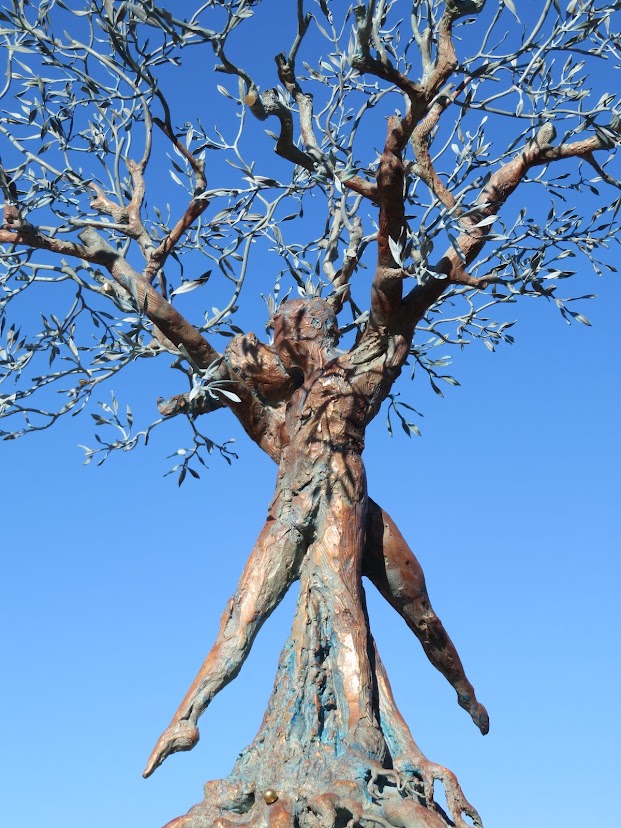
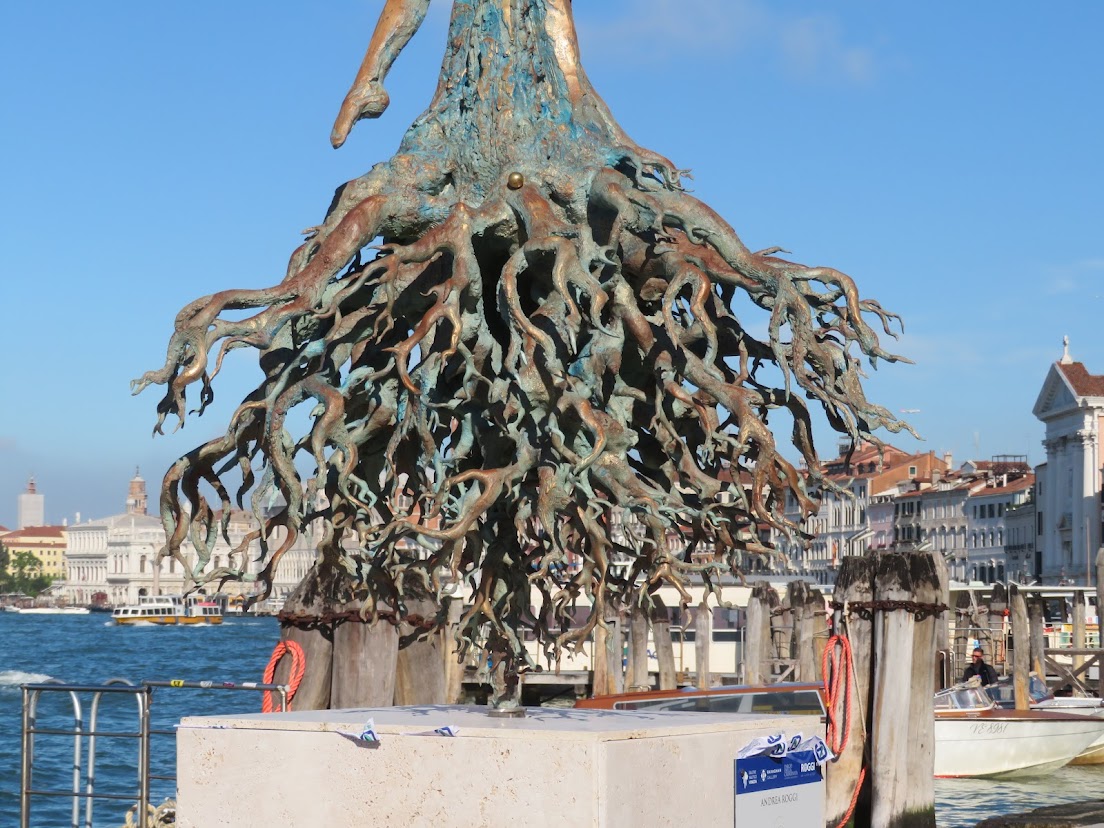
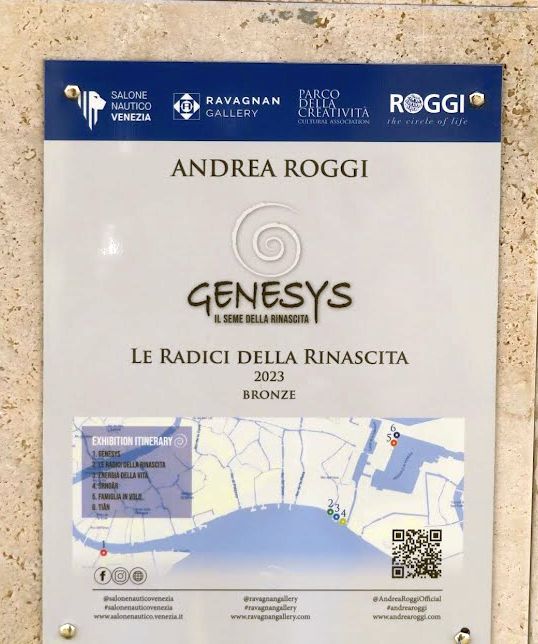
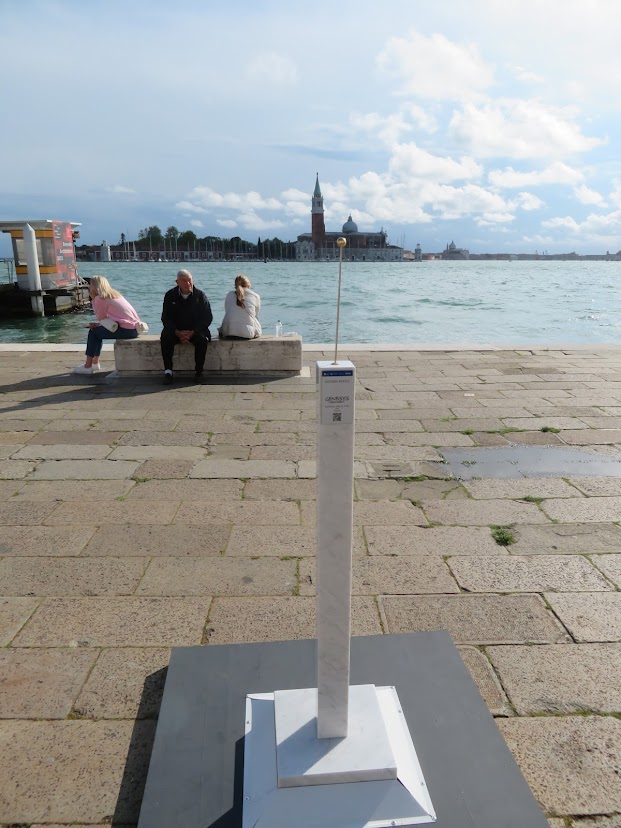
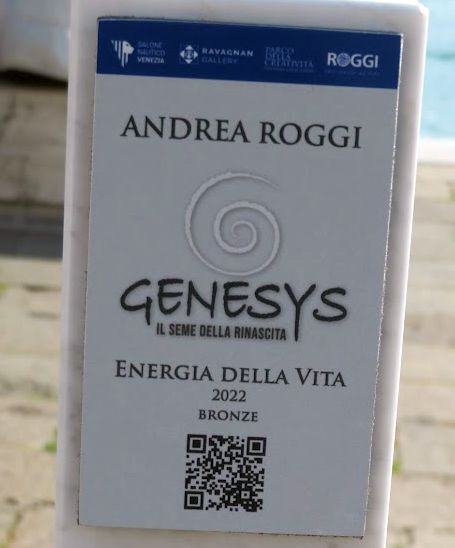
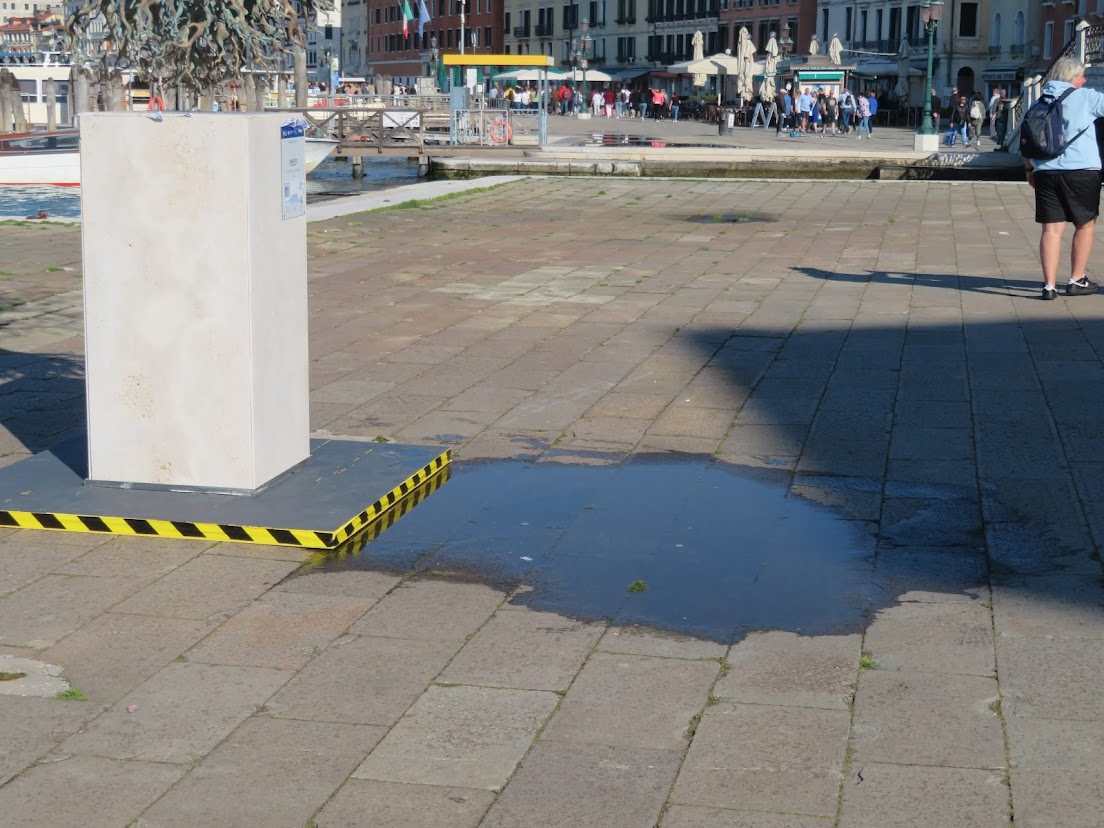
Speaking of definitions, one of the primary points of all these works is to entitle your work or show, as far as possible, in the most cryptic possible way. Yes, the word means something; no, it’s incomprehensible here. That’s what makes it art, you peasant.
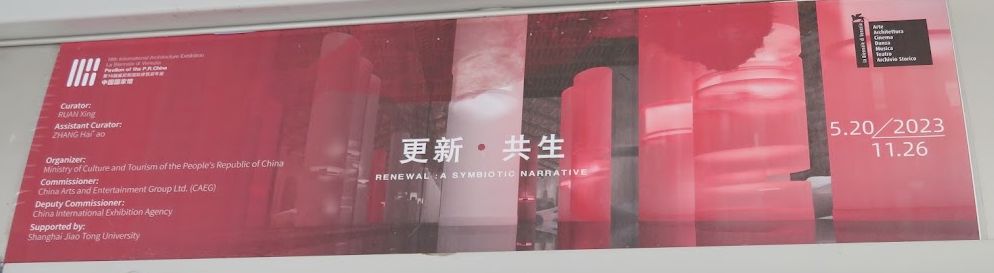
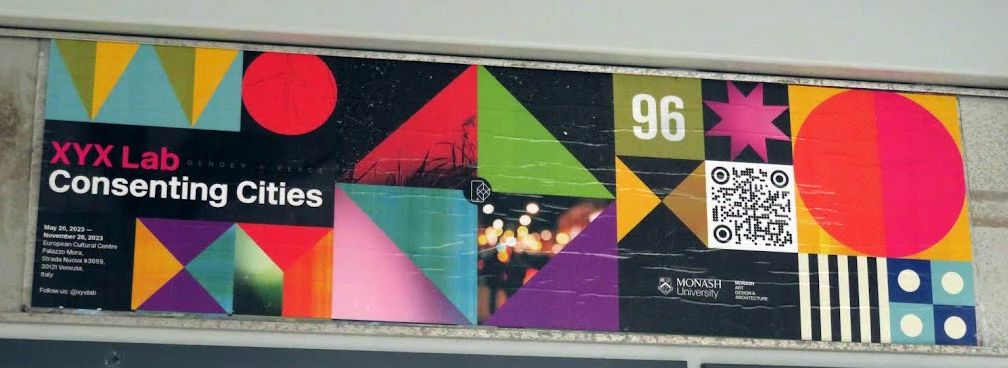
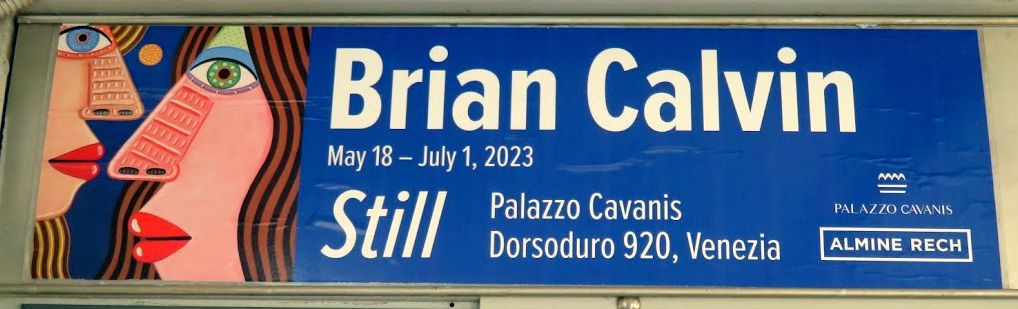
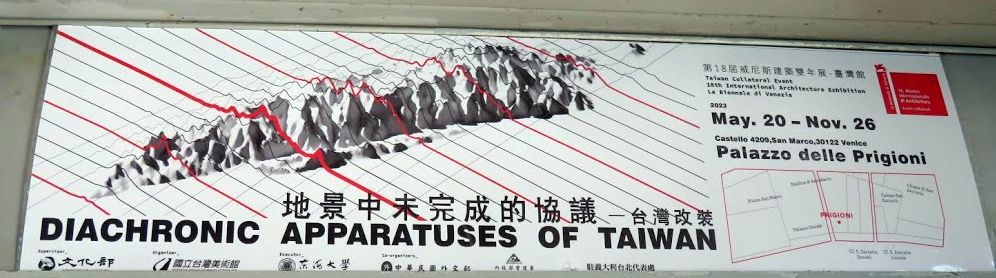
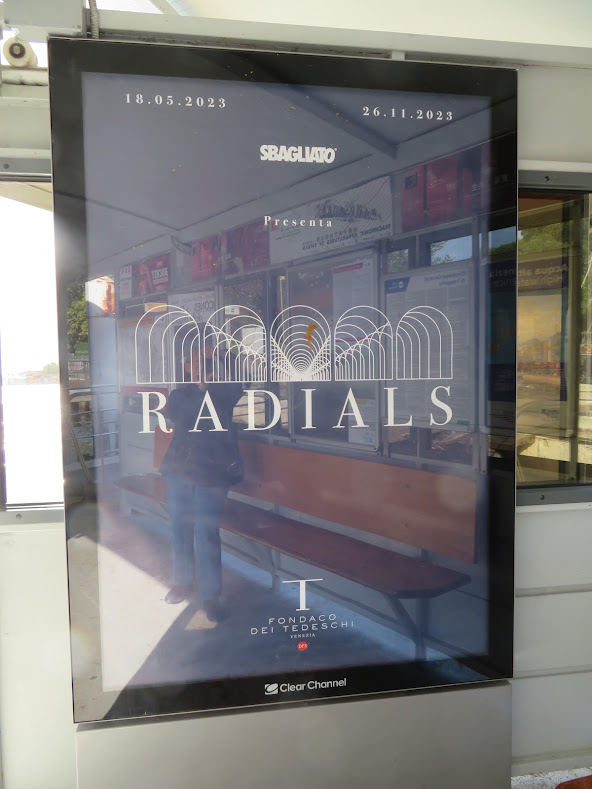
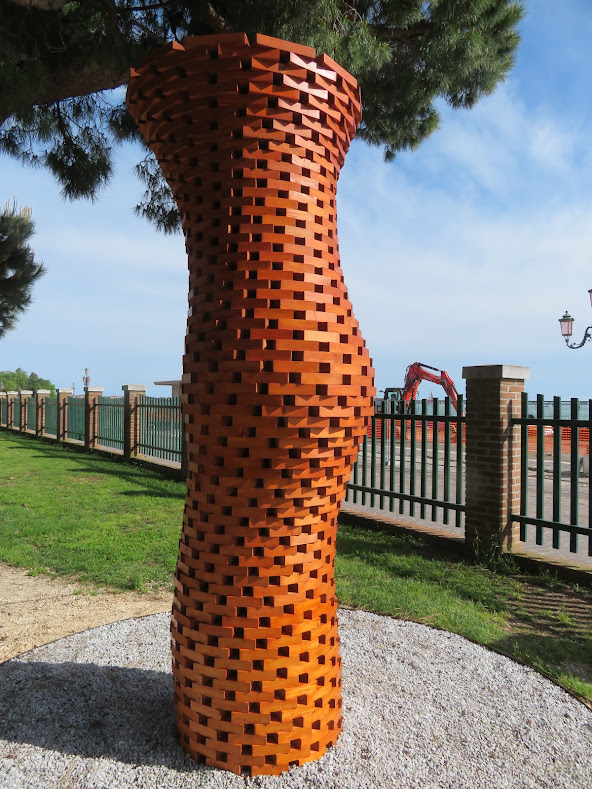
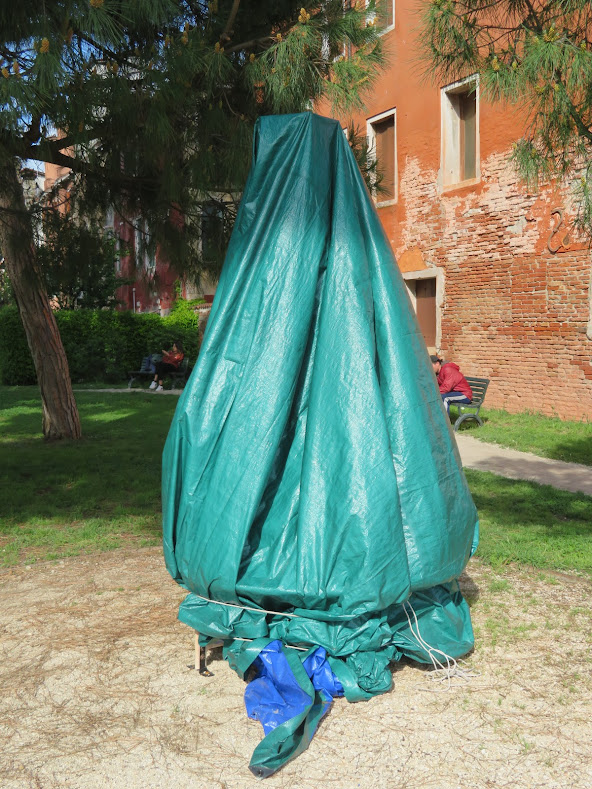
More architectural items are being set up in the two little parks along the fondamenta dei Sette Martiri.
update from Planet Cube
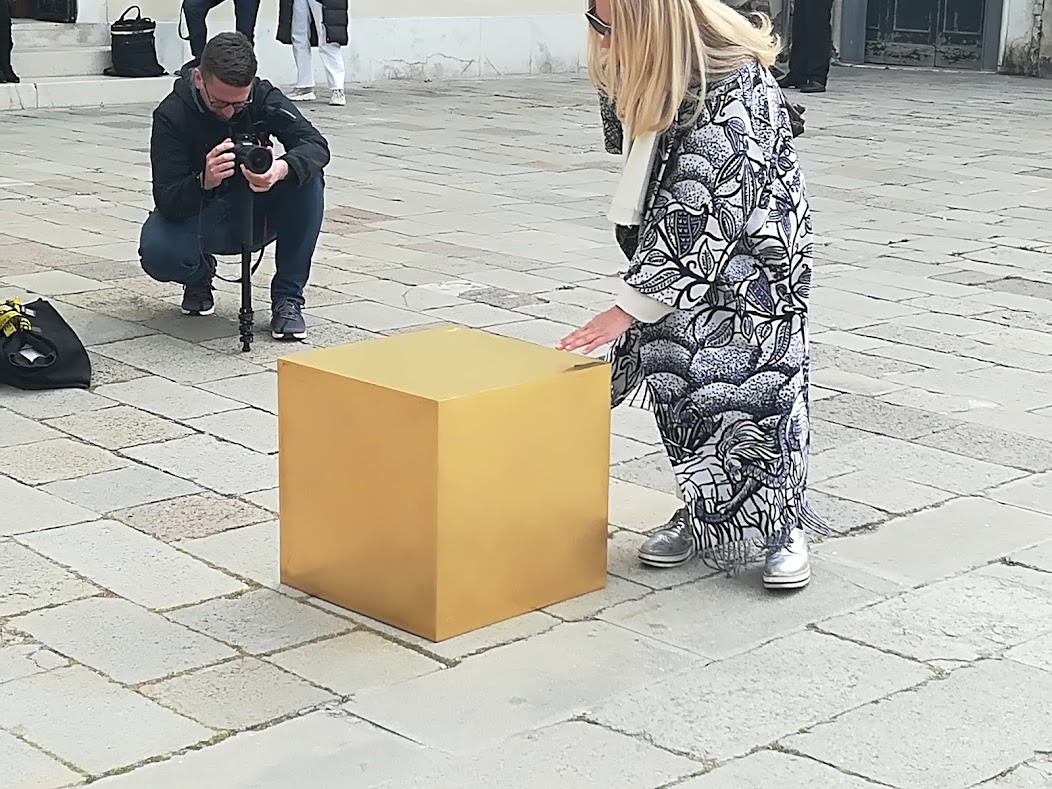
A brief article in the Gazzettino Saturday added a few details about this artefact, which I pass along.
It’s called “Castello Cube.” I hadn’t realized it had a name, it seemed such a generic object. Not that the name is any less generic.
The creator goes by the nom de guerre Niclas Castello. Now I begin to comprehend. And it is being shown in Castello! It’s almost like destiny.
His real name is Norbert Zerbs. I myself would have totally kept this name. Be proud of your heritage, Zerbs!
The cube sat on the riva Ca’ di Dio for 24 hours, it says here, so that would also explain the security guards. There were ten of them.
It weighs 186 kilos (410 pounds) of 24-carat 999.9 fine gold. I’ll admit that for some reason I didn’t want this to be true. I was telling Lino that it was probably an empty cube made of iron sheets covered with gold leaf. Nope. It is precisely what it appears to be: A block of solid gold.
Never before in history has this much gold been worked into one artwork.
The value of this mass of metal is about 12,000,000 dollars.
Zerbs’s net worth is listed at 51,000,000 dollars.
I notice how many facts about this object have to do with quantities. Don’t know why this seems to fascinate people. A man in Alaska told me that a tourist looking at Denali once asked him how much it weighed.
It was displayed in Central Park in New York City last February.
An art historian named Dieter Buchhart made the following declaration (I translate): “It is a conceptual work that seems to have arrived from another world and now is standing on the paving-stones of Venice, without a pedestal.”
I’m as keen on conceptual works as the next person, even if the concept eludes me, but here’s a concept: By all means bring us a cube of gold that seems to have arrived from another world. Just stop talking drivel.
“The artwork is exhibited in public places so that it is accessible to everyone,” said another expert, “and people have the opportunity to rediscover art in the open space.”
I’ll tell you what — you’d need 186 kilos of self-confidence to put something you call art into an open space in a city that is composed almost entirely of art. I might discern something artistic about it if it were standing, say, in an acre of alfalfa, or drifting on a raft down the Monongahela river. But placing an object purporting to be art in Venice takes nerves of tungsten carbide.
Anyway, it’s gone now, continuing its quest to find a pedestal.