Cutting up


A few days ago a powerful storm passed through, strewing rain and wind everywhere (though it stopped short of throwing hail, I’m glad to say, nor did any tiles go frisbeeing off roofs — my own ballpark-way of measuring the ratio between windspeed and danger).
But I forgot about trees. We discovered the following morning that these can also be useful, potentially life-threatening, indicators of wind.
The viale Garibaldi (not to be confused with via Garibaldi) is the shady length of filled-in canal which stretches 785 feet (239 m) from the aforementioned street to the Giardini vaporetto stop. During the summer its enclosing rows of lime trees provide the most heavenly shade, and there is always some breeze. The benches, especially during the heat of the day, are almost always occupied by people who are either eating or sleeping, which leads Lino to refer to this space as either the refectory or the dormitory.
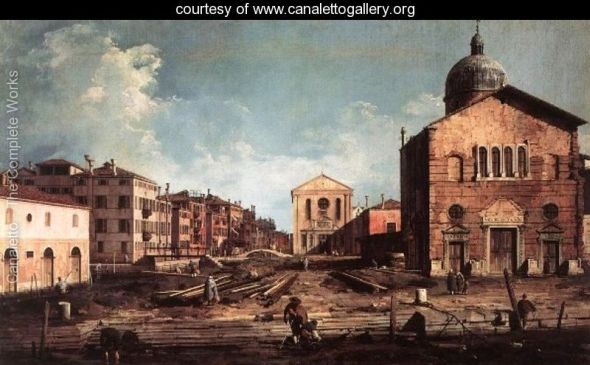
We weren’t surprised to discover that a tree had been blown down, but I was surprised to see what damage it had wrought. Lime trees bless us briefly with the most heavenly perfume each spring when the flowers bloom, but evidently their root system is not adapted to the conditions here. By “conditions” I don’t mean the possibility of wind, which exists everywhere, but the likelihood of wet and shallow subsoil. Even if it doesn’t rain for weeks and the leaves all turn brown, I am convinced that the aforementioned former canal (which continues to flow through a large pipe beneath the gravel) maintains some level of moisture which disturbs the balance between horizontal and vertical. If I’d ever studied physics, I’d know what to call this. I suppose “topheavy” will have to do meanwhile.
Lime trees, or linden, have carried sacred significance for millennia for Slavs, Germans, and Greeks. I respect the leaves’ purported healing properties also. But I have learned that while it’s a great thing to wander among them at blossomtime, you’d better keep away when the wind rises.
Keeping as close to houses as you can manage, in case any rooftiles decide to join the party.


Fishing for compliments

Our upstairs neighbor, G.S., now retired, finally has all the time he wants to go fishing. I understand that this is the dream of many men, and he is living it to the full.
He sits in his boat on some expanse of water — naturally he will never tell us where, and Lino, a fisherman himself, will never ask. He sets up three fishing rods, and with what appears to be superhuman talent always brings home something. Often, many somethings. Which he sometimes shares with us.
First, he passes our kitchen window, which is usually open except in the depths of winter. He may call a friendly greeting, or Lino may already have heard him tying up his boat. So G. will pause, and Lino will indulge in what seems to me to be lots of time discussing the day’s conditions, catch, and other occult particulars of the angler’s art. Lino never fished with a rod (he prefers the leister, or what I simply call a “trident” even though it has many more than three prongs). But he knows as much as anyone about the lagoon environment and the customs of its finny fauna. So they confer for as long as they feel like it, then G. goes around the corner and upstairs.

For quite a while, he would sometimes reappear (three flights of stairs, twice — what a guy) and plop a plastic bag of some of his fish onto the windowsill. And not just any fish. Gilthead bream (orata, or Sparus aurata), sea bass, seppie, and assorted companions who made the wrong decision by thinking “Gosh, if the bream bit, it must be good. I think I’ll try it.”
He would briefly and modestly accept our praise and thanks. Like anyone who does something really well, he considers most compliments to be mere statements of the obvious. I once complimented the wife of a trattoria-owner in our old neighborhood on her fried meatballs. “They’re the best meatballs in Venice,” I said, thinking I’d give her pleasure. “I know,” she replied. And that was it. Once I recovered from the sensation of having missed a step going down the stairs, I realized that she couldn’t honestly have said anything else. If she didn’t know how good they were, who would?
Back to G.
Matters have taken a new turn. He comes home, he passes the window, he shows Lino the catch, they talk, he goes upstairs. Normal. But the other evening, after a few minutes, we heard him call. Then a plastic bag tied to a string mysteriously appeared, descending from above, framed in the doorway.
People still sometimes let down baskets to pull up whatever they need (everybody’s got flights of stairs), and more than sometimes they let down their bags of garbage and leave them hanging on a long cord for the garbage collector to retrieve. (Except they won’t be doing that tomorrow, because the garbage people are going to be on strike. Gad.)
I suppose if we lived on the third floor and he on the ground, he’d call for us to let down a basket, bag, tray, some kind of receptacle, and we’d pull up the fish, sometimes still thrashing. His generosity means that we now eat fabulous fish at least once a week. But it’s beginning to be hard to keep up with him. When somebody gives you eight or ten bream, which is one of the most valued fish in the Venetian culinary repertoire, you feel joy and gratitude and bursts of self-congratulatory health. But you can’t eat eight or ten at one go, and the freezer is beginning to murmur in a discontented sort of way, probably beginning to consider staging a mutiny of the bounty.
But we have put our hand to the plow, as the Good Book hath it, and, as advised, we are not looking back. If fresh fish is to be our fate, we will just keep on accepting it.


Springing ahead
Although we certainly can’t complain about the winter we haven’t had — all the cold and snow were re-routed to other parts of the world — spring is still exerting the old rousing-the-bear-from-hibernation force around the neighborhood.
So I festivate the equinox with a string of springy pictures, in no particular order, because I have the sensation that everything is happening pretty much in unison, like the Rockettes. This wonderful, too-brief phase comes down to essentially two things: Fish and flowers.


Spring sneaks forward

Veteran readers are all too aware of my passion for watching for the First Signs of things — mostly from the natural world. Yes, confetti counts.
Venice has had a totally boring winter. It hasn’t even really been winter. The temperature may have gone just barely below zero once or twice, but it would have been at night and I didn’t notice. We could practically have turned off the heat (thereby foiling the vampires of the gas company who suck whatever financial blood we manage to build up). But that would have encouraged mold and the smell of damp.
For the record, there was acqua alta a few times, but it wasn’t dramatically high, nor dramatically frequent.
I do feel sorry for everyone who has had to endure the apocalyptic winter which has struck much of the US and Europe But for us here, it’s been some fog, some rain, some more rain, a little more fog, and that’s about it.
Therefore it was only a small surprise to discover that the demure little plum tree (Prunus domestica) near the Giardini decided it was time to bloom. It’s pretty unusual to see blooms in late February, but there they were. Early? Late? Blossoms don’t tend to pay attention to that. There have been violets on the lawn at the Morosini Naval School for a week already.
I hope that March doesn’t play one of its amusing little meteorological tricks on the flowers and leaves. Whatever this season could be called, it’s time for it to move on and make room for another season to have a chance. Perhaps the plum blossoms are just one of nature’s ways of hinting that it’s time for winter to go home.