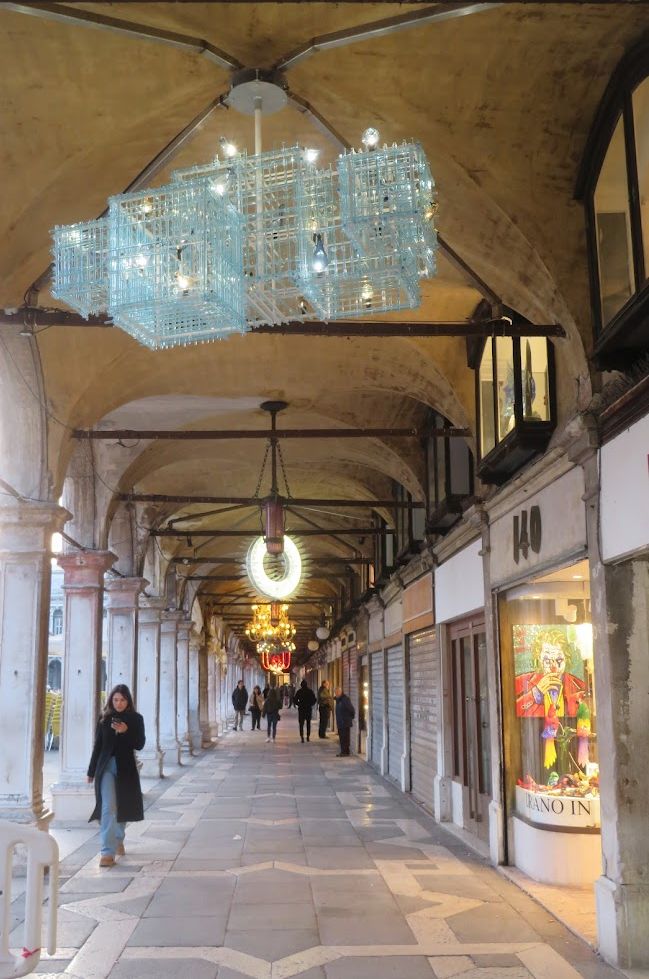
a farewell to Christmas

“Merry Christmas” in pure gold leaf beaten by Marino Menegazzo, the last man in Europe who beat gold entirely by hand. Stefania Dei Rossi’s shop “Oro e Disegni” has plenty of beautiful golden things but the sentiment here is 24 karat.

Naturally I intended to get this out before Christmas, but Christmas itself tangled me up.  (Pretty bold move to blame an entire holiday for my own lapses.)  Still, I wanted to squeak this into the calendar before 2025 reaches its expiration date.

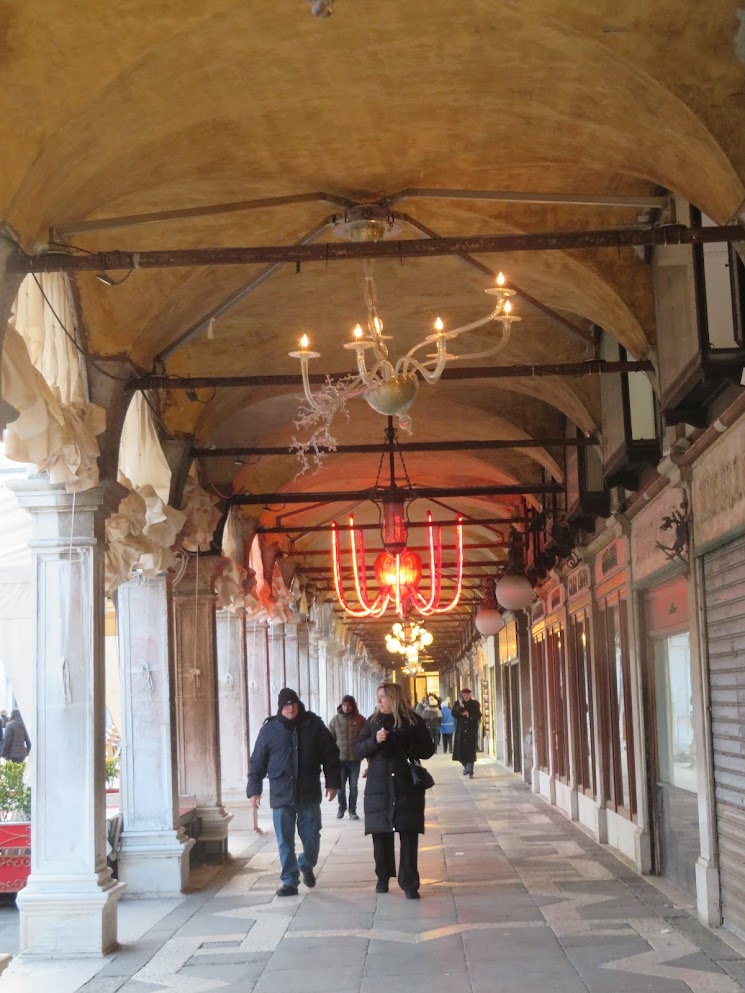
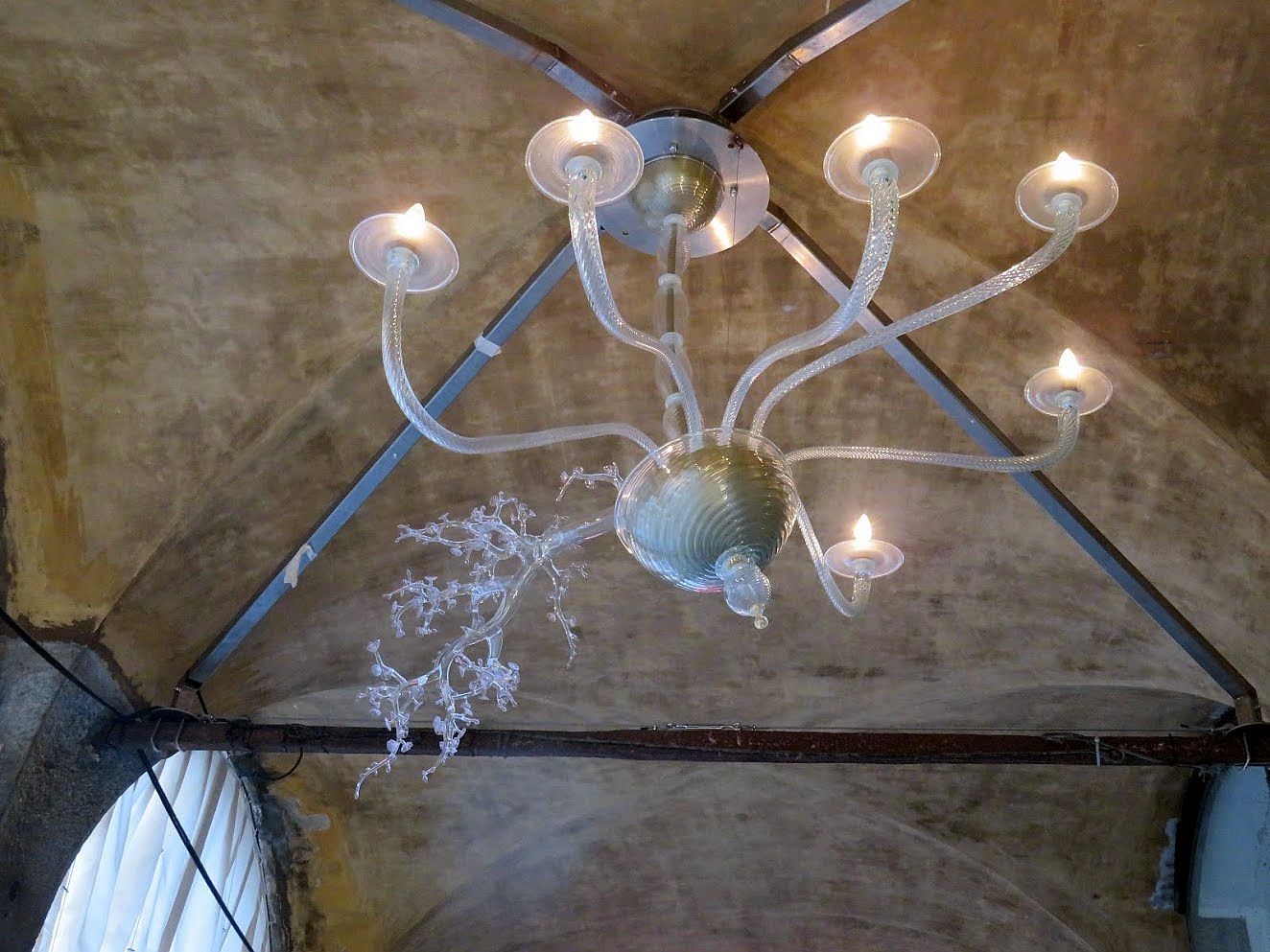
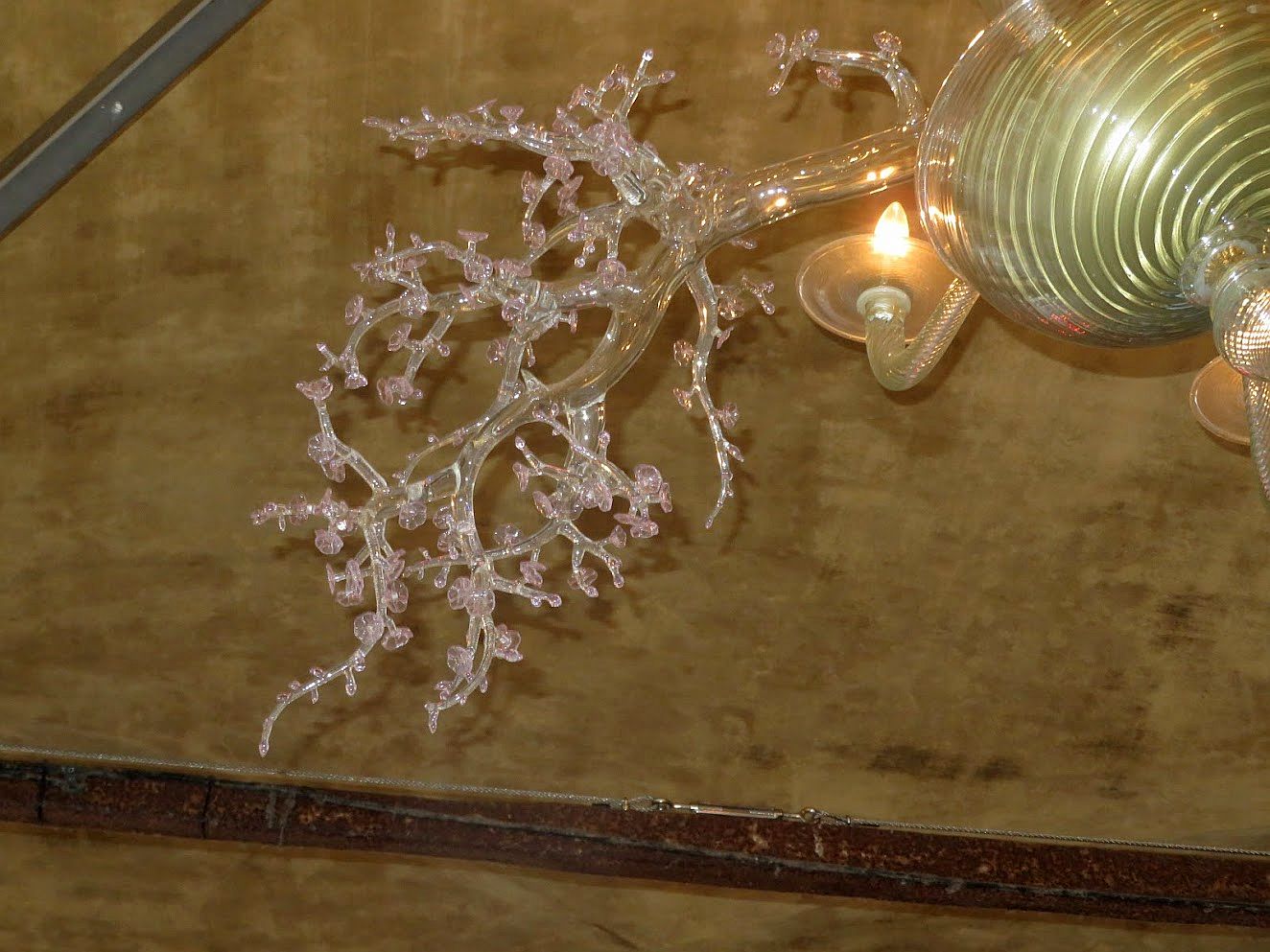
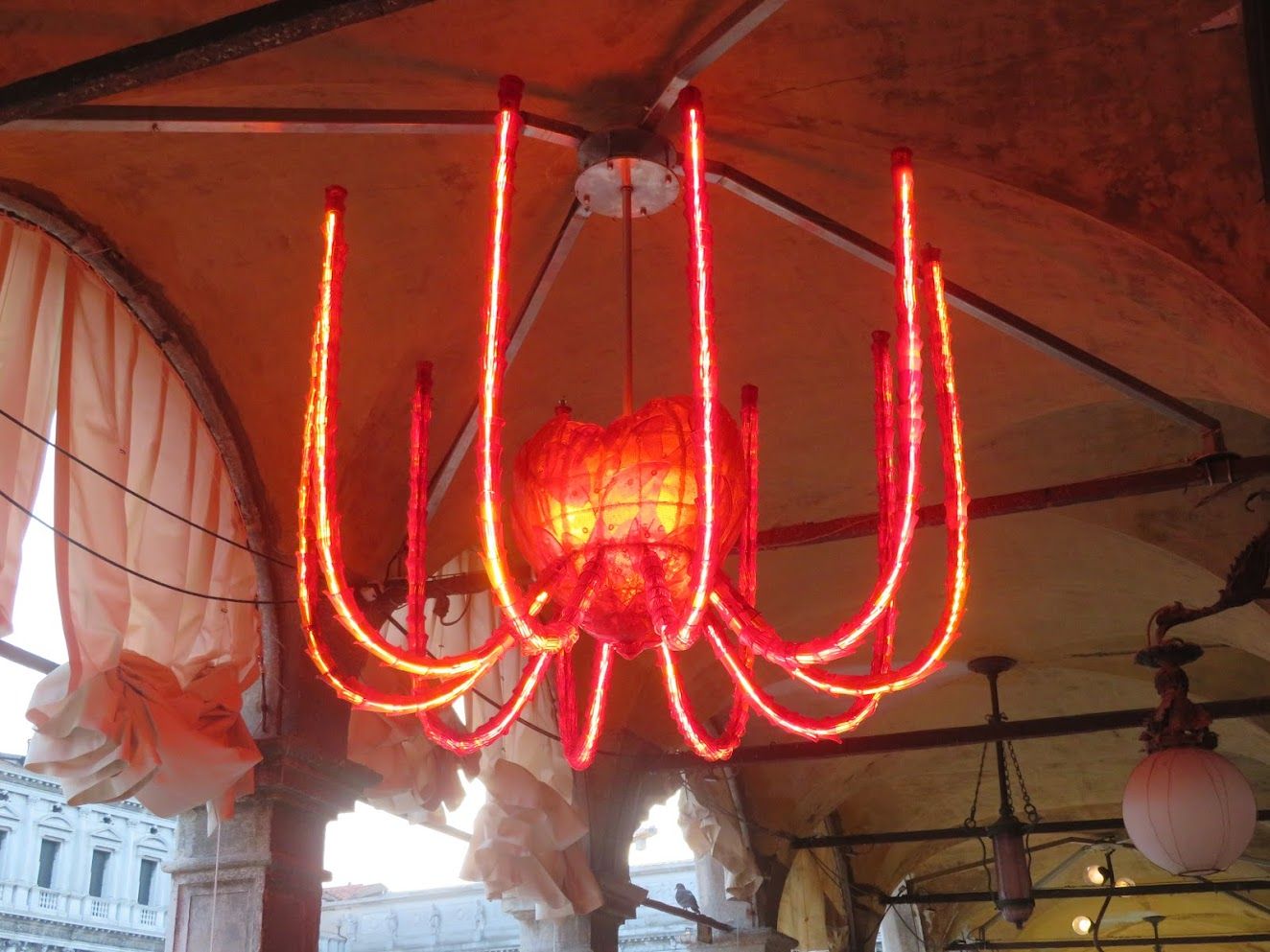
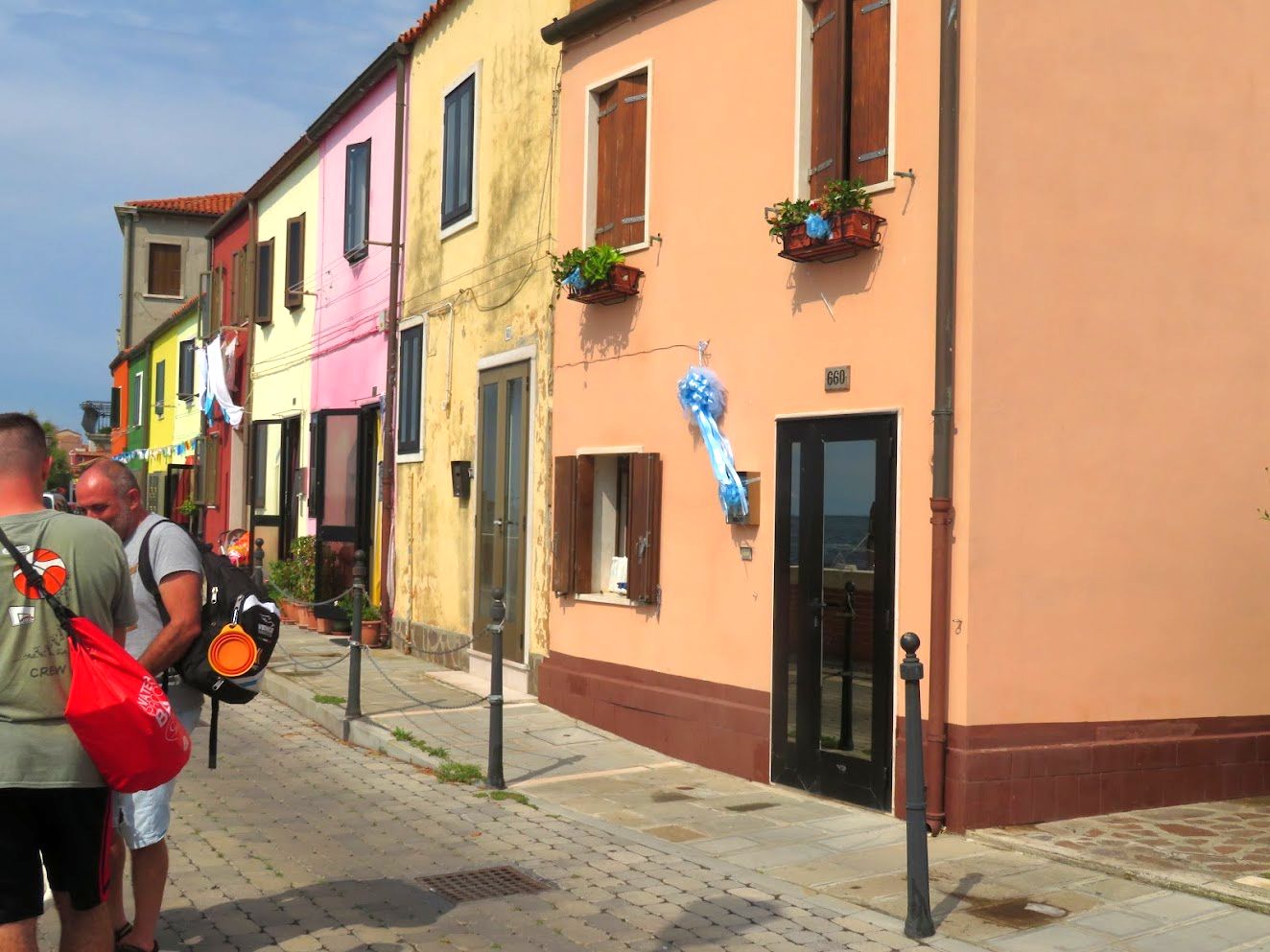
Just a few glimpses of what I saw as I wandered around.  Seems like the holiday was composed mainly of scraps, but they were good scraps.

Heartfelt best wishes to everyone for a peaceful, healthy, safe, nutritionally balanced, philosophically harmonious 2026.

Rio di Sant’Anna looking toward via Garibaldi. The fog helps.
Paolo Brandolisio’s forcola workshop has taken a frivolous twist. The forcola now looks like a duck but he gets extra points for making it work.
Speaking of frivolity, I bet you’ll wish your house had a Nativity scene arranged inside a monster pasta shell. Someone at the Rizzo shop at San Giovanni Grisostomo deserves admiration and probably also a raise.
The fish market at Rialto makes the most of its fishing traps at Christmas.
Some bright spark at the Coop supermarket had some spare time, some spare paint and the real Christmas spirit.
While we’re on the classic color scheme, let me offer this unidentifiable fruit in a decoction known as mostarda. Nobody cares what it looks like, what people (like me) love is the way its white-mustard-laced syrup is lying in wait to attack your mouth and throat and sinuses. The tiniest bite of this innocuous-looking candied fruit sets off a pyroclastic flow from your throat to your brain. They say it’s intended to aid digestion, but what happens on the way there is what matters.  You have sinus trouble?  Take a bite of this and you won’t have them to worry about anymore, they’ll be gone.
And while we’re on the subject of digestion… These bags, which need no introduction, have been sold in Christmas colors. I have no idea who put these here (of course they’re not supposed to be left on the street), but whoever it may have been has a real sense of humor.
I get my boxes of tissues at the Coop, and their Christmas version is very nice. But why did they only put this out on the shelves AFTER Christmas? Lino says they’re trying to clear out the holiday stuff and of course I get that. I just don’t understand why this holiday stuff was never seen before Christmas. So many questions…..
One of the prettiest window sills ever.  And the person who created this scene has more faith in humanity than, honestly, I ever will.
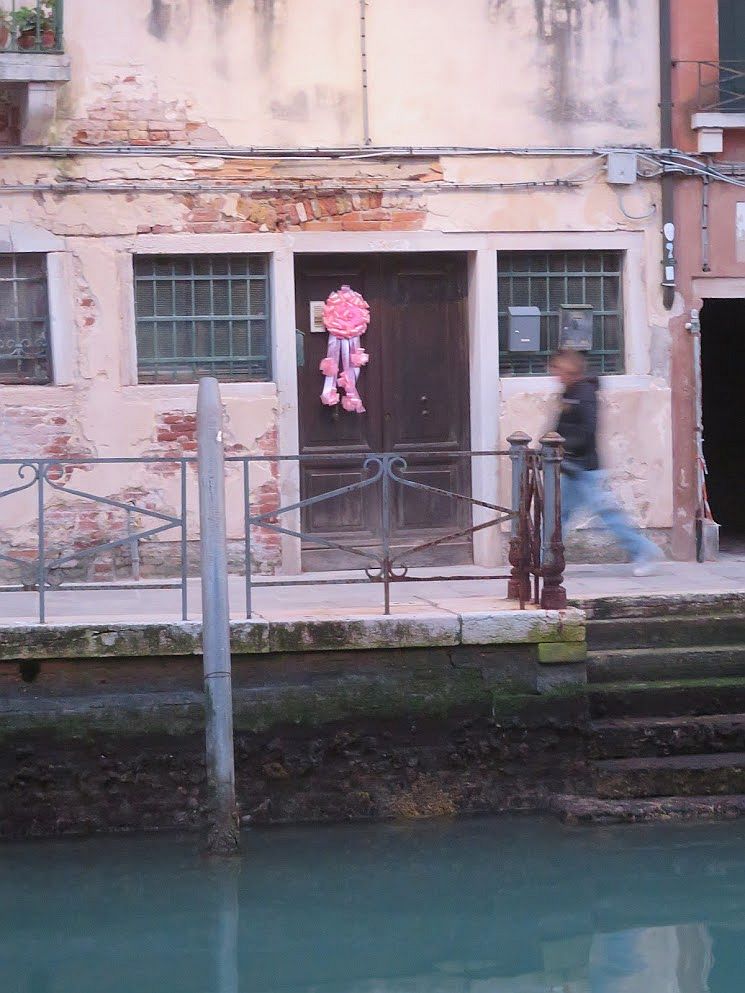
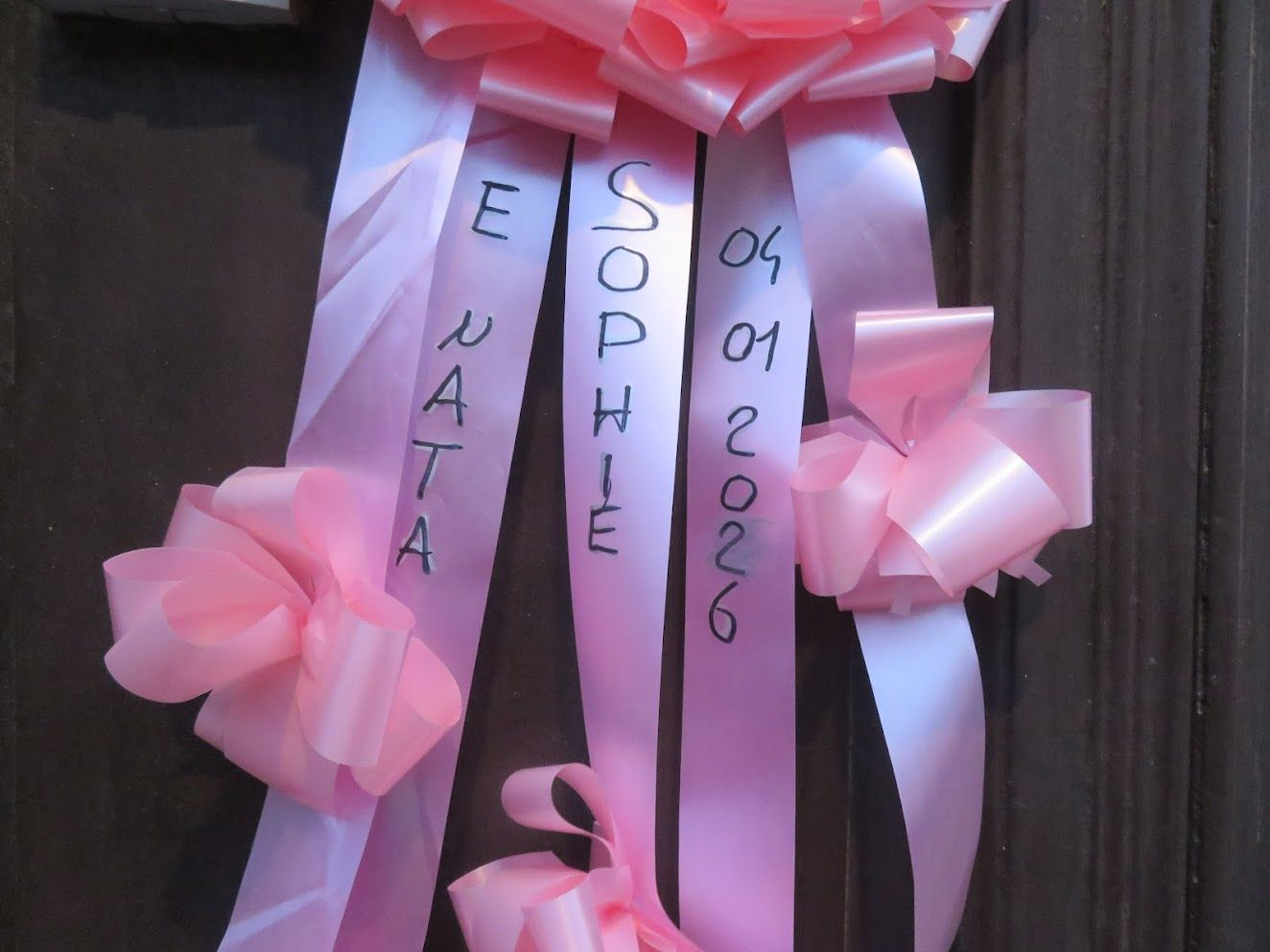
At the Rialto market this sign on the door explained why the Osteria I Compari was closed.
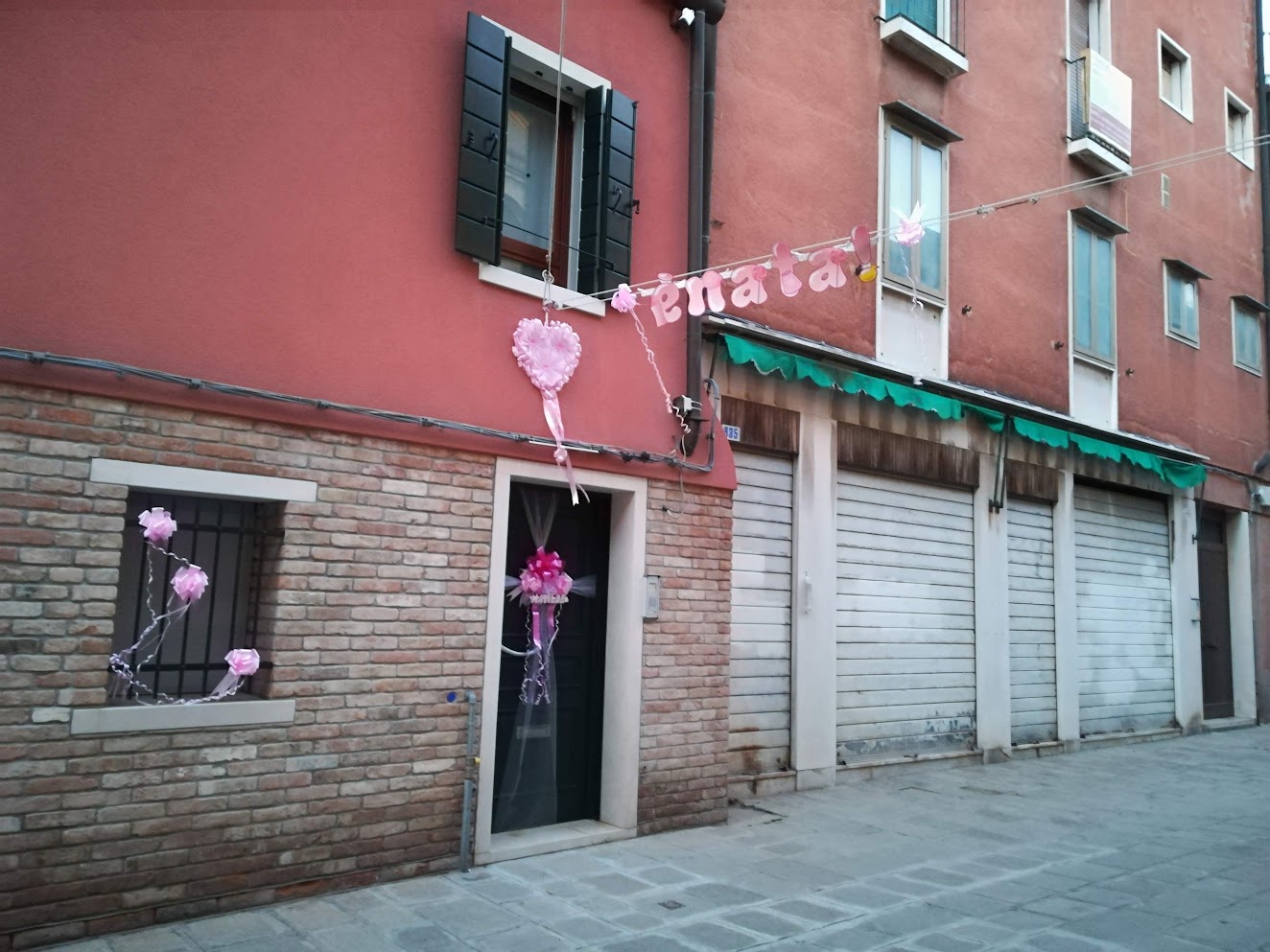
“Running off …  Maria is born!!! Closed because of happiness.” Nothing to do with Christmas but everything to do with gladness of heart and I want everybody to bask in this.
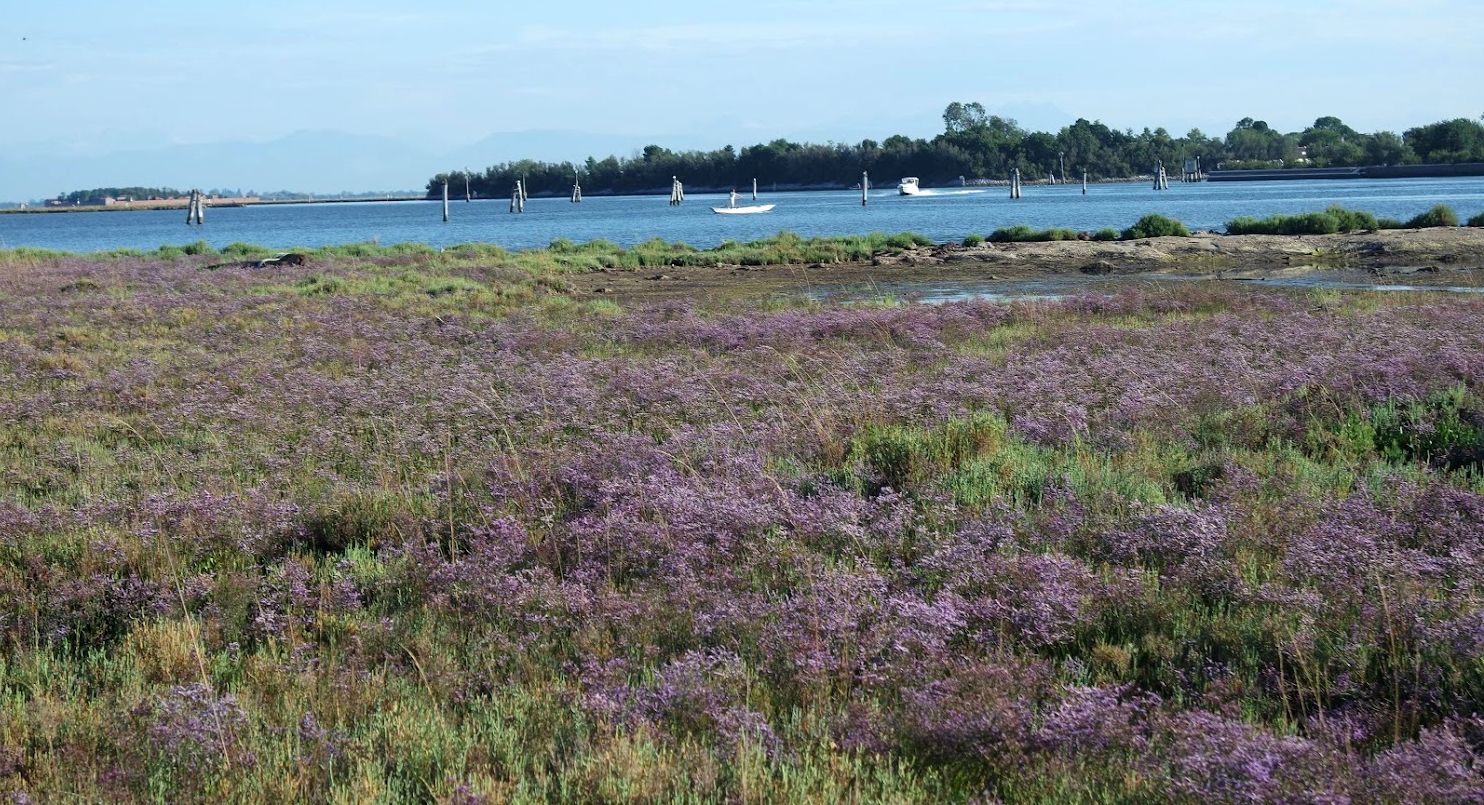
The Arsenale entrance — minimal but basically tells the whole story.
Instead of leaves there are lights in front of Nevodi. I like it a lot.
Via Garibaldi in holiday mode. Even the women’s bags are red and green. Fun fact: People in the center are walking on a filled-in canal — the edges of which are marked by the white strips along the sides.
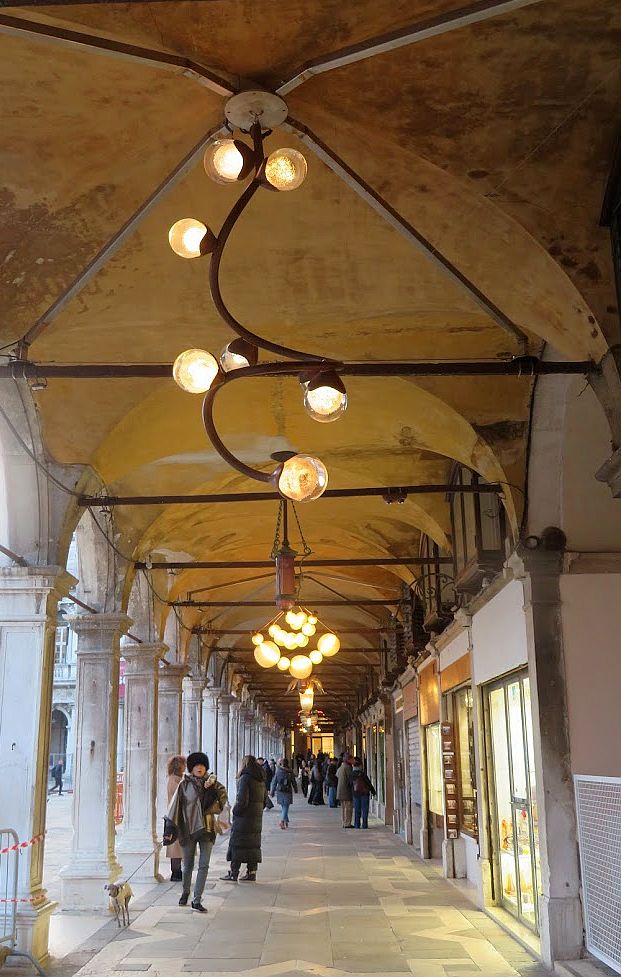
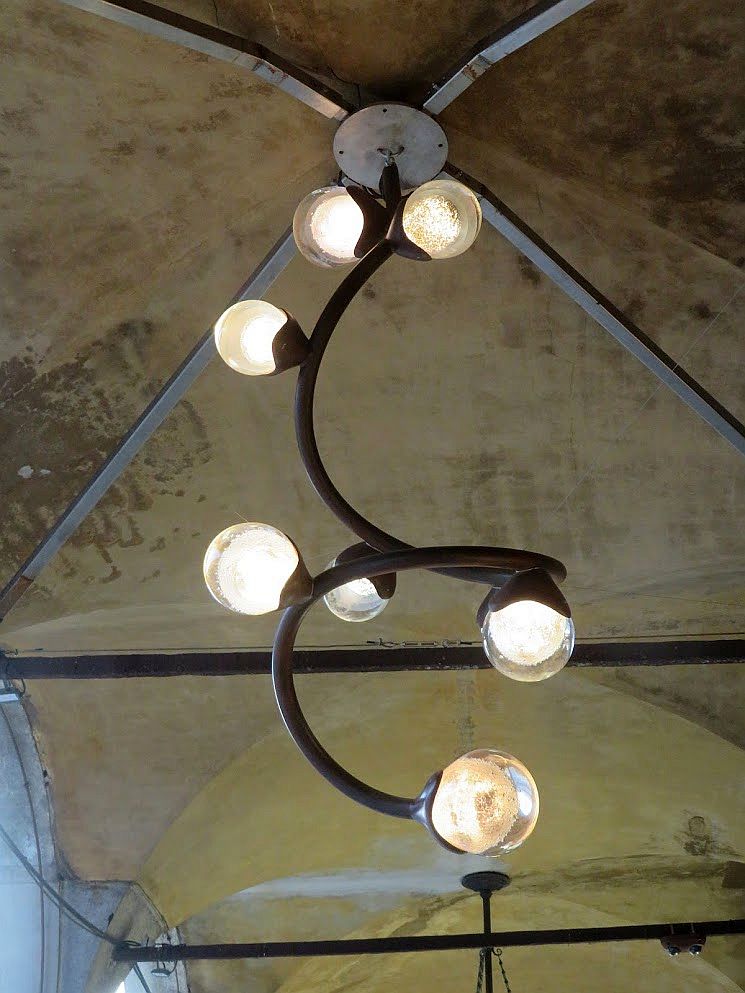
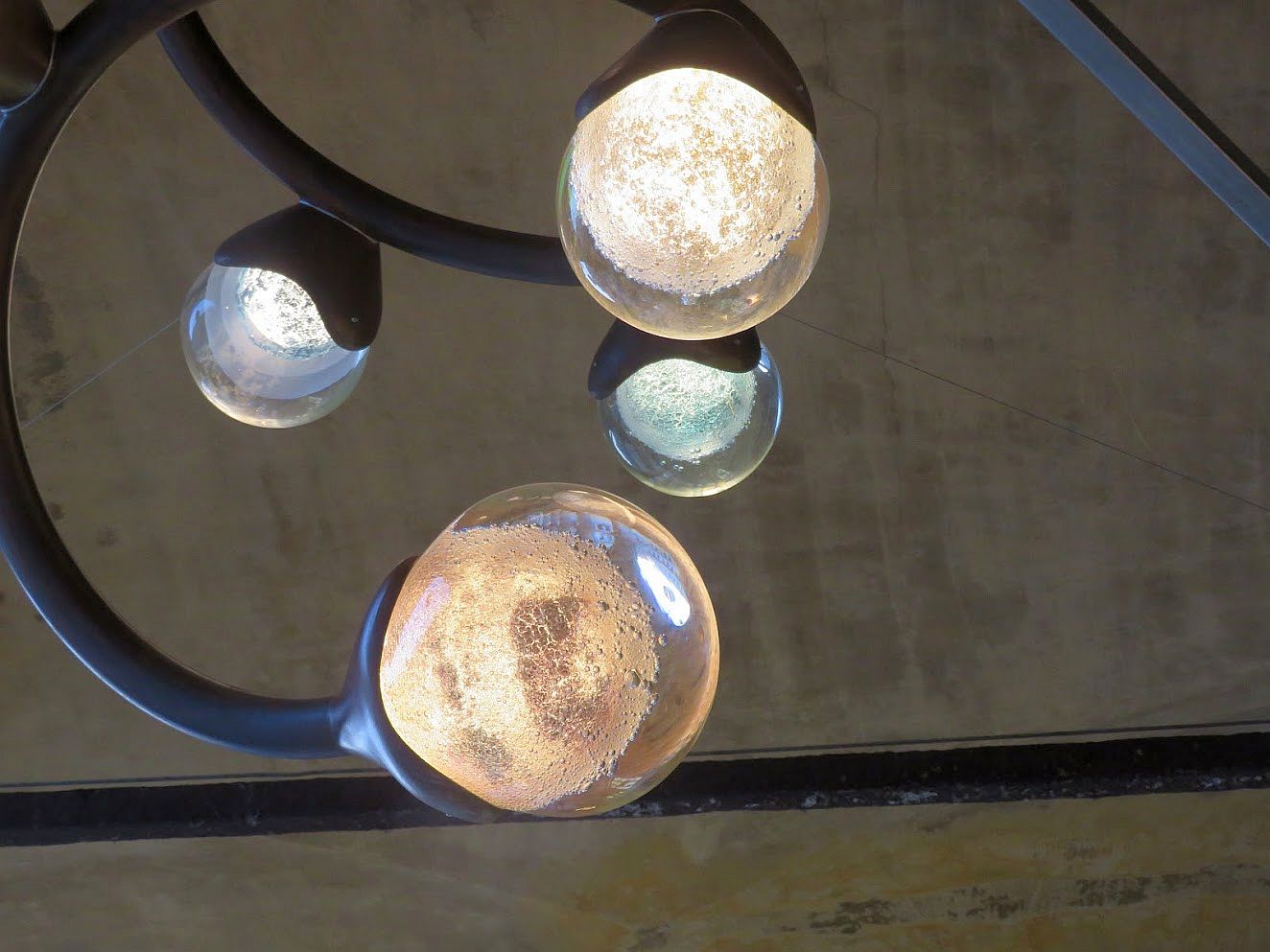
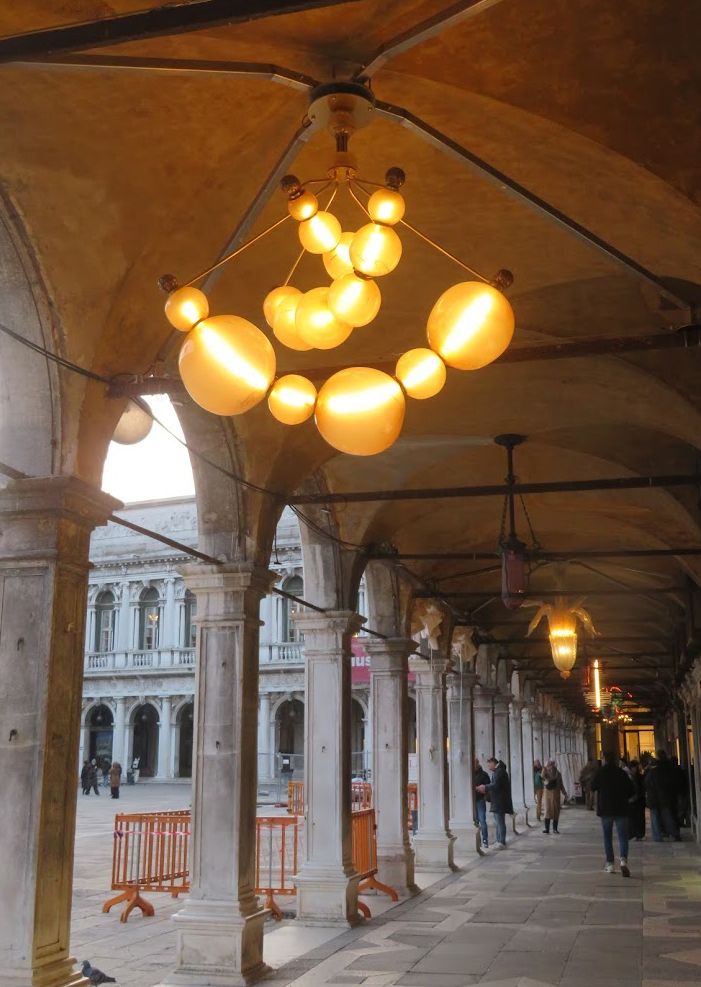
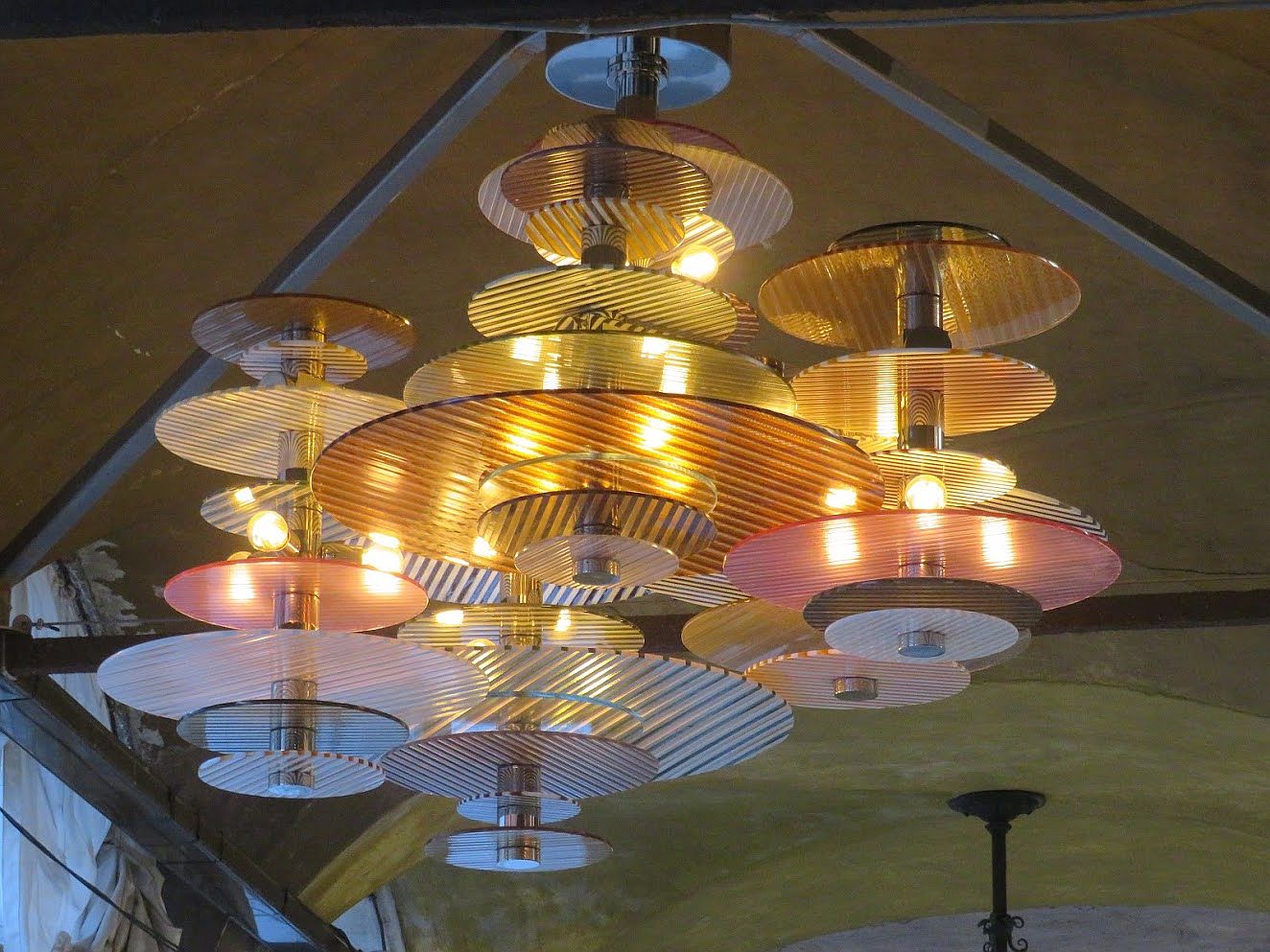
I don’t know which are lovelier — the lights inside or out. I’m going to say “inside,” but they do work well together.
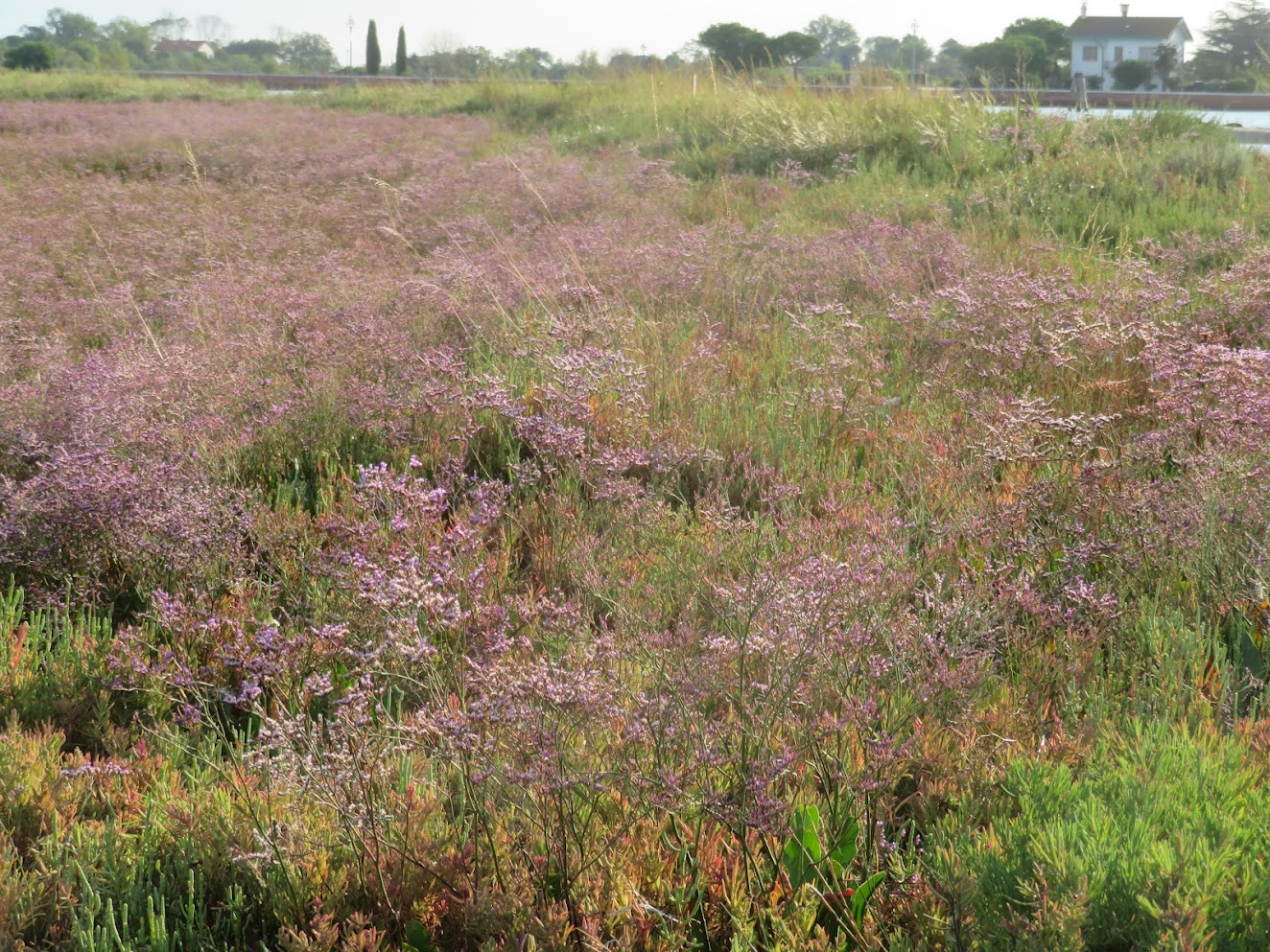
Last year there were lots of little angels fluttering above the creche in front of the church of San Francesco di Paola. This year there are flags. The story here pretty much tells itself.
Until a few days ago the cakes in the window at Melita, Mario the pastry-maker’s shop, were about Christmas. All at once (and the countdown has begun) they’re all about New Year. “Buon Anno 2026.” Chocolate huts with chocolate chimneys are absolutely what this world needs more of.
There is also a small but aggressive assortment of cakes that have abandoned the innocent greeting in favor of apocalyptic Lord-of-the-Rings shards of Theobroma cacao. Not sure if you’re supposed to eat it or vanquish it.
The moon didn’t want to set that morning in early December. It hung on till nearly 8:00, then the clouds crept over it and ordered it to go shine on someone else.


Continue Reading

introducing my Venetian wodewose

Ca’ Bembo-Boldu’ faces Campiello Santa Maria Nova. Just another palazzo, you think, then you look up. Up, in that niche. What…..?
A man holding a shield isn’t the most surprising thing to see. But then you look closer.
Have you met my wodewose?  This is not Giovanni Matteo Bembo (the Bembos aren’t furry), but he put him there.  What’s going on?

The wodewose is not some tiny creature burrowing into the walnut paneling.  It’s the Middle English term for a character that has been around since the ancient of days: The “wild man,” or Wilder Mann, homme sauvage, or in Italian uomo selvadego, “forest man” (the same etymology of wodewose).  If anyone is keeping track, this personage was first seen as “Enkidu” in the Epic of Gilgamesh c. 2100 BC.

The forest man (sometimes a woman) was well-known in the art and literature of medieval Europe.  They are generally shown as large, covered with hair, and living in the wilderness or woods.  They usually wield a club or hold an uprooted tree as a staff.  They’re more of a mountain phenomenon; you don’t tend to see them around Venice.

By 1499, when Albrecht Durer painted this portrait of Oswolt Krell, using wild men to carry a family’s coat of arms was already a firm tradition.  (Yelkrokoyade, Wikimedia Commons)

All this wondering started one morning when I was innocently loitering in Campiello Santa Maria Nova and noticed what I supposed to be a very hairy Bembo perched on his eponymous palace.  Note to self: If you’ll just put your dang phone away for a few minutes and look around, Venice is one place in the world where you can count on discovering something a little, or even a lot, wild.

Giovanni Matteo Bembo (1491-1570) was reasonably remarkable, but that seems not to be why he commissioned this monument.  This is not a literal portrait, you understand; it may represent Saturn, or Time.  He was known to be very interested in alchemy, and this construction contains recognizeable references, not only for the depiction of an old man but the scallop-shell shape of the top of the niche, and the shell beneath the marble tablet at his feet.  Alchemists used the scallop shell as a coded sign of recognition among them, symbolizing their search for universal consciousness. Or so I’ve been told.

Although wild men often carried the family coat of arms, G. Matteo Bembo seemed to be aiming at something more cosmic.  So he called on Sol Invictus, Unconquered Sun, the official state sun god of the late Roman empire.  Lest you sneer, remember that our week begins on Sunday.  But back to the wodewose.
The sun symbolizes divine power, life, glory, kingship, and protection.  Also divine favor, royal lineage, and a radiant, powerful presence in battle as both guidance and defense for warriors or nations.  I can’t say what has been done to the nose.  Corrected deviated septum?

I’m all for mythic elements, but patting yourself on your back was very un-Venetian; whatever you did was for the glory of Venice, not you.  The inscription at his feet gives the game away.

DUM VOLVITUR ISTE Iad. Asc. IUSTINOP.  VER.  SALAMIS  CRETA IOVIS TESTES ERUNT ACTOR.  Pa.  Io.  Se.  Mo.  It’s the summary of his most notable postings in the service of the Serenissima.

Interpretation: “As long as the sun turns around the poles, the cities of  Iadera (Zadar), Ascrivium (Kotor), Iustinopolis (Capodistria), Verona (Verona), Salamis (Cyprus), and Creta Iovis (Crete, the cradle of Jove) will testify to his actions (Actorum).”  The final four abbreviations are for the names Paolo Iovio, or Giovio, and Sebastiano Munstero, who in their histories had mentioned Bembo’s accomplishments.

Alchemy aside, Bembo was a conscientious and capable administrator.  As governor of Heraklion, the capital city of Crete (“the cradle of Jove”), he showed himself at his best.  Between 1552-54 he built not only the city’s first aqueduct but also this lovely and very useful fountain in Cornaro Square.  It was the first time that running water was seen in the city, so big respect to him for this.  Anyone who has ever spent a blazing summer day in Greece doesn’t need to be told what a glorious thing this fountain was.  Note: Undoubtedly there was water already in the city, probably via wells.  Not fountains.

The Bembo Fountain no longer supplies water, alas.  Note: No significance to the headless man, it is a recycled Roman statue. (Rigorius, Wikimedia Commons)

But back to our man on his plinth.

Why so hairy?  The wodewose represents the Id, the indomitable antagonist of culture, civilization, rationality, and his pelt perfectly symbolizes his animalistic nature.  Unfettered, untrammeled, un-whatever you want.  He is humanity’s natural self — raw strength, passion, aggression — the opposite of civilized society, but also embodying deep, primal energy, an image of our darker, instinctual side.  You know — before razors.

A wild man as gargoyle at Moulins Cathedral, France (Vassil, public domain)
Knight saving a damsel from a wodewose (ivory casket, 14th century, Metropolitan Museum, public domain)
Some early sets of playing cards had a suit of Wild Men. Some of the earliest European engravings were cards created by the Master of the Playing Cards, who wored in the Rhineland  1430-1450.  This is the five of Wild Men. I’m guessing this was a very strong card.

I’m glad I discovered a worthy Venetian and his equally worthy alter ego.  A day without learning something useless is a day just thrown away.  And I’m guessing that woodwoses (wosi?) throw nothing away.

She said she’d like me better if I shave my legs…..
Continue Reading

we all need more fiber

Specifically, fiber optic cable.

Fiber optic cable is no newcomer to Venice — we’ve had it at home for years now.  But clearly our neighborhood is on track for extreme upgrading to intergalactic ultra-fast ultra-wide broadband.  Venice might give the impression (briefly, from afar, with your eyes half-closed) of a city left adrift in the backwash of the Renaissance.  Yet men have been hard at work these past few days making Venice ever more modern.  And I say thanks, but Venice has always been modern.

Behold the mighty Root Cable 185 from Tratos.  The company’s website says that it has been “specifically designed for network and telecommunications uses, and is characterized by a high transmission velocity and low attenuation, making it ideal for long-distance connections and broadband applications.”  Impressive, but simpler things also impress me, such as the chance (I missed) to watch the procedure of hoisting this monster onto the fondamenta. It does inspire new admiration for the skill and effort that numberless men dedicated to creating Venice (looking at you, Doge’s Palace, belltower of San Marco, etc.).  No motors, hydraulic power, and so on.  Of course, the ancient Egyptians and Greeks and Romans didn’t have them either, and they also managed to build phenomenal things, so let’s get over ourselves.
All this work to install the means by which we can send our million daily messages and memes and photos to everybody we know.  But what I really like right here is how much red is going on.
There’s a lot happening under all that stone.  At this stage it looks like they’re operating on the city’s deviated septum.
Bridges don’t just carry you, they carry cables and wires and ducts.  Keep an eye on that loose slab of stone.
This is a master-class in bridge-building and -repairing in Venice.
Back to the bridge of Sant’Anna.  Those four open canal-side windows belong to a charming little apartment for tourists.  I’m just wondering if the visitors talked about anything else than how their romantic Venetian vacation turned out.  The jackhammers really went at it.
The romantic-apartment front door is on the right, just before the pile of mud.  I mean the bridge.

Today progress in Venice takes so many forms, though by now they’re not what you might call surprising or original.  But over the centuries Venice became rich and powerful in large part because it was alert to innovation of many different sorts.

On the social side, the Venetian government passed a law in 1258 requiring doctors, even the most illustrious, to treat poor patients for free.  Shocking then, perhaps still somewhat startling.  In 1443 the government guaranteed the services of a lawyer to poor defendants at no charge; the lawyer would be chosen by a judge from among the best lawyers in Venice (no fobbing the case off on your newest recruit) and was required to follow the case with maximum care or risk a large fine.  That’s become normal, I think, in concept if not in practice.  I don’t know about fines today, though.

On the commercial side, the Venetians established the Patent Statute on March 19, 1474, now considered the earliest codified patent system in the world.  These patents were granted for “any new and ingenious device, not previously made,” provided it was useful.

However “useful” may have been defined, suddenly useful was everywhere: Between 1500 and 1600 Venice granted 593 patents.  (In the same period the Kingdom of France granted 100.)  By 1788, Venice had certified 1896 patents.

Speaking of useful, pharmacists were forbidden to sell their medicines without a doctor’s prescription.  If this is normal now, credit goes to the old Venetians to whom quality control was an obsession.  Maybe they loved quality for itself, but control ensured that their myriad products were not only good, but reliable, hence valuable.  It was always all about money.

A zecchino minted between 1779 – 1789 for Paolo Renier, the next to last doge of Venice.  (photo seen on eBay, coin for sale by Giamer Antiques and Collectibles)

No, they didn’t invent money.  But the Venetian gold ducat, later called the zecchino, became arguably the closest thing to what you might call a monetary “gold standard” for 500 years.  The coin maintained a consistent weight (approximately 24 carats) and high gold purity (99.7 percent) from 1284 to 1797.  Venice’s strong trading network ensured the zecchino’s circulation throughout the Mediterranean and beyond, from the Netherlands to India.  It is the only coin in the world that retained, for the over five centuries of its uninterrupted existence, the same images, the same epigraphs, the same weight and the same purity of the metal.  I sometimes complain that in Venice money is king, but that’s freaking impressive.

Back to fiber optic cables.  Ninety percent of Venice and its satellite towns and hamlets are served by FTTC connections, while 79 percent has FTTH and the by-now quaint but still serviceable ADSL covers 99 percent.  If you’d like to know more, here’s Open Fiber.

So progress jackhammers on.  The bridge has been left with scars from the intervention, because there are rectangles of cement where stone used to be and I cannot understand it.  We have ultra-fast broadband, but we also still have people who just carry things off, things that aren’t even theirs.  Doesn’t feel like progress to me.

Remember that stone slab that was moved aside to allow access to the innards of the bridge? It, and its companions, are obviously gone.  I have no idea where, or for what reason.  There was stone, now there is only cement.  You might suppose that the supervisors decided it was prudent to make future access simpler/cheaper/faster/easier by not bothering with that pesky stone anymore.  And yet….
And yet, the stones at the summit of the bridge were put back where they belonged.  But the others?
The same fate befell the stones on the Sant’Anna side of the bridge. True, the steps are still uniformly grayish, so it’s not that they draw undue attention to themselves, and yes, the cement on these steps is smoother and looks less homemade than on the other side.  That’s not the point, of course.

I started this post with glowing eyes looking toward the future, and I indulged myself by recalling a smattering of examples of Venetian greatness.  But here we are today.  You’ve got your interstellar communications cables, and you’ve got steps now made of concrete where a week ago there was stone.

It’s easy to see the seam between stone and concrete. Happily for everyone, you can also see that dogs don’t care.  Or was that a lynx?
Continue Reading

the phantom cemetery

There used to be a cemetery here, but you’ll never guess why.  Our first and only hint is carved onto the lintel of the small door to the left of the big door.

It’s not that I go out looking for trivia, it just seems to drift into my lane.  And by the way, I’m not convinced that “trivia” deserves its negative connotations.  Mount Everest is made of atoms, after all, and it appears that much of life is composed of trivia.

There once was a cemetery in the campo next to the basilica of Saints Giovanni and Paolo.  Plenty of churches here had cemeteries, but these dear departed weren’t Venetians. They were Ledrensi, people from the Ledro valley near Lake Garda.  (Not to classify them as trivia.)  Six hundred years ago they had become so important to Venice and its Arsenal that they were given many important privileges, up to and including their own burial ground.  I can’t tell you why the Ledrensi would have chosen to spend eternity here rather than their home parish up in the mountains, but let’s be impressed that the Venetian government wanted to bestow this honor on them.

This is a pretend door.  The lintel, though, is genuine; it was moved here from the wall that used to enclose the cemetery.
The cemetery wall is clearly visible on the map of Venice drawn by Jacopo de’ Barbari in 1500.  This legendary and inexhaustible fount of knowledge can be seen in the Correr Museum.  For private delectation, you can download the map here.  Knock yourself out zooming on it.
Nothing to see here.  The cemetery, which had been in the area behind the tall statue, had been removed by the time Canaletto painted “Il Campo di SS Giovanni e Paolo a Venezia, col monumento di Bartolomeo Colleoni  1736/1740.”  (Wikimedia Commons)
Just gone.

The people in the Ledro Valley enjoyed a few important advantages — geography, for one thing. The valley offered the fastest route between the area near Lake Garda and Brescia, and this was of huge strategic importance to Venice during the war with the Visconti, the lords of Milan.  (Of course you remember the Lombard Wars that went on for an invigorating 31 years from 1423 to 1454.)  Furthermore, the Ledrensi fought for Venice in a few important battles up in their valley.  As early as 1426 doge Francesco Foscari, in recognition of their valor, granted them various benefits and exemptions that were confirmed in 1440 and 1445.  Venetian troops remained in the Ledro valley till 1509.

Google Maps doesn’t realize that the light-blue route is exactly the one that the Venetians were trying to avoid — it’s the western, dark-blue path that took them safely from the northern Veneto to Brescia.
The orange area was Venetian territory in the late 1400’s, but if you were at war with Milan you wouldn’t have traveled to the battlefield on the easy straight east-west line we use today on the highway. That would have forced you to cross enemy territory, the Duchy of Mantova.  The mountains were safer.
Another view of how Lake Garda divided the Venetian territories (green).

But the Ledrensi’s greatest advantage was their forests.  Venetian archives show that from the 1200’s there were workers in Venice from the Ledro valley, but by the 1500’s the relationship had evolved.  Venice depended on the Ledro valley for the resin tapped from the area’s larch and Scots pine.  By  the 1600’s the town of Tiarno di Sopra had become famous for its clay ovens that transformed the resin into pitch, essential for caulking the ships in the Arsenal.

More and more men of Ledro — also referred to as the Trentina Nation, as coming from the area near Trento — began to migrate to Venice to work.  They were allowed to work as bastasi and cargadori (porters and stevedores) in the Fondaco dei Tedeschi, the association of the Germanic merchants.  Even more important, they worked in the Arsenal as segadori (sawyers reducing tree trunks to planks for building ships), and as ligadori, exclusively responsible for loading and unloading of the ships in the Arsenal.  And of course, as caulkers.  Some of these men didn’t return to the mountains but stayed in Venice permanently, becoming better-off certainly than they’d been back home.

I suppose it’s not strange that they’d have wanted to be interred in Venice, which had been for some a sort of Promised Land.   At least we still have the lintel.

“Cemetery of the Nation of the Valley of Ledro.”

This hidden jewel of Venetian history was carefully explained on a site I discovered by chance, and I offer sincere admiration to its creator.  His name is Alfonso Bussolin and his life’s work is Conoscere Venezia (know Venice).  If you read Italian you’re going to have a fabulous time wandering around this man’s research.

Continue Reading
1 2 3 182