As I noted in my last post, the poet/philosopher/Viking raider/diamond cutter/prima ballerina assoluta (who knows if it’s a woman?) “Anon” mentioned the three sublime elements that have remained to us from paradise. The second is flowers.
If anyone were to imagine that Venice is made only of stone, brick and water, I’d like to correct that notion. Here is a very limited assortment of flowers I’ve seen in or near Venice over the years and seasons. Does it seem like a lot? I could have done more. They say that when “War and Peace” was on the verge of being published, Tolstoy suddenly cried out “A yacht race! I left out a yacht race!” In this case, I have left out the magnolia and plum and pomegranate and daisies…. I had to stop somewhere, as Tolstoy must also have regretfully realized.
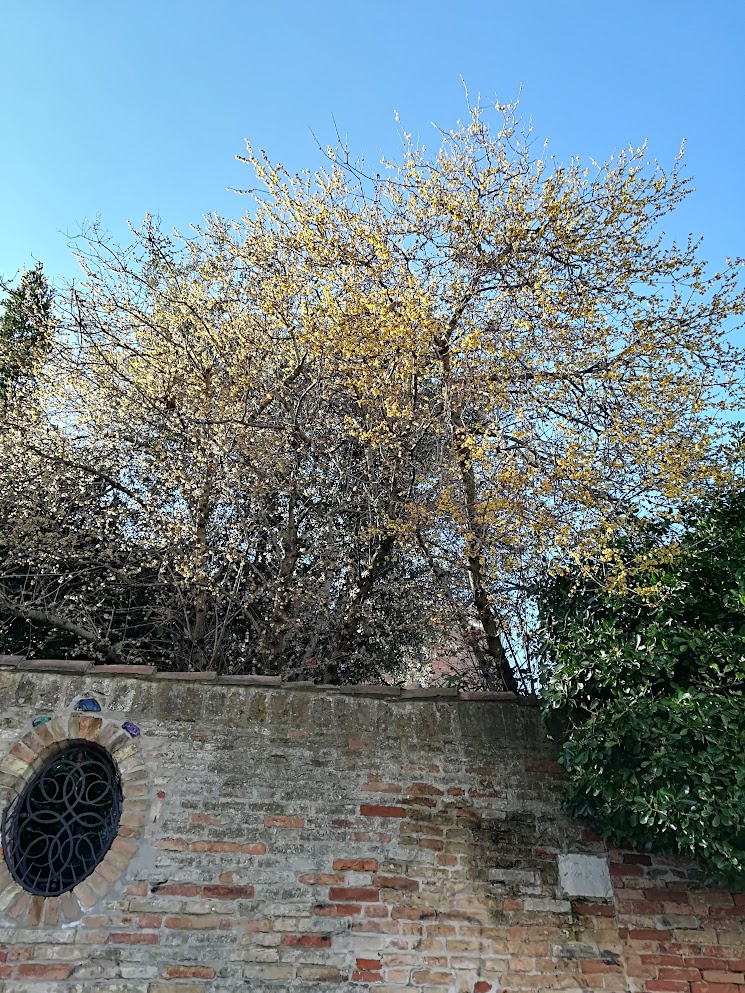
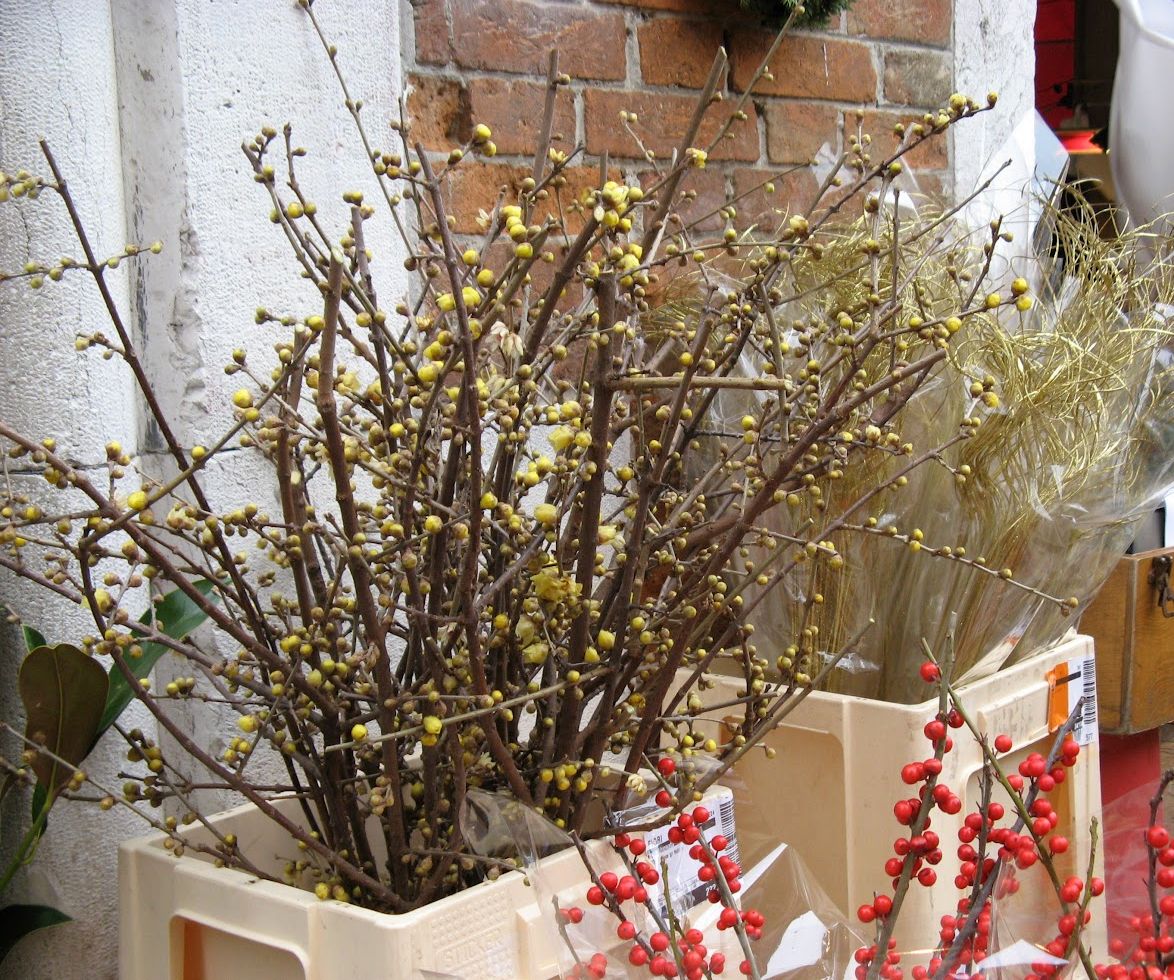
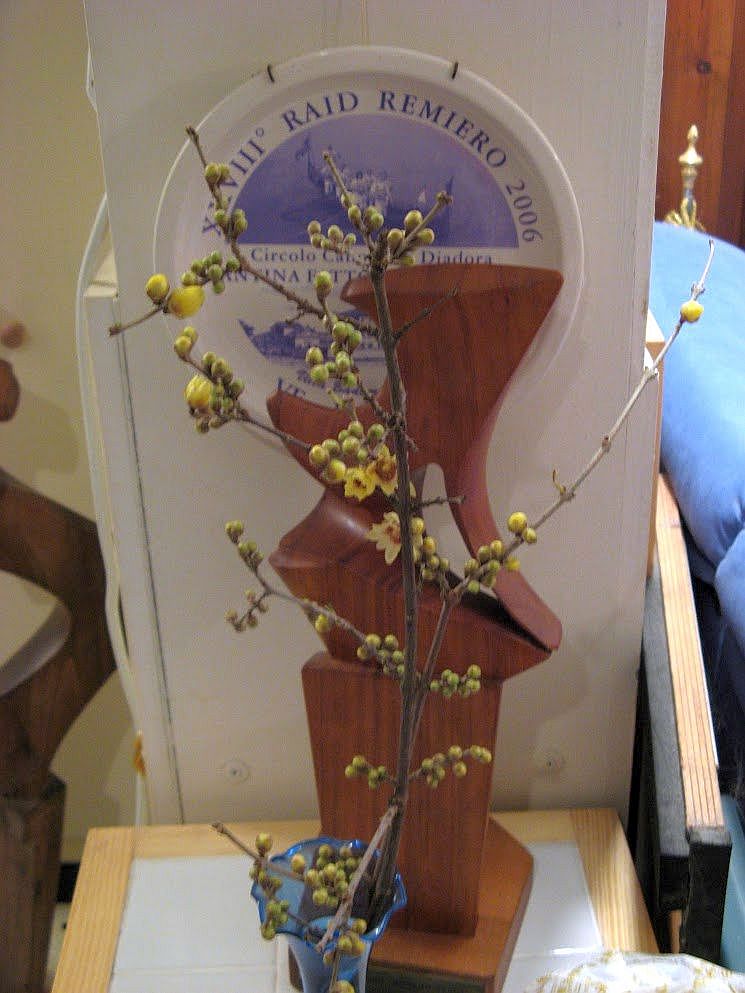
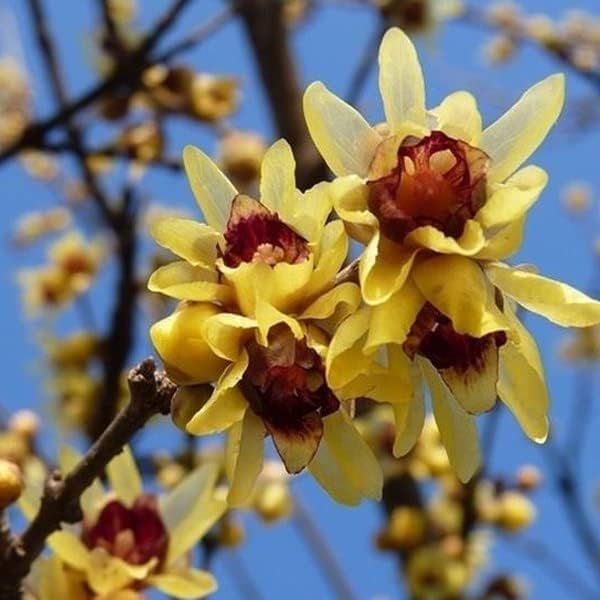
Winter flowers sounds like a contradiction (experts know it’s not) but I was astonished one freezing winter day years ago to find myself walking through a cloud of perfume. That was my introduction to what Lino calls calycanthus — I discovered later that it is “Chinese winter bloom” (Chimonanthus praecox). This is not that particular tree; the one I discovered was almost completely hidden behind a different wall which only made the moment even more magical. If the fragrance wafts past you some frigid night, it verges on celestial. I read that this essential oil is used in some “quality perfumes.” It’s sheer quality all by itself.It begins to bloom in December. Break off a little low-hanging branch, and in the few brief days before the flowers start dropping off your house will smell divine. No, I’m not exaggerating.Lino knew a few places where the shrubs were easy to reach, so he would bring me a few twigs.
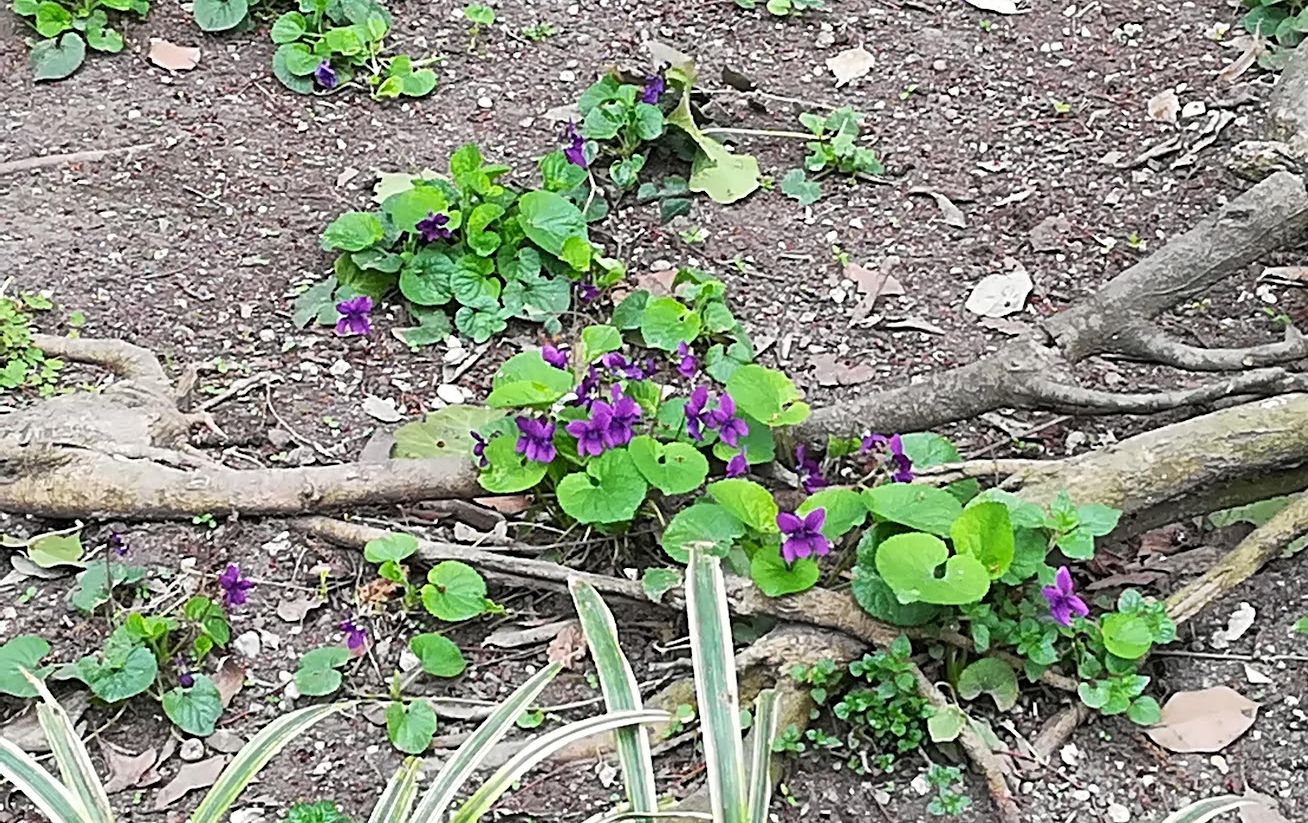
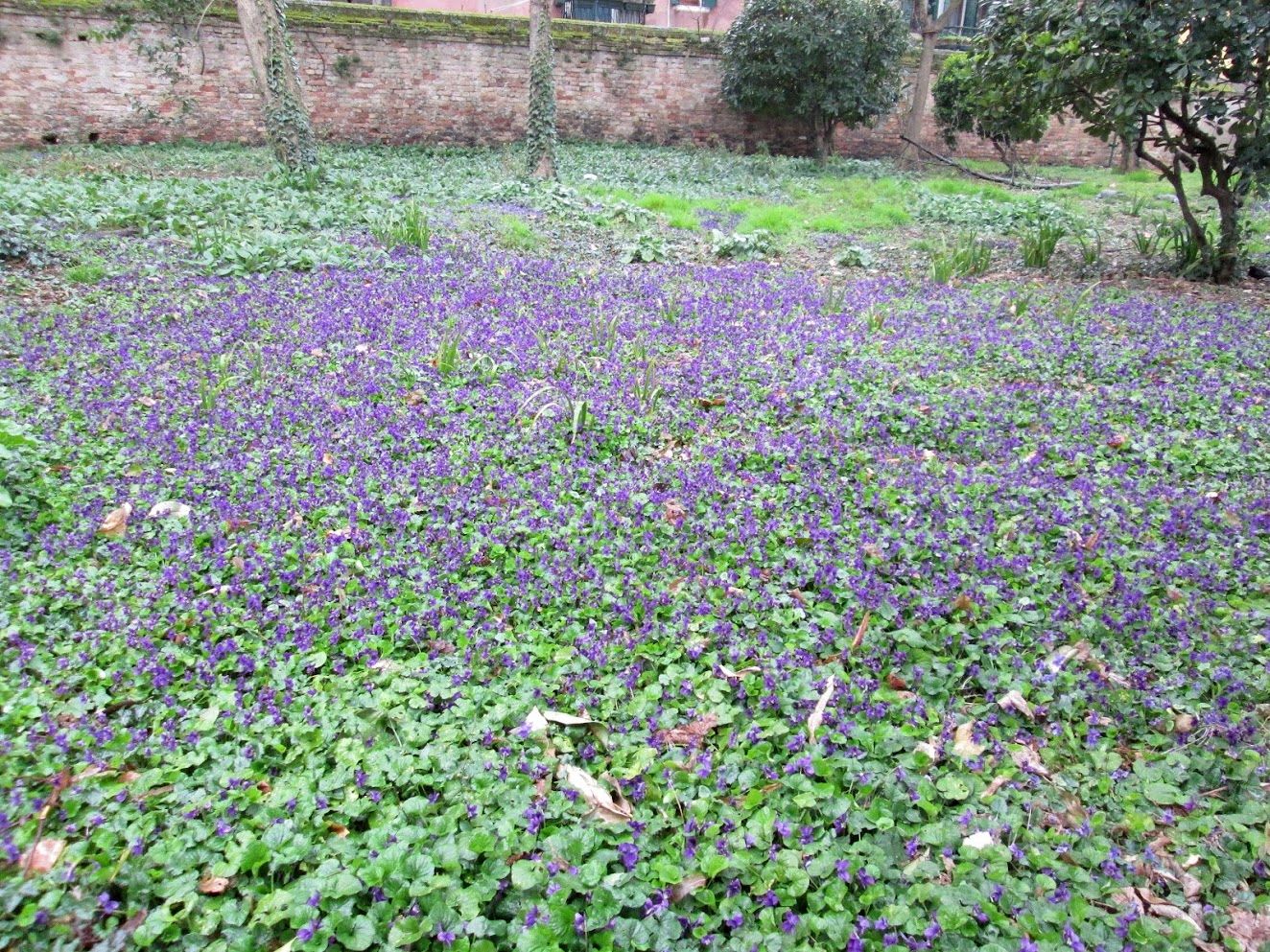
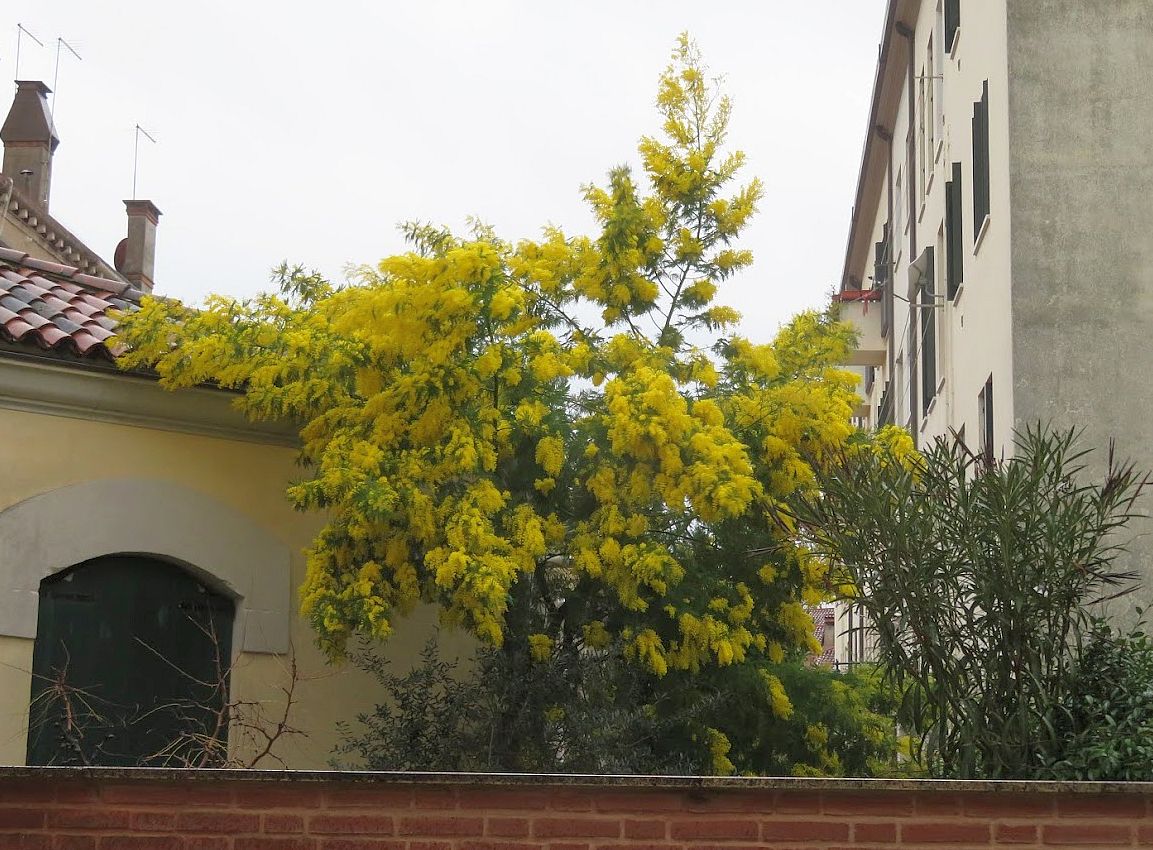
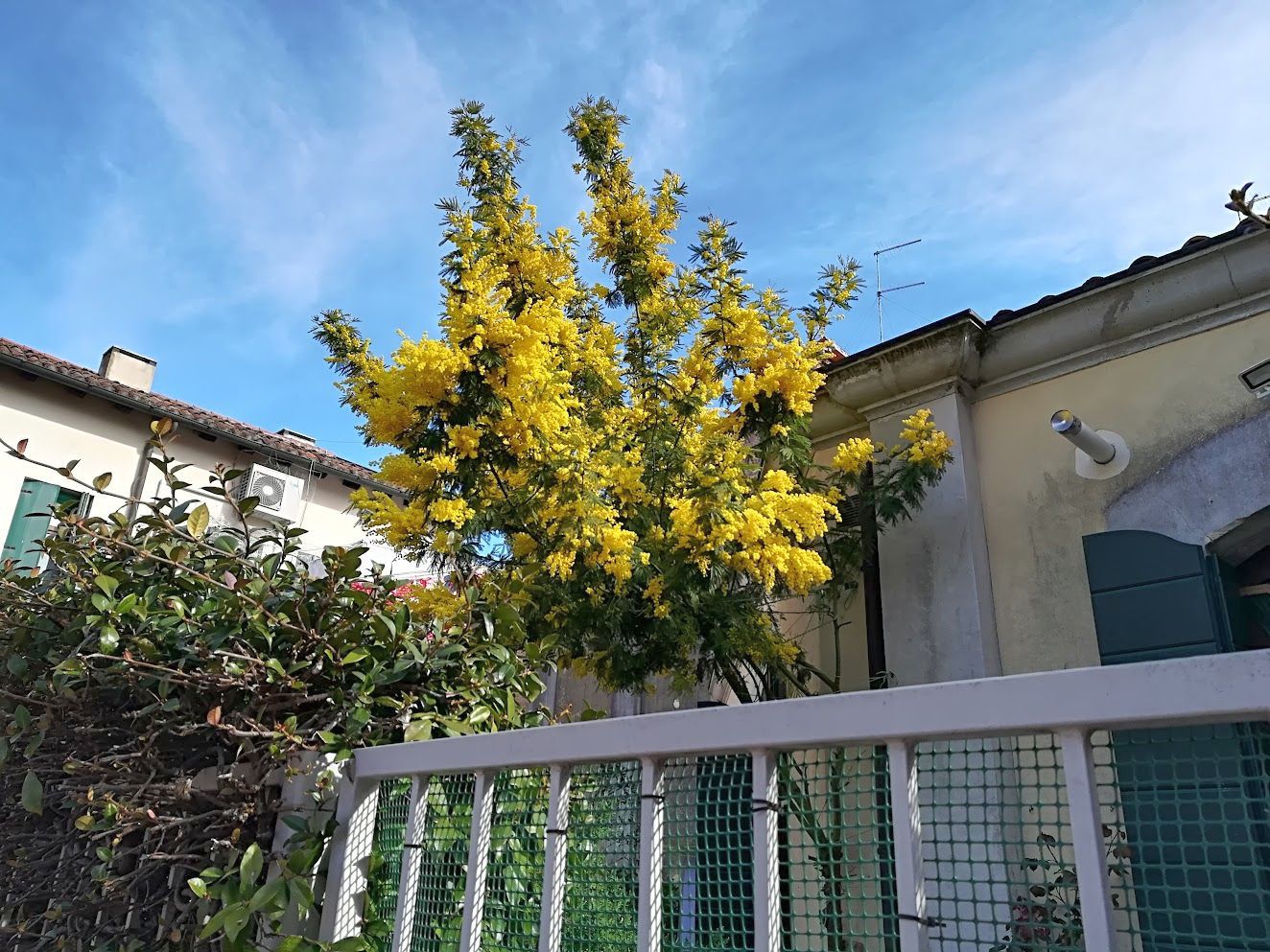
The violets make their first appearance lurking among the spring shadows.Then everybody wants to get into the act.Late February and early March bring mimosa.
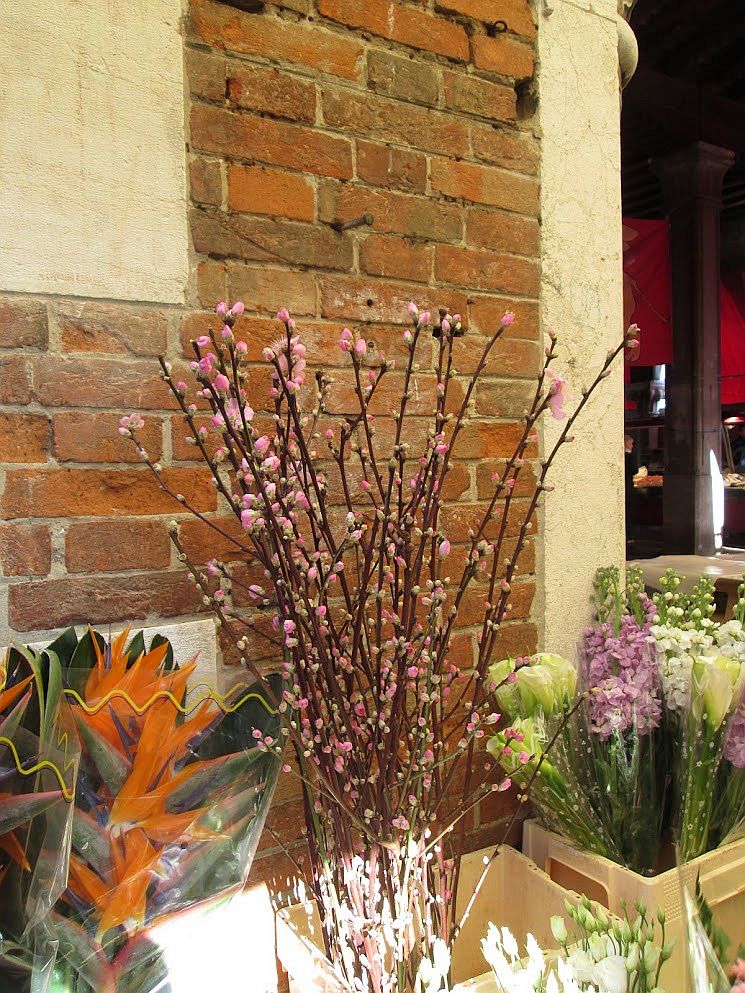
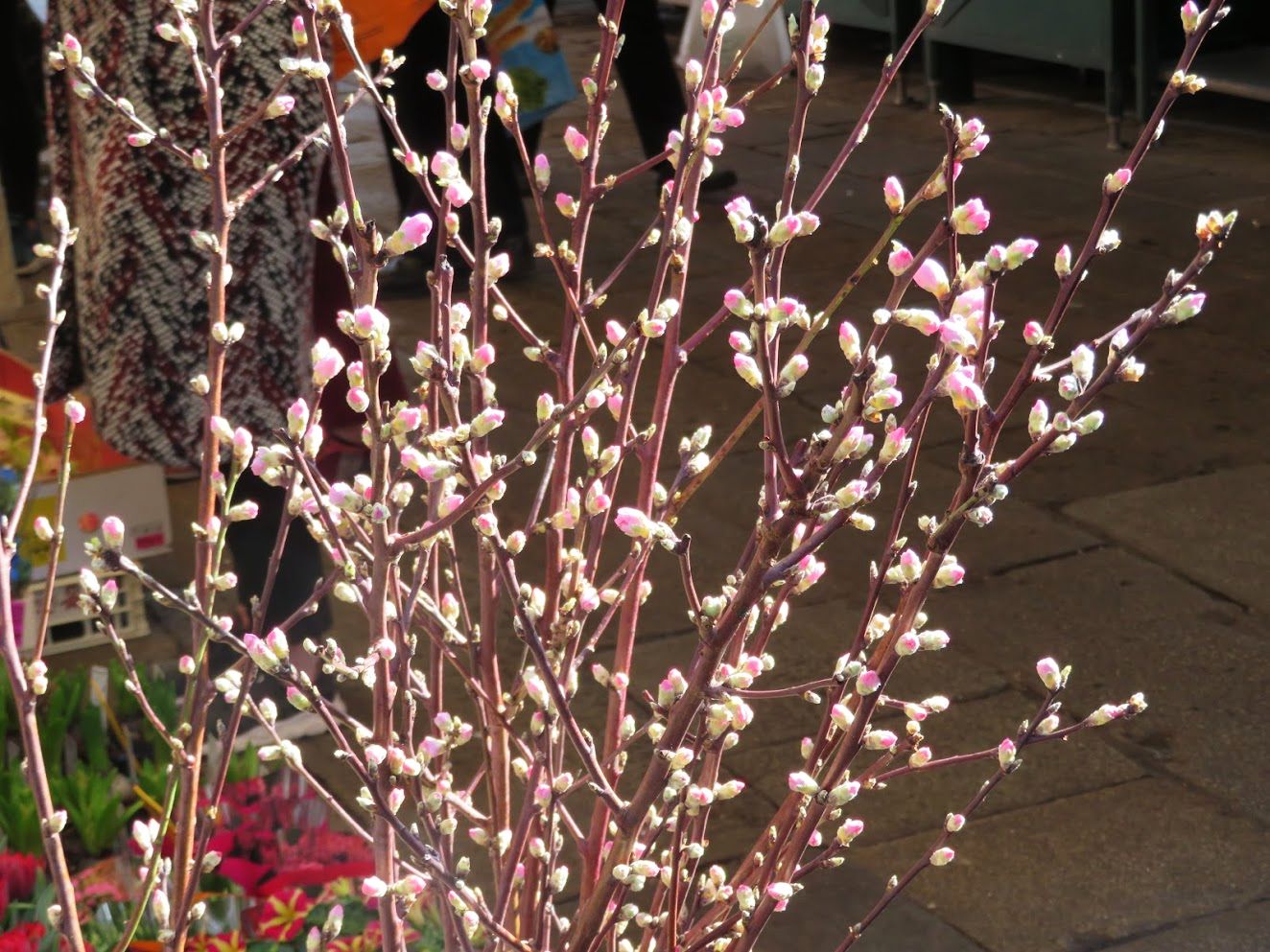
Moving toward Easter (which also moves every year, try to keep up), the peach blossoms arrive, often from Sicily, or even from somewhere in the Veneto. It must depend on the weather. I only see them at the Rialto market.
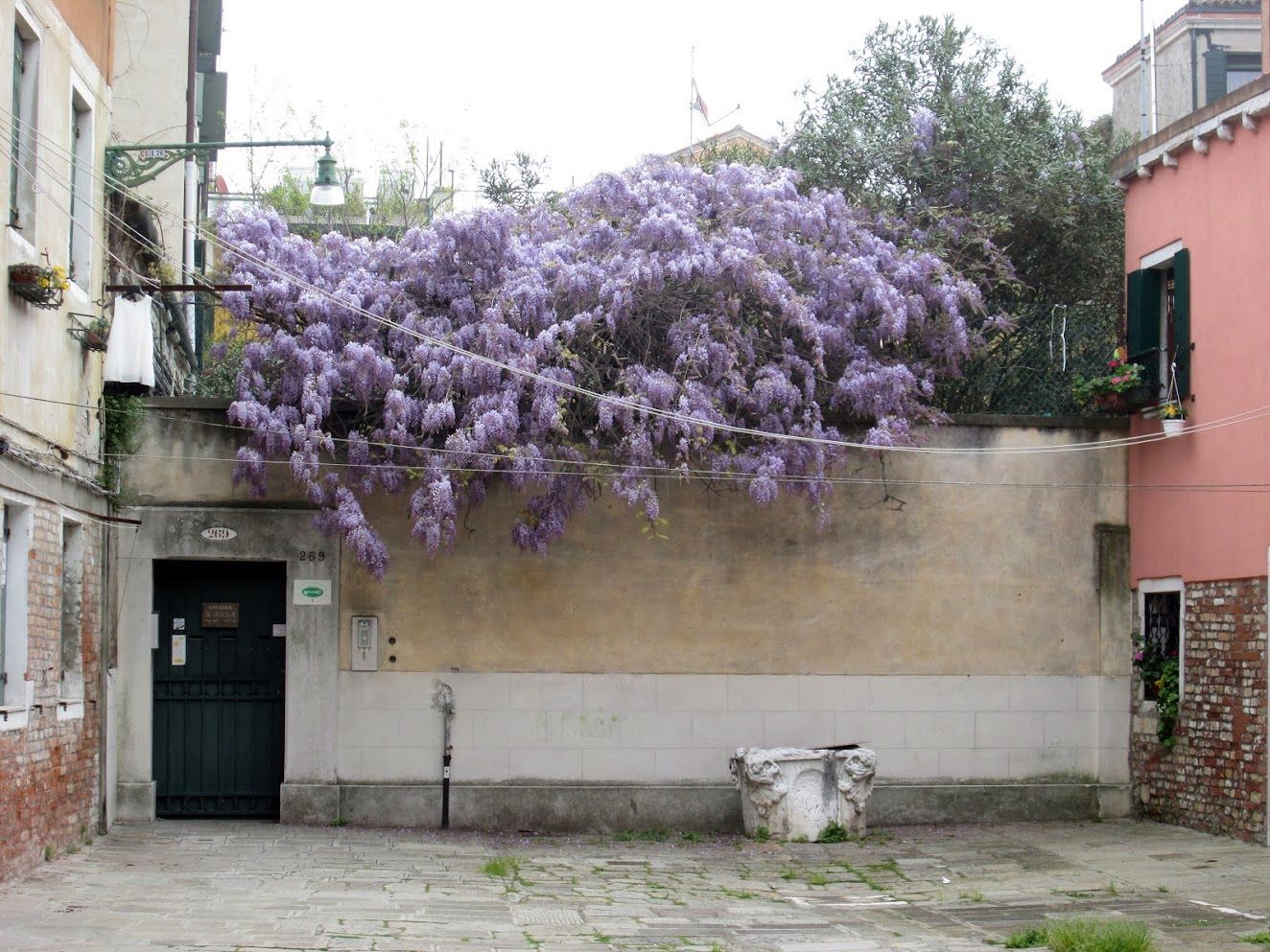
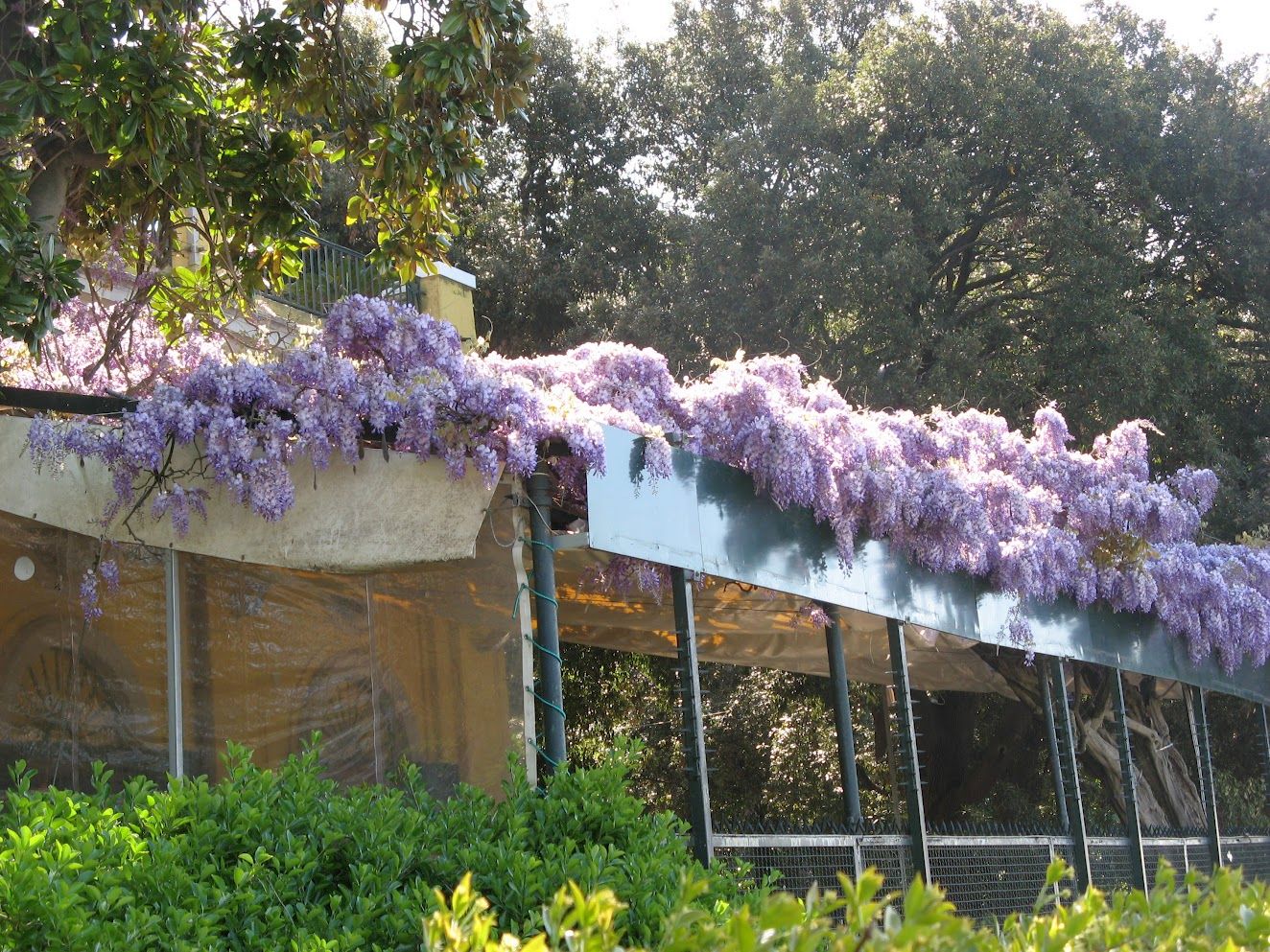
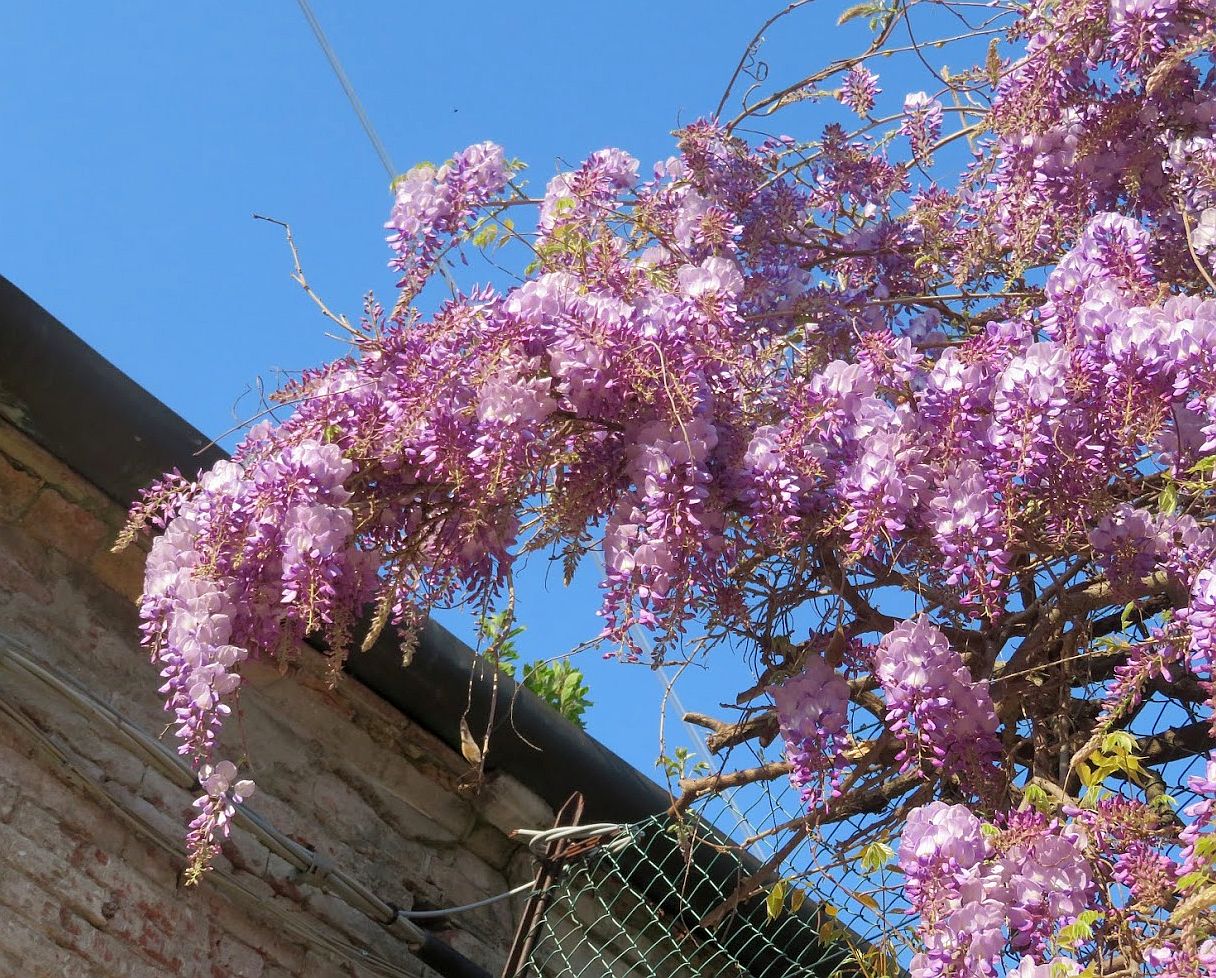
Then the wisteria steps into the spotlight. It seems to be everywhere but I count on seeing it in the little campo behind us.The Ristorante in Paradiso in the Giardini facing the lagoon never disappoints where its wisteria is concerned. I don’t know about the food.
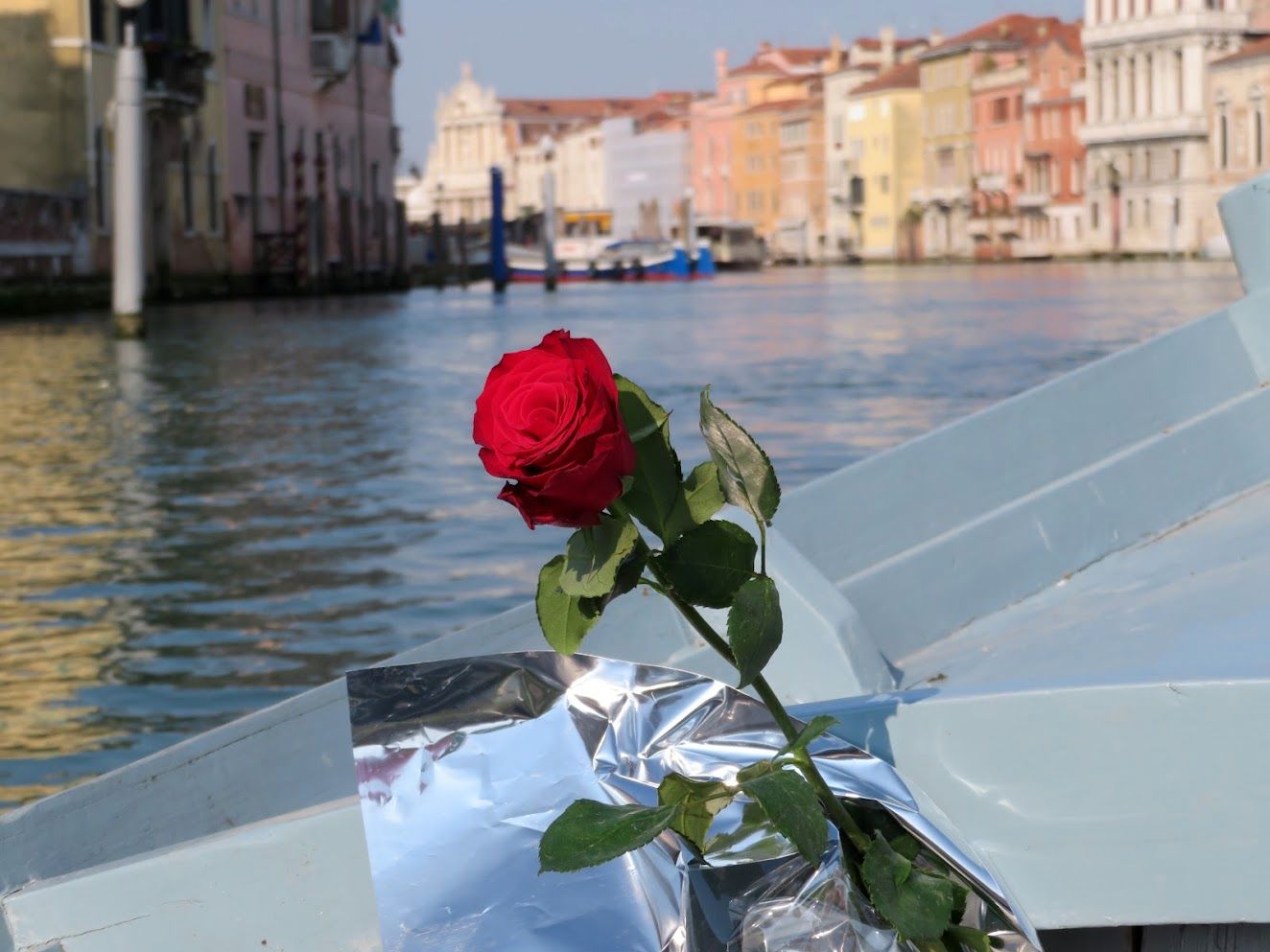
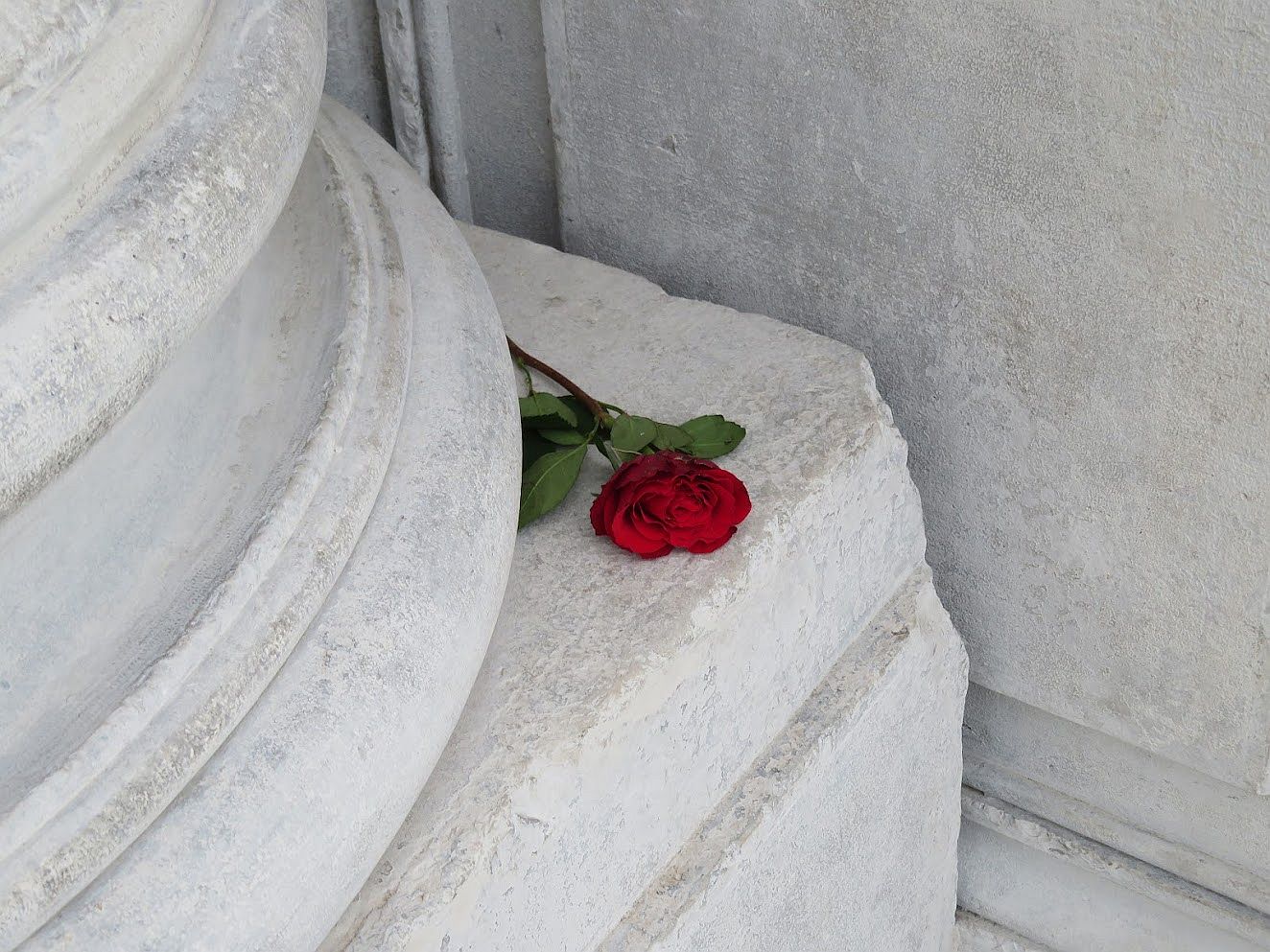
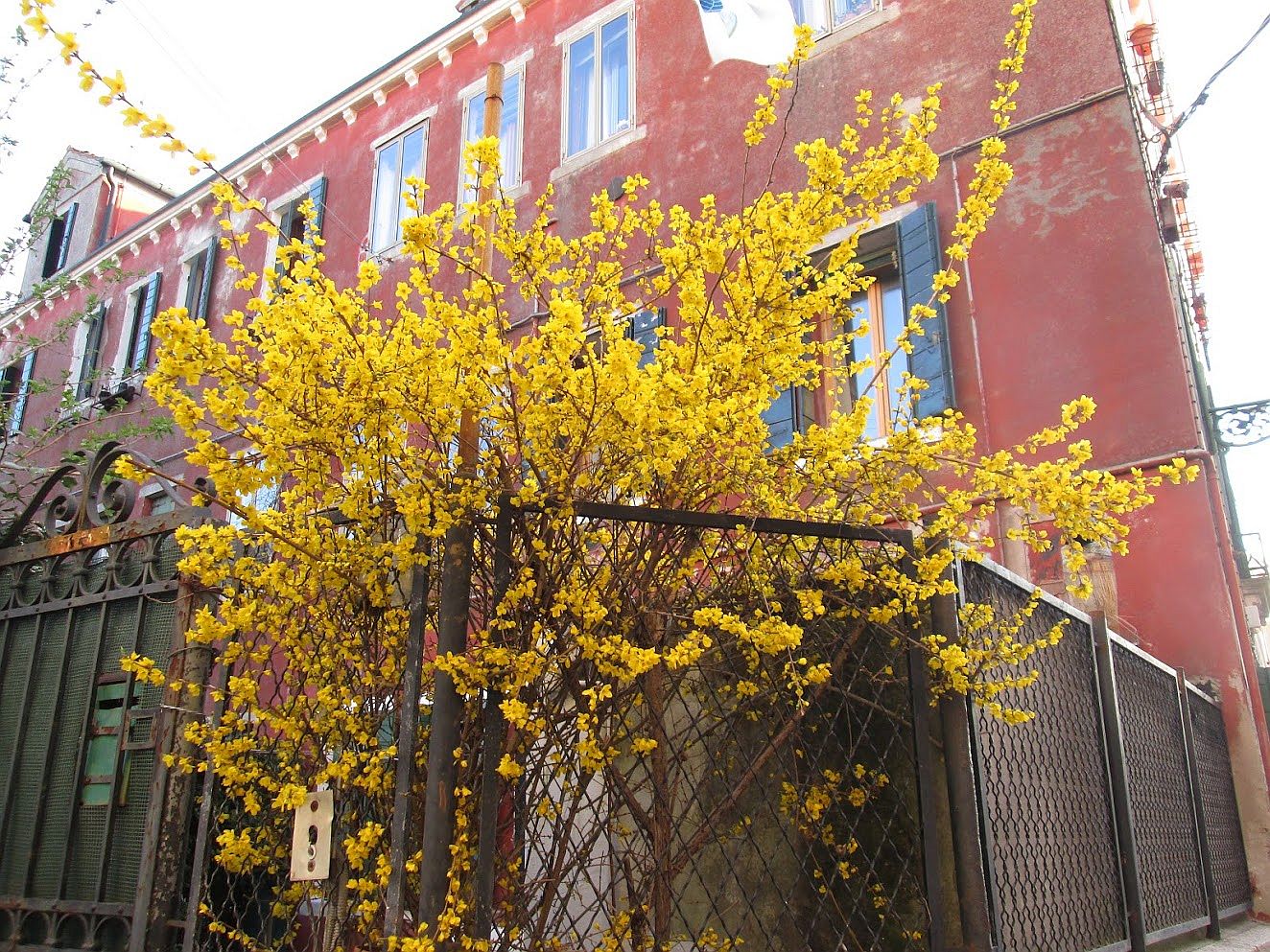
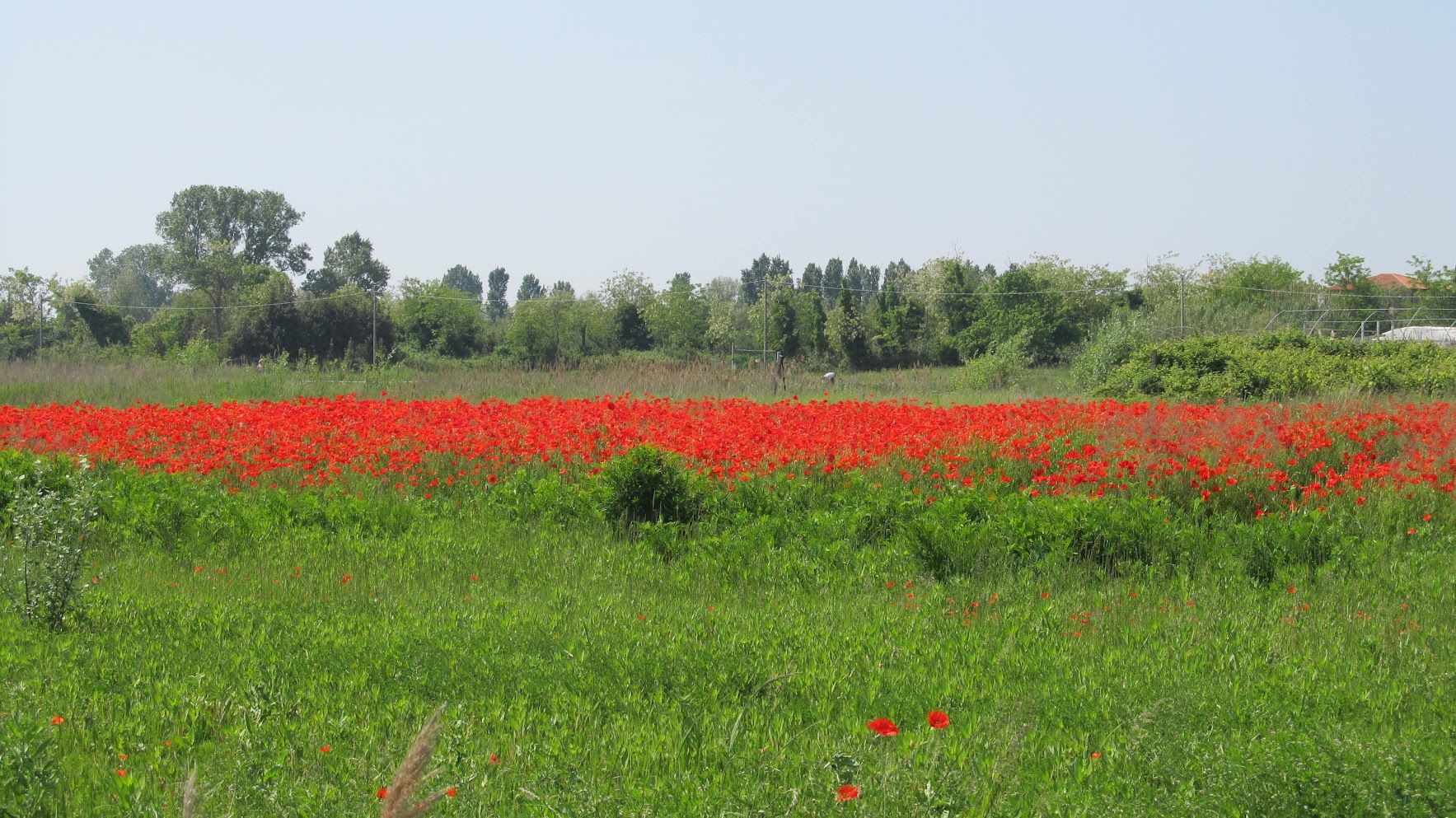
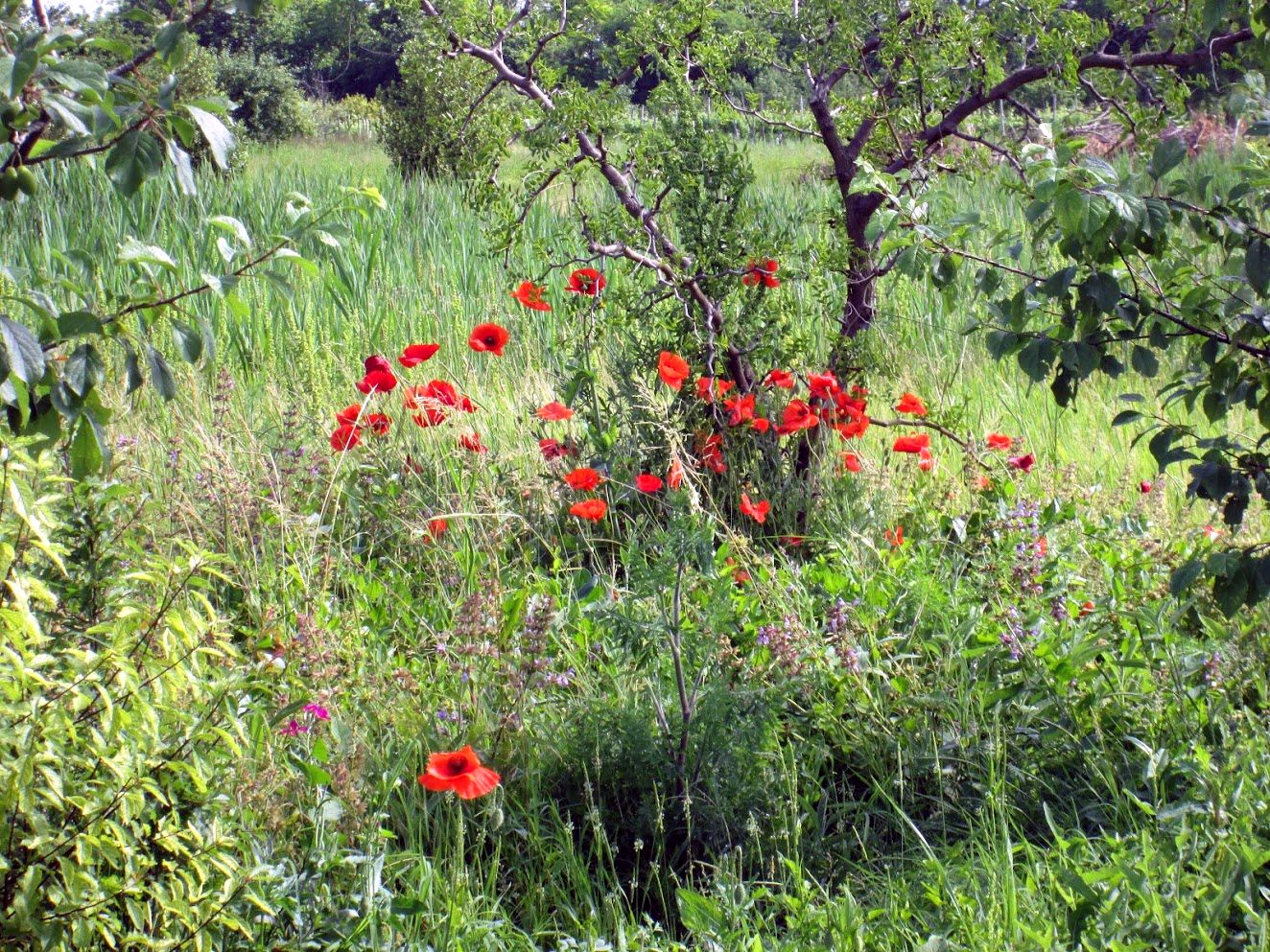
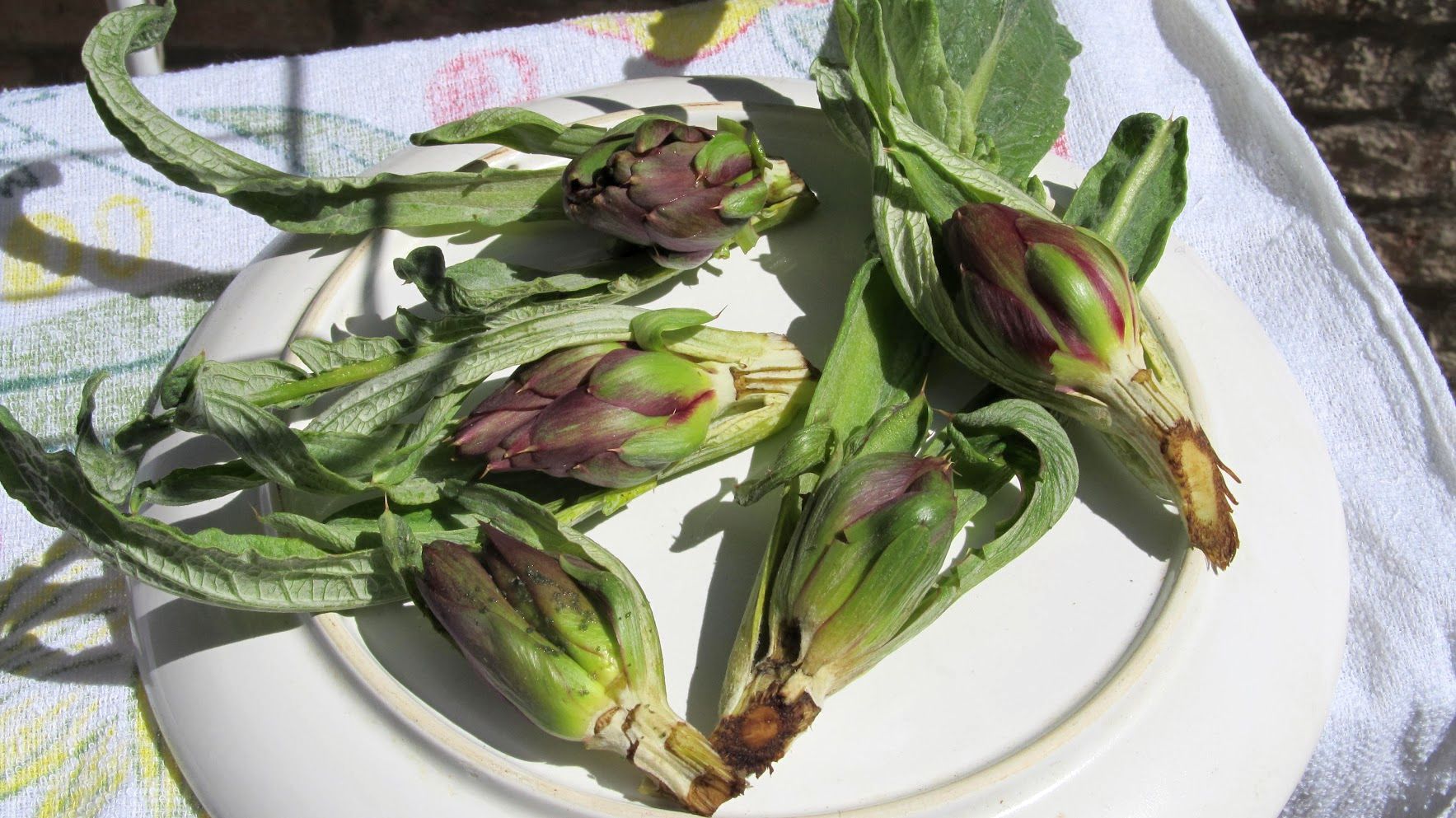
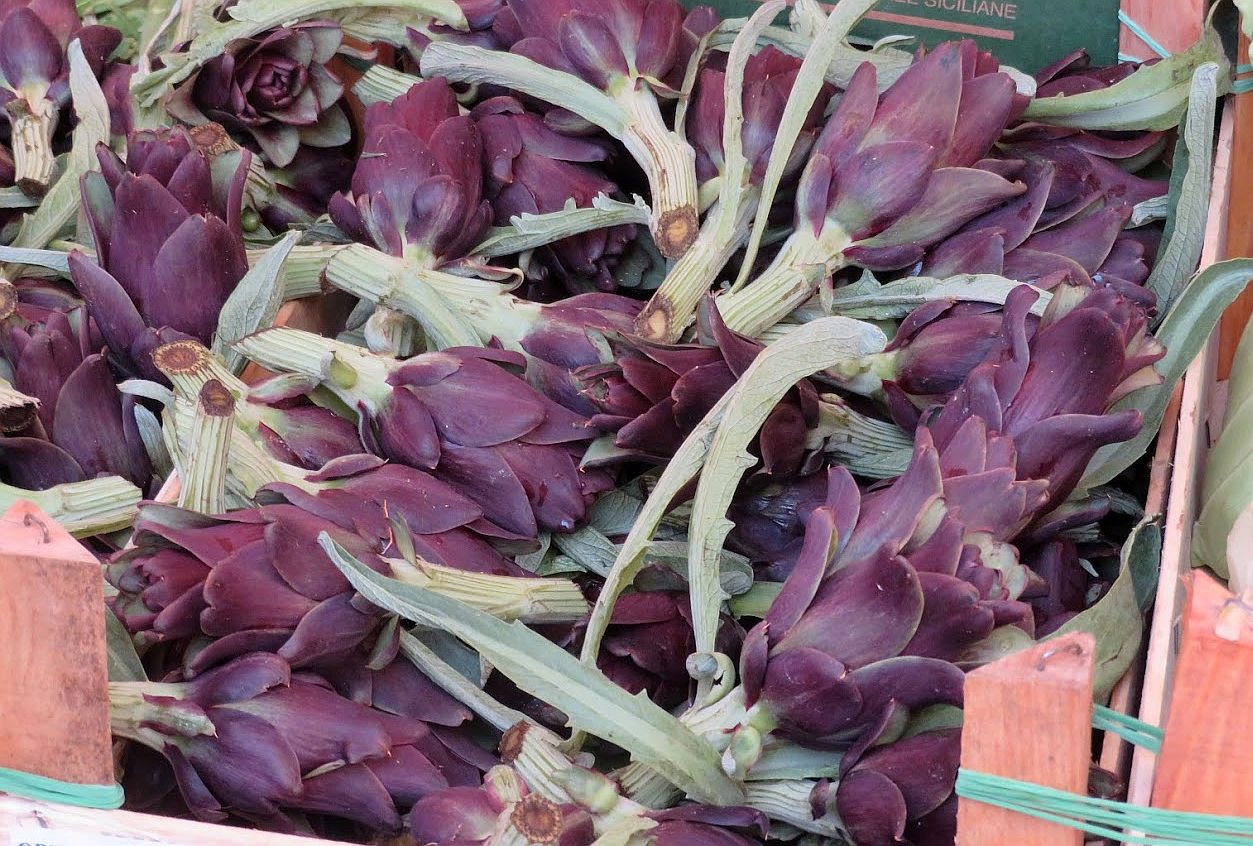
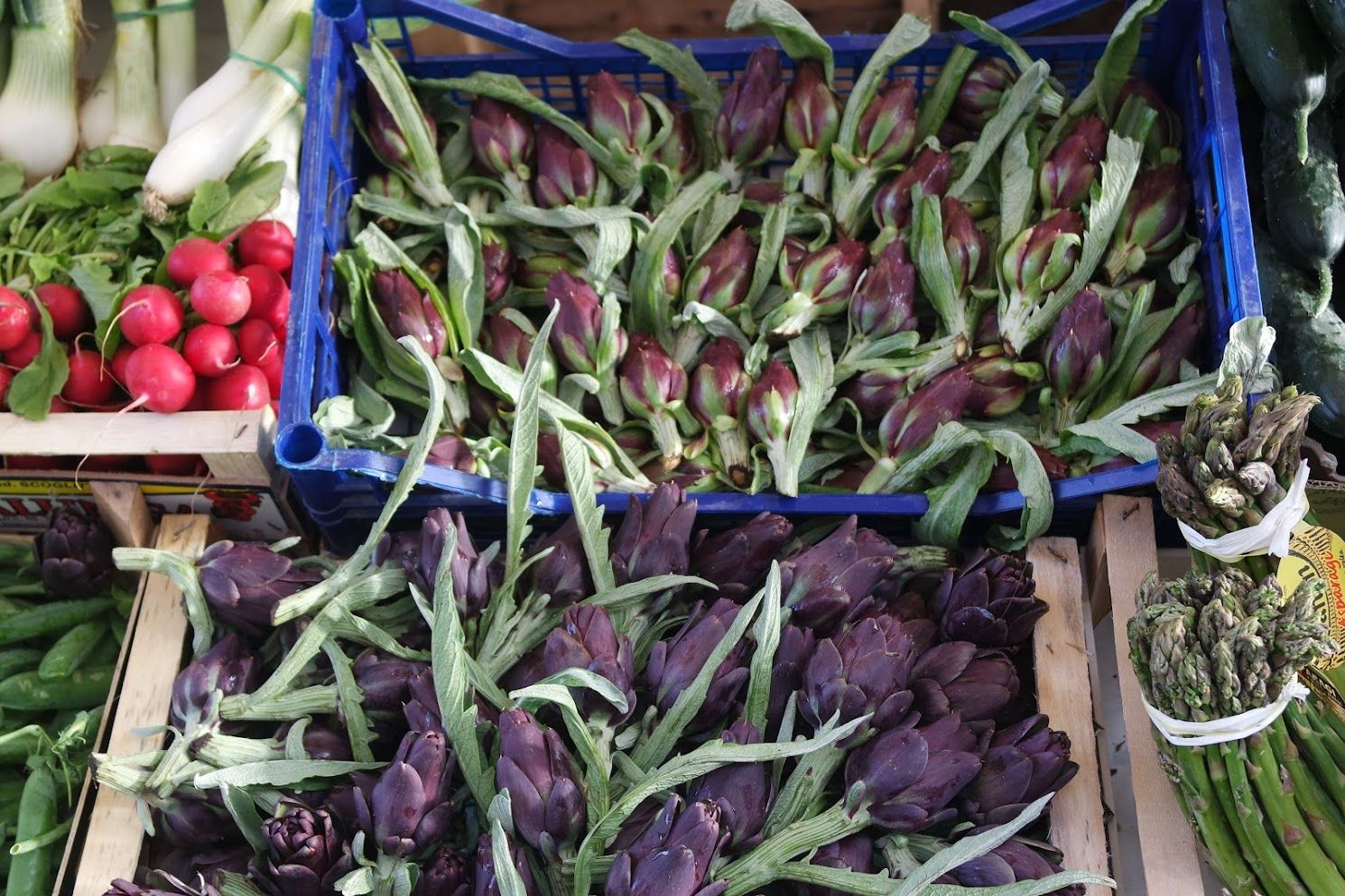
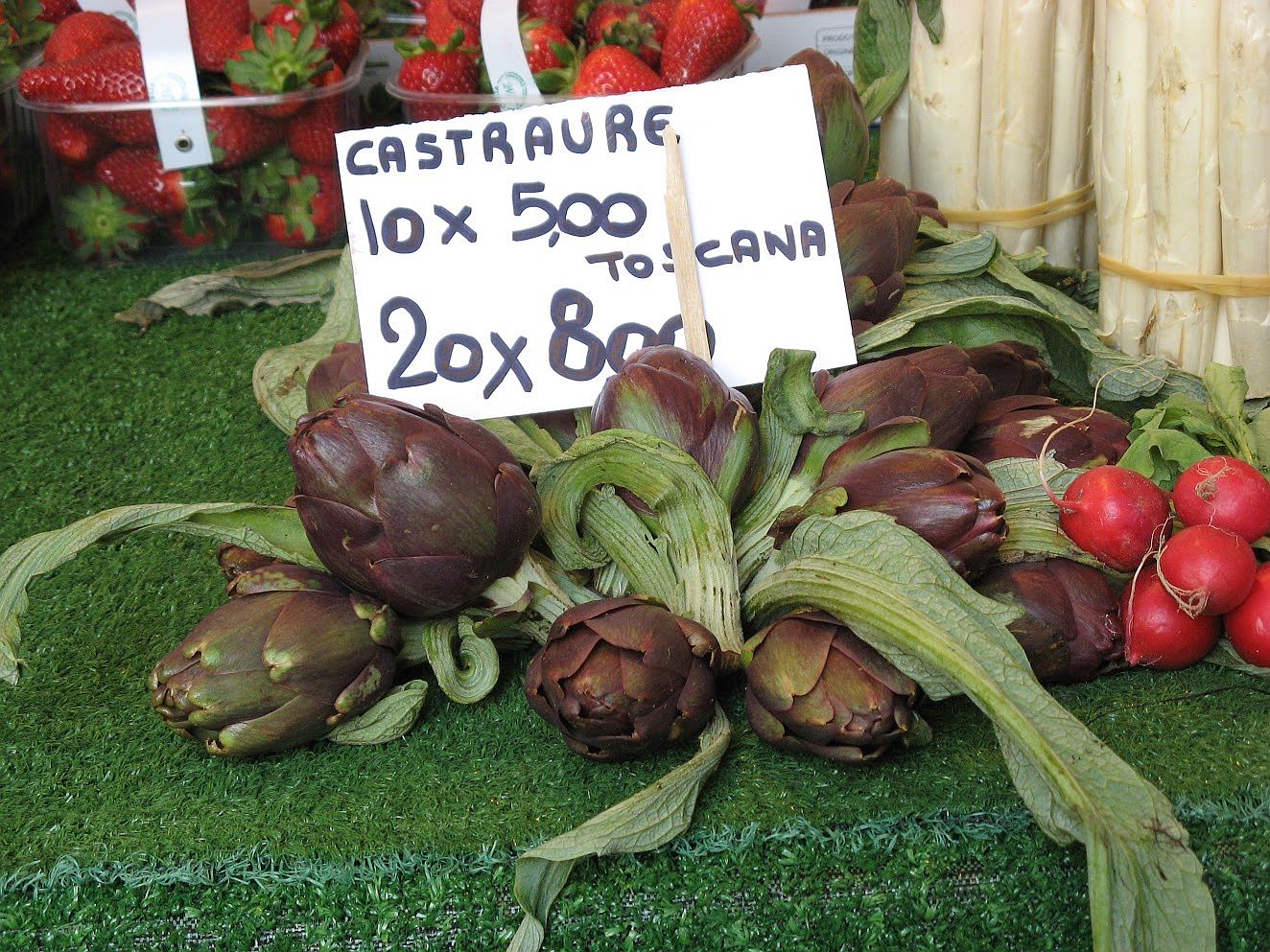
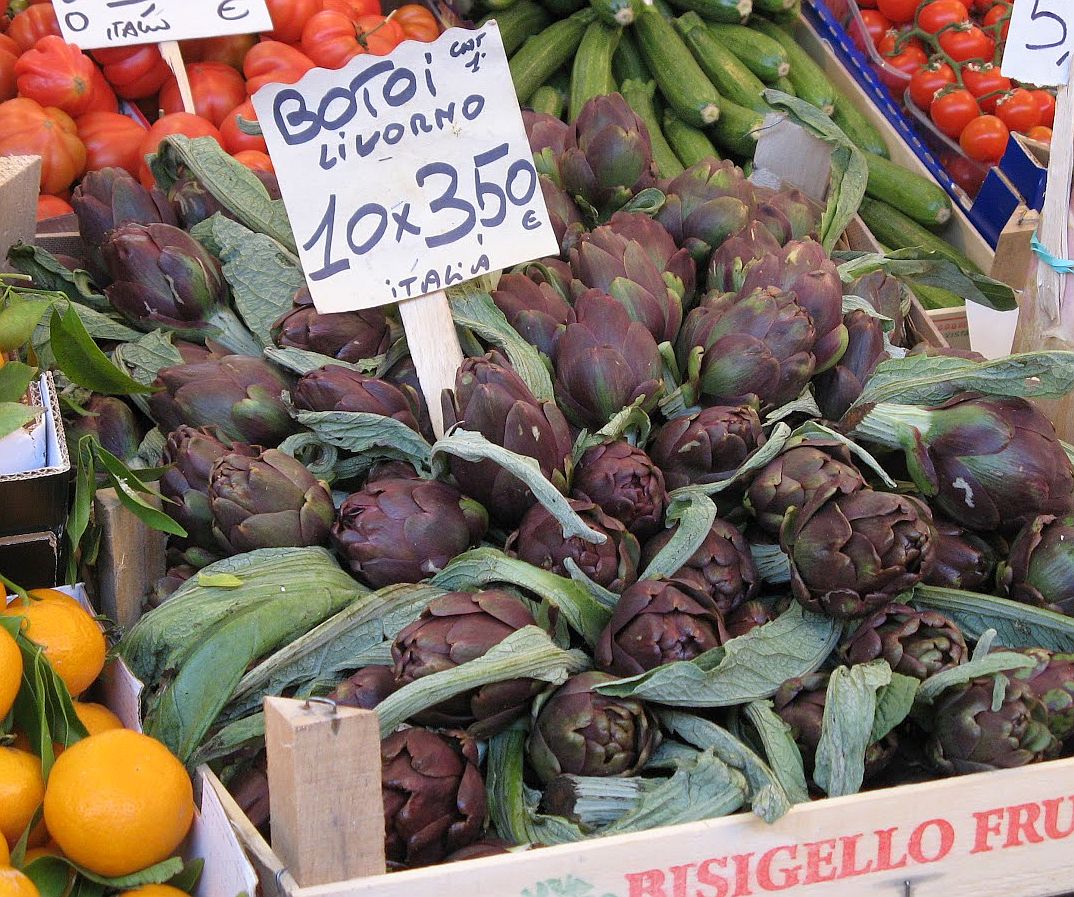
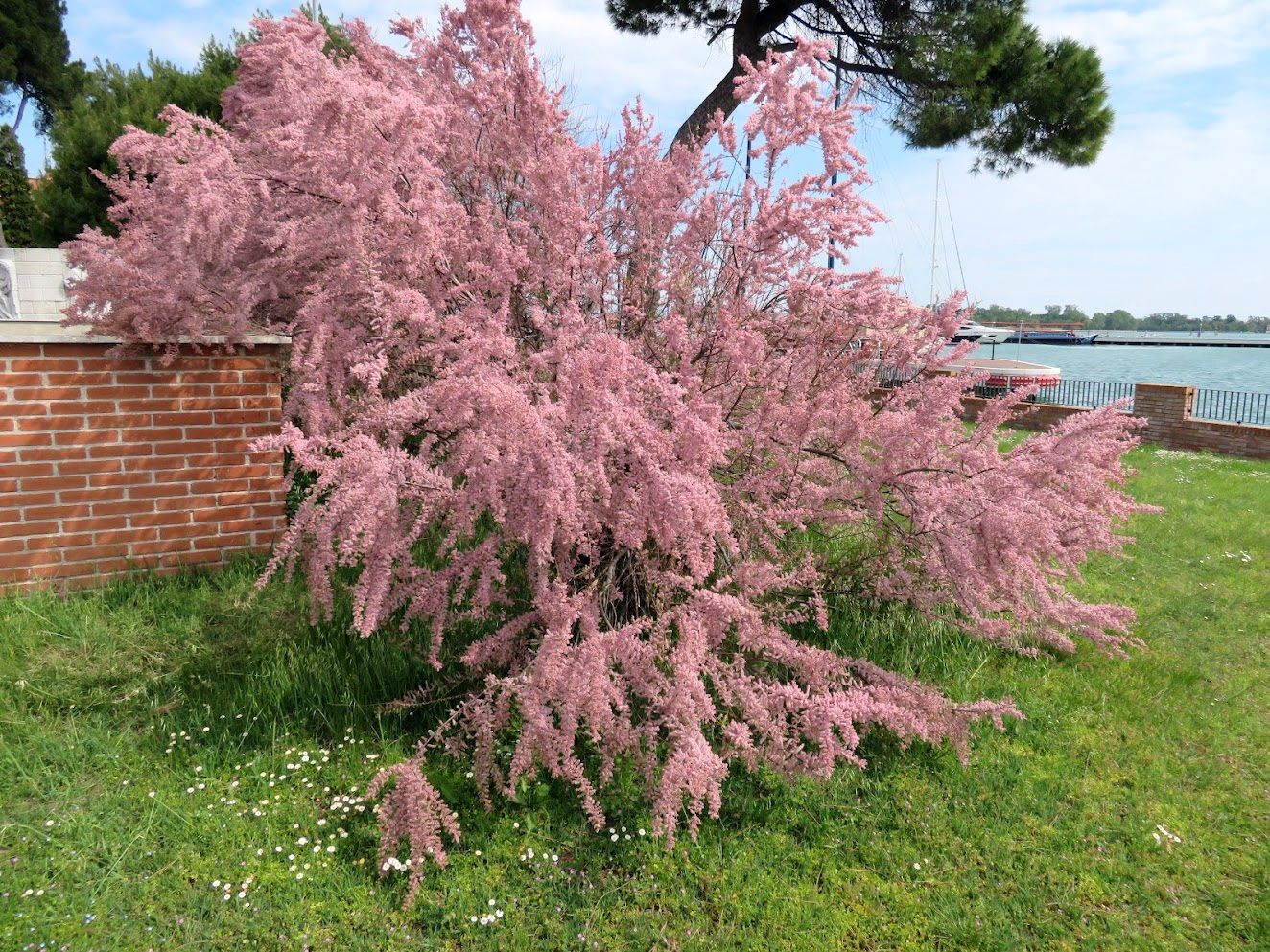
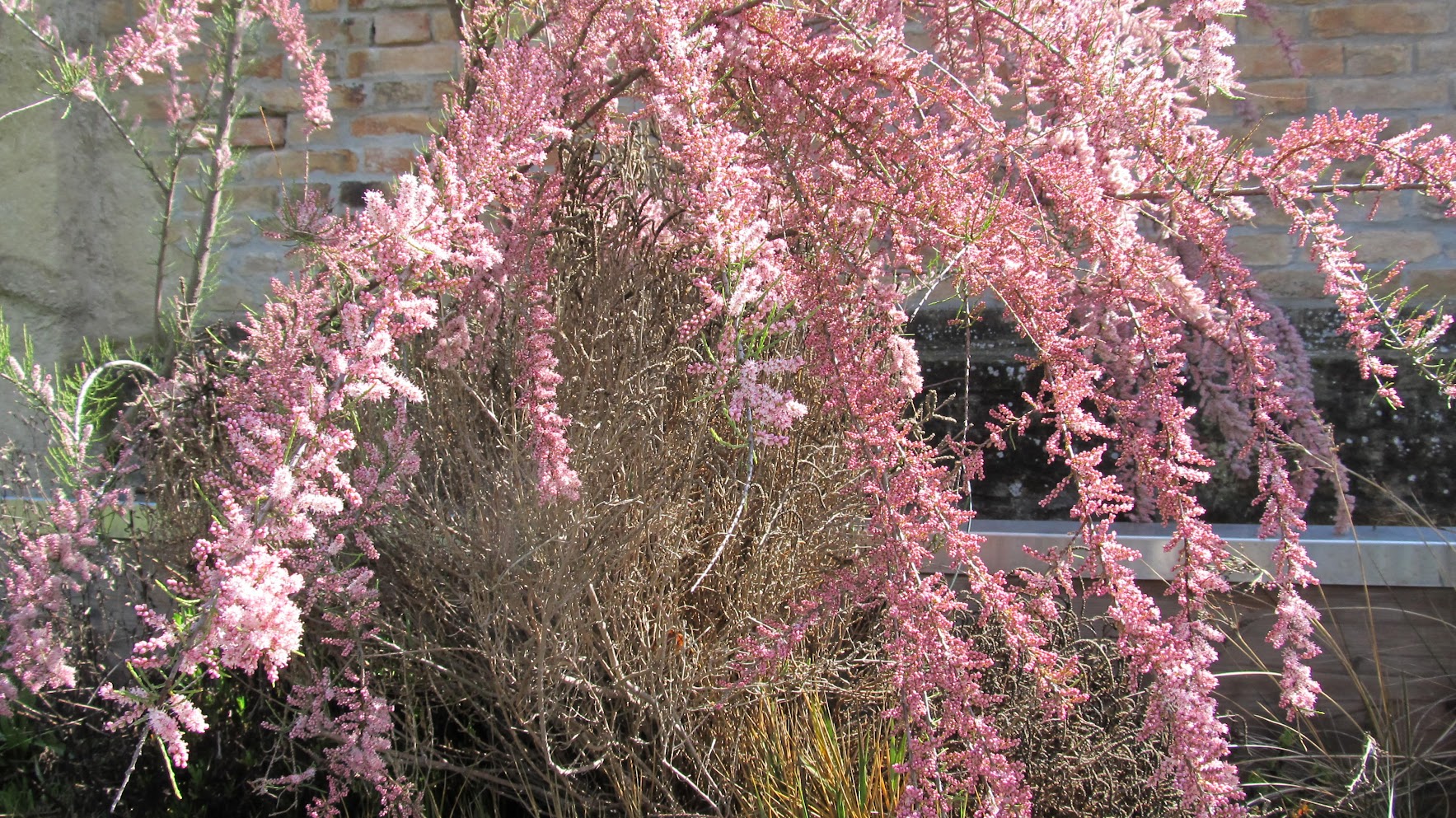
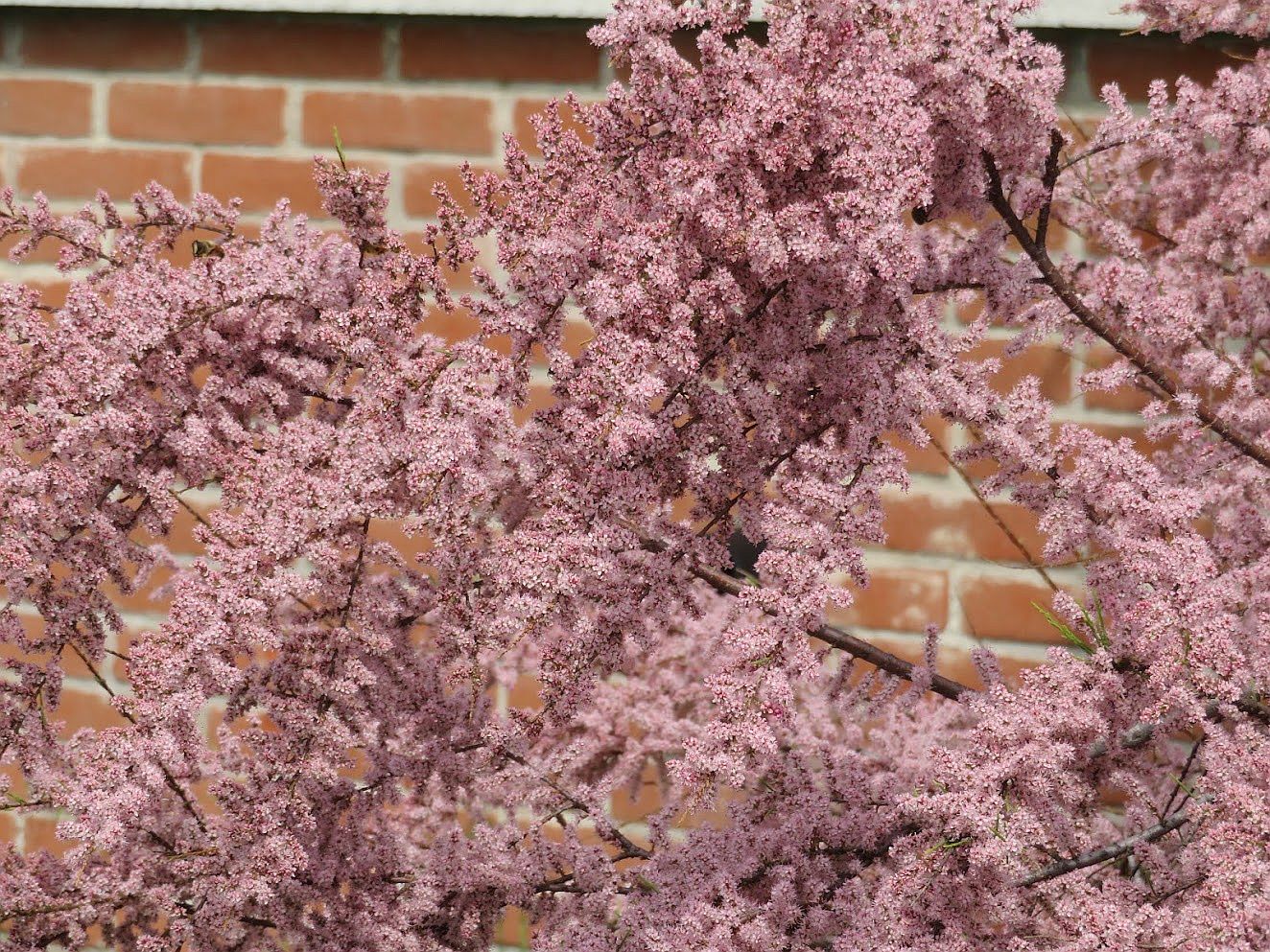
On April 25, San Marco’s feast day, Venetian men go for the rose — the “bocolo” of a rose — and the longer the stem and redder the petals, the better. Your lady-love has to have one. Or else. One year we decided to take mine for a ride.An abandoned bocolo does not bode well,either for the couple or for the rose.Toward the end of April the forsythia takes center stage. This is an approximate date, of course; it comes out when it’s good and ready to come out.May: Poppies on Sant’ Erasmo.Poppies are everywhere for too brief a time.Yes, artichokes are flowers. These are a few castraure (cahs-trah-OO-reh) of the renowned Violet Artichoke of Sant’ Erasmo. Each is the very first bud that appears at the apex of the artichoke plant. People await their appearance sometime between April and May as if a special esoteric treasure is about to be bestowed. Because they now have reached a sort of cult status, it’s truly amazing how many castraure somehow show up in the market. After all, just one per plant … There are various recipes for them, of course, but considering that their primary attribute is their tender youth, they are especially delectable raw, sliced extremely fine and enhanced simply by salt, pepper and the best olive oil you can find. The supply only lasts a mere two weeks or so, then the botoi (BOH-toe-ee) move in.Botoi are the flowers that bloom after the castraura has been removed. They are more flavorful, but they have no PR agent to rhapsodize about them so nobody makes a fuss about botoi the way they do about castraure. Also, there are many more botoi than there are castraure, so they don’t seem quite so exceptional. More than one expert prefers them to castraure, but to each his own mania.To review: The upper crate contains castraure, the lower crate has botoi. They are both delectable.Before we move on, let me alert you to the fact that Italy is rife with artichokes. You will find these on sale in Venice: Castraure from Tuscany. At a very reasonable price, too — another hint that you might have left the Sant’ Erasmo sector. (Castraure from that island, at least the first few days, can cost as much as 2 euros each.)Accompanied by their botoi, noted as coming from Livorno (Tuscany). They actually look just the same to me. But the whole point of this interval is that artichokes are flowers.Tamarisks love salty soil. Besides being lovely they are also very useful; on Sant’ Erasmo they serve as windbreaks around the asparagus and peas and other spring treats.
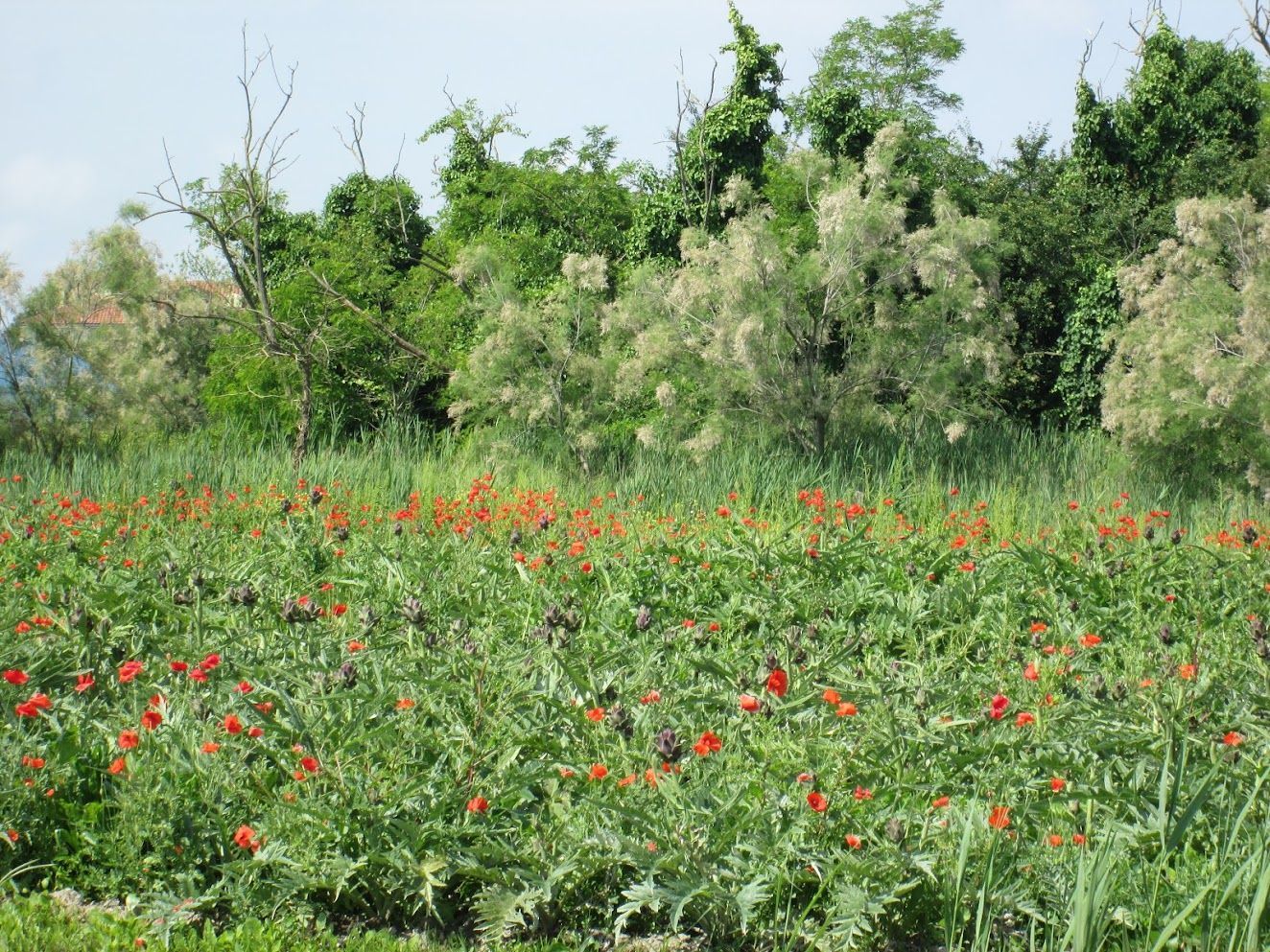
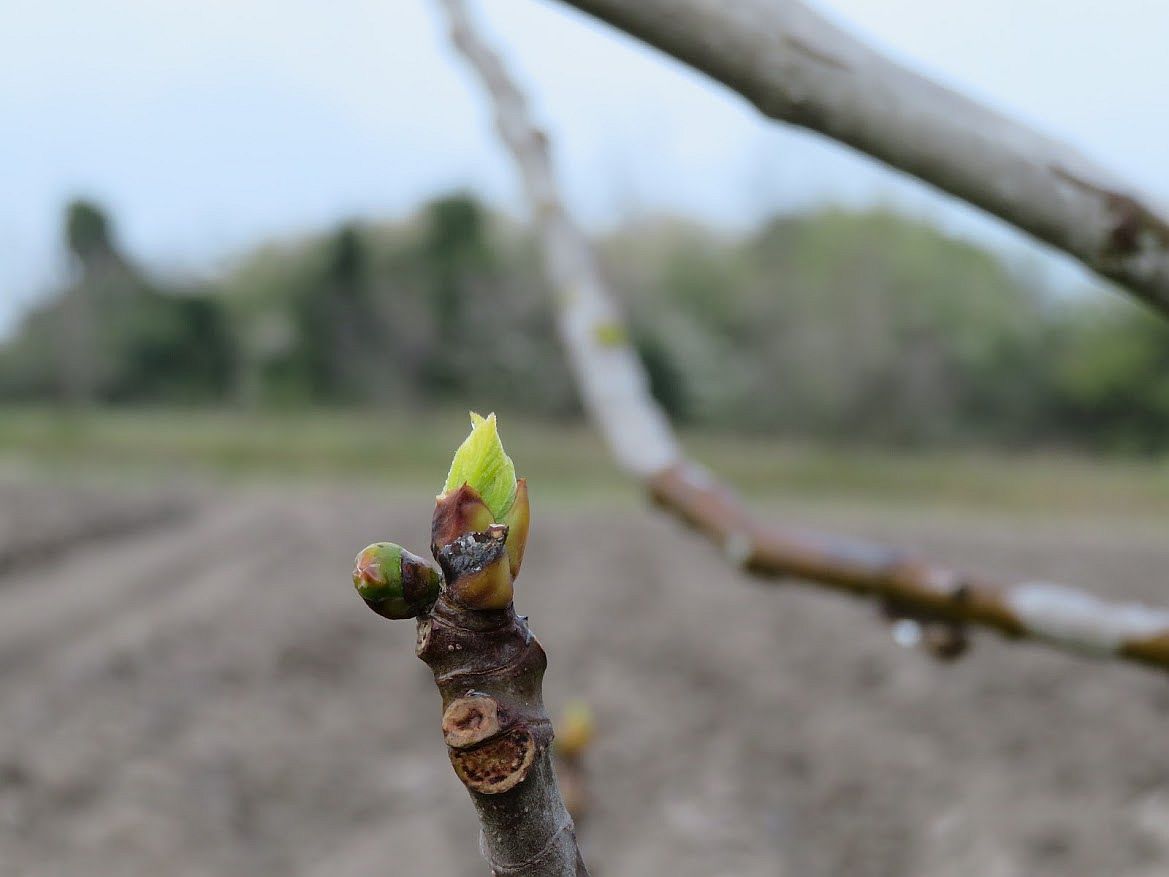
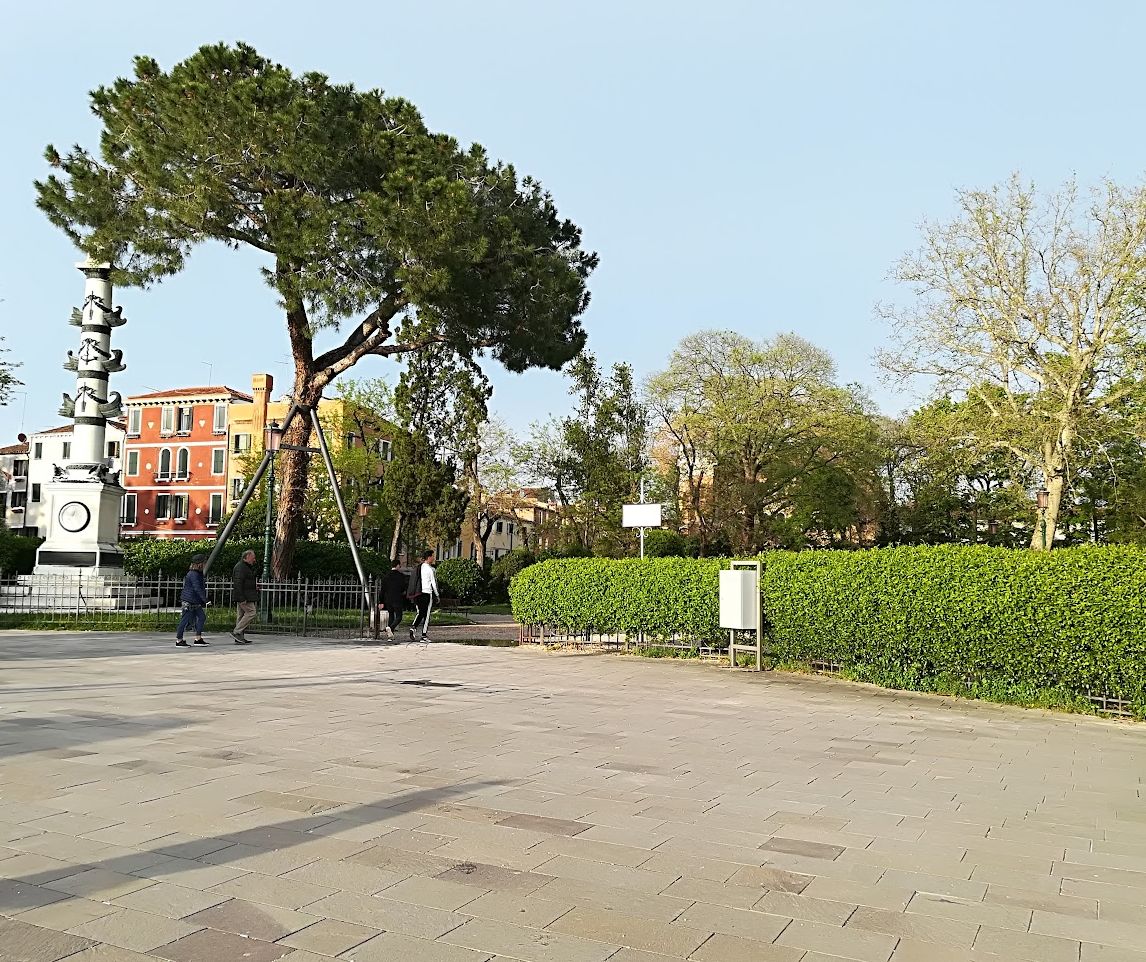
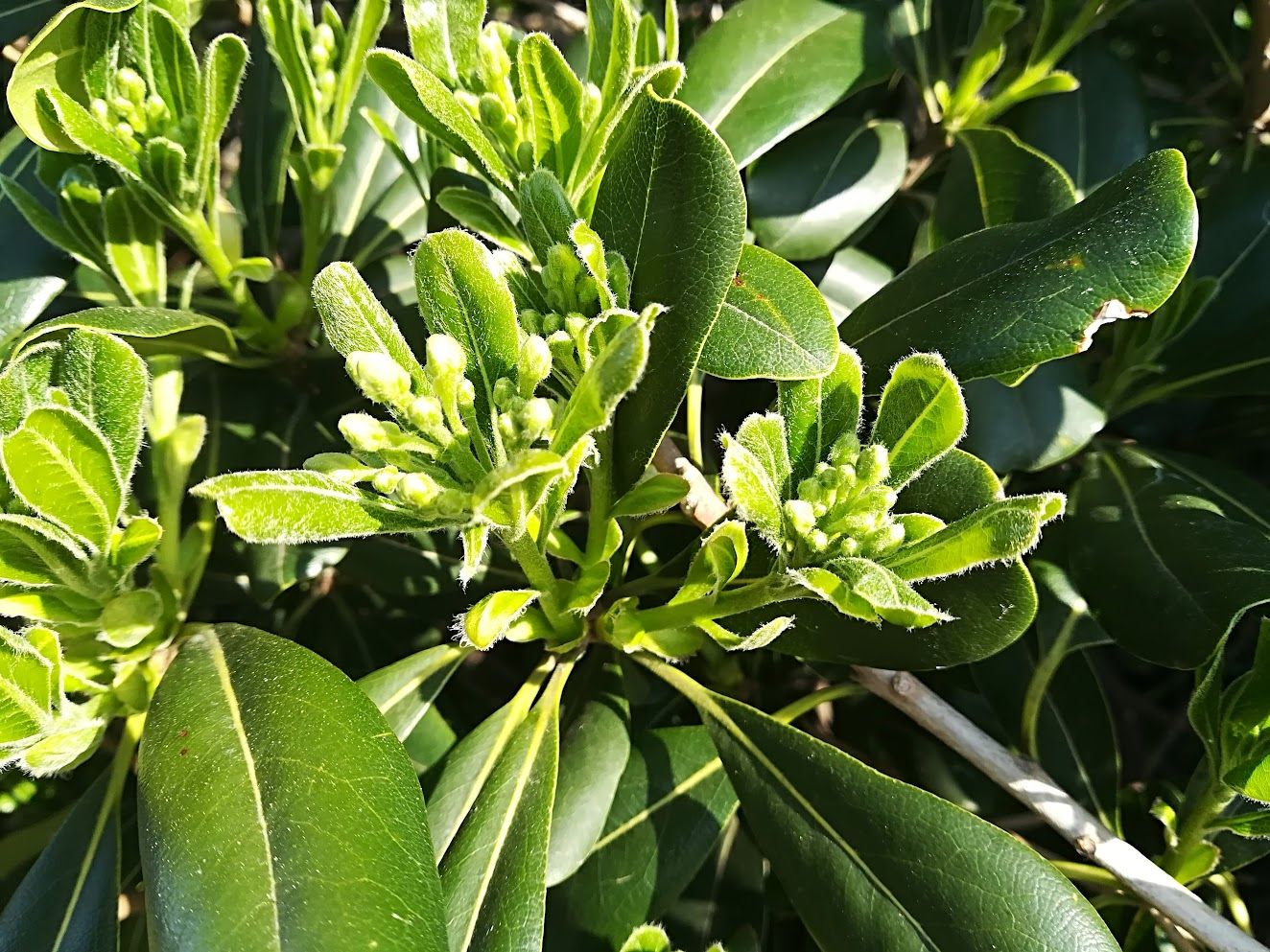
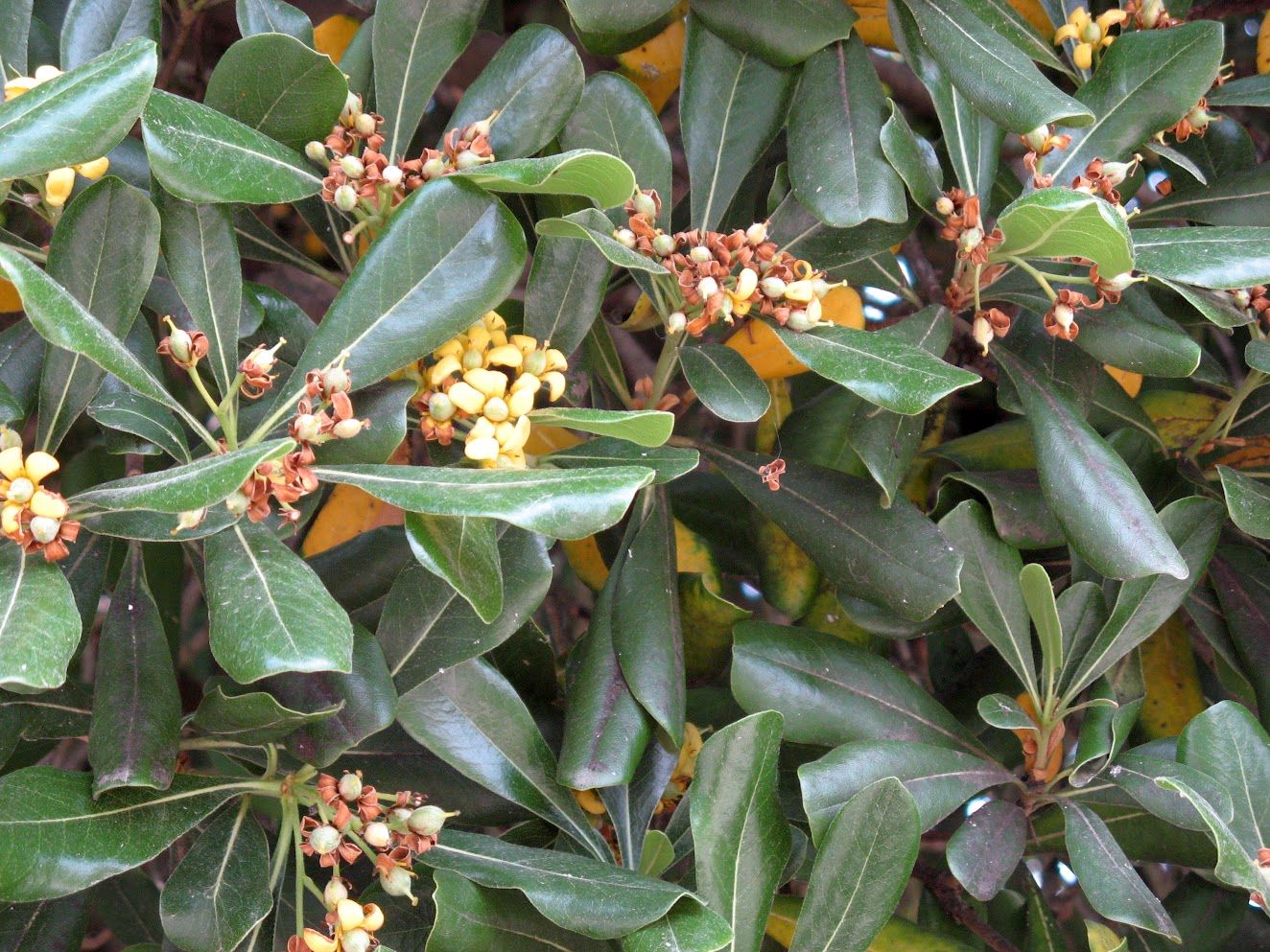
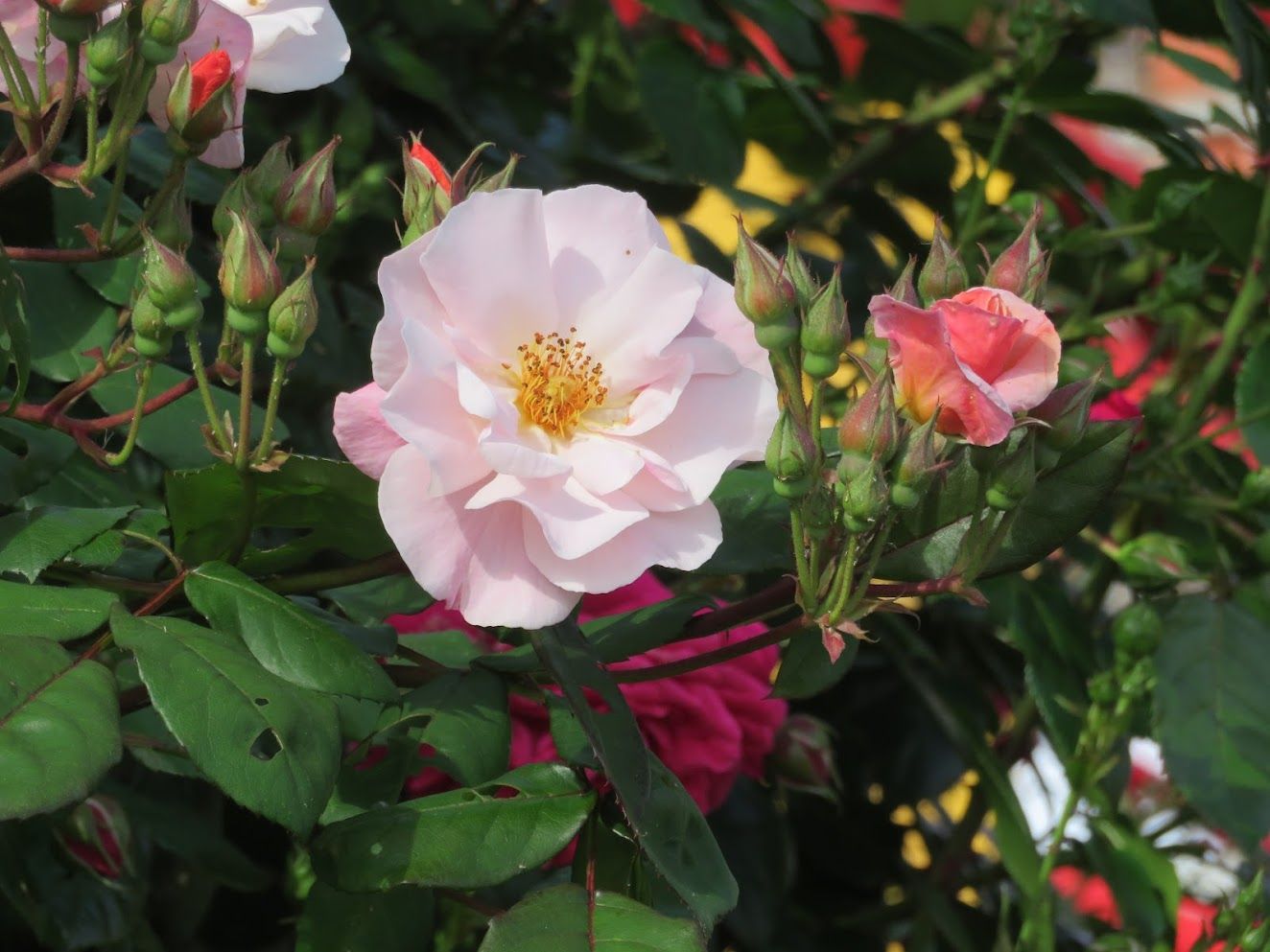
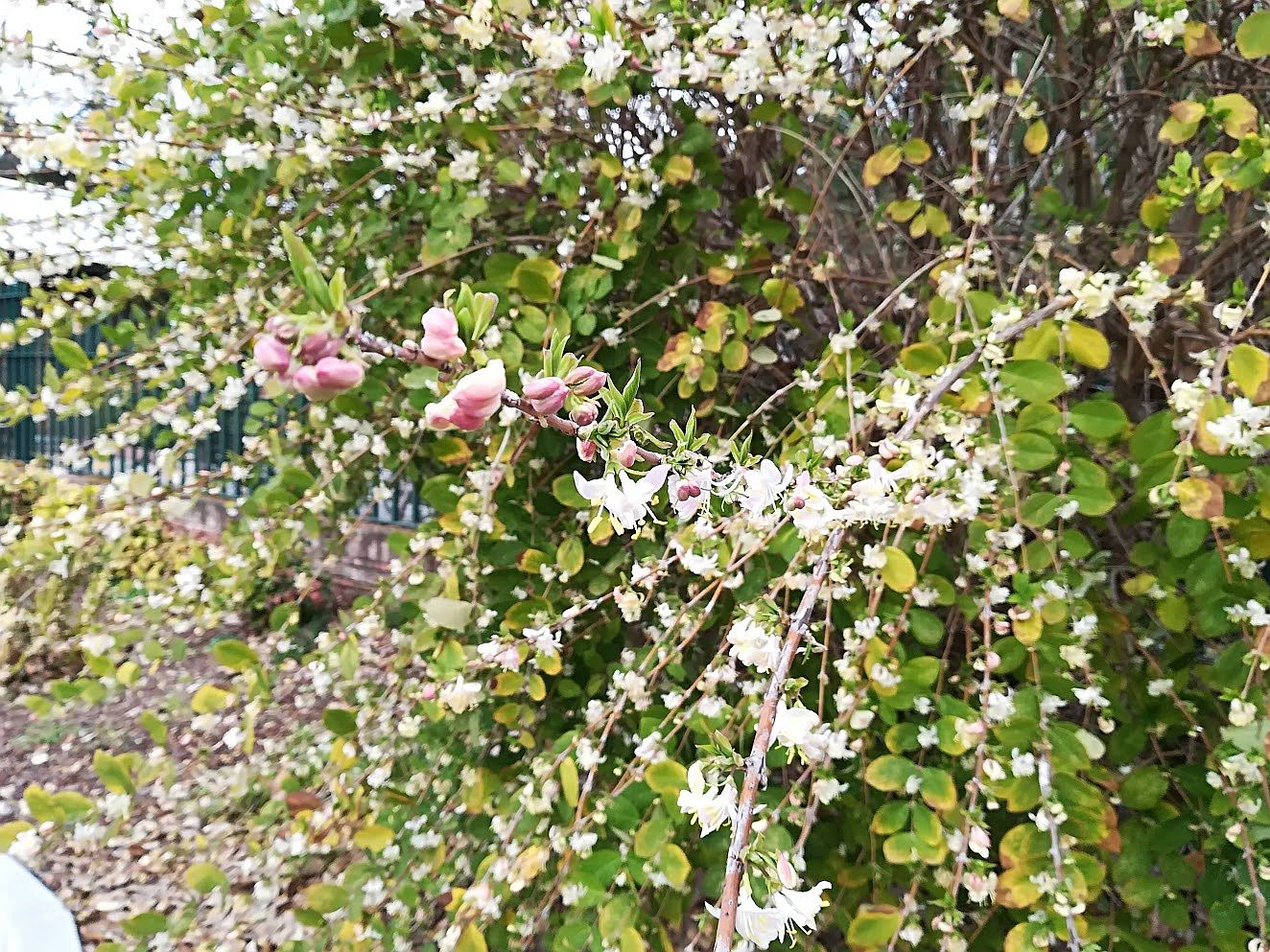
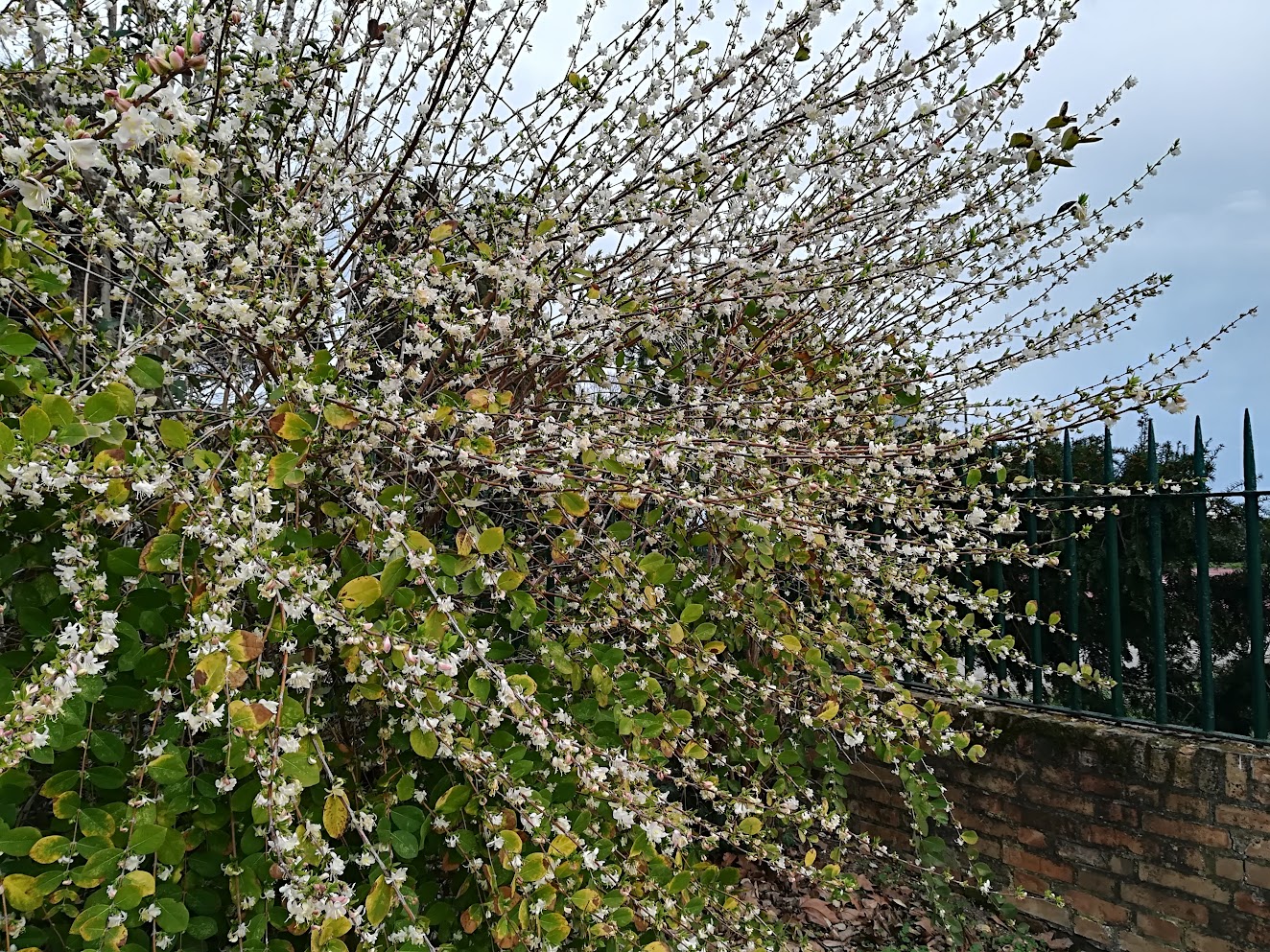
At just the right moment, the artichokes, poppies and tamarisks (here they are not pink, as you see) are all out together. Tamarisks also manage a faint perfume, which is charming.Going to be figs when they grow up. I put this picture in just because I think it’s so cool, but then my rudimentary research reveals that figs have flowers, but are to be found inside the fruit. That seems grotesque but it obviously works so never mind.This luxuriant sweep of shrubbery at the Giardini is Pittosporum tobira. My source says it is “native to eastern Asia and is widely grown as an ornamental plant in Mediterranean climates. The plant produces small, inconspicuous greenish or whitish flowers that grow in clusters in the leaf axils.” Until late May its only virtue is being green. But then the flowers begin to open up and become conspicuous. My source says the flowers are known for their “intense fragrance,” and that is an understatement.Aren’t those little buds lovely? And their first aroma, after the long winter, makes you want to open your arms and invite them to your home and bring them cool drinks and expensive snacks and ask them if they’re happy and insist that they tell you if they need or want anything. That’s the first week or so. But like “The Man Who Came to Dinner,” they settle in, become obnoxiously comfortable, and decide they don’t ever want to leave. As the late spring days pass, they lose their early charm and frankly they don’t care.Time passes, and as the buds mature in the sunshine the fragrance becomes denser, heavier, more aggressive. The perfume that once was so ingratiating begins to evolve into a sort of murmured menace. No longer delightful, the odor verges on nauseating. And that’s not the point at which they fade and die. No, they remain at that stage until they get bored revolting you, and then they stay for a while longer. This extraordinary plant travels the world under various aliases: Australian laurel, Japanese pittosporum, mock orange and Japanese cheesewood. Call it what you will, let it pass by. Turn off the porch light, lower the blinds, pretend you’ve had to leave unexpectedly for Kiribati. Or at least stop using the Giardini vaporetto stop and just walk to wherever you’re going.Roses in the Giardini.Honeysuckle (Lonicera tatarica) at Sant’ Elena.
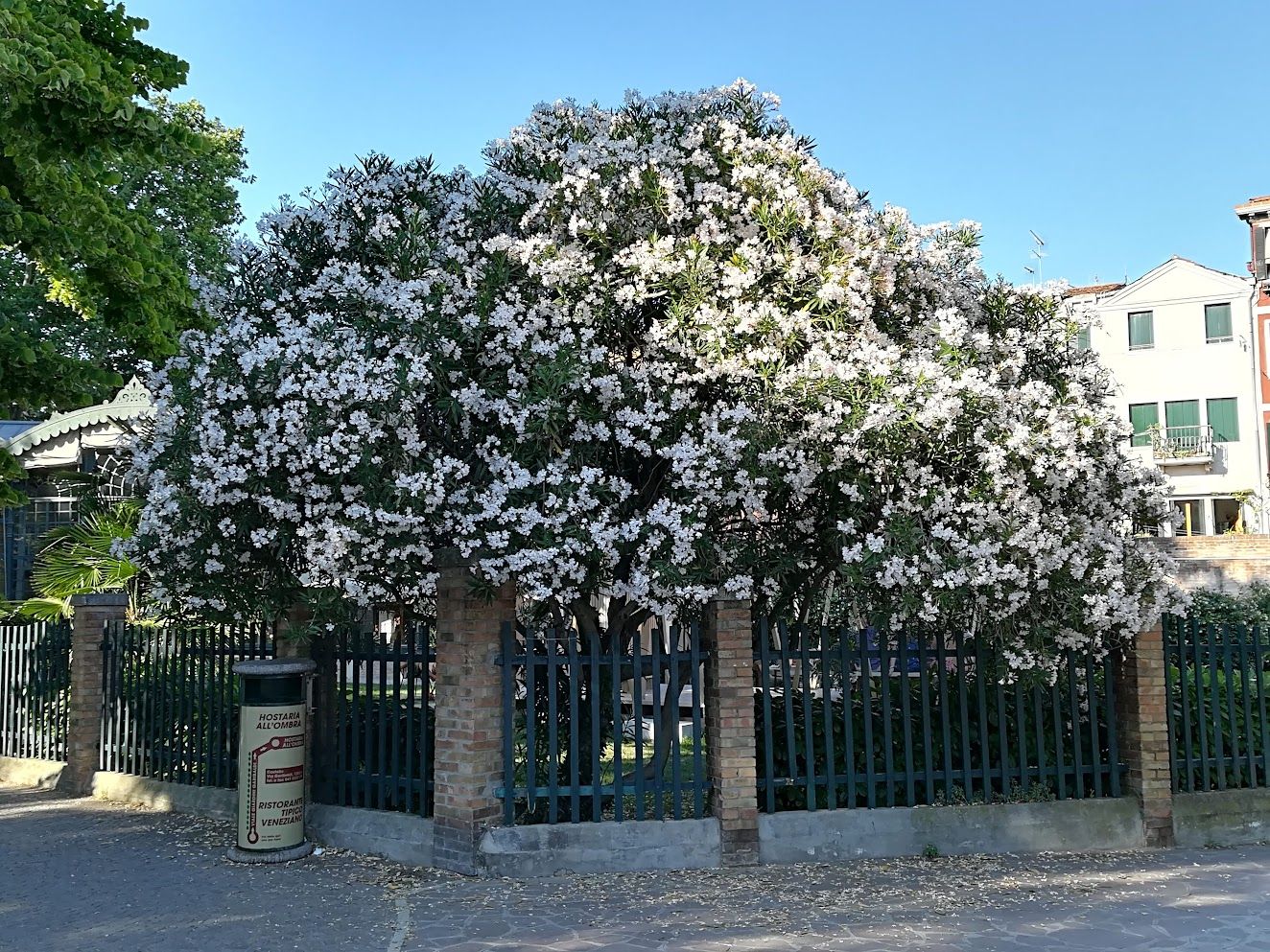
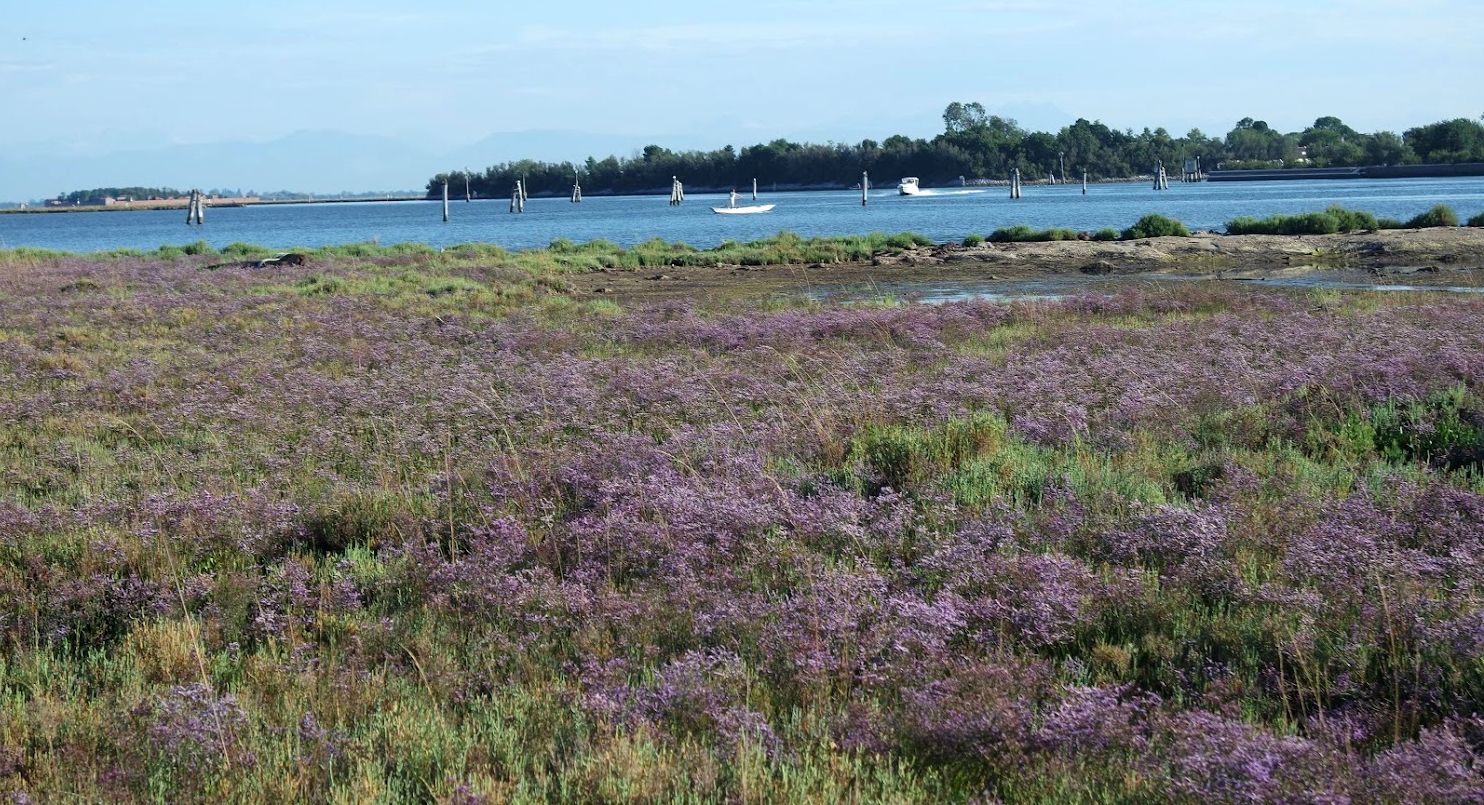
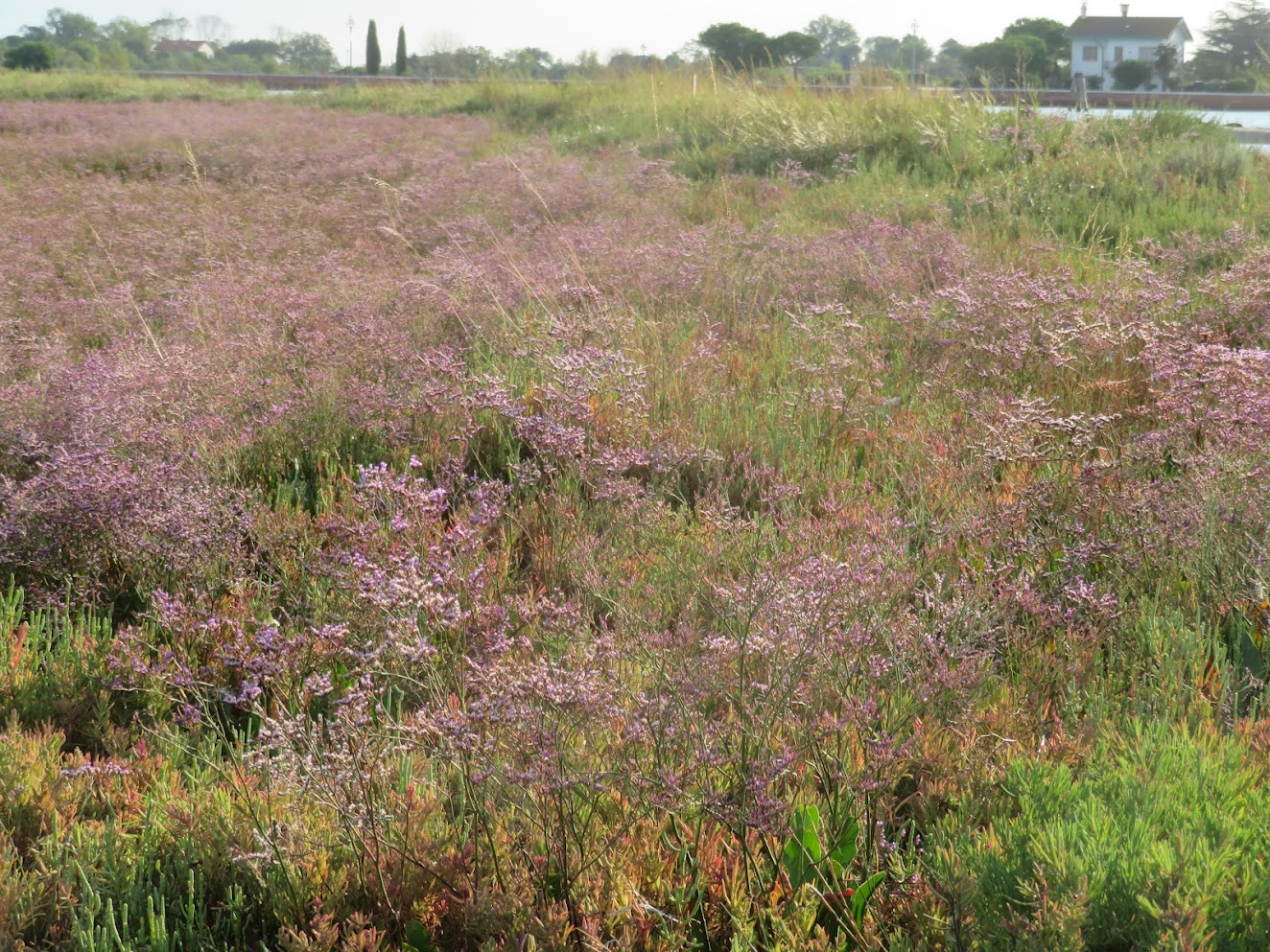
Oleander (Nerium oleander). I hope they leave it alone, it’s perfect just the way it is.Limonium narbonense comes out in mid-August. Various relatives are called sea-lavender, statice, caspia, or marsh-rosemary.
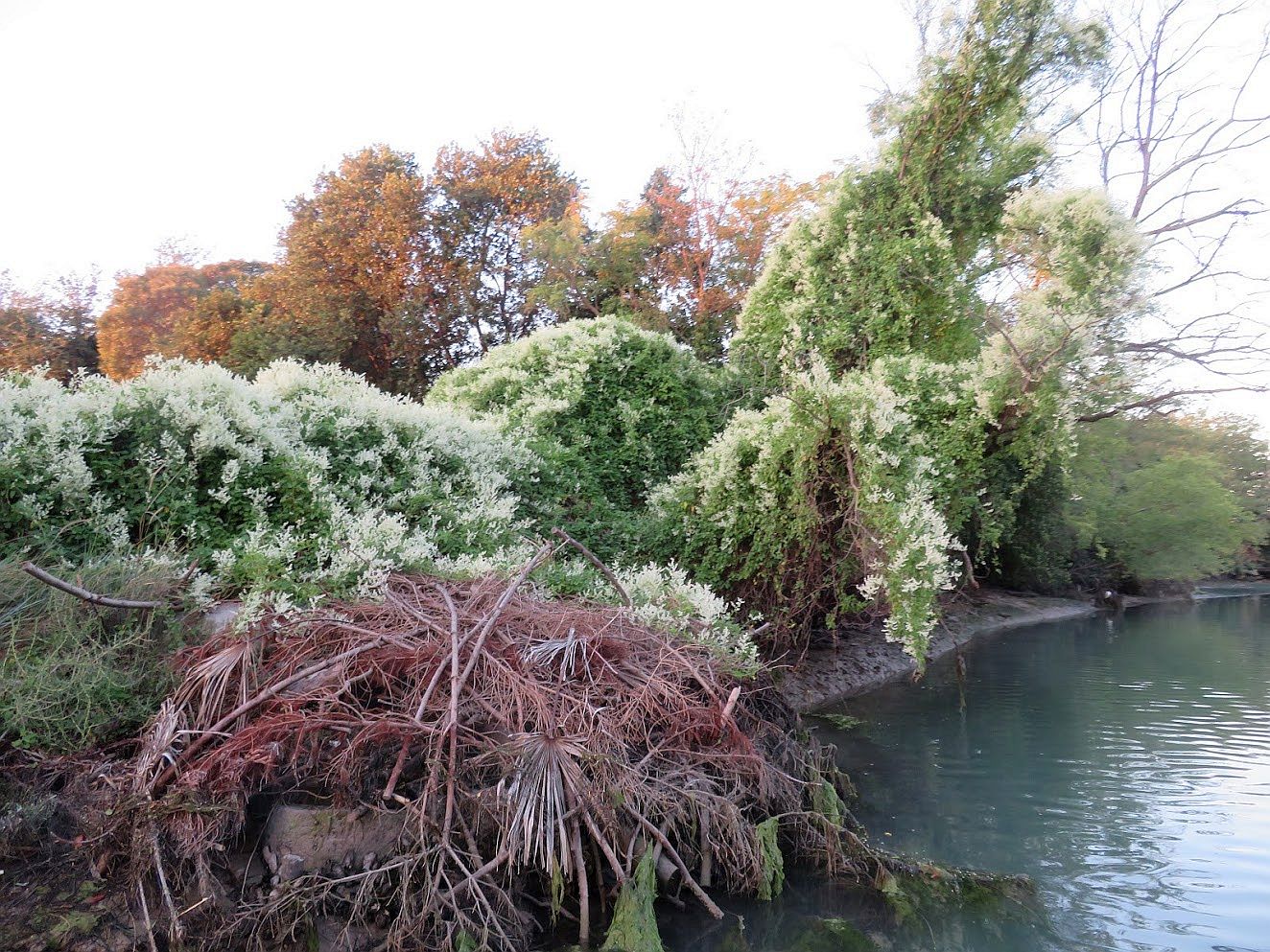
Late summer brings out the Erica; I do not know which of the hundreds of species this one may be. These are generally called “heath” or “heather.” That’s all I can tell you, apart from the fact that they are protected and you really should resist taking any home.This flowering shrub on the Vignole may be fleeceflower, or it may be silver lace vine. I hope some knowledgeable reader will settle this for me. Meanwhile it’s beautiful, and it lasts for weeks. Too bad it’s probably invasive, but we all know people like that. You take the fluffy with the bad.
Thank you for this–especially for those of us in the US trapped in a freezing storm with no power–no heat, no lightl Thank you especially for introducting us to botoi, about which I knew nothing, as most of our time in Italy was in the autumn and not spring. You make me terribly homesick for beloved Venice, with all its troubles.
Ahhhhh, just the post I needed, when it’s sub-zero for the umpteenth day in a row… Thank you for the beautiful blooms and wryly poetic captions, dear Erla!
Dear Erla, thanks AGAIN for brightening up our pretty glum and scary days, and reminding us that there is beauty all around if we just stop and look. Thanks also for the shout out to Sant’Erasmo I recall one Spring on the island, probably early May, when I was arriving after having been away for a while. It was early evening. You could smell the island from the vaporetto before it even got close! The jasmine, tamarisk and another flowering shrub that smells of honey… were all in bloom at the same time. I’e never witnessed that before or since. Magic.
A lovely post, as usual, and a reminder that spring with it’s beauty is just around the corner, but here in Solna I’ll keep the winter tyres on for a few months more. I totally agree with Mary Ann that in these days we do need the encouragement in a world that seems to have gone completely bonkers. I’d just love to come to Venice just for a stroll, it all looks so lovely.
Thank you for that, Erla. It’s pouring with rain here, forecast to turn to snow. That photo of Venice emerging from the summer haze made my heart leap and I long to be there. What’s the weather like..?
I’m glad I was able to bring some sunshine to your day. Our winter is proceeding with moderate good manners. The temperatures are reasonable — low 40s F, cooler at night, but not freezing. They’re predicting a little high tide the next two days, plus heavy rain and strong bora (NE wind). Feb. 2 is the feast of the Purification of the BVM (here in Venice called the “Candelora”) and that’s our Groundhog Day, so we’ll see if the tradition holds that says if there’s wind and rain that day we’re in for another 6 weeks of winter. But we haven’t suffered anything like the people in southern Italy with Cyclone “Harry.” Go to YouTube if you feel like seeing devastation, which of course you don’t. Conclusion: So far everything normal. What a privilege it is to be able to say that!
Superb timing, as always. We’ve got whole lakes of rain on many roads, and the threat of snow, and the winds have been howling day and night for days – not set toe out of doors since last week, too miserable for words. And along comes your post! I’ve got snowdrops outside the conservatory window, winter-flowering jasmine on the fence, and those are there to cheer us up, but your bevy of beauty has really lifted out spirits! May feel the need to toast it with a glass of decent prosecco later, before dinner. Thank you yet again.
Ella B
Charming year in review. Thank you. Does Italy have an equivalent to the Anglophone countries’ folk saying, “Half a gardener’s work is done in their winter dreams” ? Perhaps Lino or his network of friends and family would know.
Lino has never heard this, but doesn’t therefore assume it doesn’t exist somewhere out there. There may well be gardeners in Venice but I see mainly windowboxes. In any case, plant life is something that would be more important to people out in the countryside, whether flower gardeners (giardinieri) or fruit-and-vegetable growers (ortolani). If anyone around here were having winter dreams about flowers or cabbage I’m guessing it would have more to do with what the price would be in the market for selling them than anything else.
Thank you for checking with Lino; he seems an endless font of fascinating local knowledge. As you point out, the saying must be linked to a locus with room for a garden.
The folk-saying is a pleasant sentiment, especially in climates with cold and sunless winters. The purveyors of garden seeds know it; opulently-illustrated garden catalogues flood the mailbox when the holiday sparkle has faded and the greater stretch of winter lies ahead.
A favorite photo I took in Venice does not capture a major monument or glittering interior. It is not great art, but it depicts the prow of a boat crammed with pansies. I took it opposite the Fondamenta de la Prigioni late one autumn forenoon. It was pleasant to think of how they would brighten window boxes through the winter.
You have impelled me to think further on the subject of gardens here, and I regret that I disparaged wndowboxes. Over the years I have taken a modest number of photos of these, here and there, and I have to say that they do add lovely touches to the sometimes not-very-lovely streets (looking at you, narrow dark side streets). When Lino was a lad his mother had a windowbox with geraniums and carnations, but I don’t know if she had any time, or income, to dedicate to dreaming about them. In any case, you have boosted my thoughts to another level. Here is a wonderful little article, decipherable only to readers who really understand plants, that I hope you and others enjoy: https://www.learningwithexperts.com/blogs/articles/venetian-gardening-window-boxes-balconies-and-climbers?srsltid=AfmBOoqLUSB8KHocI8_2kbG_1fka6uIAf9MroFCLvFXCbRmSO5H0ZVjz
Thank you for the web link. When I made the move from New England’s more temperate climes (summer, definitely not this winter) to the Sonoran Desert, I had to let go of the gardening wisdom inherited from my parents, grandparents, and experience, and learn to garden in our Martian climate of furnace summers, frosty winter nights, and soil worse than I knew existed. To the point, this required a deep-dive into botanical binomial Latin and plant origins… and so I could read the website with understanding, delight, and, inevitably, a touch of sentimentality. I’ve never had a window box, but at the end of my days, however that plays out, I should like, at the bare minimum, to have a pot of rosemary at hand. Ophelia got that right.
Beautiful photos. Thank you for the commentary also.
Thank you for the lovely flower show. My son – in – law, I can attest too is NOT a gardener !
He and my daughter bought his sister a Fig tree she had been wanting, for her birthday. She spent a lot of time and energy with it, wrapped it in winter or brought it in during the winter but after several years it didn’t produce 1 Fig. She gave it back to her brother who went out dug a Hole dropped it in and didn’t give it a second thought ! It now is over 6 feet tall and gives they figs to everyone, it produces so many. I guess the Fig was happy to be neglected.
They lost some trees and he actually took an interest in replacing a few.
The “ Chinese winter bloom “ sounds lovely. We live in Pennsylvania so I”m going to research if it will survive our weather. His success at neglect of the Fig has spurred him on!
I really enjoy your posts you take me on a walk in my favorite city that I have visited many times .. it is my favorite.
Thank you
Normalement nous venons en avril avec agustino pour lui faire découvrir cette magnifique ville dont nous sommes tombés sous le charme mais également de votre acceuil.
Nous espérons vous revoir !
Gregorio, sandra, agustino

21 Comments
fantastic article…and special thanks for the info about the botoi
I’m glad you appreciate the revelations about the botoi. Yet another secret of Venice — or if not Venice, at least artichokes — revealed!
Thank you for this–especially for those of us in the US trapped in a freezing storm with no power–no heat, no lightl Thank you especially for introducting us to botoi, about which I knew nothing, as most of our time in Italy was in the autumn and not spring. You make me terribly homesick for beloved Venice, with all its troubles.
Ahhhhh, just the post I needed, when it’s sub-zero for the umpteenth day in a row… Thank you for the beautiful blooms and wryly poetic captions, dear Erla!
Dear Erla, thanks AGAIN for brightening up our pretty glum and scary days, and reminding us that there is beauty all around if we just stop and look. Thanks also for the shout out to Sant’Erasmo I recall one Spring on the island, probably early May, when I was arriving after having been away for a while. It was early evening. You could smell the island from the vaporetto before it even got close! The jasmine, tamarisk and another flowering shrub that smells of honey… were all in bloom at the same time. I’e never witnessed that before or since. Magic.
A lovely post, as usual, and a reminder that spring with it’s beauty is just around the corner, but here in Solna I’ll keep the winter tyres on for a few months more. I totally agree with Mary Ann that in these days we do need the encouragement in a world that seems to have gone completely bonkers. I’d just love to come to Venice just for a stroll, it all looks so lovely.
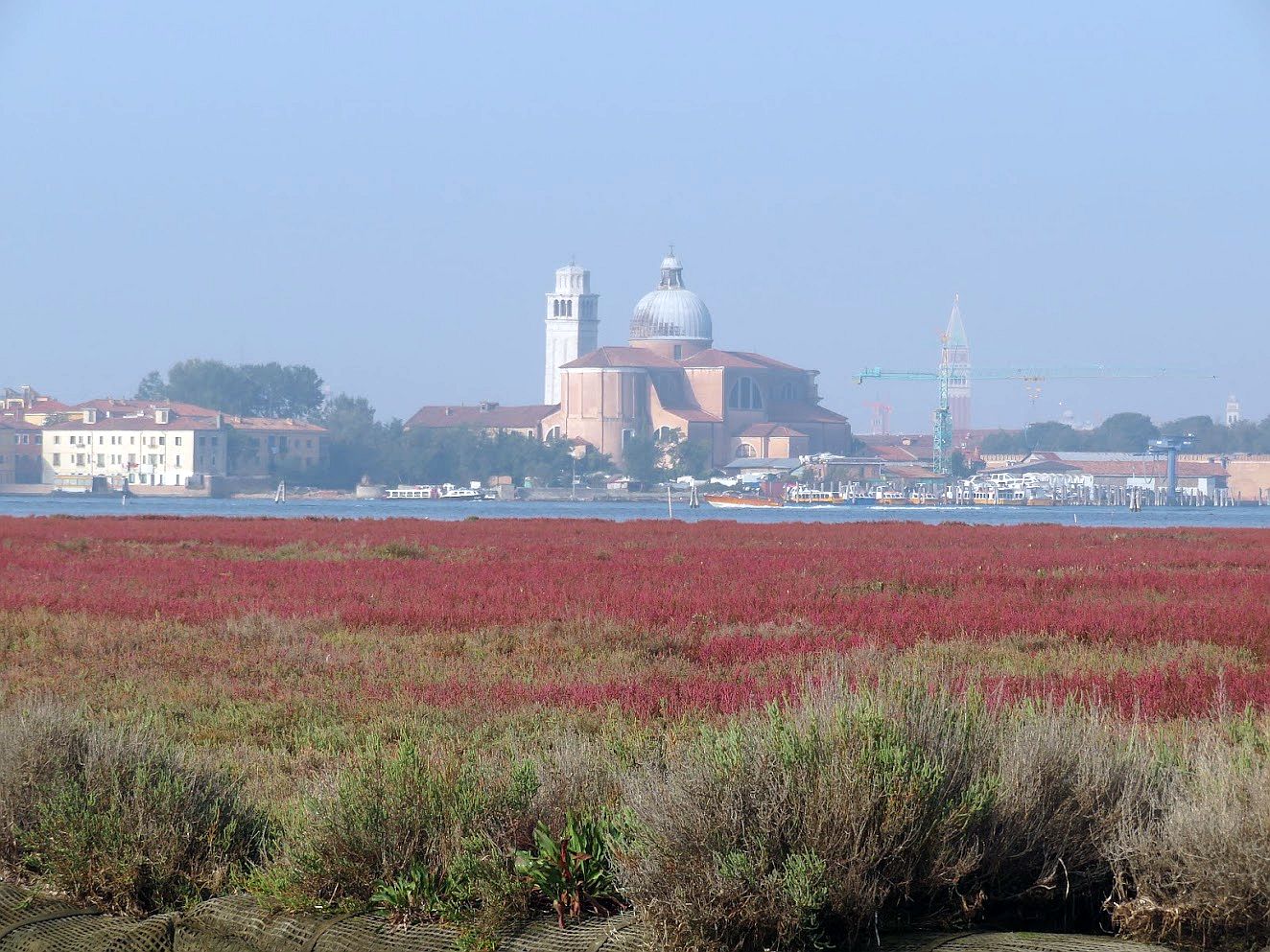
Thank you for that, Erla. It’s pouring with rain here, forecast to turn to snow. That photo of Venice emerging from the summer haze made my heart leap and I long to be there. What’s the weather like..?
I’m glad I was able to bring some sunshine to your day. Our winter is proceeding with moderate good manners. The temperatures are reasonable — low 40s F, cooler at night, but not freezing. They’re predicting a little high tide the next two days, plus heavy rain and strong bora (NE wind). Feb. 2 is the feast of the Purification of the BVM (here in Venice called the “Candelora”) and that’s our Groundhog Day, so we’ll see if the tradition holds that says if there’s wind and rain that day we’re in for another 6 weeks of winter. But we haven’t suffered anything like the people in southern Italy with Cyclone “Harry.” Go to YouTube if you feel like seeing devastation, which of course you don’t. Conclusion: So far everything normal. What a privilege it is to be able to say that!
Superb timing, as always. We’ve got whole lakes of rain on many roads, and the threat of snow, and the winds have been howling day and night for days – not set toe out of doors since last week, too miserable for words. And along comes your post! I’ve got snowdrops outside the conservatory window, winter-flowering jasmine on the fence, and those are there to cheer us up, but your bevy of beauty has really lifted out spirits! May feel the need to toast it with a glass of decent prosecco later, before dinner. Thank you yet again.
Ella B
Charming year in review. Thank you. Does Italy have an equivalent to the Anglophone countries’ folk saying, “Half a gardener’s work is done in their winter dreams” ? Perhaps Lino or his network of friends and family would know.
Lino has never heard this, but doesn’t therefore assume it doesn’t exist somewhere out there. There may well be gardeners in Venice but I see mainly windowboxes. In any case, plant life is something that would be more important to people out in the countryside, whether flower gardeners (giardinieri) or fruit-and-vegetable growers (ortolani). If anyone around here were having winter dreams about flowers or cabbage I’m guessing it would have more to do with what the price would be in the market for selling them than anything else.
Thank you for checking with Lino; he seems an endless font of fascinating local knowledge. As you point out, the saying must be linked to a locus with room for a garden.
The folk-saying is a pleasant sentiment, especially in climates with cold and sunless winters. The purveyors of garden seeds know it; opulently-illustrated garden catalogues flood the mailbox when the holiday sparkle has faded and the greater stretch of winter lies ahead.
A favorite photo I took in Venice does not capture a major monument or glittering interior. It is not great art, but it depicts the prow of a boat crammed with pansies. I took it opposite the Fondamenta de la Prigioni late one autumn forenoon. It was pleasant to think of how they would brighten window boxes through the winter.
You have impelled me to think further on the subject of gardens here, and I regret that I disparaged wndowboxes. Over the years I have taken a modest number of photos of these, here and there, and I have to say that they do add lovely touches to the sometimes not-very-lovely streets (looking at you, narrow dark side streets). When Lino was a lad his mother had a windowbox with geraniums and carnations, but I don’t know if she had any time, or income, to dedicate to dreaming about them. In any case, you have boosted my thoughts to another level. Here is a wonderful little article, decipherable only to readers who really understand plants, that I hope you and others enjoy: https://www.learningwithexperts.com/blogs/articles/venetian-gardening-window-boxes-balconies-and-climbers?srsltid=AfmBOoqLUSB8KHocI8_2kbG_1fka6uIAf9MroFCLvFXCbRmSO5H0ZVjz
Thank you for the web link. When I made the move from New England’s more temperate climes (summer, definitely not this winter) to the Sonoran Desert, I had to let go of the gardening wisdom inherited from my parents, grandparents, and experience, and learn to garden in our Martian climate of furnace summers, frosty winter nights, and soil worse than I knew existed. To the point, this required a deep-dive into botanical binomial Latin and plant origins… and so I could read the website with understanding, delight, and, inevitably, a touch of sentimentality. I’ve never had a window box, but at the end of my days, however that plays out, I should like, at the bare minimum, to have a pot of rosemary at hand. Ophelia got that right.
Beautiful photos. Thank you for the commentary also.
I’m so glad to hear from you and that you liked it. Thanks for writing.
I had no idea! Beautiful Venice. Thank you.
Wonderful photos. Wish I had “smell-o-vision.”
Thank you for sharing,
Ronda
I share the feeling.
Thank you for the lovely flower show. My son – in – law, I can attest too is NOT a gardener !
He and my daughter bought his sister a Fig tree she had been wanting, for her birthday. She spent a lot of time and energy with it, wrapped it in winter or brought it in during the winter but after several years it didn’t produce 1 Fig. She gave it back to her brother who went out dug a Hole dropped it in and didn’t give it a second thought ! It now is over 6 feet tall and gives they figs to everyone, it produces so many. I guess the Fig was happy to be neglected.
They lost some trees and he actually took an interest in replacing a few.
The “ Chinese winter bloom “ sounds lovely. We live in Pennsylvania so I”m going to research if it will survive our weather. His success at neglect of the Fig has spurred him on!
I really enjoy your posts you take me on a walk in my favorite city that I have visited many times .. it is my favorite.
Thank you
Bonjour erla et lino,
J’espère que vous allez bien.
Merci pour ces photos de venezia !
Normalement nous venons en avril avec agustino pour lui faire découvrir cette magnifique ville dont nous sommes tombés sous le charme mais également de votre acceuil.
Nous espérons vous revoir !
Gregorio, sandra, agustino