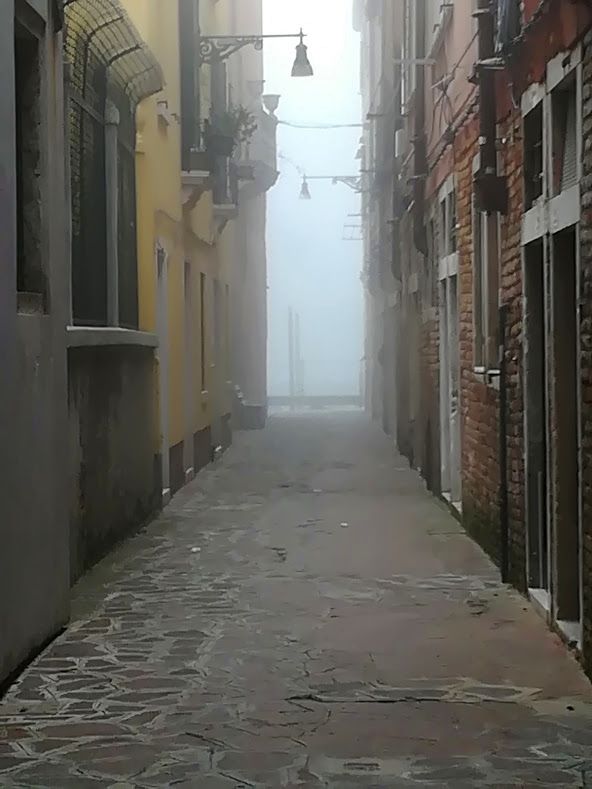
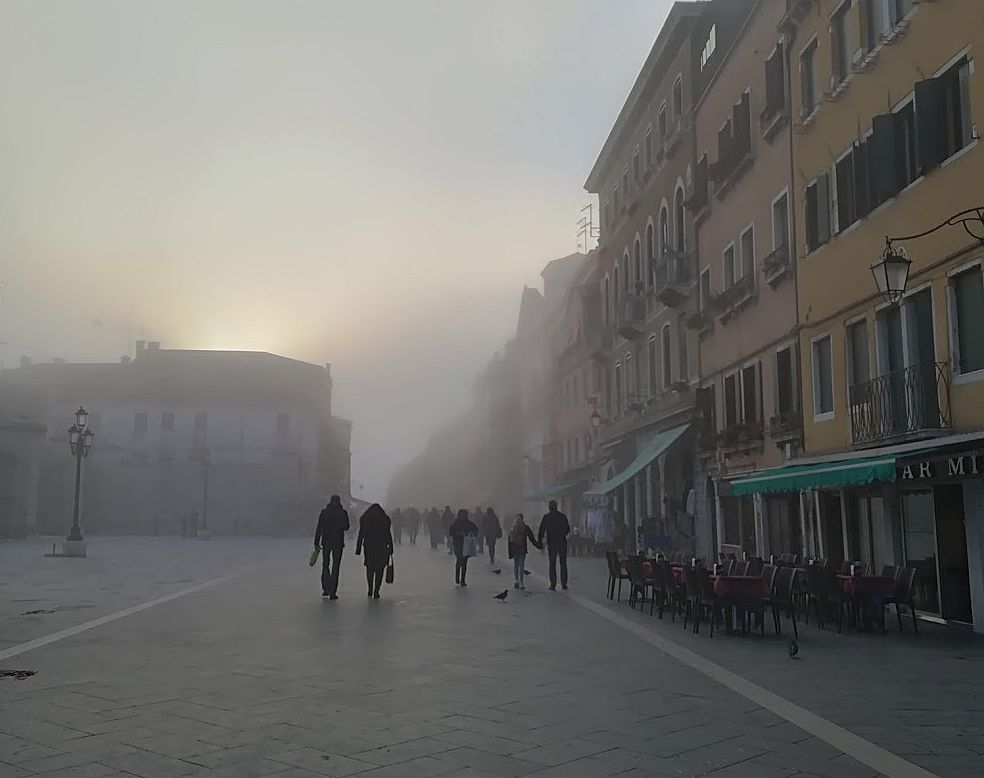
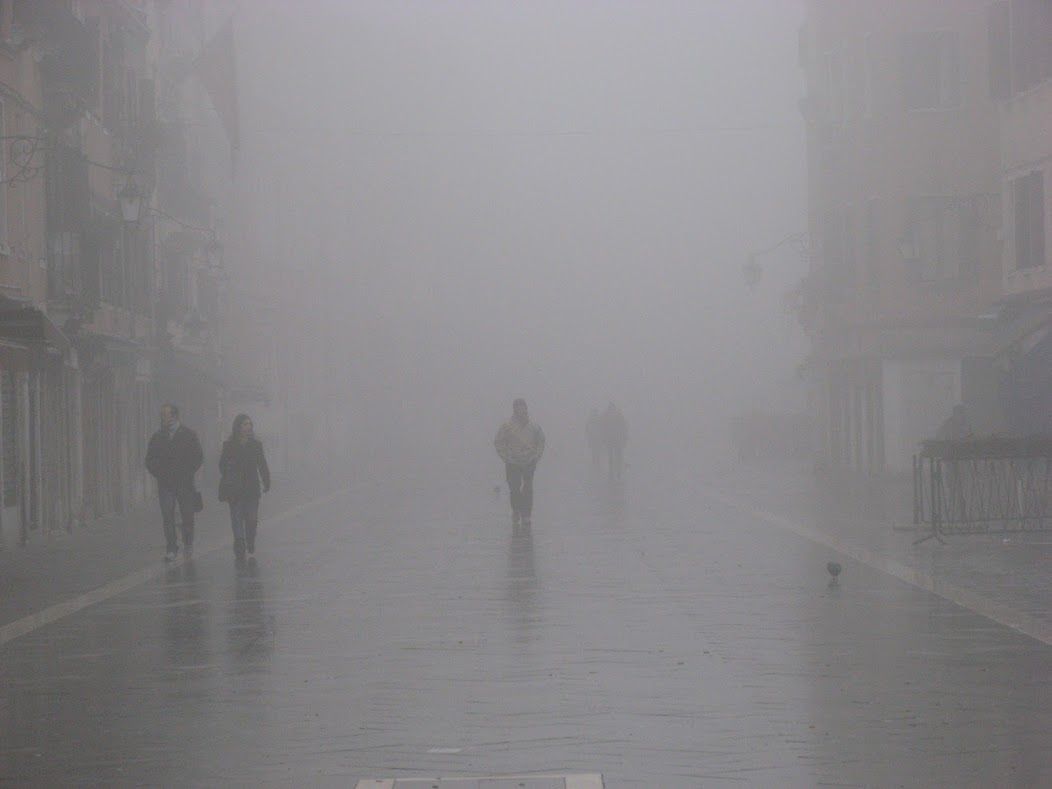
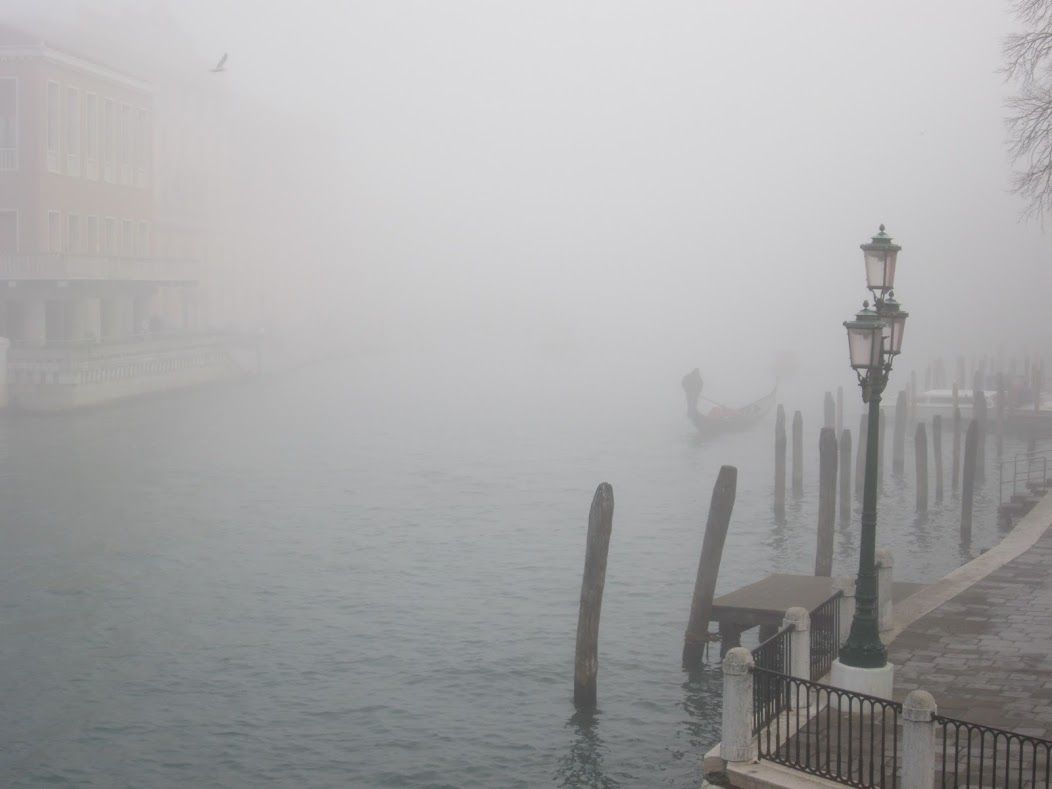
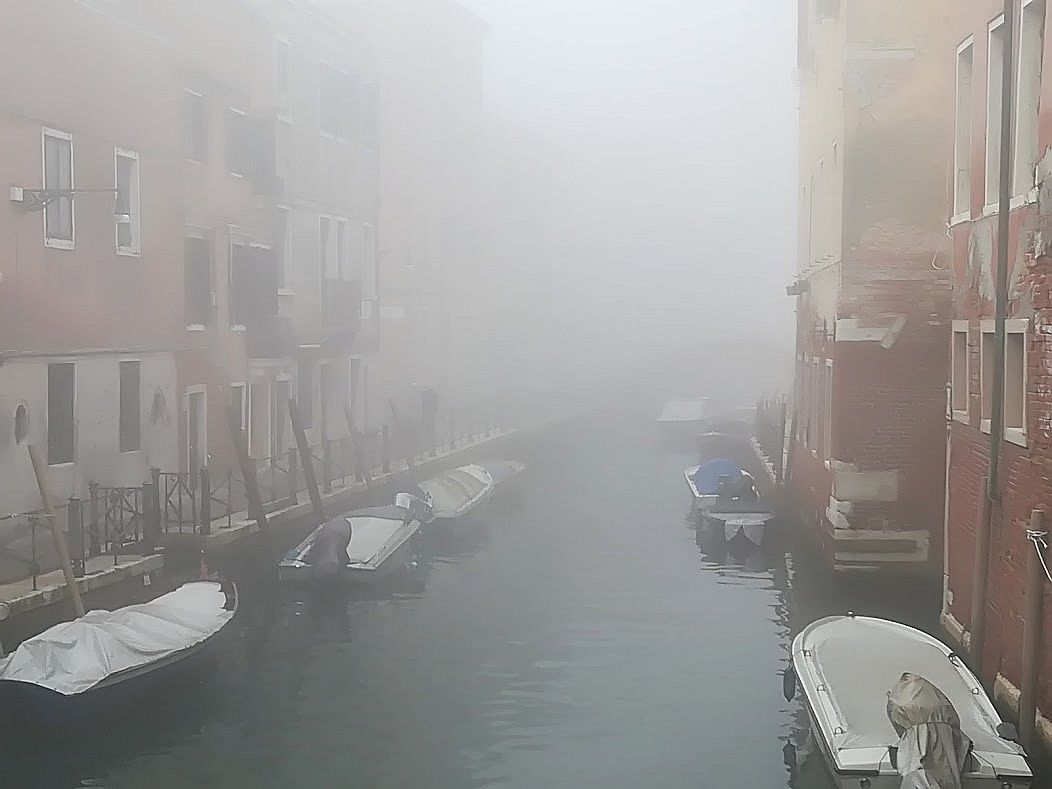
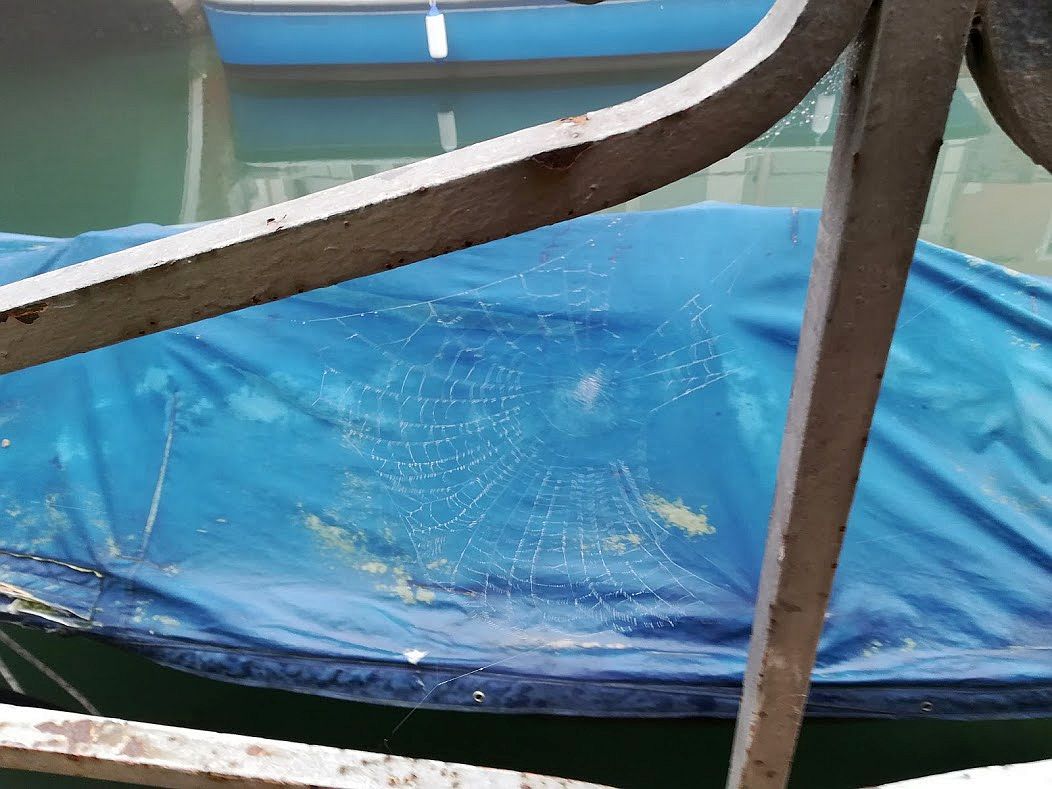
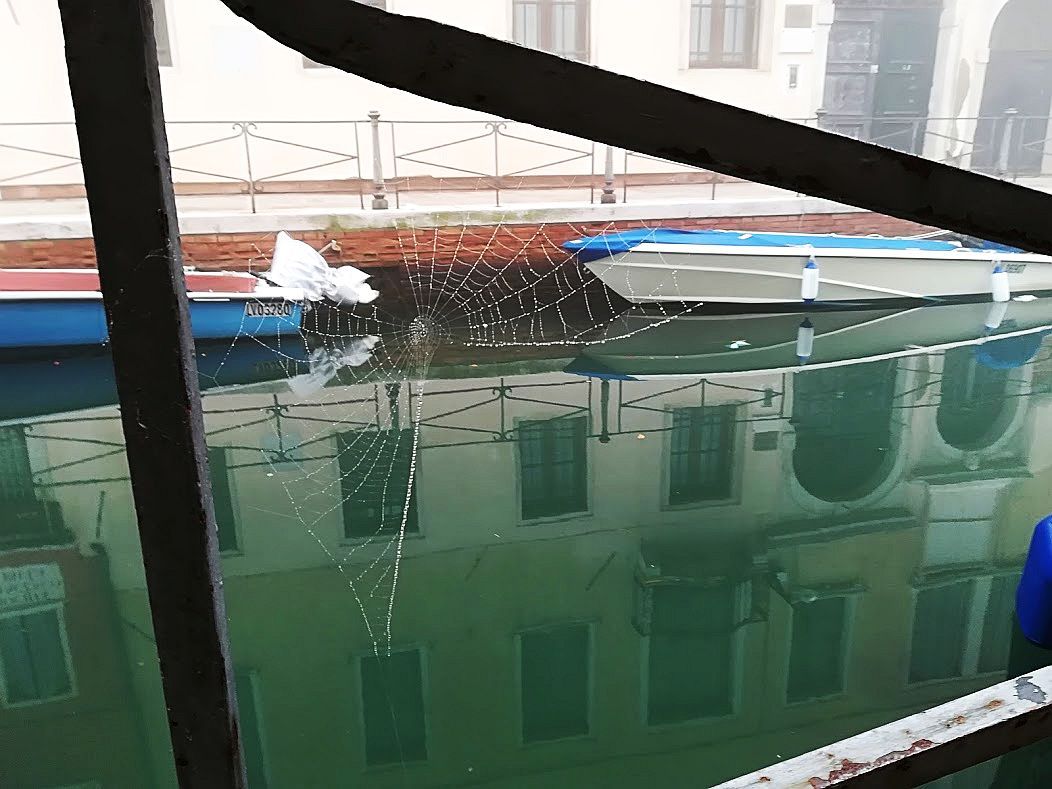
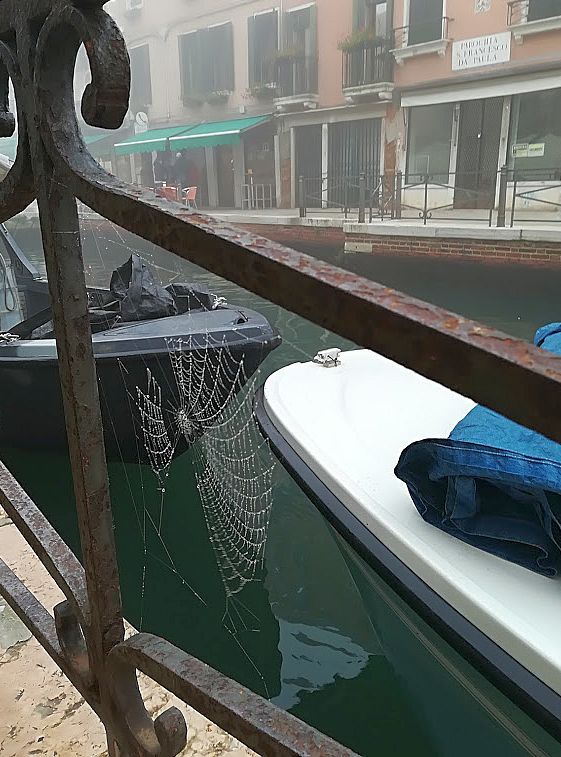
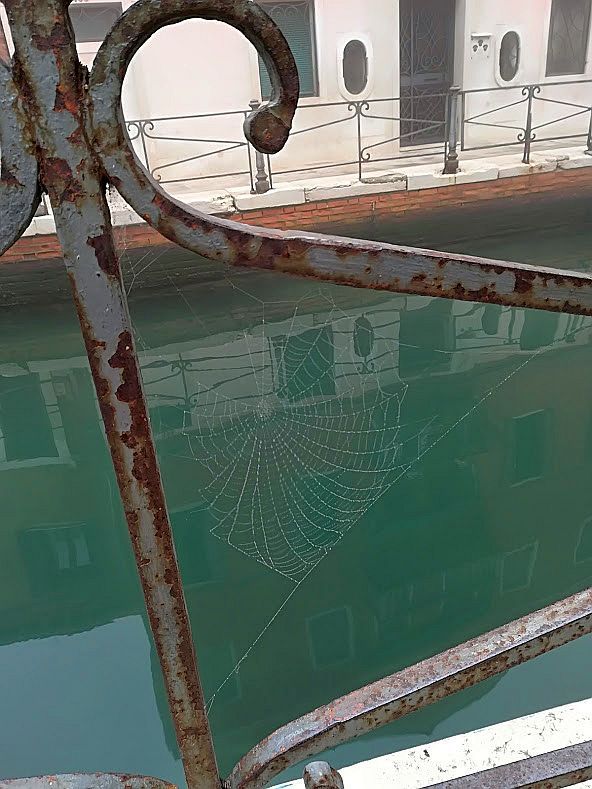
Most times you don’t see the fog that is enclosing you — you discern it according to how thickly it covers relatively nearby objects. As in this case I examined the end of our next-door street, which always ends in a canal but on this morning ended also in fog.
We get fog intermittently at various moments throughout the year, and my only objection to it isn’t what it does to my hair (I’ve abandoned my dreams there) but what it does to the vaporettos.
They still run, but the smaller motoscafos that circle Venice undergo an abrupt change of plan, which I totally do not understand. The boats have radar; the boats are almost always in sight of land, or channel markers, or whatever. It may be the crushing influence of the insurers that induces the ACTV to send the motoscafos up the Grand Canal instead of around the city, and iin that case making only a few strategic stops to which you must adapt (Accademia, Rialto, train station, Piazzale Roma).
Or sometimes they simply suspend operations on most of the round-the-city lines, with no notice whatever, meaning you have to reconfigure everything in order to make use of the one truly and eternally reliable transport, the trusty old #1 local.
Sometimes it comes in the night, so when you wake up it’s already there. Other times it drifts up to greet you, in an ominous kind of way.
At that point, you have to plot a new overland route to your destination, and that’s where the real inconvenience comes in. As it happens, not long ago I was accompanying an elderly neighbor to the hospital for an appointment. The boat we usually take requires a mere four stops, and the fourth is right in front of the hospital. But with the fog, the music changes, as they say here when describing an unexpected and disagreeable shift in plans. So we had to A) walk further than our usual stop in order to reach a stop that still was functioning; B) disembark at San Marco; and C) walk inland.
My friend is a trouper, though. By the time a Venetian reaches 82 years old she/he may well have stronger legs than Simone Biles. I had proposed riding to the Rialto stop and walking inland from there. She counter-proposed that we get off at San Zaccaria and walk cross-lots from there. I secretly gave her ten extra points and a gold star. And a bluebird.
Happily for us, the fog lifted while we were indoors, so we took the usual four-stop vehicle and were home in a jiffy (or 15 minutes in ACTV years).
Unhappily for us, this scenario was repeated this week — two days in succession — and while I may enjoy bragging about it at the end of those days , I do not appreciate being compelled to show how strong and hardy I am. Frankly, I’ll never beat the little old lady to win the Tough as Old Boots trophy.
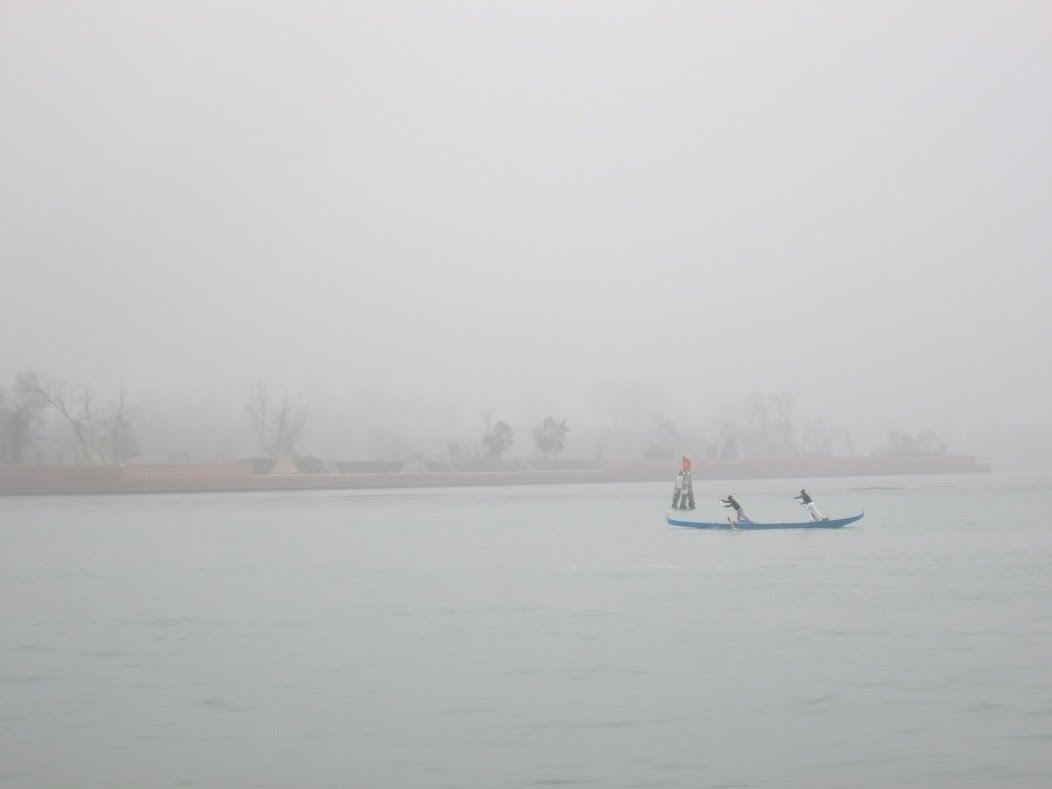
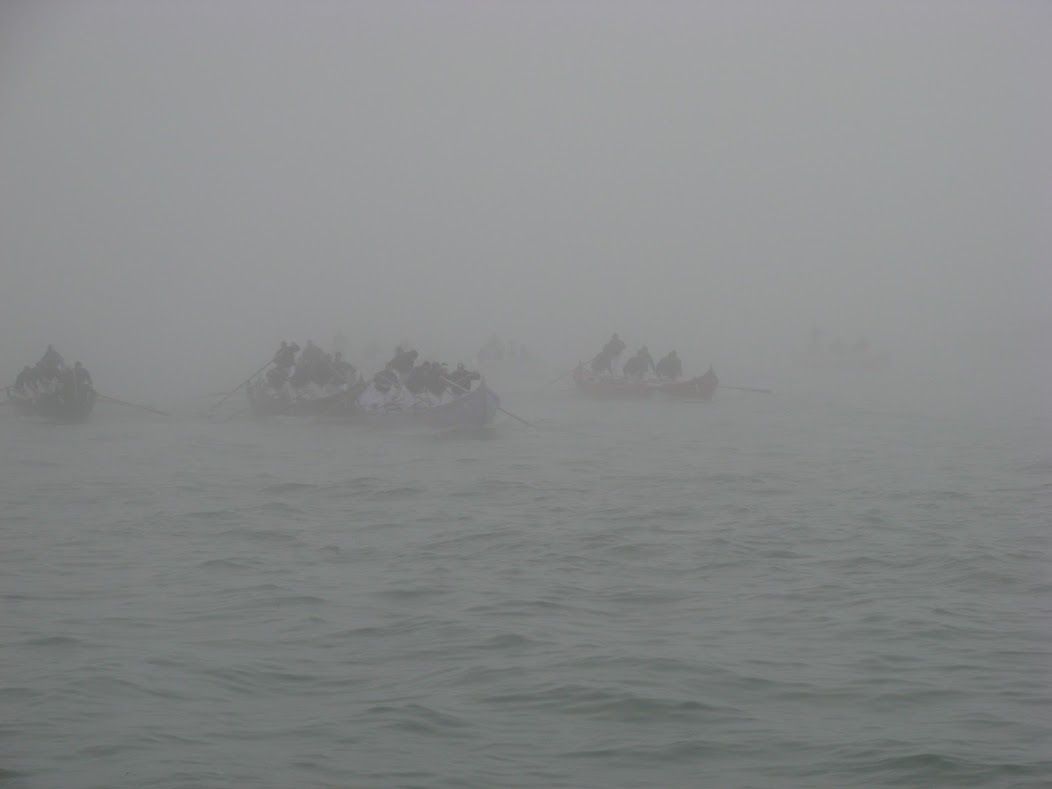
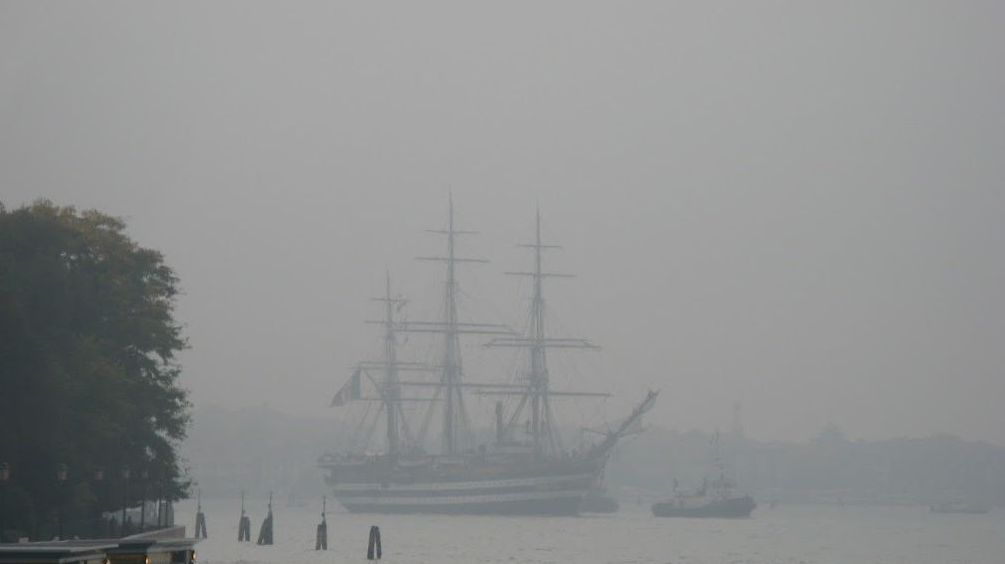
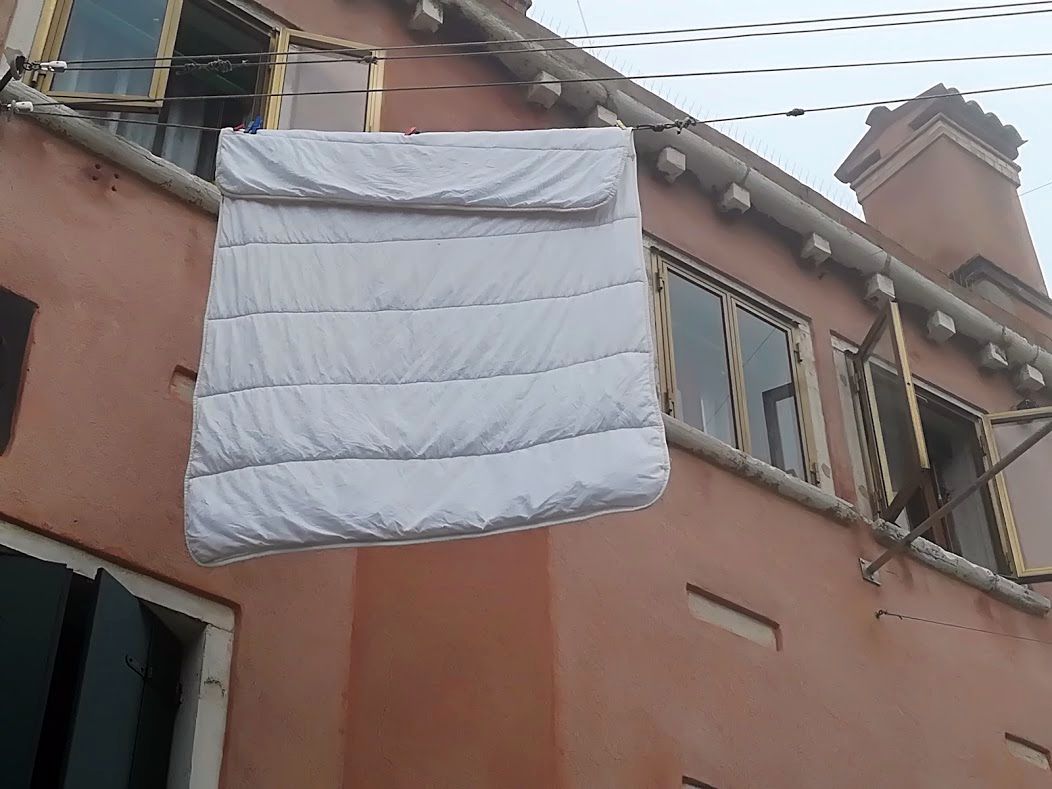
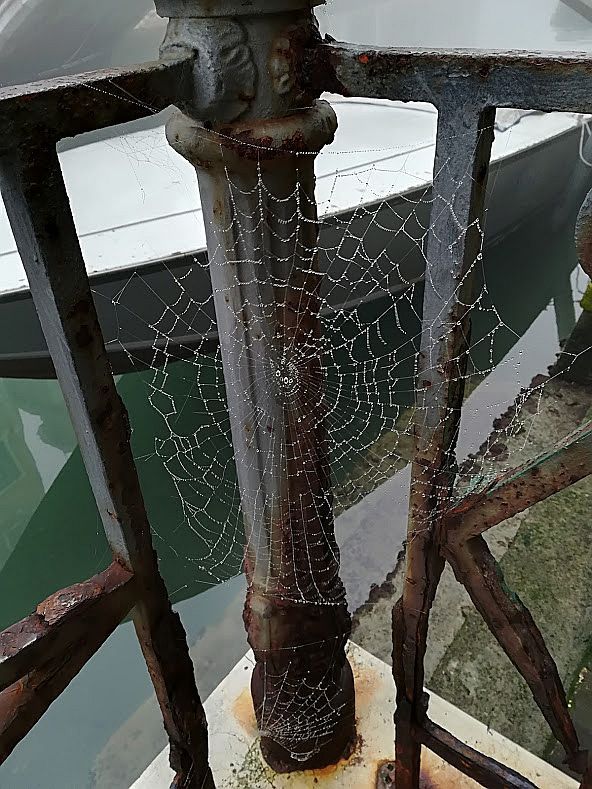
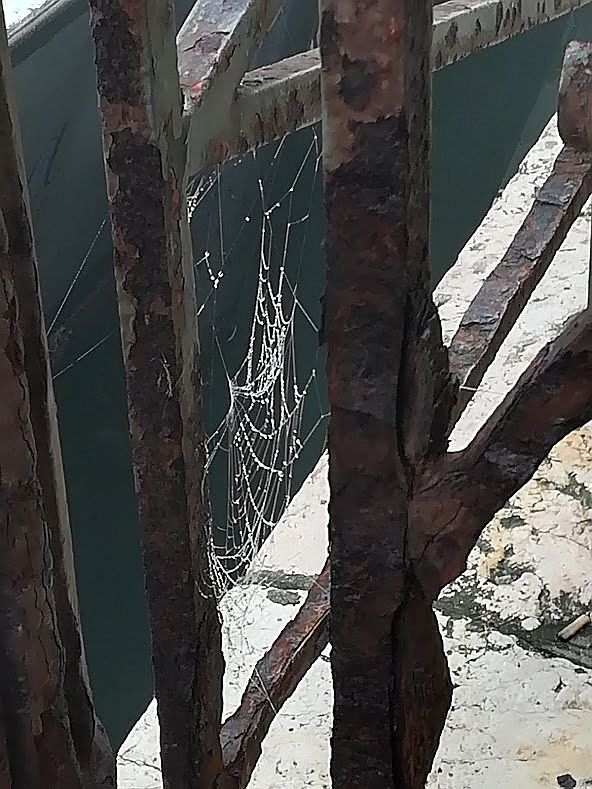
And a gracious good morning to you, whoever you are.Rowing clubs hold races all year, and winter is an excellent period for the rowers (if not the spectators) because there is almost no traffic. Here two men are rowing their gondolino toward the nearby starting line out in the lagoon.I have seen gondolas in the fog even carrying passengers, who must have been in complete now-or-never mode. As for the gondolier, at first I wondered how he could manage to follow his route with almost no visibility, then realized that he does the same circuit ad infinitum — for all I know, he just gives the boat its head and lets it go on its own.There doesn’t seem to be any rule forbidding racing against boats you can barely see. But in the race on December 4 a few years ago in honor of St. Barbara, caorlinas carrying five dauntless men and one student from the Morosini Naval School fought their way across the Bacino of San Marco. In cases like these, the judges in the following motorboat have to deal not only with navigating “blind,” but can barely make out the color of each boat. The difference between red and orange is hard to differentiate even in broad daylight — here you might be forced to go by the word of the rowers. A situation you obviously would like to avoid.“Amerigo Vespucci,” the Italian navy’s sail training”tall ship,” arrives on special occasions, and always on those when the President of Italy is here. It has no need of fog to look amazing, but the fog doesn’t hurt, either.My heart goes out to her, because I would swear she had no idea when she hung out her down comforter that she was going to awake to discover that it’s become soggier than it was when it came out of the last spin cycle. If she’s going to have to rely on the sun to get it dry, it will finally be ready sometime in August.Our ordinary canal is bordered by a rusty railing that the fog transforms into something magical. I was astonished to see how many of these there were — or are. The next day it was as if they had disappeared.
Contains information related to marketing campaigns of the user. These are shared with Google AdWords / Google Ads when the Google Ads and Google Analytics accounts are linked together.
90 days
__utma
ID used to identify users and sessions
2 years after last activity
__utmt
Used to monitor number of Google Analytics server requests
10 minutes
__utmb
Used to distinguish new sessions and visits. This cookie is set when the GA.js javascript library is loaded and there is no existing __utmb cookie. The cookie is updated every time data is sent to the Google Analytics server.
30 minutes after last activity
__utmc
Used only with old Urchin versions of Google Analytics and not with GA.js. Was used to distinguish between new sessions and visits at the end of a session.
End of session (browser)
__utmz
Contains information about the traffic source or campaign that directed user to the website. The cookie is set when the GA.js javascript is loaded and updated when data is sent to the Google Anaytics server
6 months after last activity
__utmv
Contains custom information set by the web developer via the _setCustomVar method in Google Analytics. This cookie is updated every time new data is sent to the Google Analytics server.
2 years after last activity
__utmx
Used to determine whether a user is included in an A / B or Multivariate test.
18 months
_ga
ID used to identify users
2 years
_gali
Used by Google Analytics to determine which links on a page are being clicked
30 seconds
_ga_
ID used to identify users
2 years
_gid
ID used to identify users for 24 hours after last activity
24 hours
_gat
Used to monitor number of Google Analytics server requests when using Google Tag Manager