
“Murano Illuminates the World”
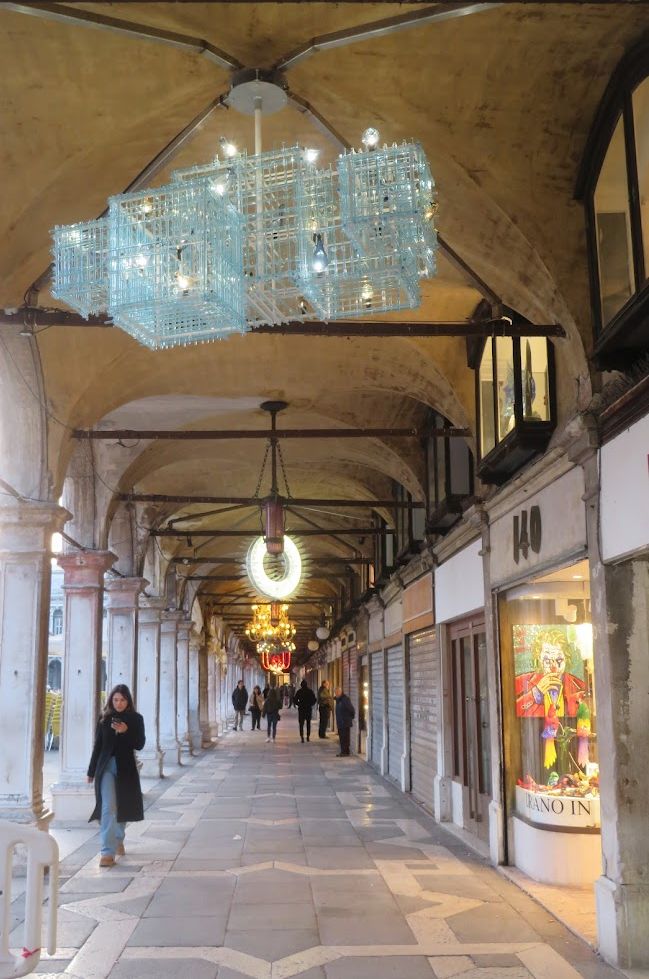
Last November 22 the passageway under the Procuratie Vecchie at the Piazza San Marco lit up with 12 glowing glass chandeliers. Yes, I’m very late to this subject, but I do not go to the Piazza every day, nor do I subscribe to the “Murano Glass Daily Astonisher” (totally made up).
Late as I may be, the lamps will be shining until March 1, so there is still time to see them if you’re in the neighborhood.
This year is the third edition of an annual invitation-only exhibition, “Murano Illuminates the World,” to showcase the collaboration of international glass masters with Muranese “furnaces” who were given the assignment “chandeliers.”
I admire the technical and creative talent that the artist and glassmaster displayed in this extraordinary collaboration. As for the appeal of any individual piece, opinions will certainly be respected. The mystical meaning of each work is elucidated in the excellent report from “Venezia Today” online (translated by me).
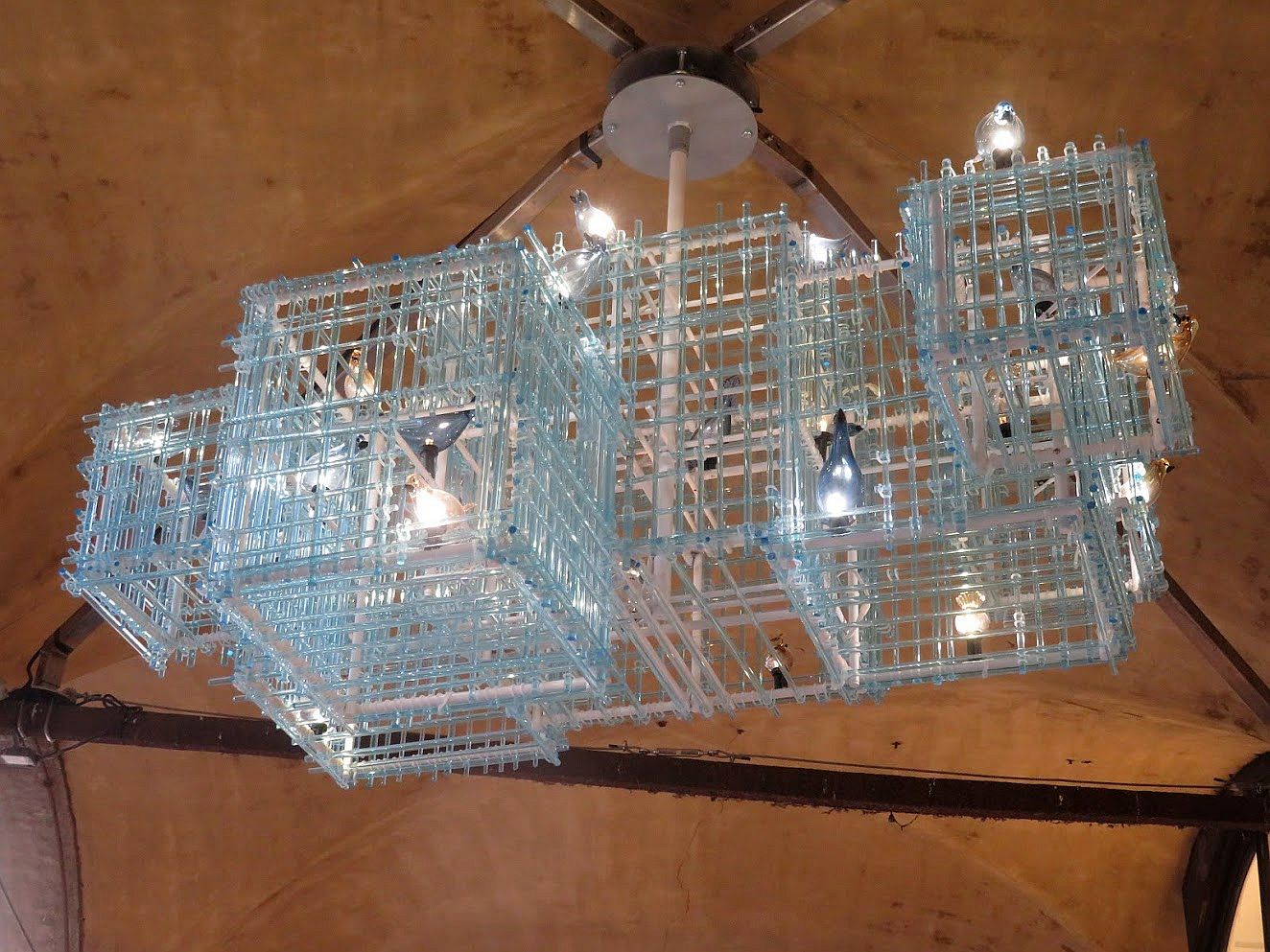
Ru Xiao Fan, with Effetre and Seguso Gianni. A birdcage complete with birds, in and out. “The work reflects the choice between security and liberty, and evokes the myth of Eden and the ‘invisible cages’ of the present. To leave the illusion of protection requires courage, but only he who risks can discover the true significance of flight.”
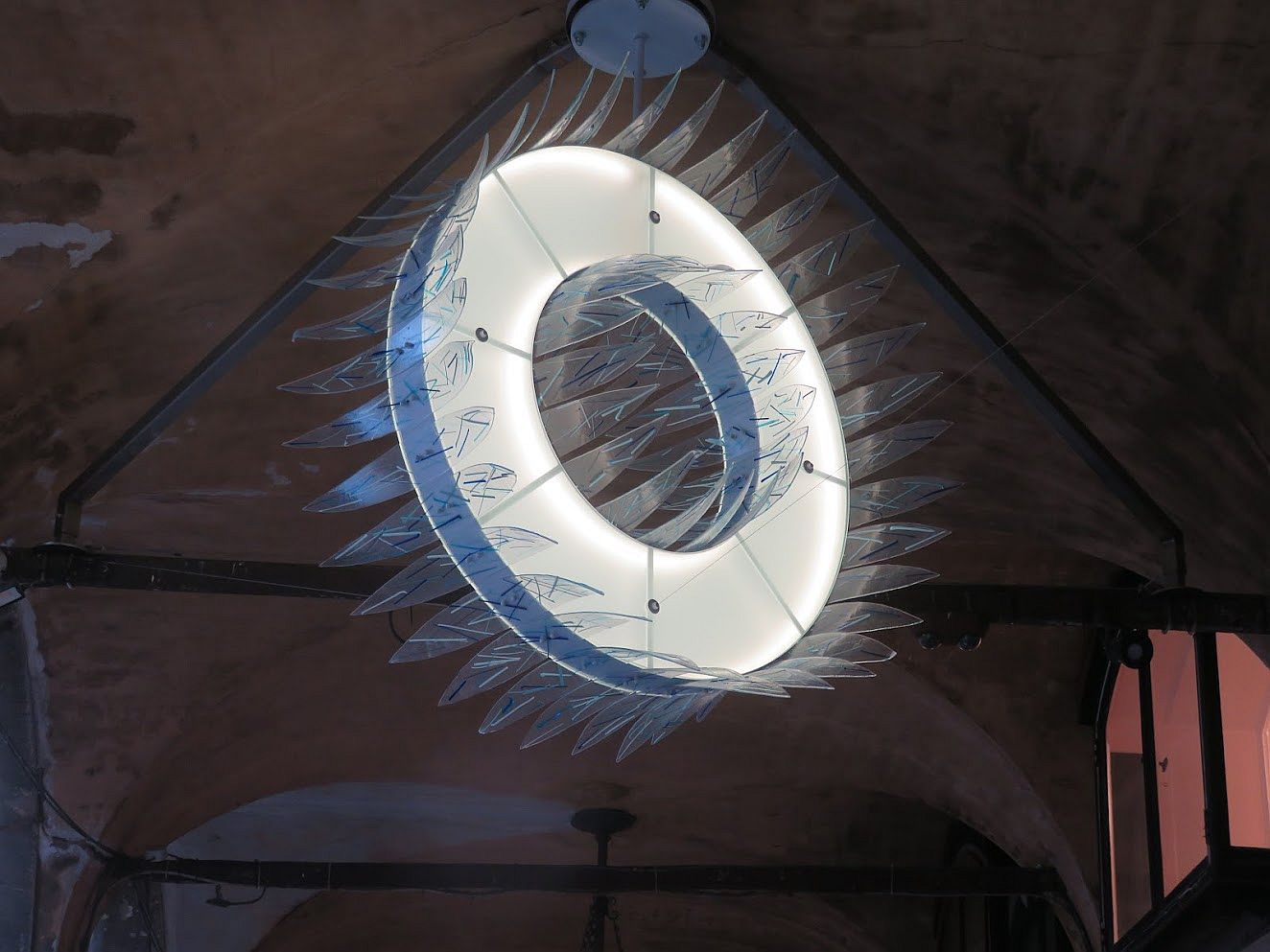
The Abate Zanetti school, with master Eros Raffael. A group work born of the creativity of the young glassmasters. “The chandeliers’ leaves decorated in various shades of blue filaments symbolize the cycle of life. The leaves recall water, the origin of every form, and by their harmonious movement speak of time, the transformation and the eternal continuity of existence.”
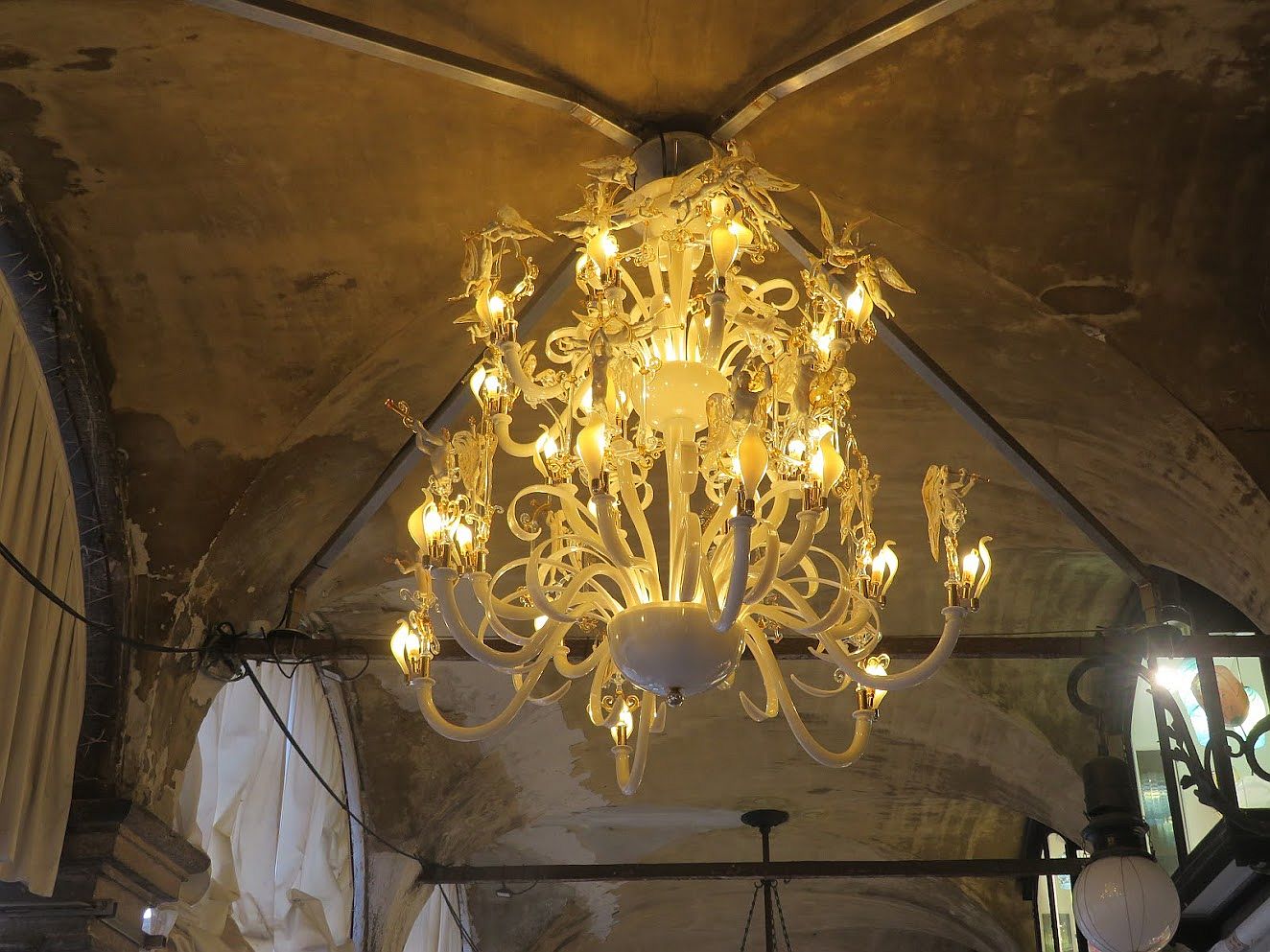
Lucio Bubacco, with Vetreria 3 Artistico Lampadari. “A scenographic composition with an ensemble of angels that play classical instruments. The chandeleier is made of 30 arms and the light they carry becomes the atmosphere that surrounds the angelic figures.”
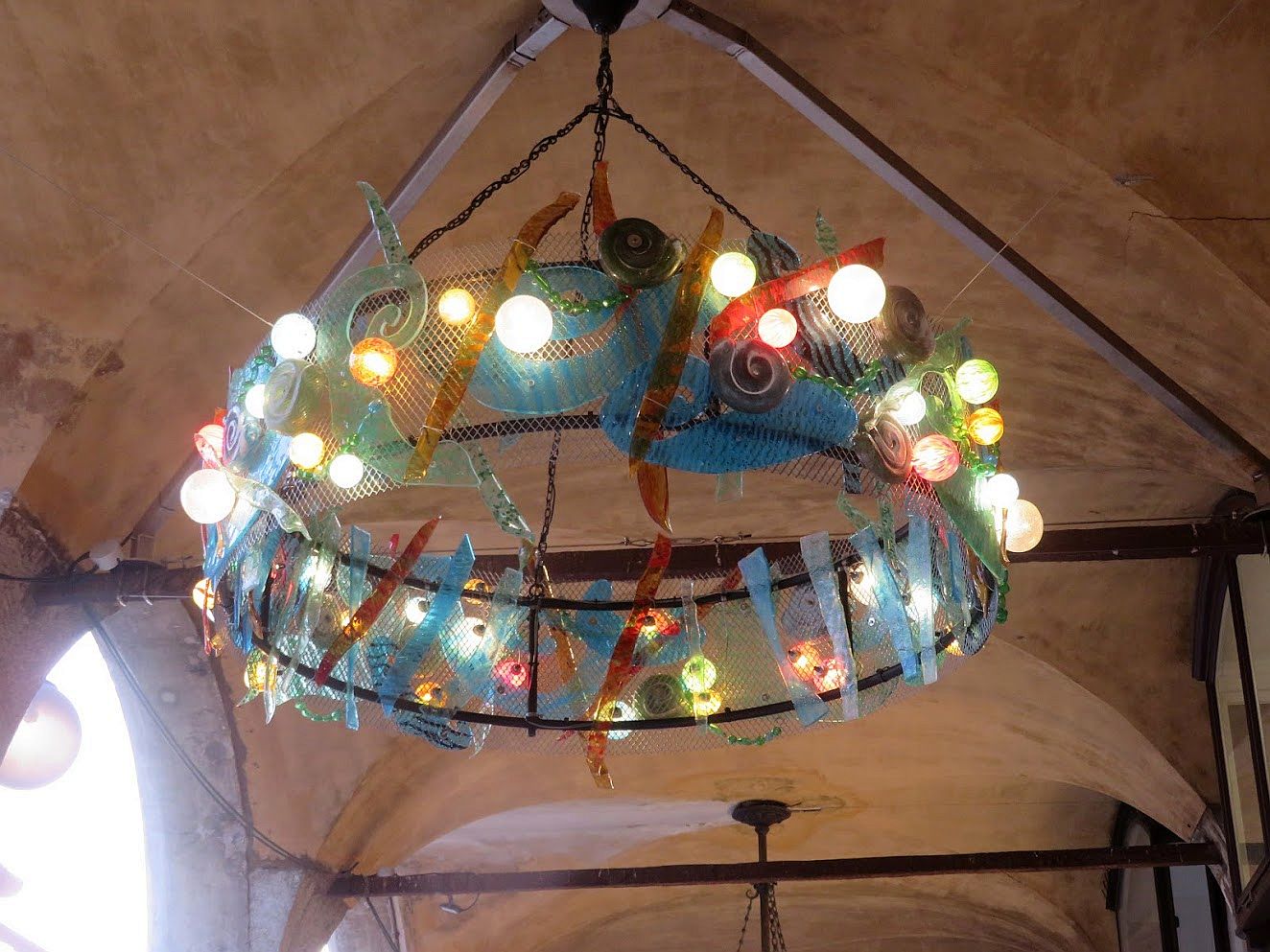
F. Taylor Colantonio with Signoretto Lampadari in collaboration with Calvadore. “Has drawn inspiration from the designs in the archive of the Study Center of Glass of the Giorgio Cini Foundation on the island of San Giorgio Maggiore, and from the ceiling of the railway station of Santa Lucia. The Pool of Light imagines a ray of sunshine that filters through a swirling current of the lagoon.”
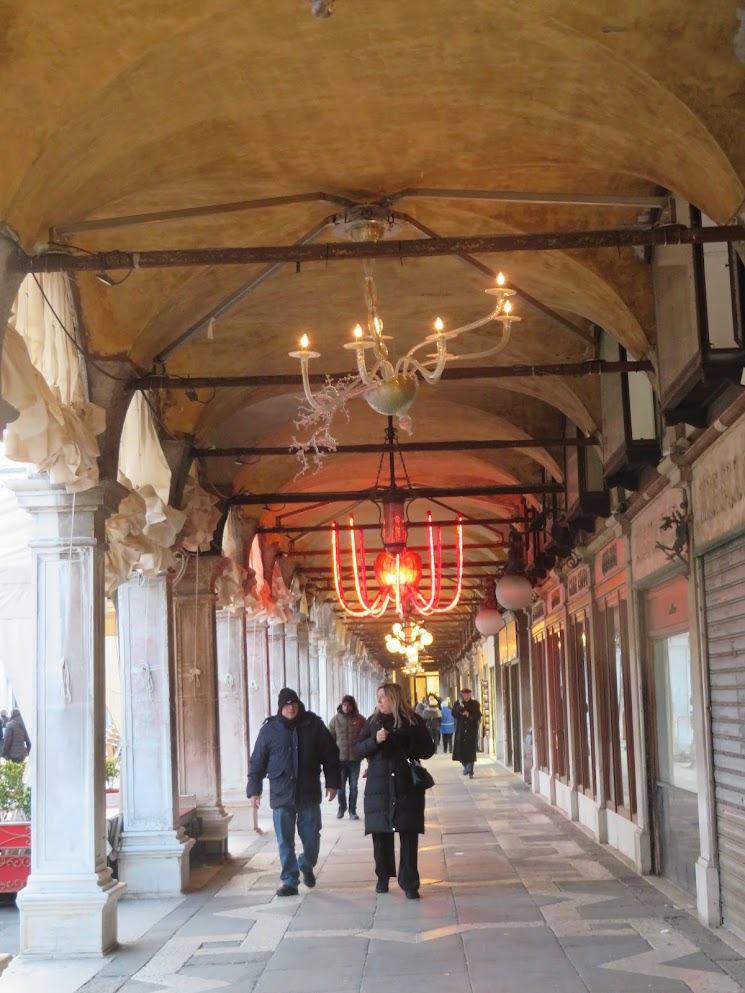
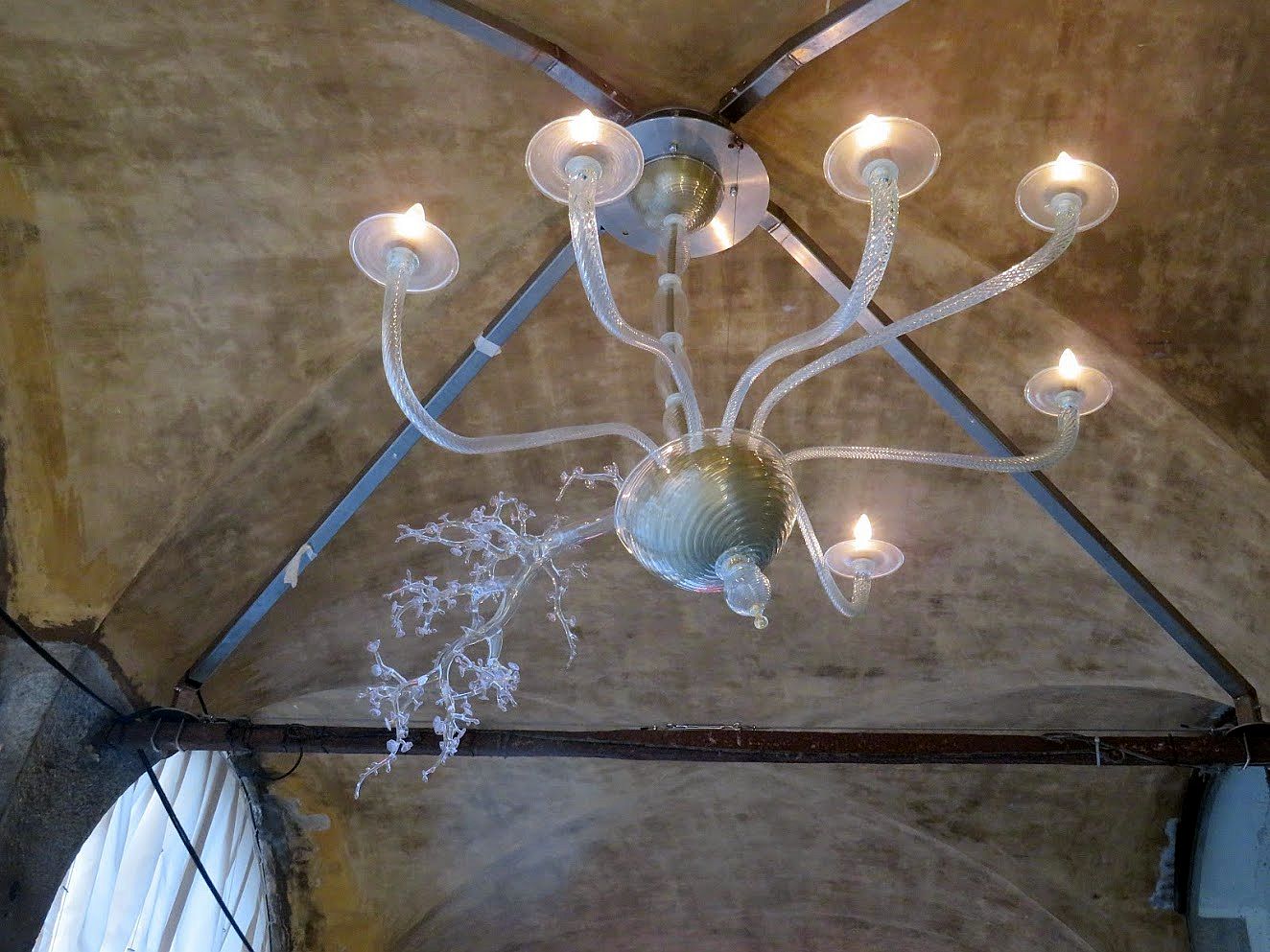
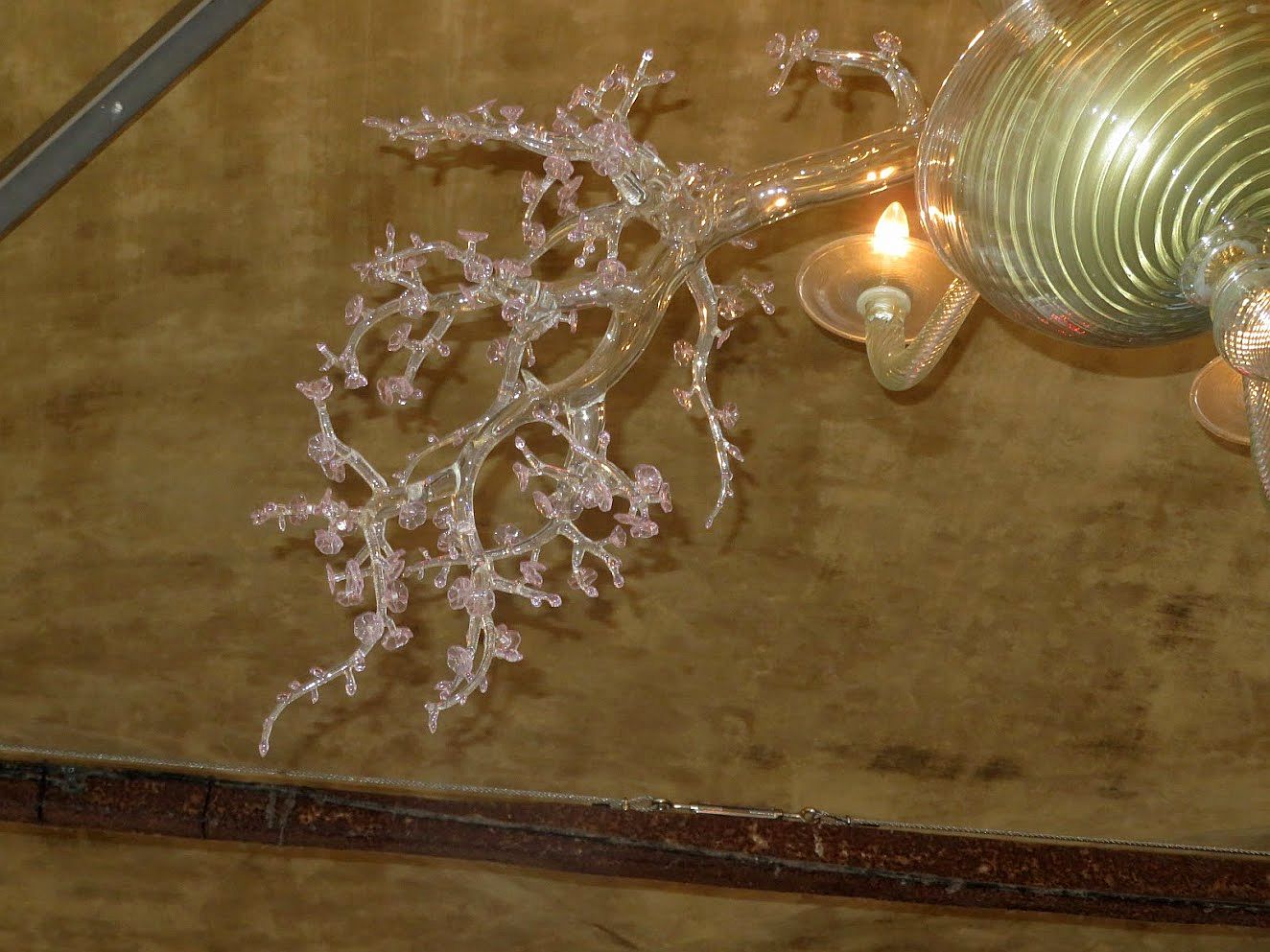
Simone Crestani, with Berengo Studio. “A chandelier inspired by models from the Twenties, where a flowering branch in borosilicate (silica and boron trioxide) glass, studded with pink buds, crosses and unbalances the linear structure in smooth glass to then recompose in a poetic equilibrium, combining geometry and naturalism.”
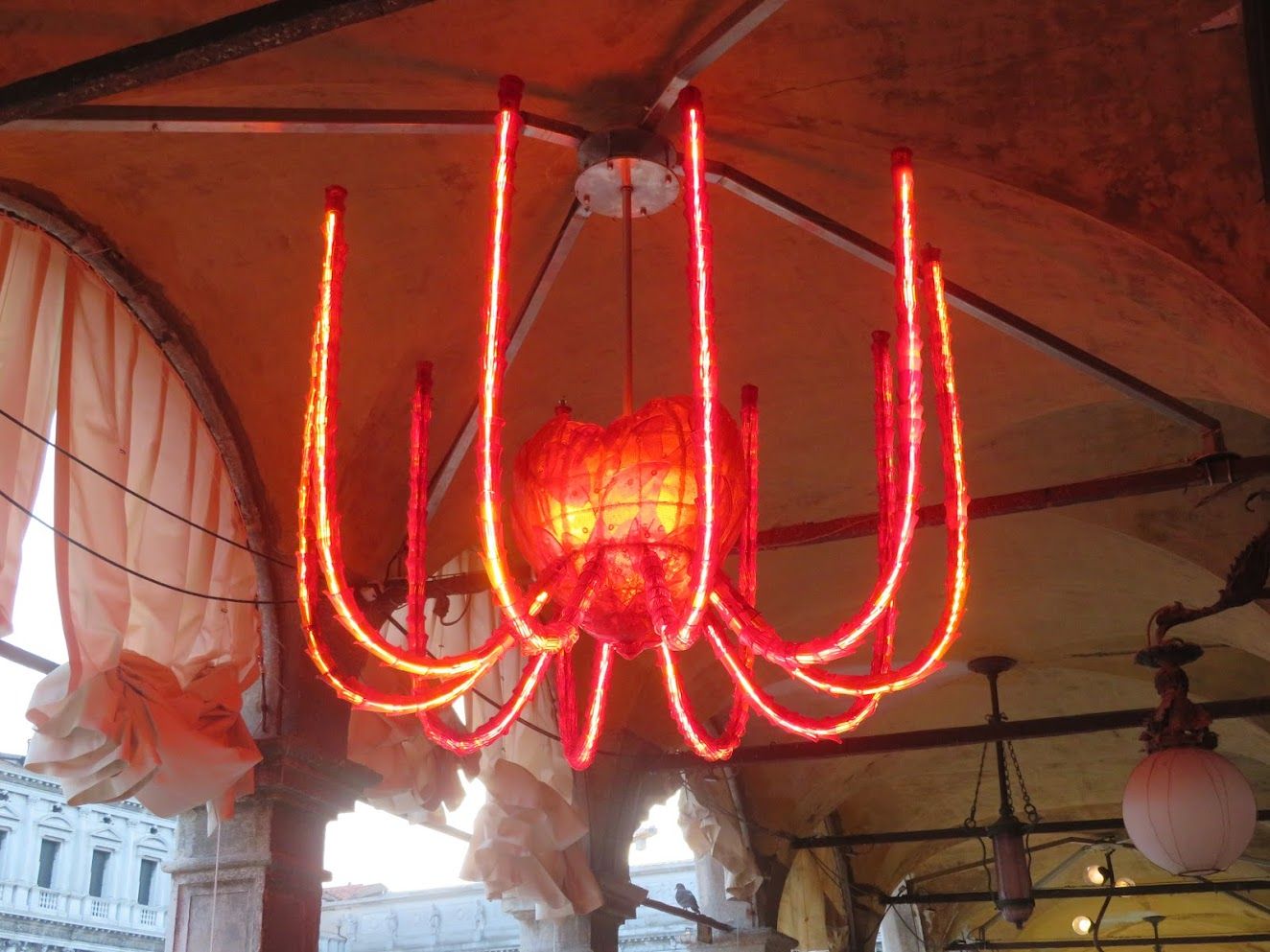
Joana Vasconcelos, with Berengo Studio, “transforms the chandelier into a pulsating organism… a luminous heart that vibrates with light and color, a monumental symbol of passione, resilience and transformation. The form, suspended between tension and harmony, reinterprets a domestic object into an emotional and universal icon.”
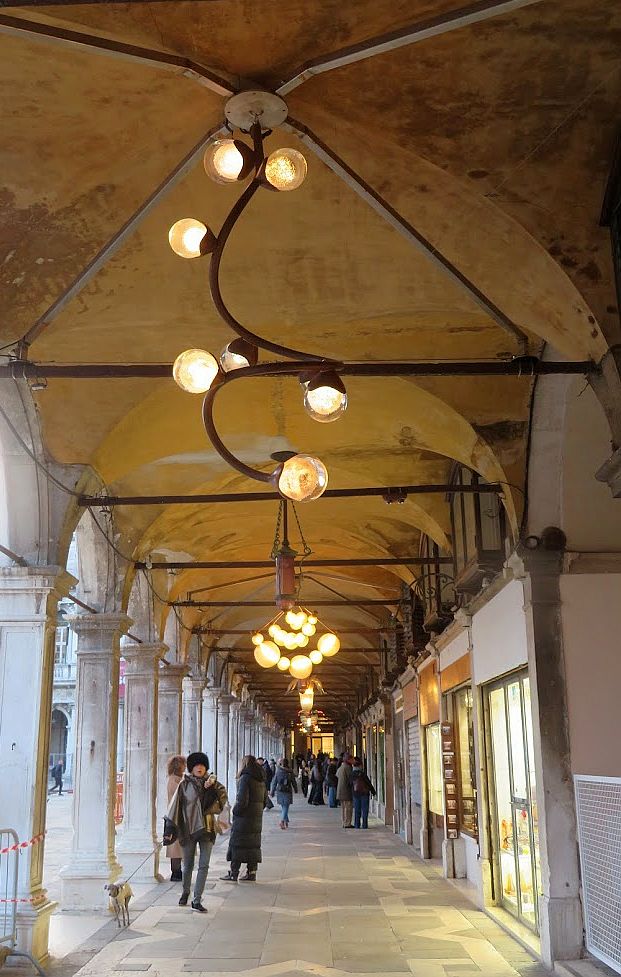
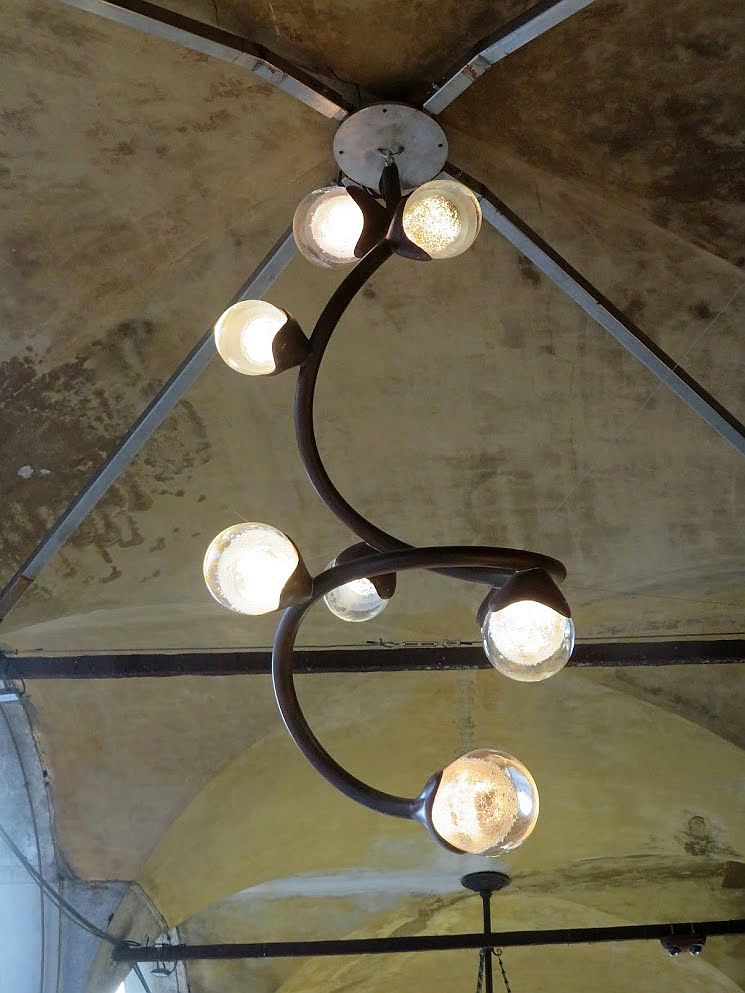
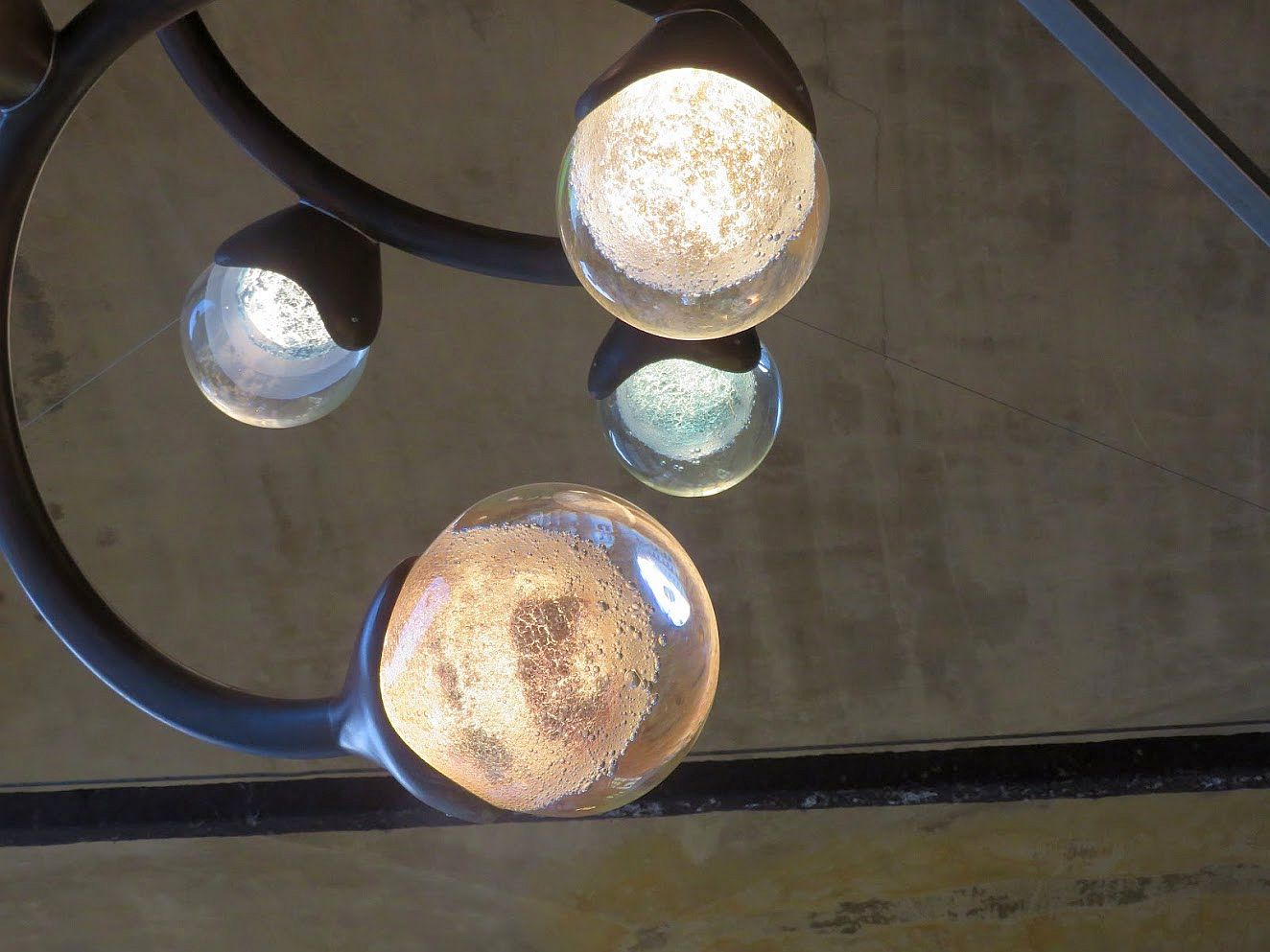
Irene Cattaneo, with Lavorazioni artistiche of Fabiano Amadi. “With its eight handmade “moonlike” spheres, the chandelier is homage to the glassmaking master of Murano, where the classic technique of the submerged entanglement is expertly fused with the use of metallic powder to create a luminous and profound effect.”
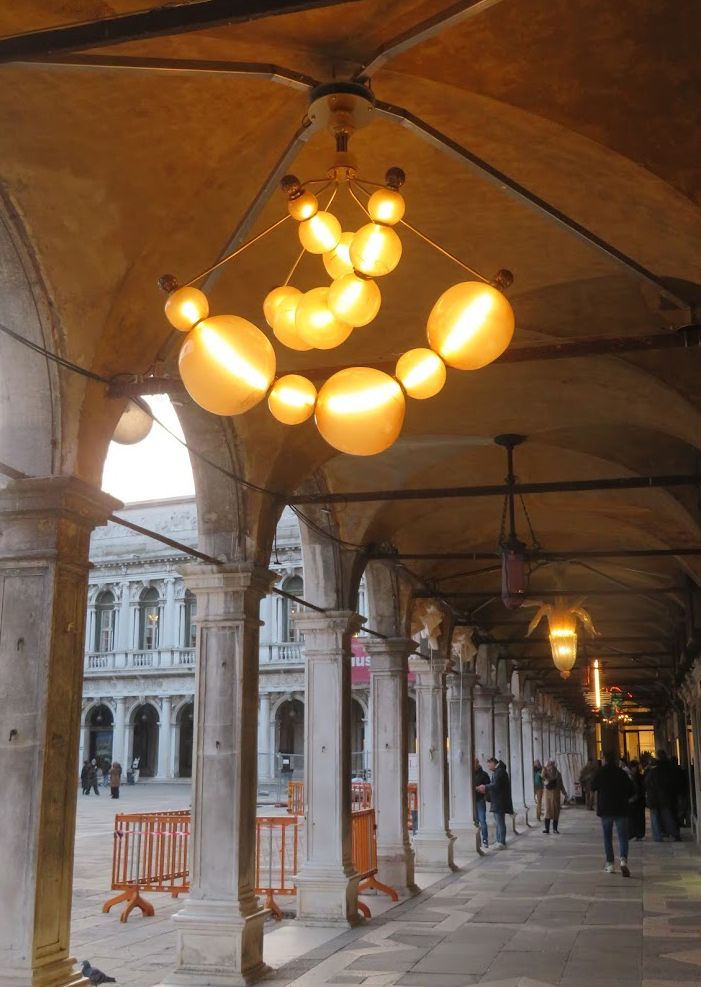
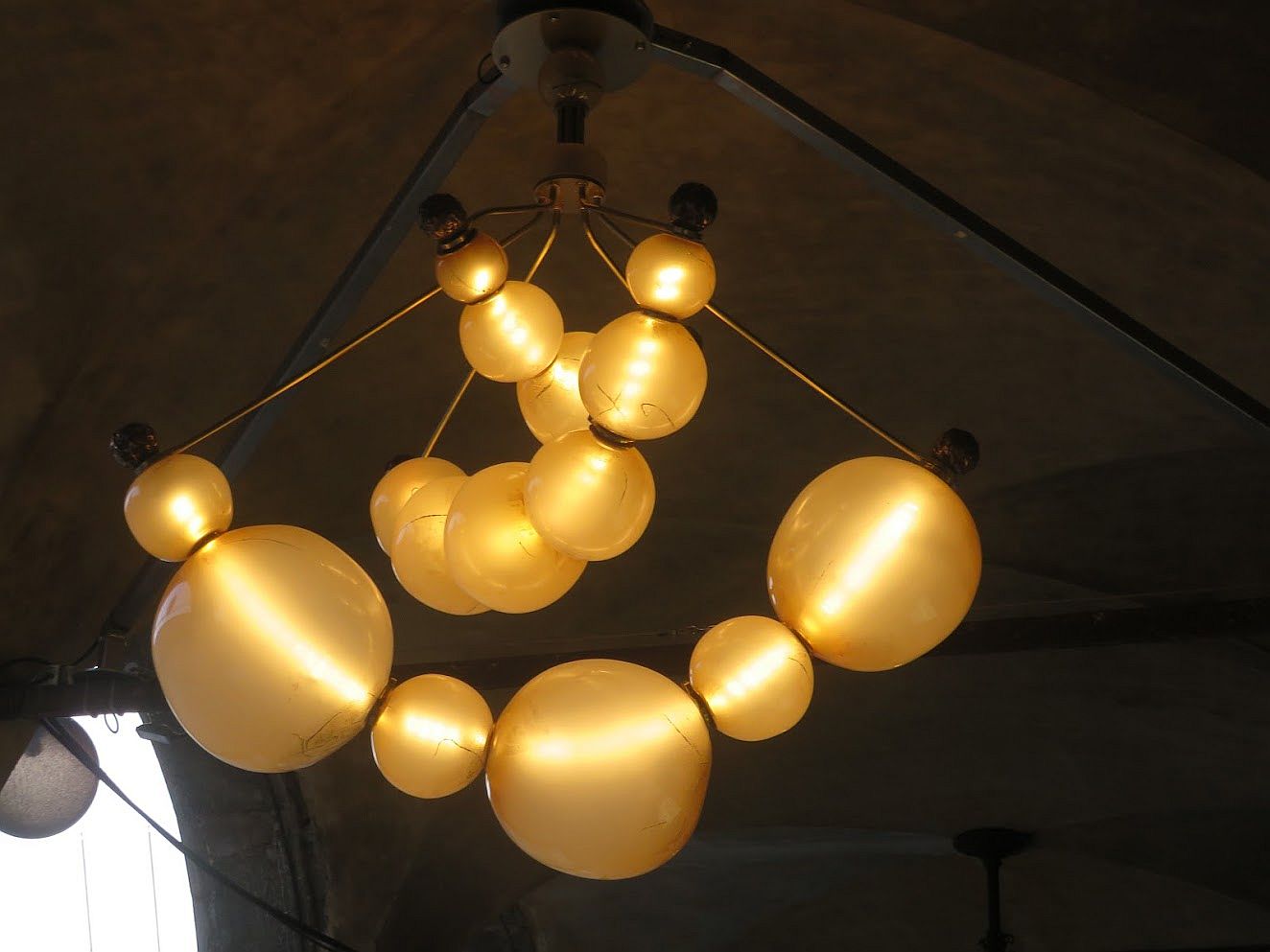
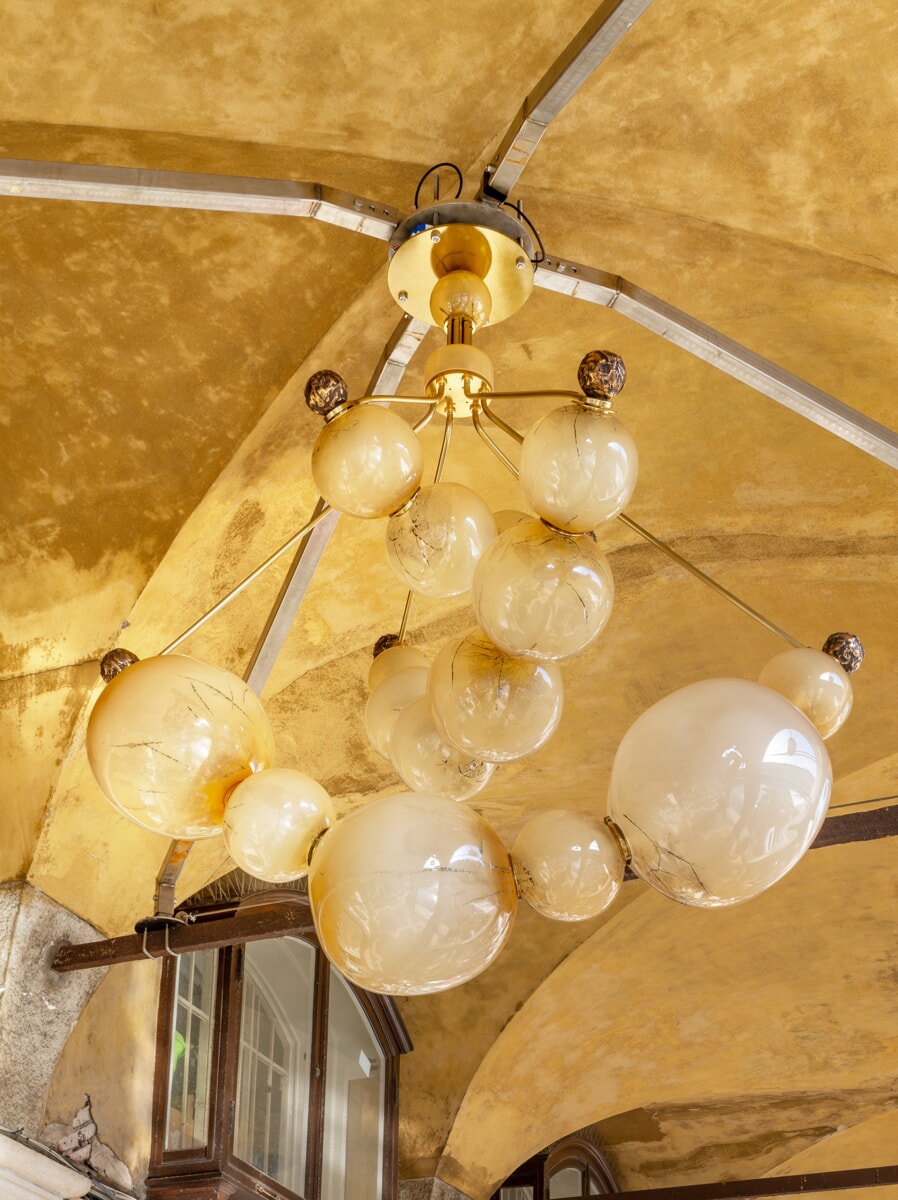
Michela Cattai, with Simone Cenedese. “It takes shape from the observation of the rhythms of the tides and the geometry of the islands of the lagoon by Murano, elements that define a fragile equilibrium and in continuous flux.”
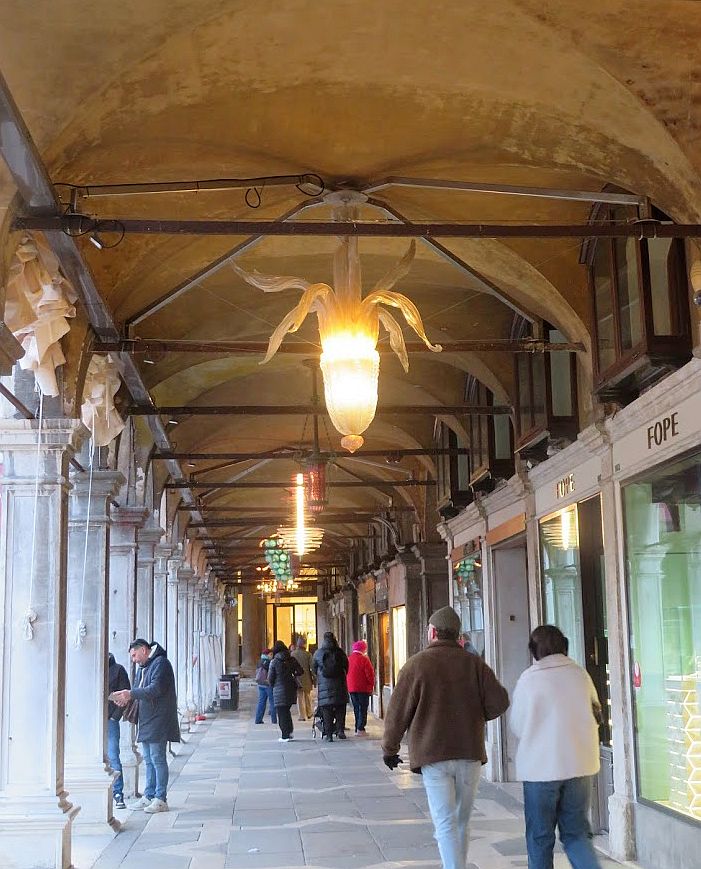
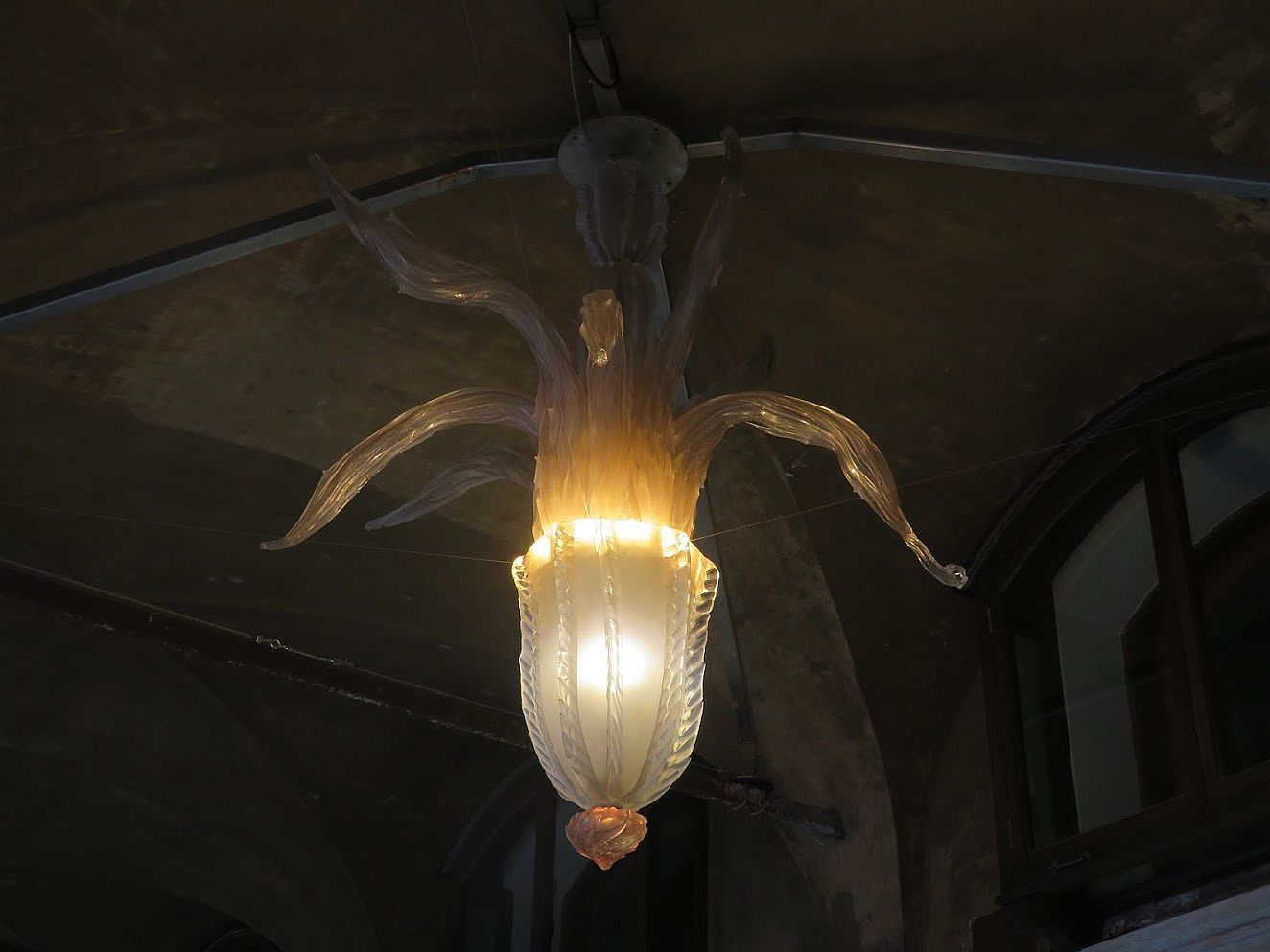
Massimo Micheluzzi, with Vetreria Anfora. “A chandelier in an organic form that evokes marine tentacles. The glass shapes the fluid movement of the water and the Venetian lagoon, transforming the chandelier into a creature that is poetic and alive, mirroring the material that breathes with the territory.”
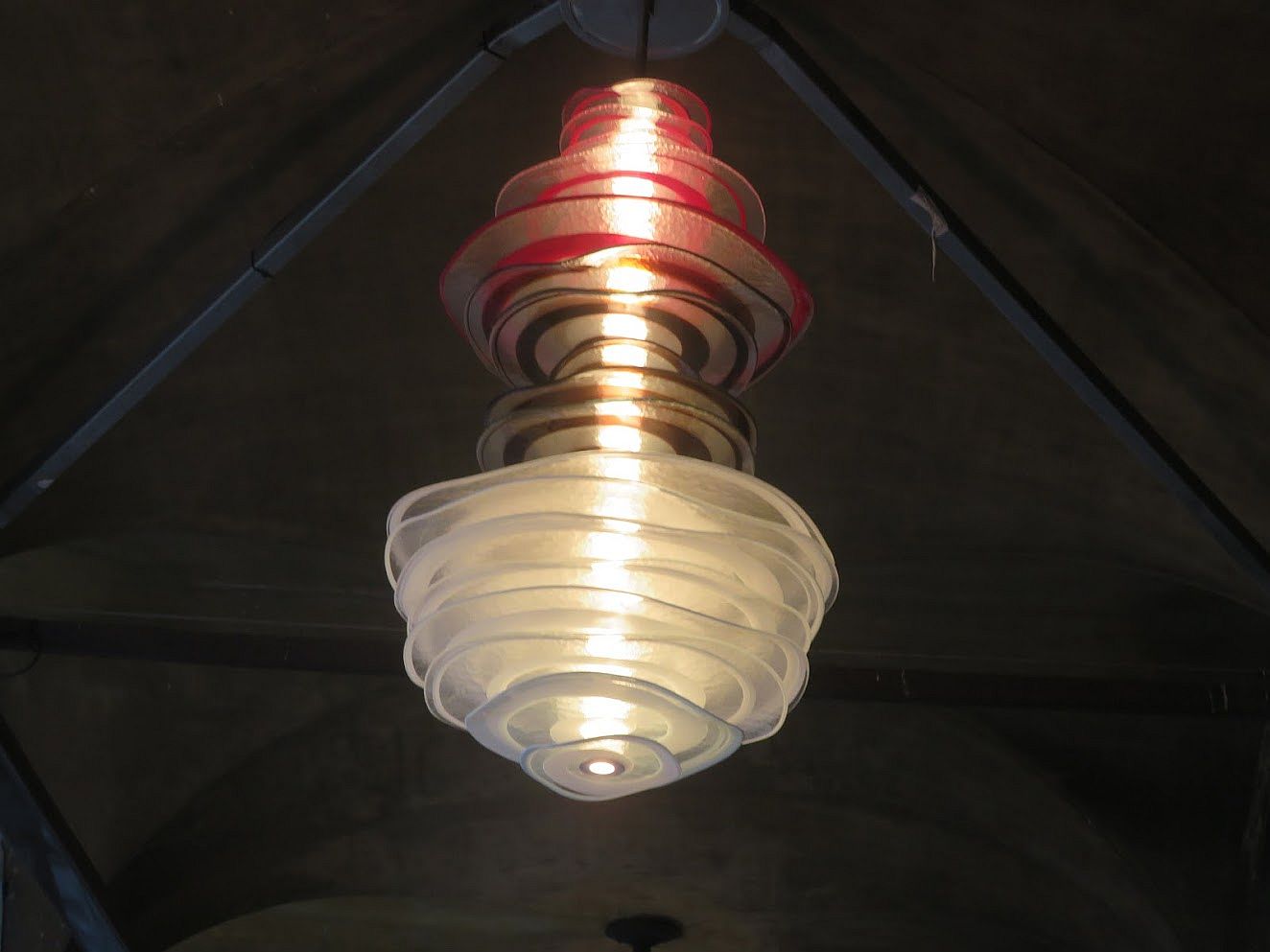
Luca Nichetto, with Barovier & Toso, blends craftsmanship and technology in “A work that reinterprets in a contemporary key the silhouette of the classic chandelier, composed of 34 disks in centrifuged glass. Each disk conserves in the glass a delicate spiral motif, a trace of the gesture of the artisan. The light diffused by a central axis unites the forms in a hamonic dialogue between past and future, where centuries-old techniques meet innovative design.”
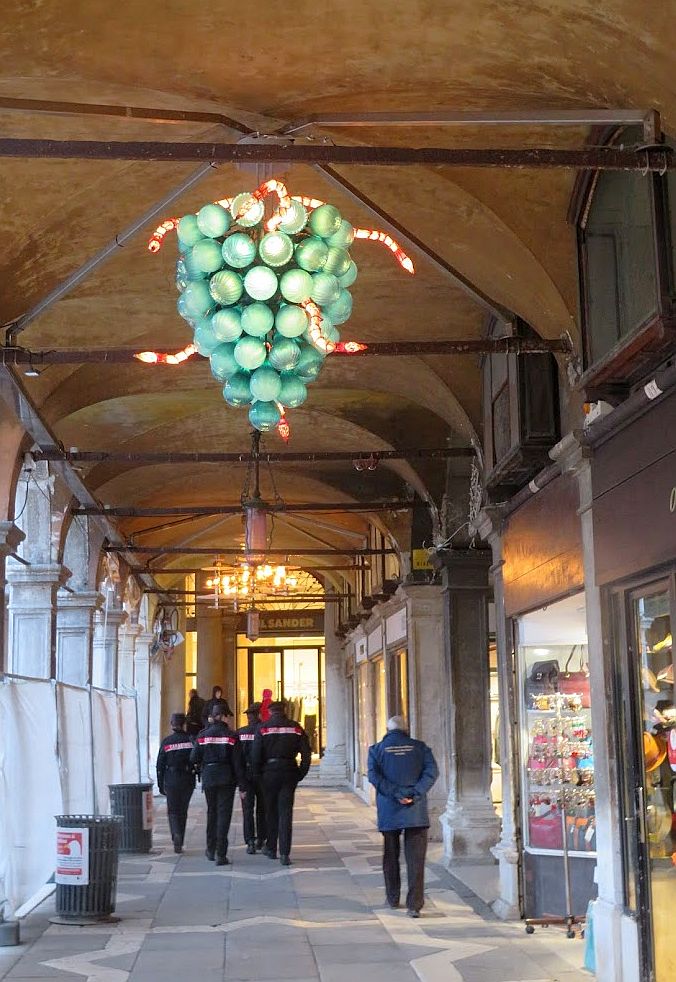
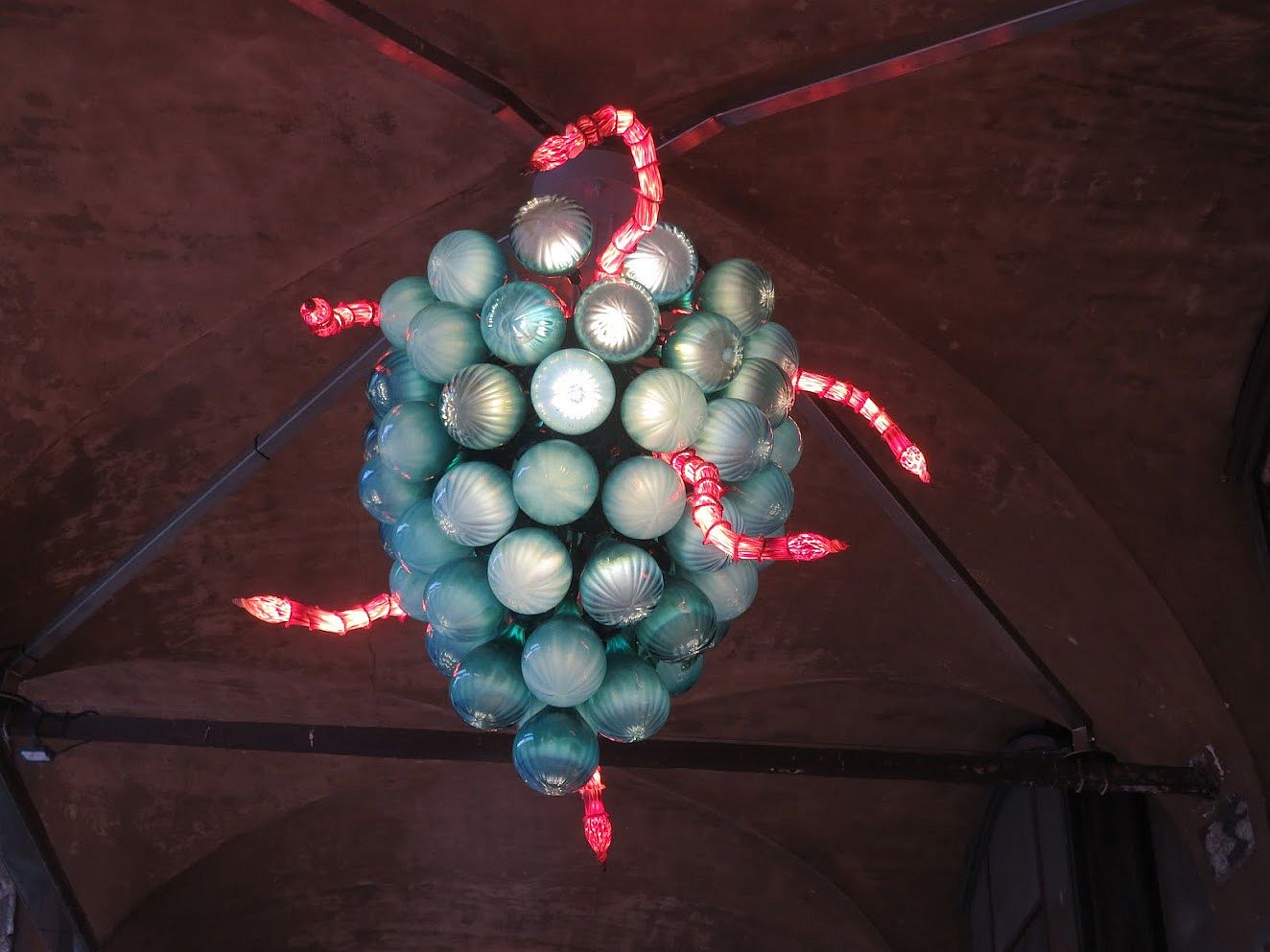
Christian Pellizzari, with Salviati. “A suspended work composed of blown “eggs” and tentacles made with the technique of the ‘compasses’ of the Rezzonico chandeliers. The ancient material dialogues with an innovative system of micro-LED, celebrating the continuous rebirth of nature through light, fragility and strength.”
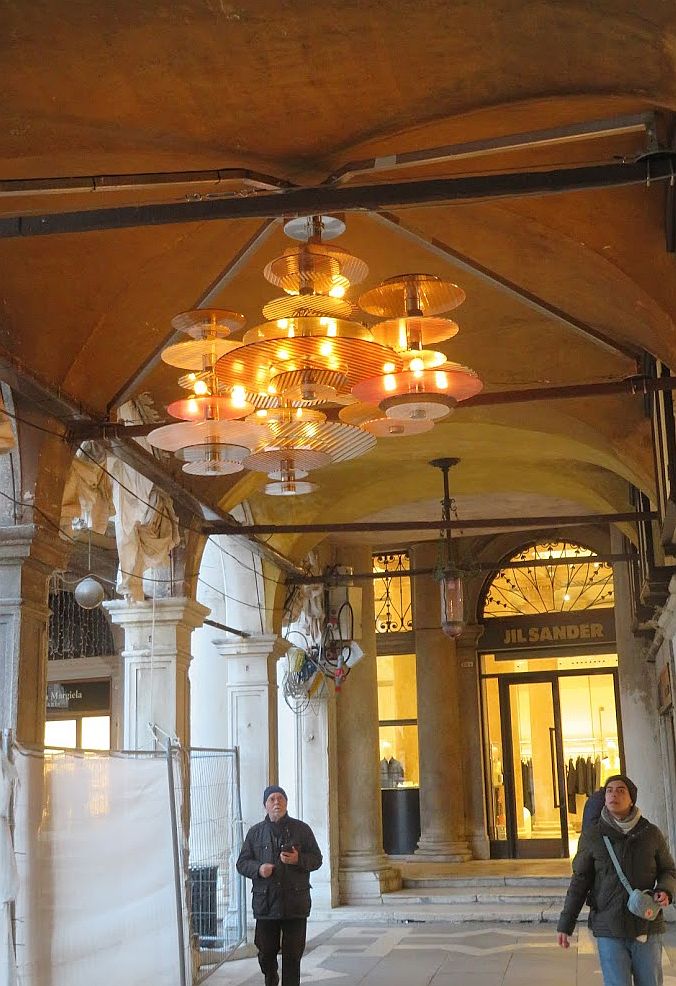
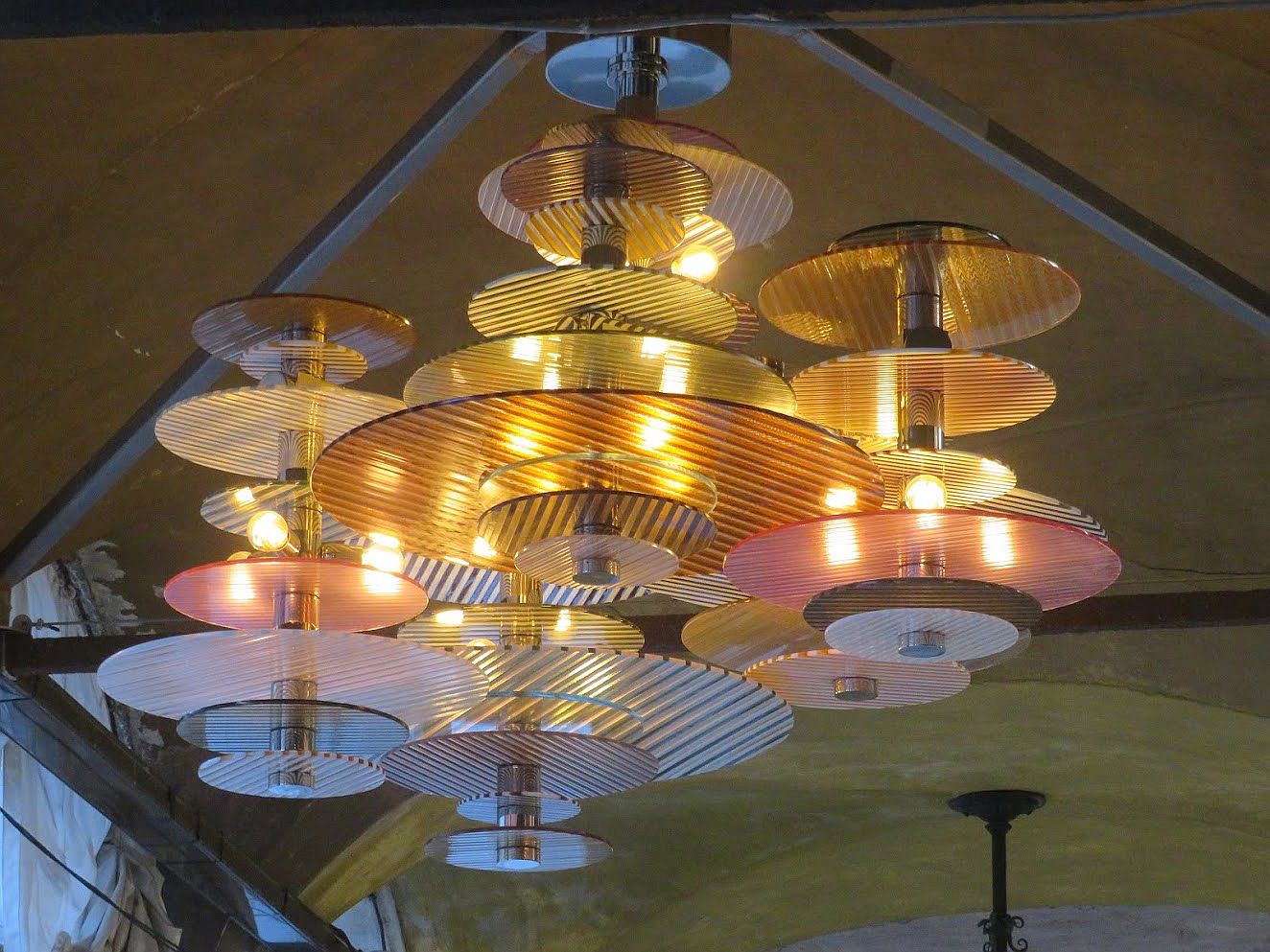
Chahan Minassian, with Nicola Moretti Murano, “reinterprets one of his iconic designs: overlapping disks of glass dance in a tonality inspired by the Venetian lagoon, composing a chandelier that is minimalist but vibrant, where the circular movement evokes the fluidity and reflections of water.”
Boats and saints
Last Sunday was an unusually entertaining day. It wasn’t as entertaining as the last Sunday of June typically is, coming at the culmination of five days of festivizing at San Pietro di Castello in honor of the church’s namesake. But by the time the day was over there had been more diversion than I’d expected.
Let’s start with the festa for Saint Peter. This year — you know what’s coming — The Virus made it impossible to host the usual large and lively crowds, or execute the expected entertainment and the feeding of at least five thousand. (Yes, bread and fish are always on the menu, among other things.)


But nobody said we couldn’t have the festal mass, complete with the Patriarch of Venice on his annual visit. Chairs were set up outside in the campo, correctly distanced, and although the usual supporting players were few (a couple of selected Scouts instead of a whole troop, four trumpeters instead of the band from Sant’ Erasmo), or even non-existent (no Cavalieri di San Marco in their sweeping mantles — soooo hot but sooooo well worth it, I’m sure they believe), there was a fine gathering of the faithful.
And may I say that seeing each other without being separated by layers of tourists has been, and continues to be, a noticeably positive aspect of the quarantine and aftermath. More about that another time. But back to the service.
As the Patriarch pointed out in his sermon, the religious aspect is the one essential element of the occasion. He didn’t specifically say “Don’t feel mournful because there were no barbecued ribs and polenta and live music and horsing around for hours with your friends and the mosquitoes,” though I’m sure he knew that’s what people were missing. At least they came for him.
To review: This was the traditional festa:


Sunday afternoon it was time to segue from the sublime to the secular. Every year, on the last Sunday in June, the city of Venice organizes two races in honor of Saints Giovanni and Paolo. The reason it isn’t called the race of Saint Peter is because it is held in the water between Murano and the Fondamente Nove, and the finish line is in front of the hospital, which is on the campo SS. Giovanni e Paolo.
The first race involves pairs of men on a boat called a pupparino; the second race is for young men up to age 25, rowing solo on gondolas. Sound simple? Of course it is, as long as everything goes well.
But sometimes it doesn’t…..

The men on pupparinos go first, and go they certainly did. I’m usually watching from the shore, but this time I was able to follow the race on a friend’s motorboat.


If anyone is interested, here are the results of the race of the men on pupparinos, from first to last: Orange, green, pink, white, brown, blue, purple, red. (Yellow withdrew, obviously.)
As for the race of the young men on gondolas, I have no strength left to report on it or anything else. Happily, there is nothing noteworthy to report. It seems that the day’s double-ration of drama was expended completely on the first race.
Now I’m going to lie down for a while.
The name game

Not a game at all, but shards of information I consider interesting, in an ephemeral sort of way. My favorite kind.
Meeting people here, or even just reading about them in the paper, will fairly quickly give you the sensation that there is only a handful of last names in Venice. Reading Venetian history has the same effect. There were 120 doges, and every five minutes it’s a Mocenigo or a Morosini or a Barbarigo or a Contarini (I feel a Gilbert and Sullivan patter song coming on).
In daily life nowadays, it’s Vianello or Zennaro or Busetto or Scarpa, all at some point from Pellestrina, where so many with these surnames dwell — and have dwelled — that the town is divided into four sections, each named for one of those specific tribes. This situation was created by doge Andrea Contarini, who in 1380 sent the four eponymous families from Chioggia to Pellestrina to reconstruct and inhabit the former town which had been destroyed by the Genoese in the “War of Chioggia” (1378-1381).
The density of these four names in Pellestrina is such that the post office finally gave permission to put nicknames on addresses, to give some hope of distinguishing between the scores of individuals with the same first and last name, some of them even living at the same location.
In the Comune at large, Costantinis and Penzos abound, and every year there is a bumper crop of D’Estes and Dei Rossis. Each name has its own provenance; some of them are obvious (“Sartori” means “tailors,” “Tagliapietra” means “stonecutter,” with which Venice had to have been infested) and some are more obscure (“Ballarin” meant “sawyer,” and “Bastasi” were the porters, specifically for the Customs or the quarantine islands).

I’ve been here long enough — and it doesn’t mean you need to have spent a LONG time — to recognize the provenance of many of these names. If you hear one of these, you have a good chance of knowing where the person comes (or came) from:
Chioggia: Penzo, Pesce, Boscolo, Tiozzo, Padoan, Doria
Burano: Vio, Costantini, Zane, Tagliapietra, Seno
San Pietro in Volta: Ballarin, Ghezzo
Murano: Toso, Gallo, Ferro, Schiavon
Cavallino: Berton
Venice (Dorsoduro): Pitteri
A few tidbits from the article, which are not evident in the table of numbers but are obvious to anyone living here:
First is that during the past ten years, the number of individuals bearing each surname has diminished. That’s just part of the well-known shrinkage of Venetians.
Second — also fairly obvious to locals — is the addition of foreign surnames. Of course, my surname is foreign too (German-Swiss), but I’ve been happy to disappear among many Venetians whose last names also begin with “Z,” and they aren’t German, either: Zane and Zanella and Zuin and Zuliani. It’s great down here at the end of the alphabet, I’ve finally got company.
As you easily notice, Muslim and Asian names are becoming more numerous. (I realize that “Muslim” is not a nationality, nor a geographical area, but while the bearers of these names are most likely from Bangladesh, I decided not to guess).
So where would the “Vianello” clan come from? According to my dictionary of Italian surnames, it springs from Viani, which isn’t a place, as far as I can determine, but a basic root-name. Lino hypothesizes that it could derive from “villani” (pronounced vee-AH-nee in Venetian), which means farmers, tillers of the soil — “villein,” in the feudal terminology, a partially-free serf. You can still hear someone around here vilify another person by calling him a “villano,” and they don’t mean “villain” — they mean clod, churl, oaf.
“Rossi” means “reds.” It’s the most common surname in Italy, though in the Southern half it is often rendered “Russo” (the second-most common surname in Italy). It most likely came from a personage with some strikingly red attribute, such as hair, beard, or skin. Or all three.
“Scarpa” — It means “shoe,” so I’m guessing their forebears were shoe-makers, though then again, it’s possible that it was once somebody’s nickname (in Venice, at least, nicknames are fairly common and the person bears it for life and even sometimes leaves it to his children.) However, another hypothesis holds that it could be a variation of Karpathos, the Greek island known as “Scarpanto” in Venetian, and which formed part of the Venetian “Sea State” from 1306 to 1538, plenty long to germinate names. Thousands of Greeks lived in Venice, so the place name may have shifted to a personal name.
There are lots of names that come from places, sometimes Venetianized, such as:
Visentin (vee-zen-TEEN): Vicentino, or from Vicenza
Piasentini (pya-zen-TEE-nee): Piacentino, or from Piacenza
Veronese: from Verona
Trevisan (treh-vee-ZAHN): from Treviso
Furlan (foor-LAHN): from Friuli
Schiavon (skyah-VOHN): from Schiavonia, later Slavonia, which is now the easternmost part of Croatia. The Venetians were known to trade, among other valuable merchandise, in slaves, which often came from Central Asia or the Balkan hinterland. “Schiavo” (SKYA-voh), conveniently shortened, means “slave.” Slav – Slave. Not made up.

Farewell Bruno


I’ve been noticing all sorts of interesting things around the city over the past few days, and while I regret to imply that a funeral qualifies as “interesting,” I will state that often the deceased is extremely interesting and makes me sorry I never knew him or her, and often never even heard of them until the dread news was published.
A case in point is Bruno Fusato Signoretti.
The “interesting thing” was his funeral cortege this morning, which didn’t completely surprise me when I saw it from the #1 vaporetto. I had only heard of him two days ago, when his obituary in the Gazzettino alerted me to the human behind a name with which I was familiar in exactly one way: Glass. That is, I knew that the name Signoretti was an important one on Murano, and that this company, or person, had begun (like many commercial ventures here) to sponsor some of the racers of the major Venetian regatas.
But there was much more to say about him, which I have learned now that he’s gone.
I have mashed up a few biographies, one written by Tullio Cardona in the Gazzettino, and the other by Maurizio Crovato on the website veneziaeventi.com. Here goes:

Gondoliers and Murano are in mourning. On October 5, Bruno Fusato “Signoretti” passed away in his house on the Lido. He was 74 years old, and had been fighting a difficult disease since last March.
Fusato began working as a gondolier, son of a centuries-long tradition; his family was noted among gondoliers since 1600. In more recent times, his grandfather Vincenzo, nicknamed “Cencio,” was chosen by Prince August Wilhelm of Prussia for his excursions in the lagoon in 1907, and when Cencio got married, the Prince sent him a silver coffee service and 1000 lire. (The new gondola he was able to order cost 300 lire, to give some idea of the magnitude of this gift.)
Bruno’s father Luigi was the gondolier of Princess Margaret and Queen Elizabeth II.
When young Bruno began his career as a gondolier, he was known for being able to make six “murane” a day (roundtrips in his gondola from San Zaccaria to Murano). He became the substitute gondolier for Albino Dei Rossi, the legendary Venetian-rowing champion known as “Gigio Strigheta,” filling in while Gigio was training for the races. “Thanks to this young man,” Strigheta quipped, “when I’m not working, I make twice as much.”
What with his love for the gondola, and for the regatas, and for his city, Bruno began to diversify. He retired from gondoliering and began to organize tourist traffic to Murano. Then he opened stores in London, and finally, in 1986, he acquired an abandoned glass furnace on Murano and established an important center for glassmakers and designers.
He also lived a kind of parallel career of philanthropy and benefaction. As Crovato states, he always kept the “old gondolier” in him. There was not one racer, not one aged gondolier, alone and forgotten, who didn’t receive help from him in moments of need.
In 1991 he dusted off the abandoned tradition of the “disnar” (dinner) of the competitors before the Regata Storica. He sponsored difficult art restorations, and when La Fenice opera house went up in flames in 1996, he was a founding member of the reconstruction fund-raising initiative, and its first private contributor.
After September 11, 2001, he created the idea of the “Baptism of Venetian-ness” (battesimo di venezianita’). I can’t tell you how it worked, but it raised funds for the firemen of New York.
His last joy, as they put it, was the victory of Giampaolo d’Este and Ivo Redolfi Tezzat of the Regata Storica 2014, a team which he had sponsored.
In remembering him, Tezzat gave Signoretti the baptism of gold, at least in Venetian terms:
“What he said, he did.”
In a city where words outnumber deeds by an impressive margin, this is a statement whose brevity conceals a universe of meaning.

