
get to know the mud
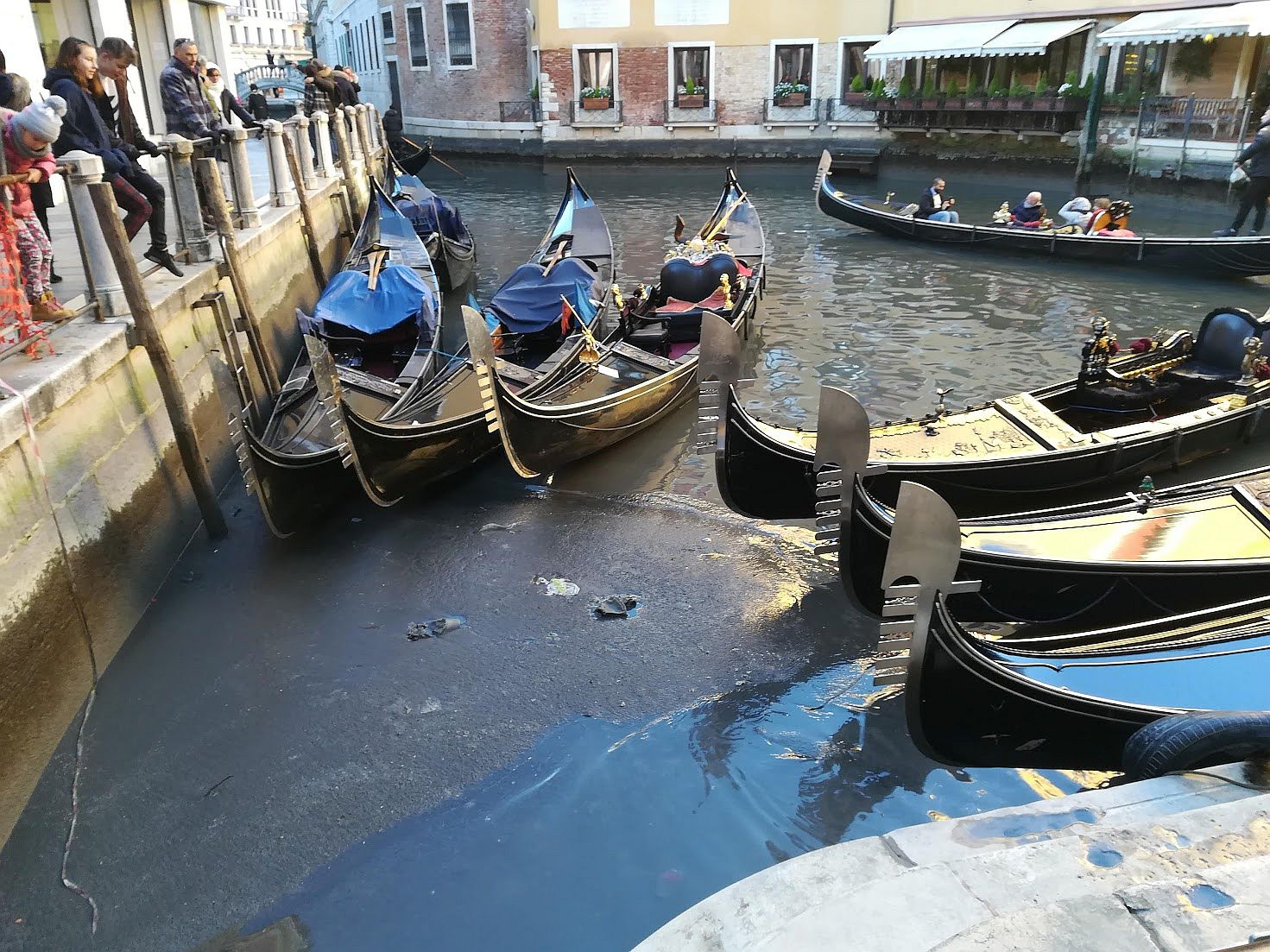
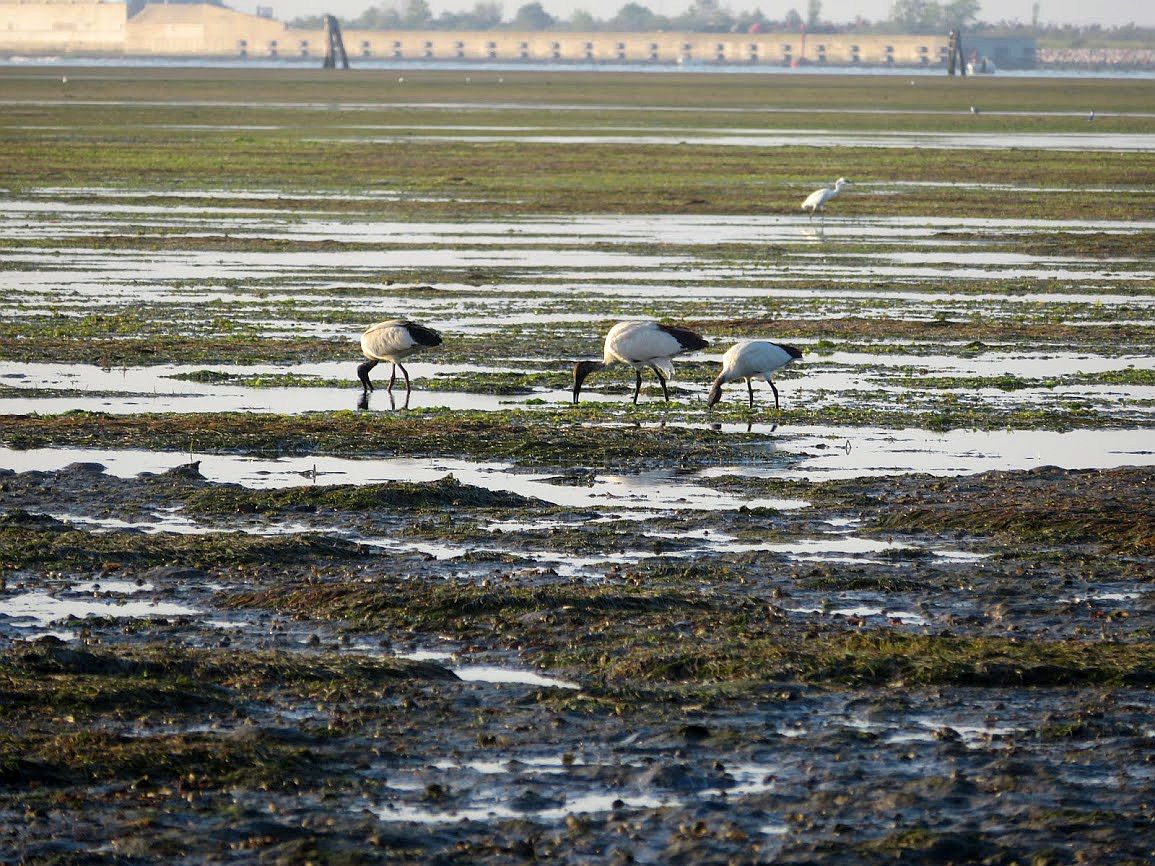
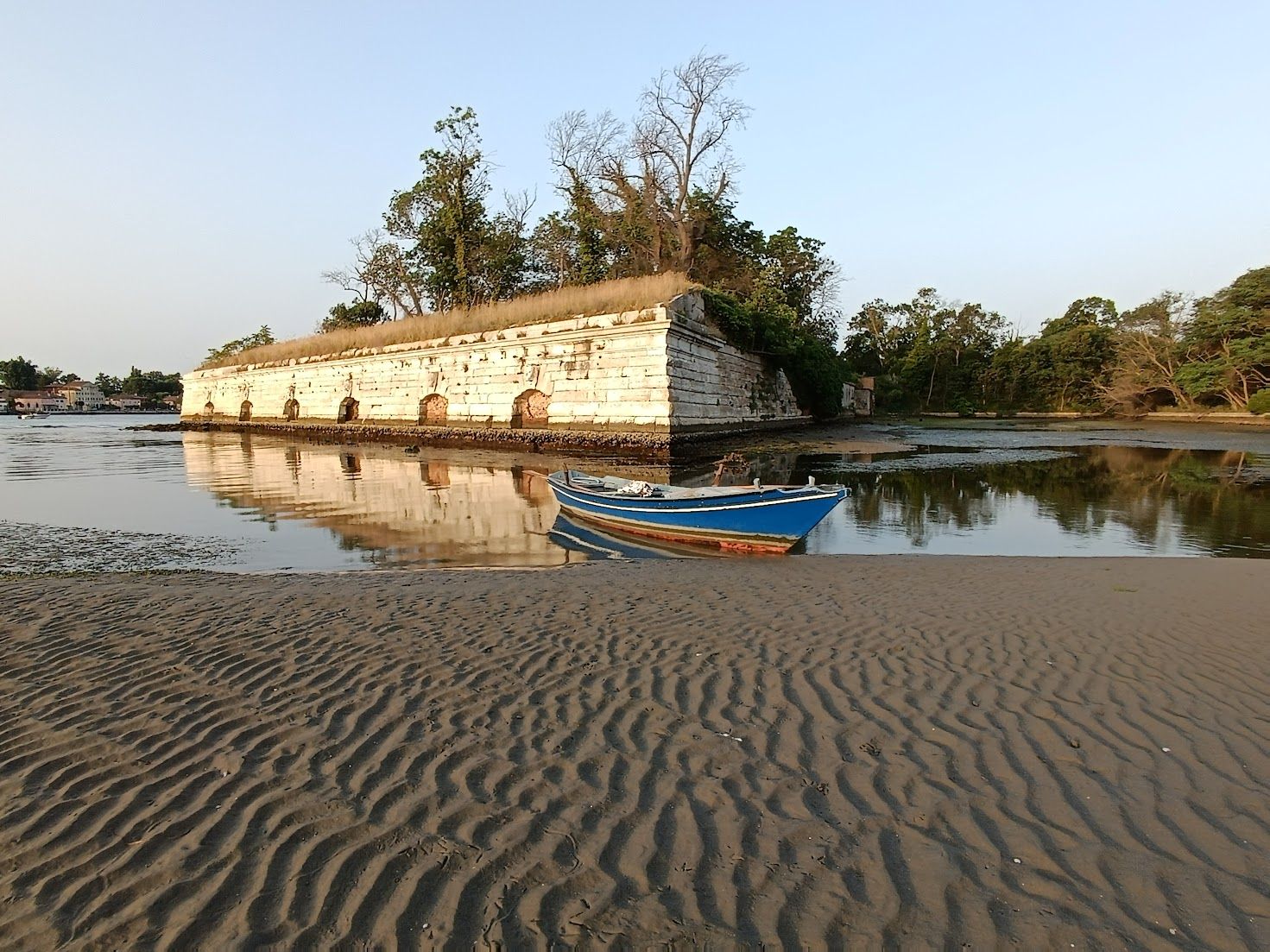
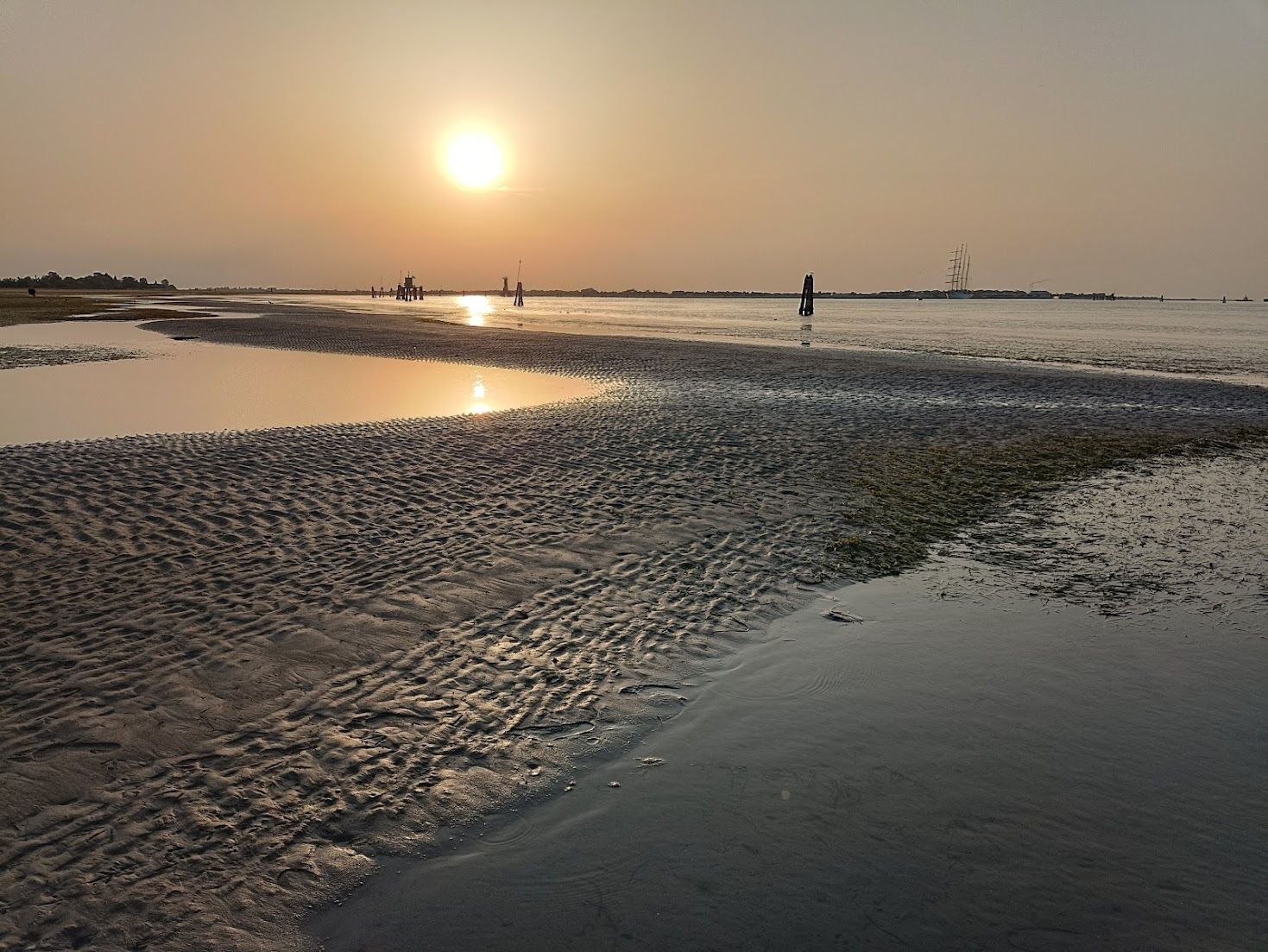
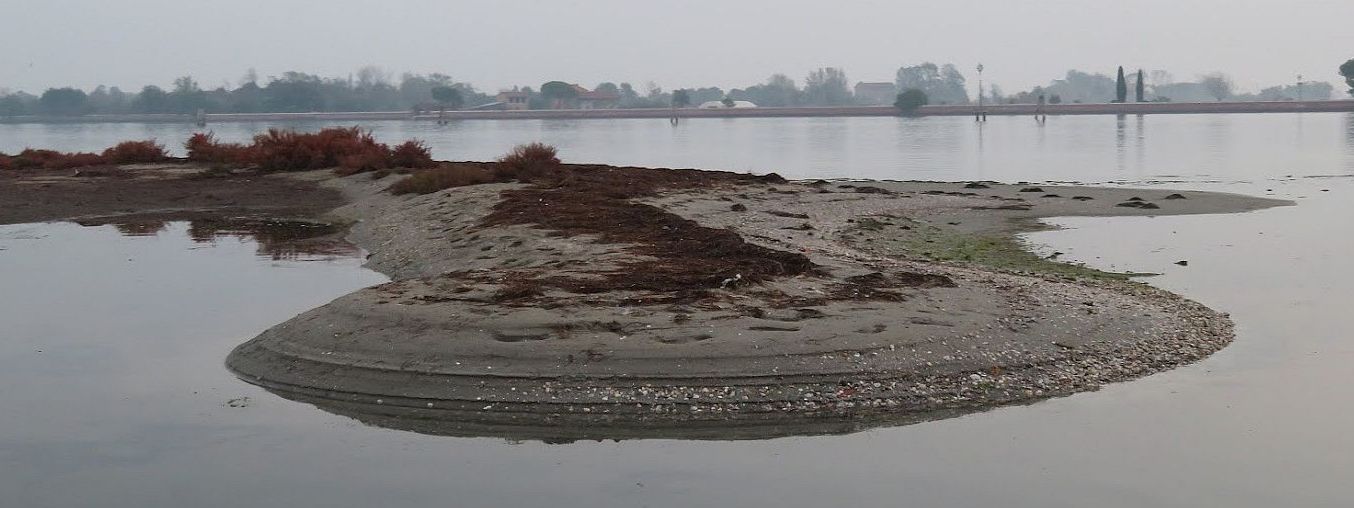
You could call it the lagoon’s base layer. There are places where there’s too much mud, mainly in the canals; it accumulates and creates problems for boats when the tide is low and, equally important, problems for buildings whose drains it has blocked, and so we have to take it away.
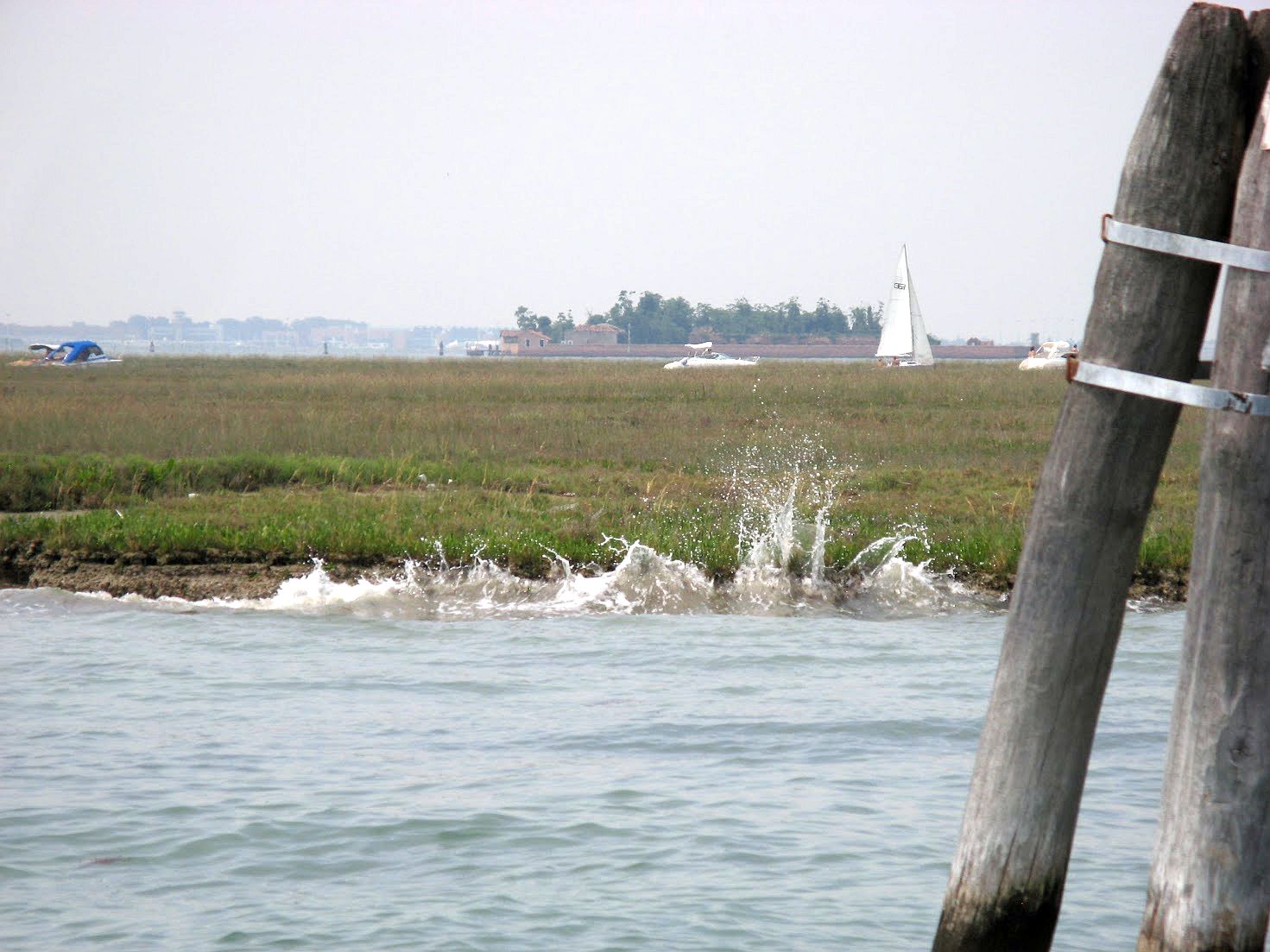
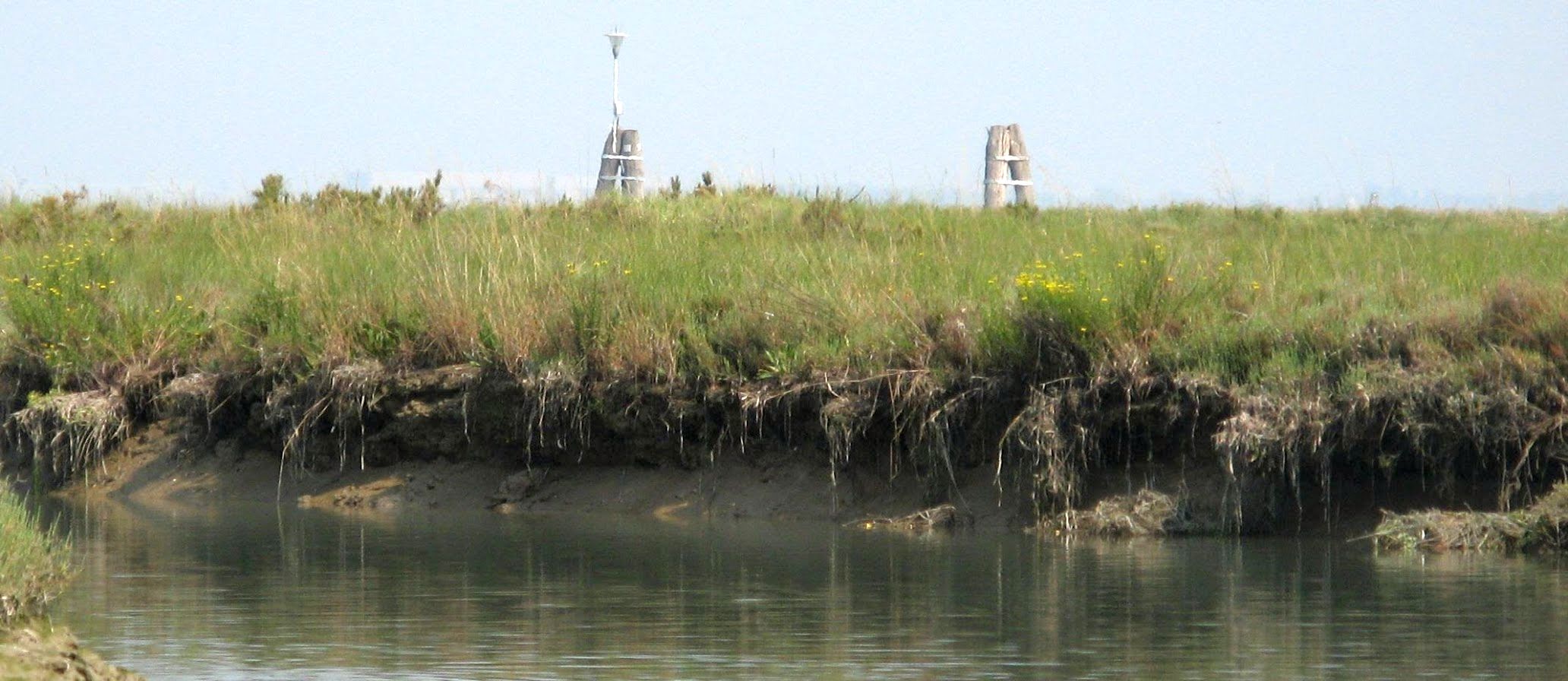
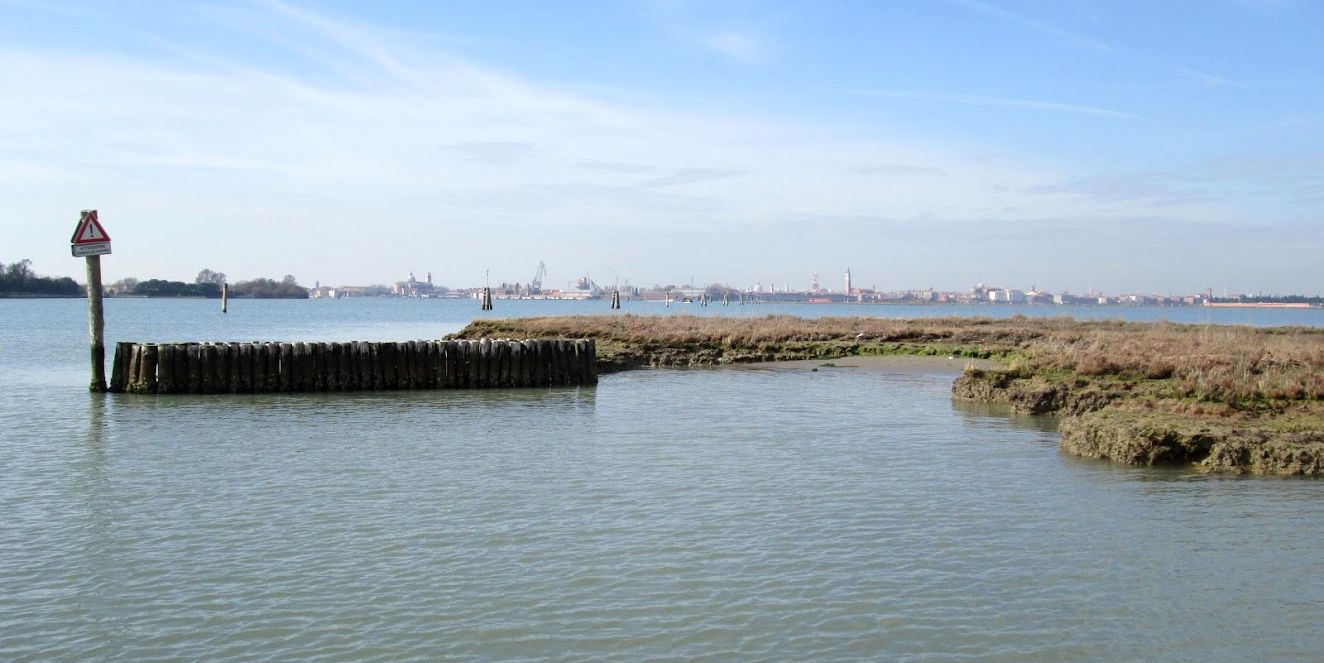
But there is an equal and opposite problem of there not being enough mud in places around the lagoon, where dredging has been heavy or, more frequently, where the motondoso (waves from motorboats) has loosened the soil, and the tide and waves have washed it out to sea. Waves that demolish the wetland marshes (barene) or, on the other hand, fill up channels, have been known for years to be wrecking the lagoon’s wrinkly underwater shape, smoothing it out and slowly turning it into a sort of bay of the sea. Bays of the sea are an entirely different ecosystem from lagoons, but no matter! Motors are indispensable for keeping the city going, and the lagoon is just going to have to suck up (so to speak) the consequences.
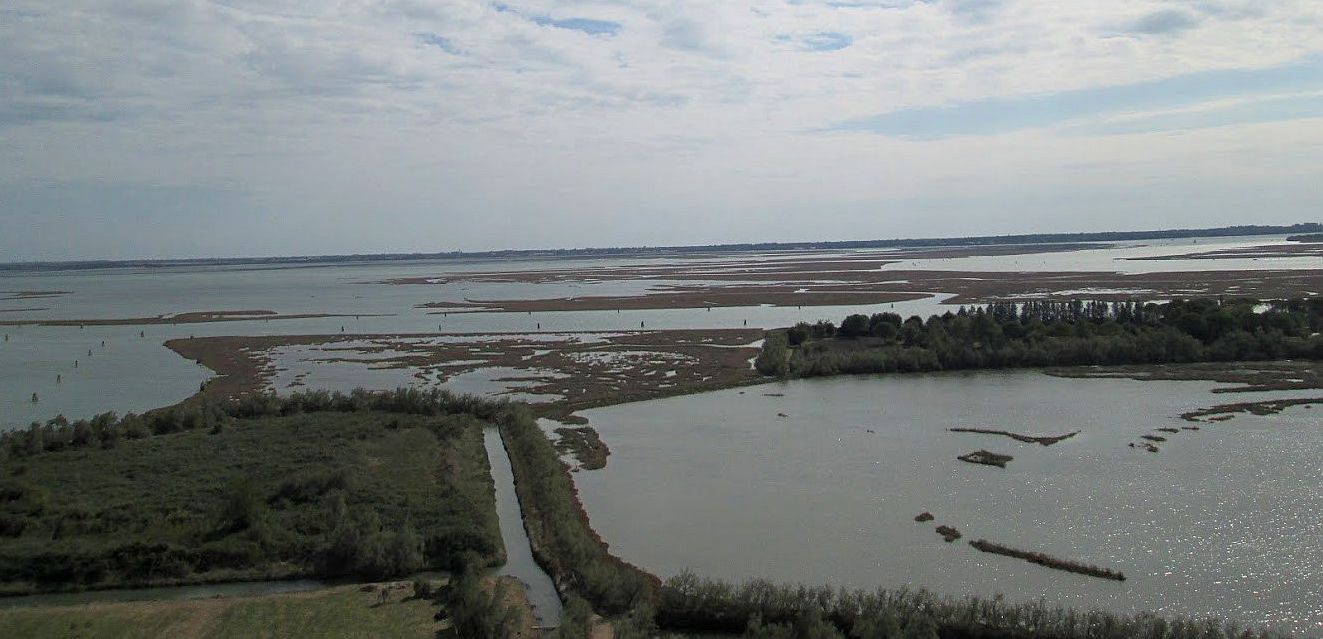
The 17th-century Venetians knew the lagoon dynamics intimately. Their survival depended on it. Fears of the lagoon silting up from the several rivers that flowed into it led them to an epic undertaking: From 1600-1604 they cut the river Po to divert it southward into the Adriatic.
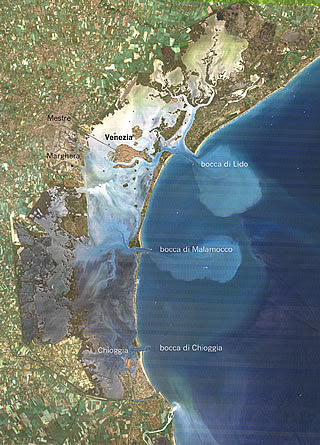
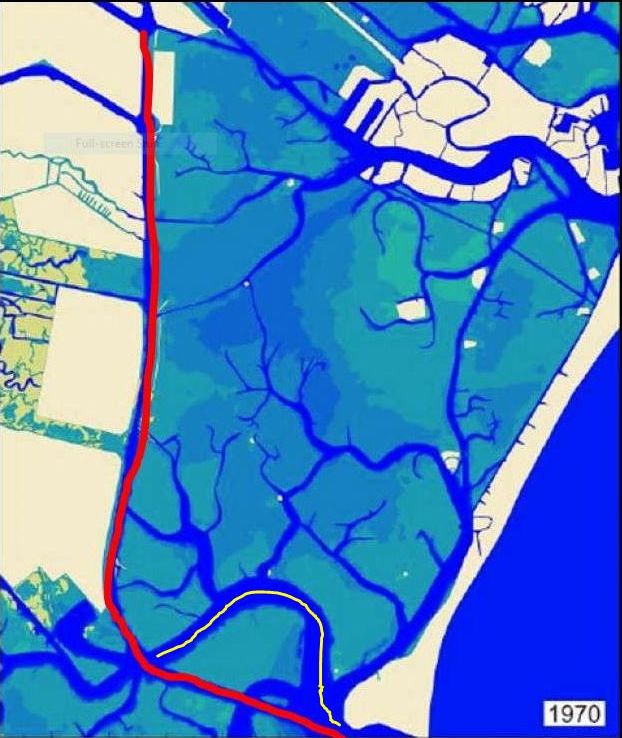
In 1993 it was decided to redistribute the quantities of mud in the city and lagoon: Simple, logical, effective, positive. Dredging proceeded and the mud was deposited in various locations where it was useful, or at least not problematic. In fact, moving mud around is far from a recent phenomenon — it’s been done many times over the centuries resulting in consolidations, expansions, and entire new islands. This assortment of maps showing the Morphological Evolution of the Lagoon of Venice from the XVI Century till today is very interesting. In the 20th century Tronchetto and Sacca Sessola, to name only two, rose from the lagoon bottom created with dredgings.
And so, in the fullness of time, the dredges were at work outside our door in 2021, and they were at it again just two months ago. All seemed to be going well, but suddenly we read that things have taken an unexpected turn. The mud is unusable!
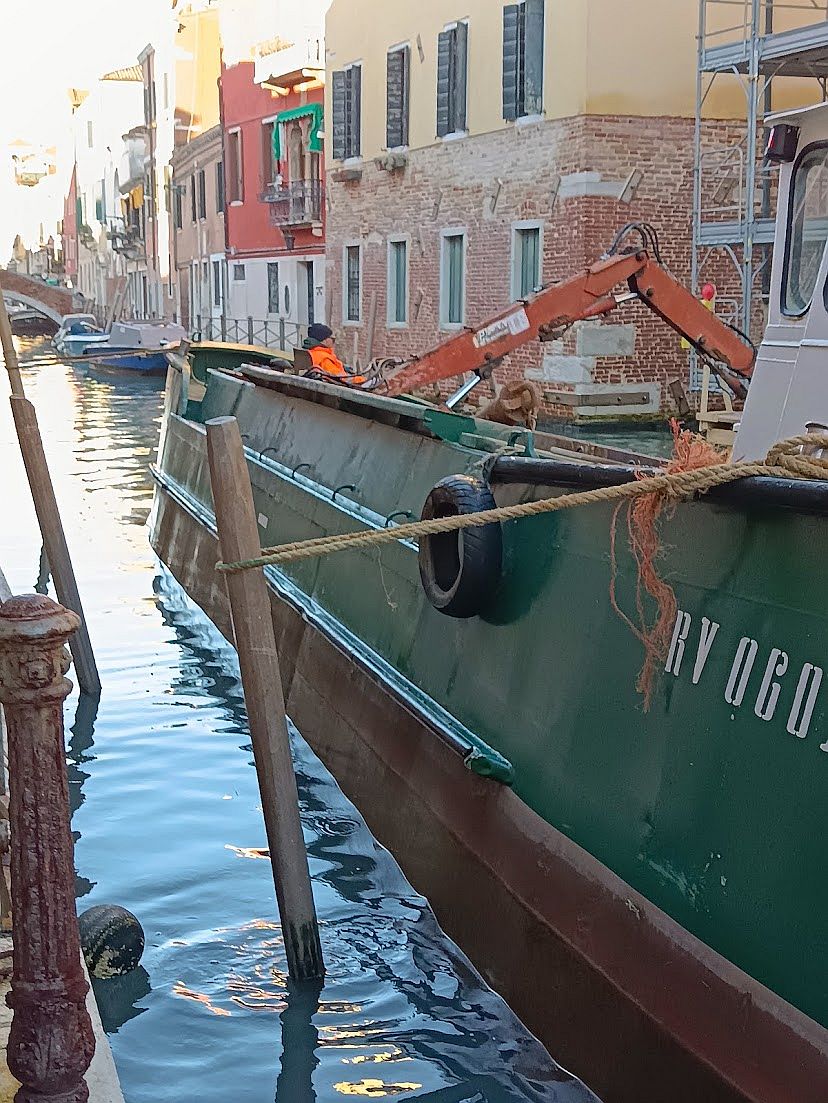
The headlines have been blunt: “Unusable muds, the lagoon in crisis, the dredging has been stopped in the lagoon.” “The new Protocollo of 2023 for the sediments dug in the canals doesn’t work anymore because the parameters of ecotoxicity are too rigid.” “First they were considered clean and good for reconstructing the barene. But no more: Now there’s a risk of blocking also the dredging of the most polluted.”
This problem has come up literally in mid-dredge. It’s a little awkward to discover that the Protocollo of 2023 is invalid when the barges are full of mud, so now what? Is there a Plan B? “Strictly speaking, we don’t have one,” to quote CIA operative Gust Avrokotos in the film “Charlie Wilson’s War.” “But we’re working on it.”
So what changed all of a sudden? It’s that, as the headline noted, the standards are suddenly stricter as to what mud is classified as “ecotoxic” (either biological or chemical) and therefore where it can be dumped. (Don’t write in, I know that everything is chemical, looking at the universe. We’re roughly distinguishing here between chromium and E. coli.)
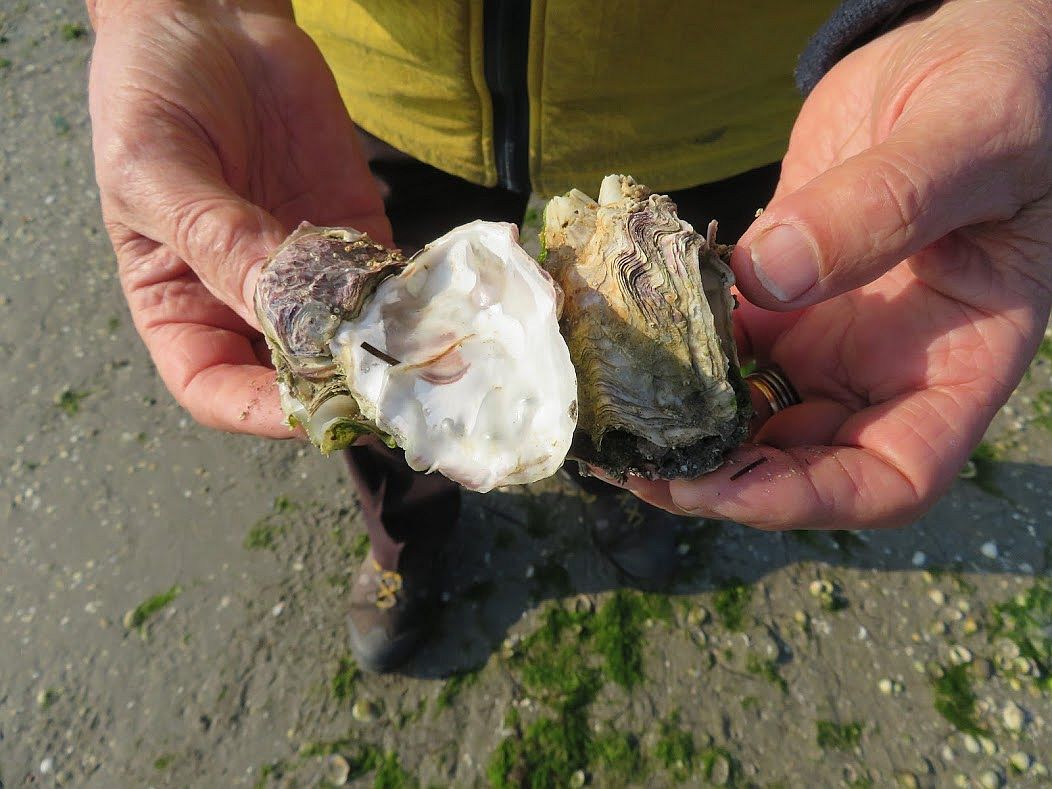
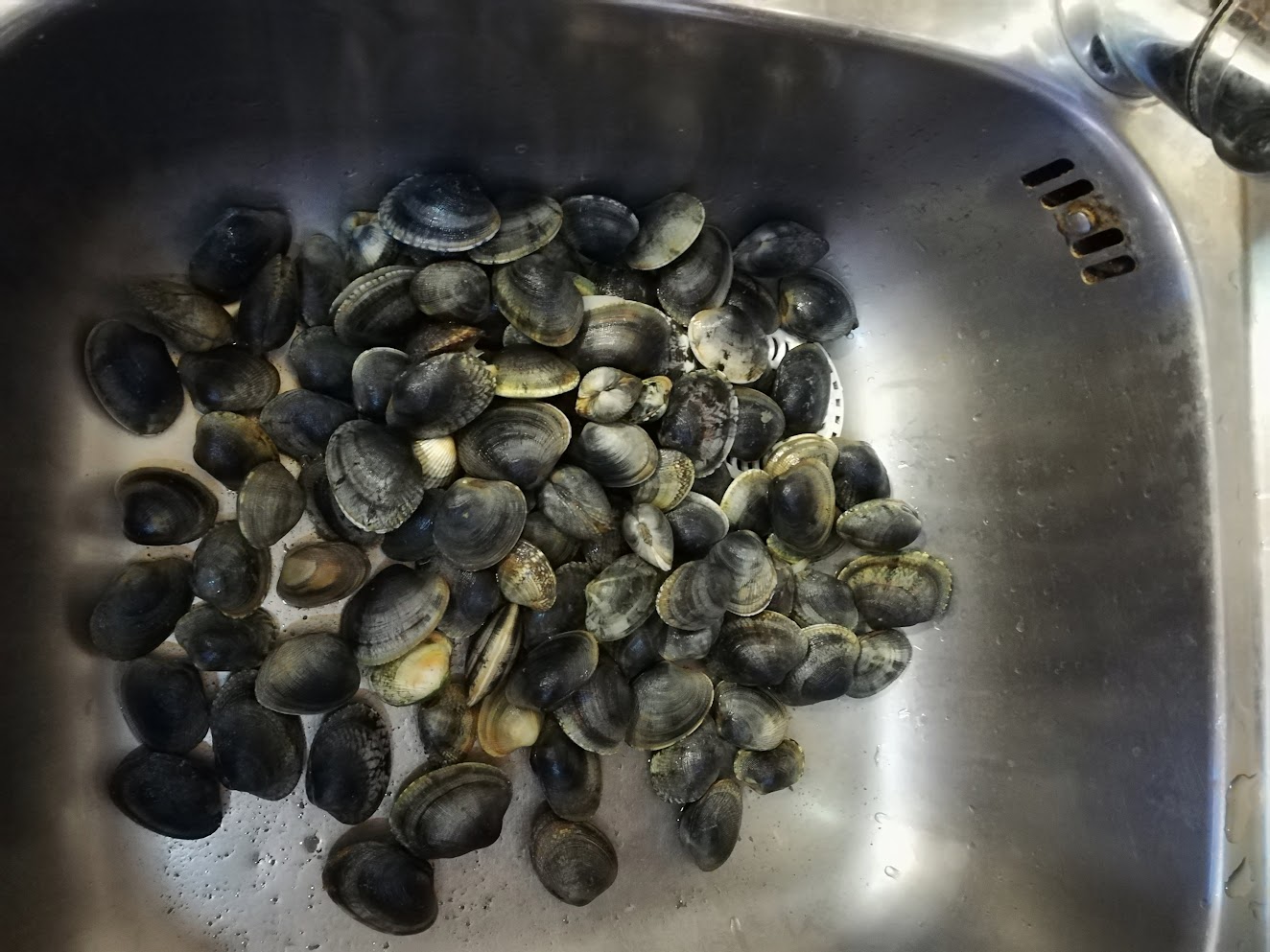
Nobody’s surprised to hear that there are toxic substances in the lagoon — just look at the Industrial Zone shoreline and draw your own conclusions. A few years ago the University of Padova and Ca’ Foscari in Venice studied some mollusks taken from the channel bordering the mainland. Researchers found that the bivalves contained a quantity of poisonous substances 120 times higher than in the rest of the lagoon.
So here we are. Where will the mud go?

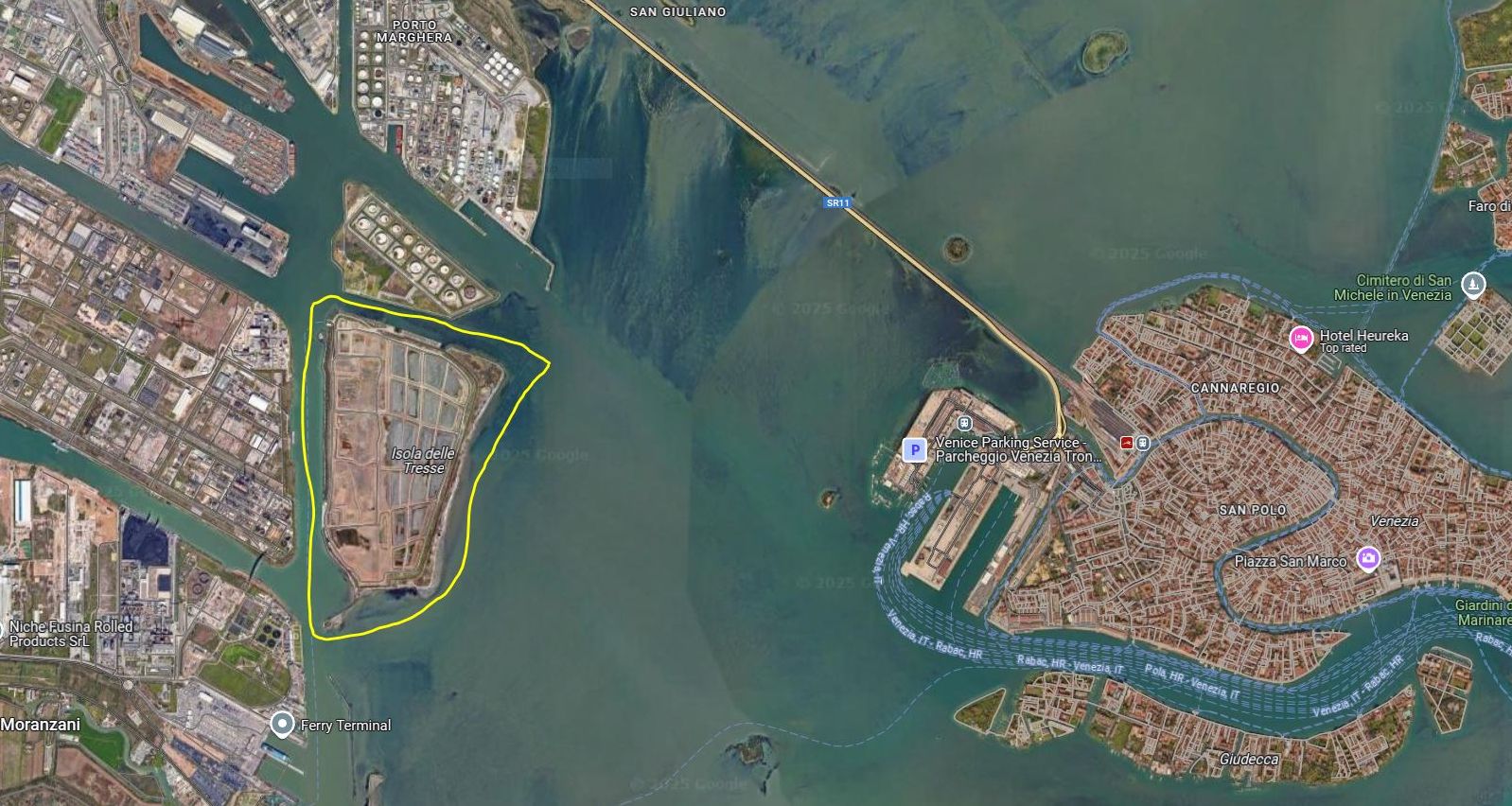
All muds are not created equal. Category A, the cleanest kind, is safe to put under the water, so it can be used “nourish” the shrinking barene. Other muds, the more toxic Category B and C, can’t be put back into the lagoon, no matter how worthy the reasons, and have to be banished to the Tresse island. And God forbid all these muds should become mixed together. Burning the mud is an interesting proposal, but it’s hard to agree on where to put the ash.
Also, the Tresse at the moment is running out of space. There have already been discussions about enlarging it, but quantity and quality, as often happens, are in conflict. Decisions lag. Bureaucratic, legal, logistical issues keep bumping into each other. Cost must be in there too, somewhere. The Morphological Plan of the lagoon was shot down in 2022 and nothing has been heard of it since.
So, back to the dredging at hand: After weeks of hardy gouging and hauling, the mud’s permission to land, so to speak, has been revoked. The Department of You Should Have Seen This Coming isn’t answering its phone.
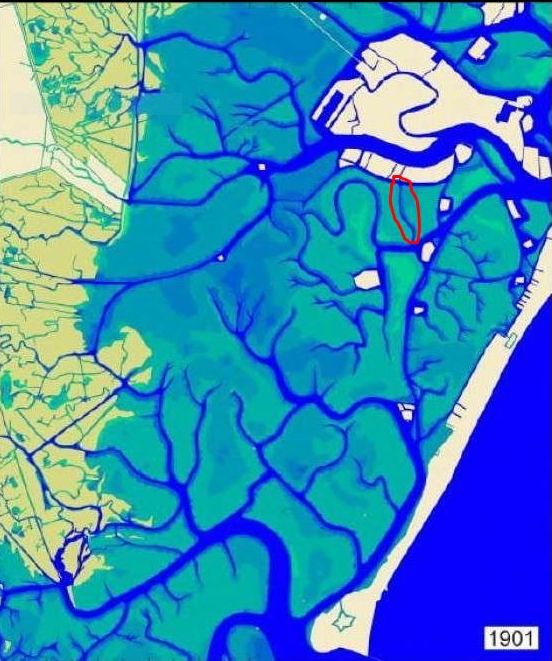
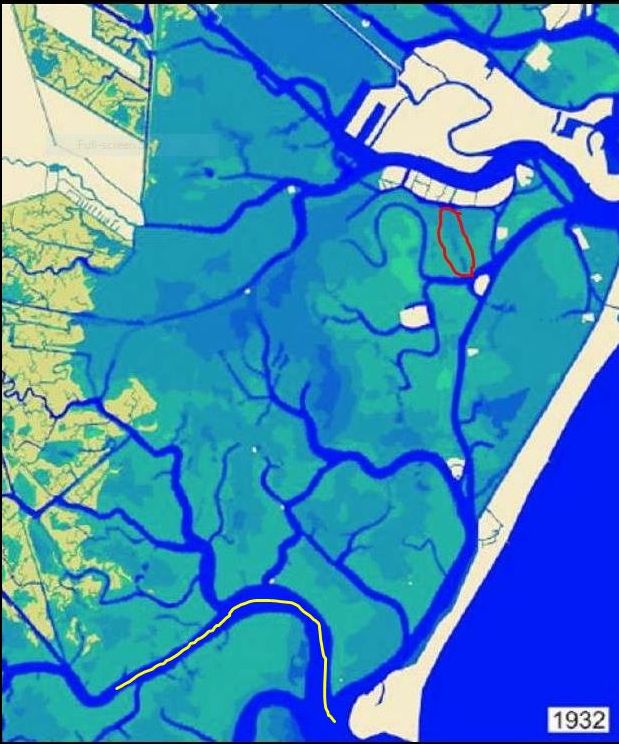
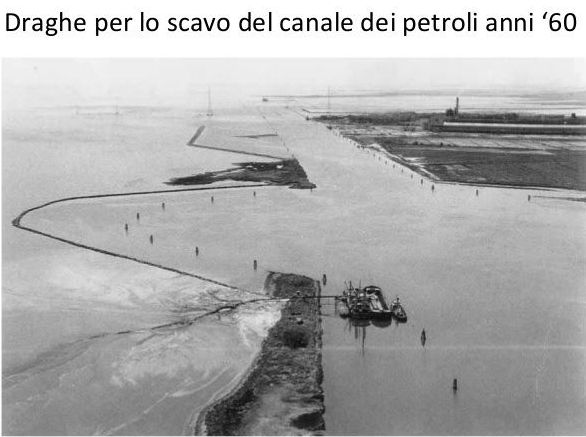
In the Thirties the Industrial Zone was being built; for Venice’s post-war economy it seemed like the greatest plan ever, and in many ways it was. In their great days (now past), the chemical refineries here were the largest in Italy. Oil and chemical industries require raw materials, and those require ships, and ships require reliable channels for passage. That broad, curving channel marked in yellow on the map above that enters the lagoon from Malamocco does not look like anything a big ship would want to navigate, and of course ships also need a waterway to reach the mainland port area. And so the Canale dei Petroli (“petroleum canal,” in honor of the expected tankers) was planned.
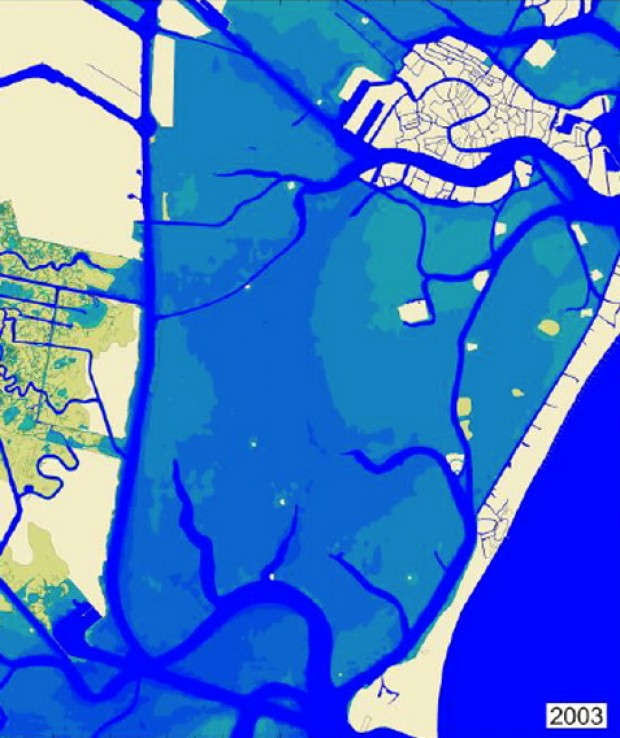
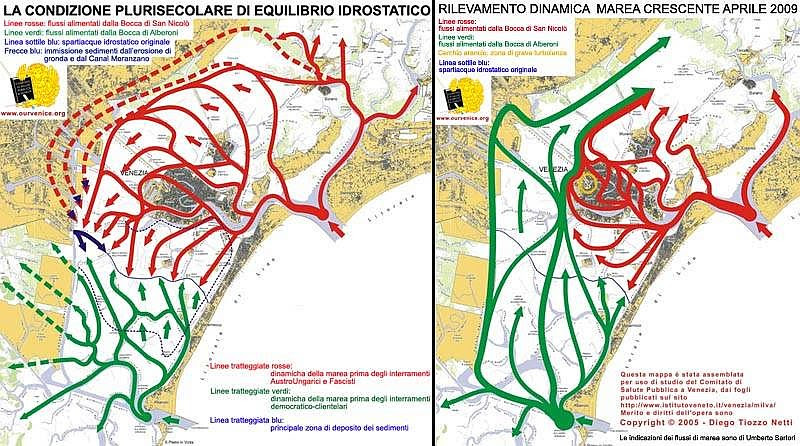
We’re looking at tide patterns, otherwise known as the hydrostatic equilibrium of the tides in the lagoon over many centuries.
LEFT PANEL: The solid red lines show the tidal pathway from the inlet at San Nicolo’. The solid green is the water entering from Malamocco (Alberoni). The thin blue line across the center of the lagoon emphasizes what we can see where the arrows meet, the point where the two incoming tides form the spartiacque, or “division of the waters.” The dotted red lines show tidal flow before the landfills created by the Austro-Hungarians (who left in 1866) and Fascists (1922-1943). The dotted green lines show the tide before the landfills made by the post-war “democratic-clientele governments.” The dotted dark-blue lines are the principal zones of sediment deposits, which makes sense considering the movement of the tides.
RIGHT PANEL: The pattern of the rising tide in 2009. The solid red line shows the pattern of the tide entering the lagoon from the inlet at San Nicolo’. The solid green line shows the tide entering from Malamocco (and, obviously, along the track of the Canale dei Petroli.) This graphic shows the effect of losing the mudbanks, natural channels and barene, smoothing out the lagoon bottom that used to be naturally uneven and knobbly.
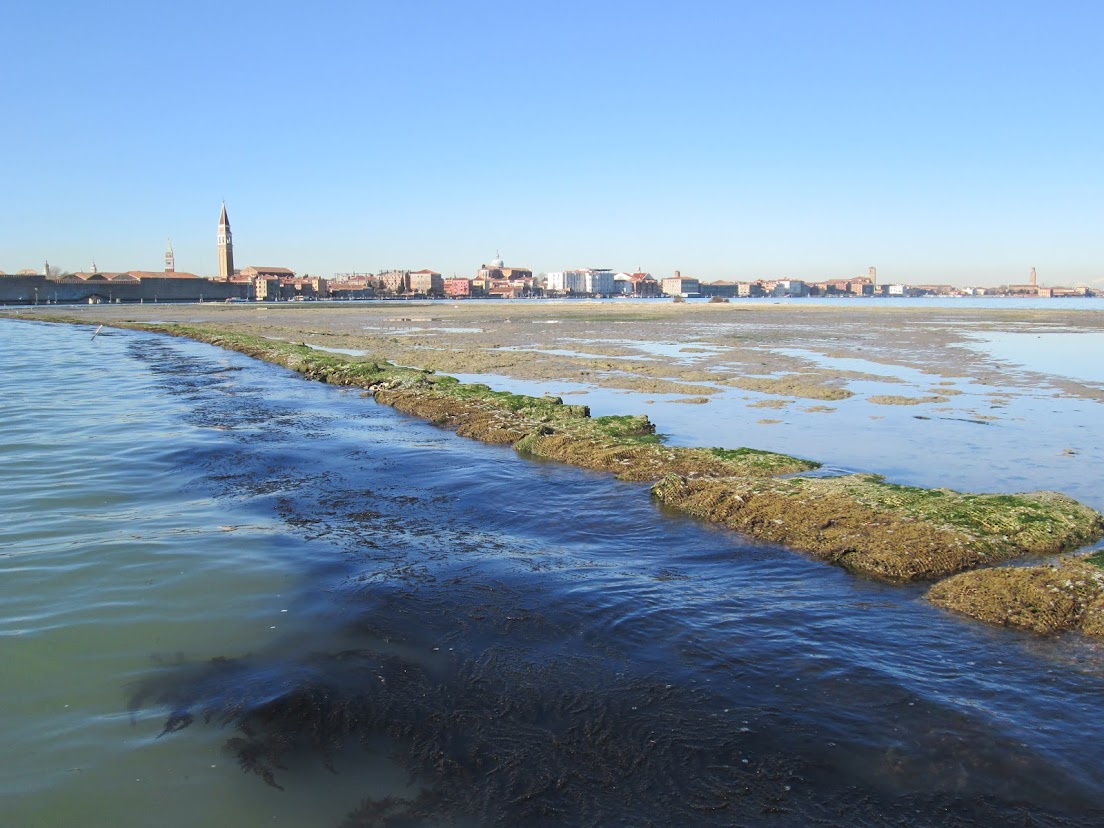





If you want a lagoon, you have to want mud. Otherwise you might just as well look at your bathtub.
tourist strikes back

This just hot off the press.
Yesterday (Tuesday) afternoon the Piazza San Marco was bubbling with tourists. The sun was out, the air was warm, the most beautiful city in the world (so-called) was just lounging around being beautiful, etc. There were thousands (probably) of tourists, and an inexact number of thieves and pickpockets in the mix. So far, so normal.
One of the tourists was a man identified only as being South American. One of the pickpockets was originally from Tunisia, and around 4:00 PM they were destined to meet. The Tunisian was already known for his propensity to steal from shops, but yesterday he tried his hand at stealing from people. The aforementioned hand had already extracted the tourist’s wallet, as I understand it, but the victim felt it, ran after and caught him, and launched his fist at the thief’s nose. Broke it, in fact.
Wallet recovered, pickpocket carried away in an ambulance to await surgery.

Lessons learned? Don’t try to steal wallets if you’re only used to ransacking rooms. Rooms don’t hit back.

Venice’s winning ticket
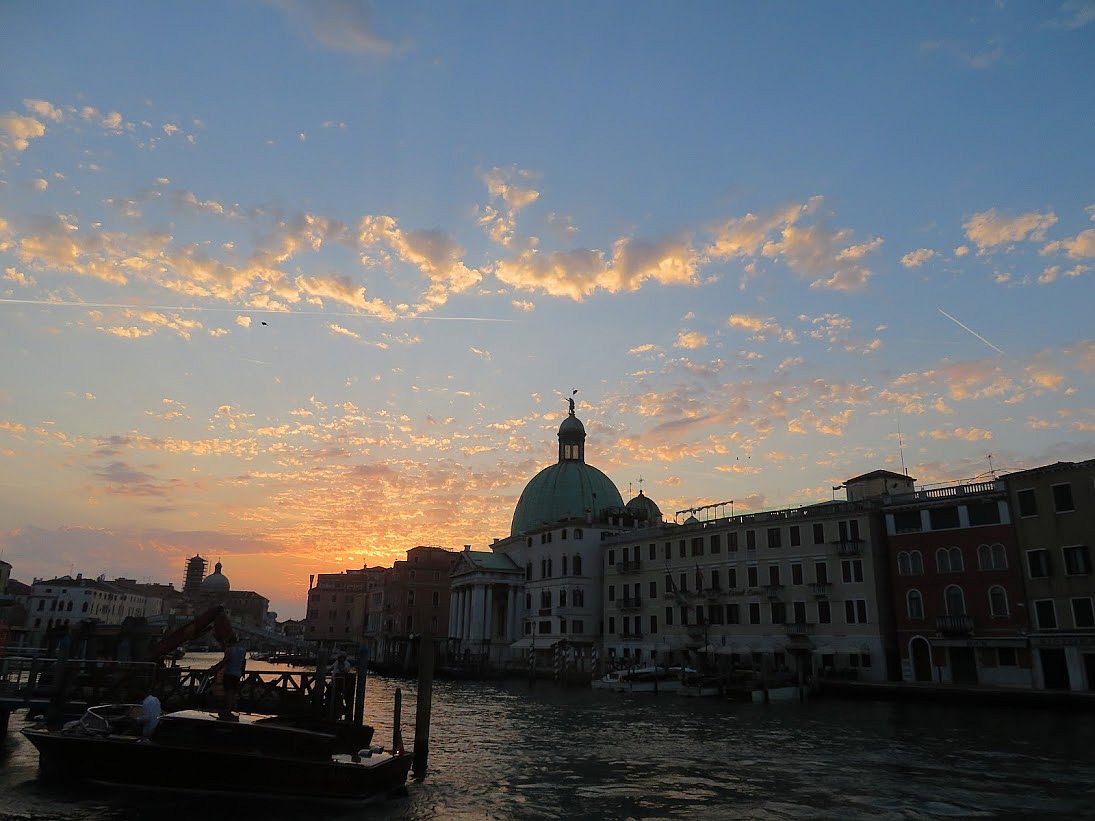
Maybe you remember that in April there was an international wave of publicity/curiosity/dread/disbelief at the announcement that the city government — after nine years of dithering — was ready to start a 29-day program that imposed what was vulgarly called an “entrance ticket” on visitors to the city. (The city, attempting elegance, called it a five-euro “contribution for access.”) To lessen the unpleasant connotations, the plan was termed “experimental,” which means that no matter what happened, everything would be fine. That being the nature of experiments. You want to see what happens.
Many, including your correspondent, were perplexed as to what this project was intended to accomplish. Theories abounded. Mayor Luigi Brugnaro said it was to slow the flow of tourists that was swamping the city. I myself doubted it, because if five euros were a sufficient deterrent to a prospective day-tripper, that person should be spending those five euros on food and shelter instead of lollygagging around the most beautiful city in the world.
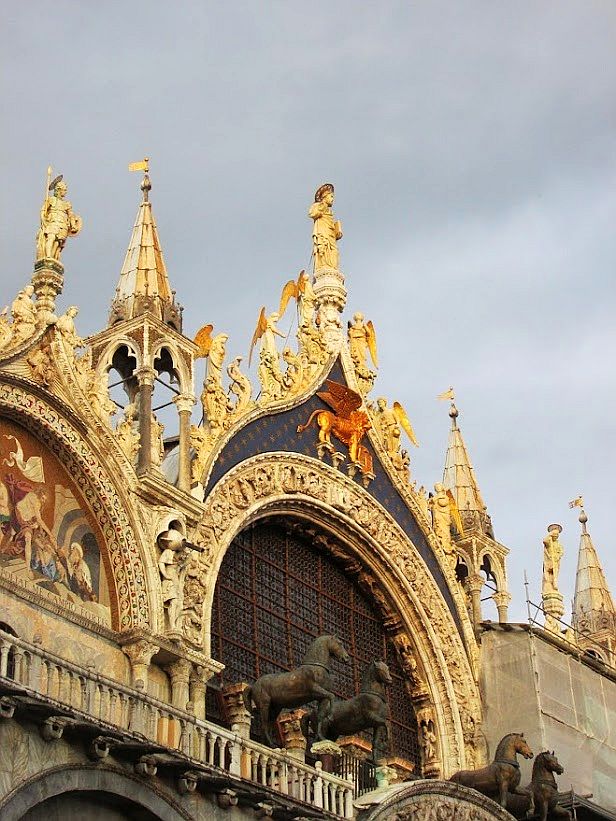
Also, the ticket was only required on weekends and holidays, from 8:00 AM – 4:30 PM. So the flow could easily shift to other days, and other times of day, too. Finally, there were so many exemptions almost nobody, it seemed, was going to have to pony up. Resident Venetians, Veneto citizens, anybody with a job here, tourists who overnight in hotels/apartments, temporary residents, children under 14, students, persons with disabilities, persons participating in a sports event, persons with medical appointments…You get the idea. My favorite: “Going to visit a friend.” You fill out the exemption request on the city’s website naming some Venetian you met once standing in line at the supermarket cash register, and you’re all set. Not saying it ever happened, I’m just saying it could.
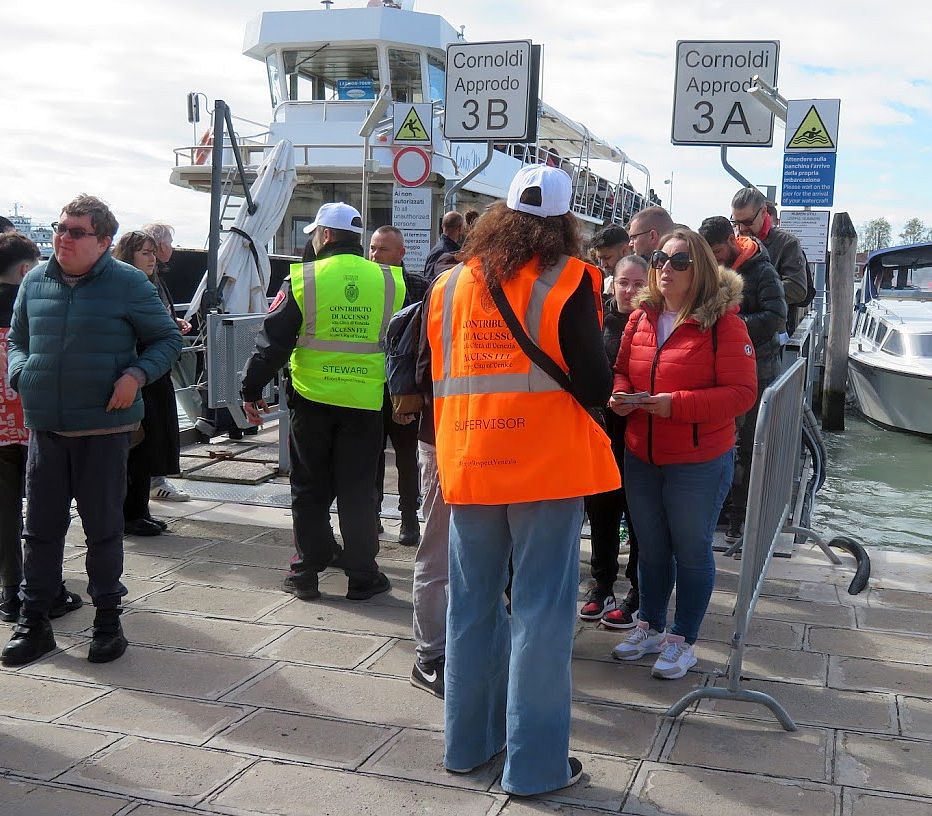
Some more cynical people theorized that this was a cleverly mislabeled method for the city to make some money. Crass! The city denied this, of course, saying that the expenses of administering the program (and staff and other stuff) far outweighed any potential profit. I’m confused. Why is the city pretending to be so bashful about wanting money? We’re already completely accustomed to the tourist tax on overnight visitors. Why wouldn’t there be more fees popping up?
Interestingly, the whole scheme depended on the honor system, which seems like a shaky way either to limit traffic or make money. If you arrived at 7:30 and just walked into the city, there wasn’t a dangerously high probability of being stopped during the day by somebody in uniform asking to see your ticket. It could happen, but as I say, the odds were pretty much on your side.
On the city’s side, however, was the fact that there was no limit to the number of visitors, so simply pull out a crisp crackling fiver and you were in.
100,000 tourists arrived on the first day, and 8,000 paid. I’m no good with numbers, but those didn’t seem to indicate much of a deterrent, much less a slot machine pouring out cash. If the system worked as planned, there should have been fewer visitors and therefore less income. How wrong I was.
Deterrent it clearly was not, and the term cash-flow took on exciting new meaning. The city had estimated that in the 29 days of “limited access” there would be 140,000 paying visitors providing 700,000 euros total income. Yet the numbers up to the last two days revealed that there had been 440,000 paying visitors.
And as for those mournful remarks about how much it cost the city to run the program? The earliest report says that 2.2 million euros came in, three times the projected sum.
So we are all left with a huge question mark hanging over our heads (“we” meaning those who care, which I do not). What was all that?
At the beginning, the mayor stated that the ticket was “the first step to a plan to regulate the access of day-visitors.” In another interview, he said that “Our objective has always been to put a brake on those who come to Venice just for the day.”
So now, faced with the realization that the five-euro ticket hadn’t slowed the traffic at all, but that in some weird way had actually accelerated the situation, what is the next logical step? Already mooted: Raise the price to ten euros! That’ll keep ’em at bay! Or if not, it’ll bring us cataracts of cash. Either way, the city wins!
(Appreciation to Luca Zorloni’s excellent piece in wired.it)
natural functions
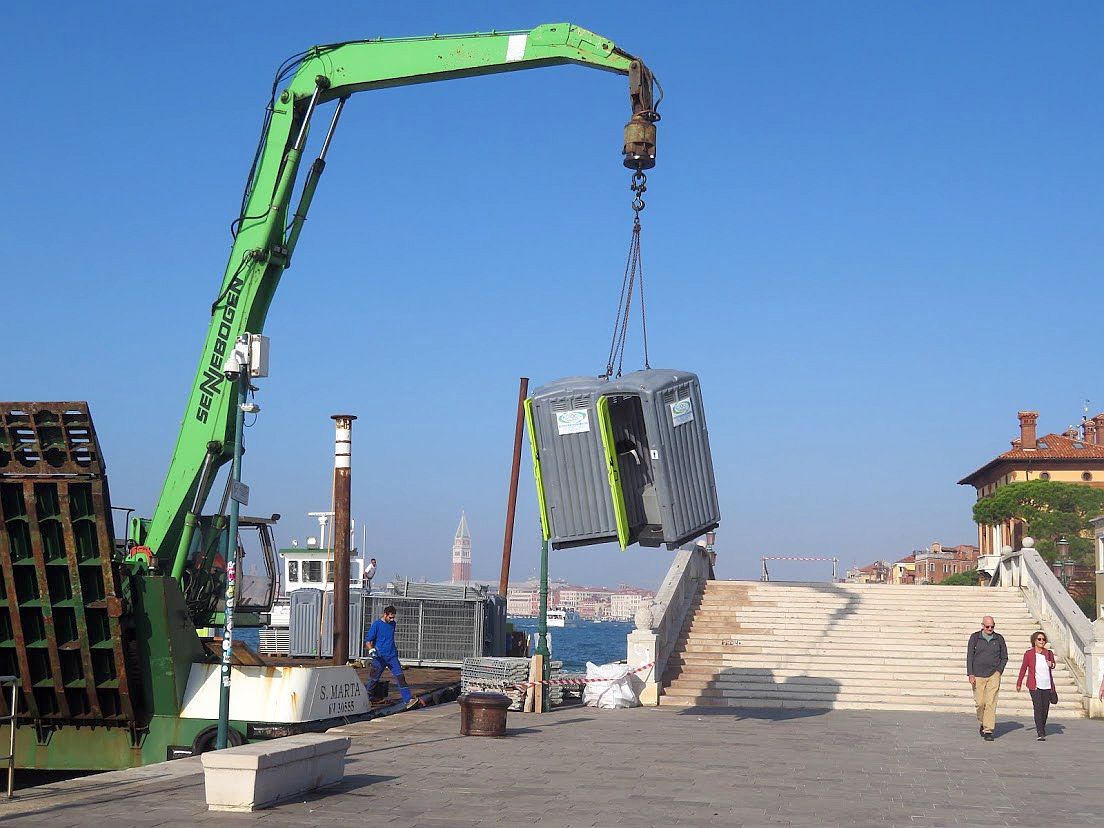
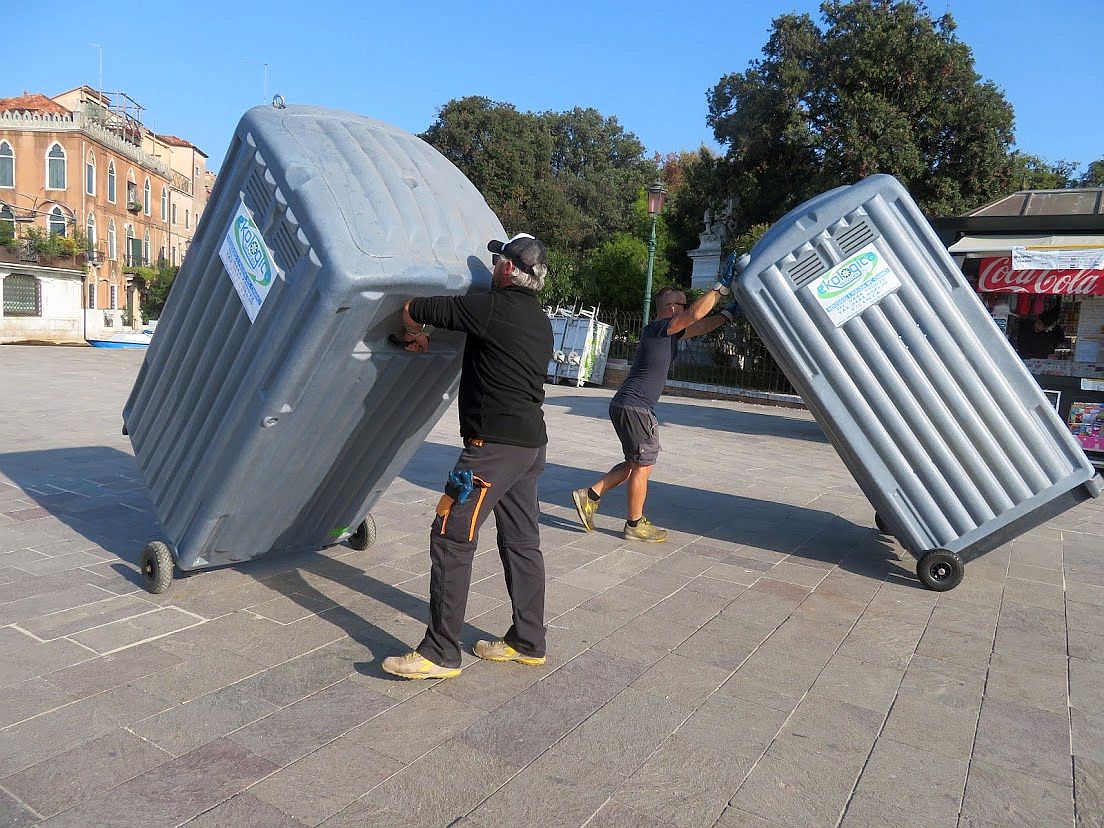
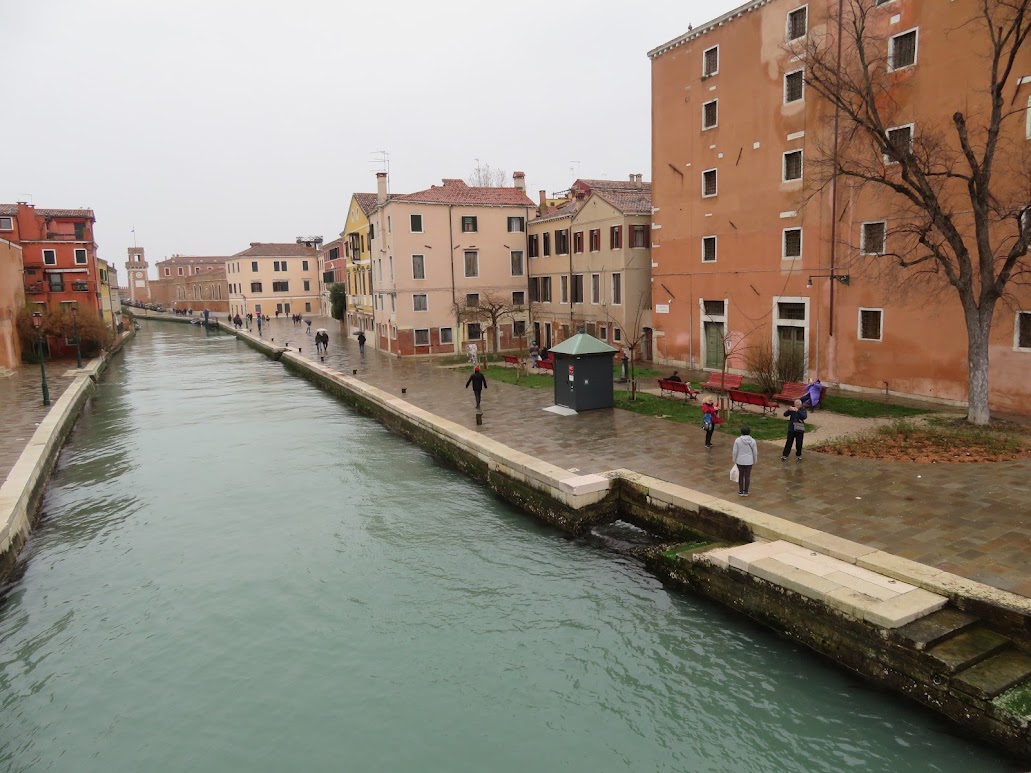
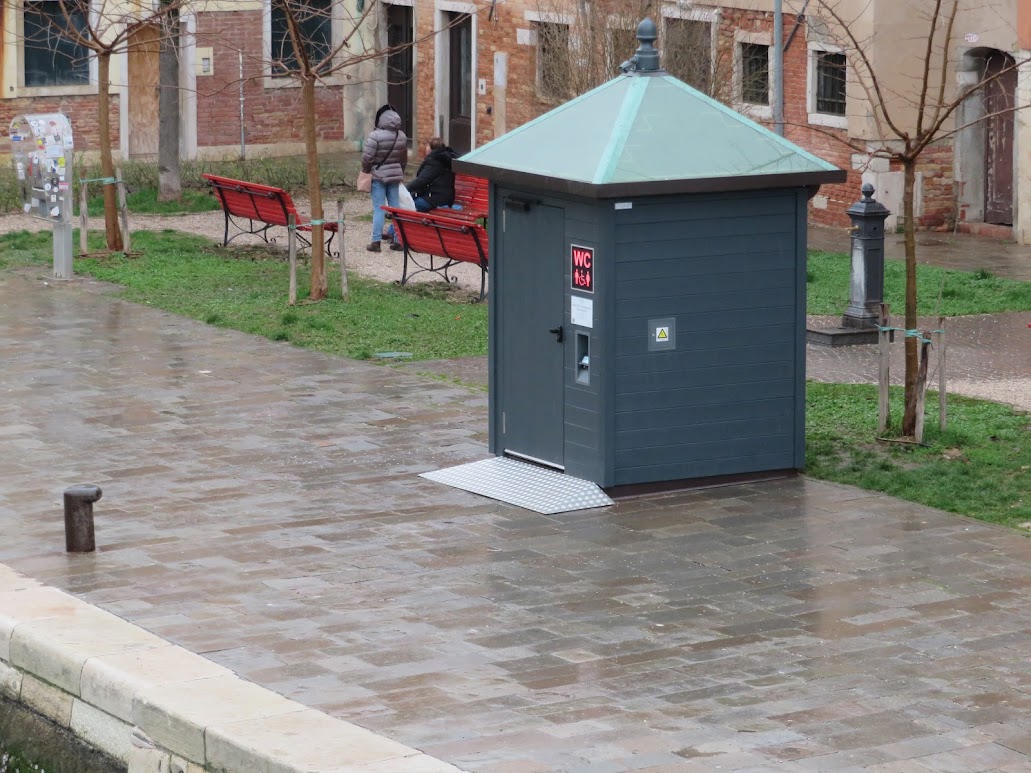
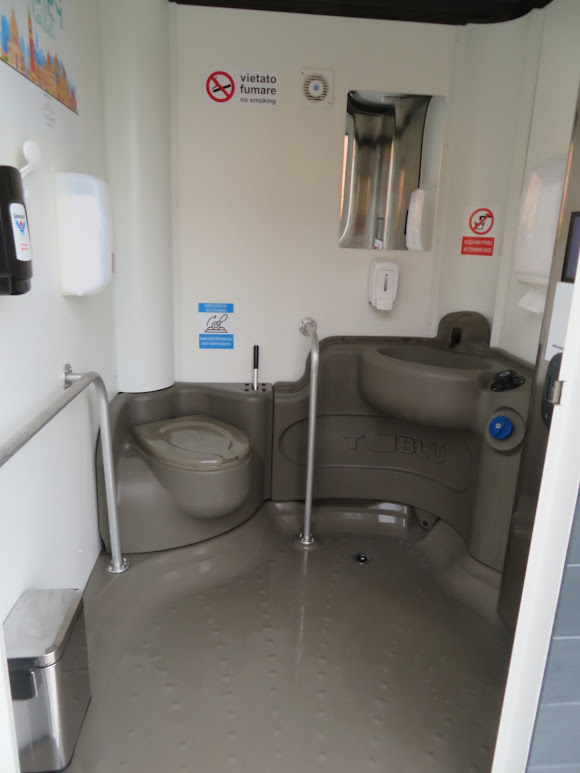
This is a simple tale composed of two parts. (A) What we need and (B) how hard it can be to obtain it because of (C) (my error, the tale has three parts) other people. To demonstrate I take the situation of the new experimental temporary chemical toilet (A) near the Arsenal and (C) the city of Venice, some city councillors of.
People need places to relieve themselves, we’ll start there. On the whole, visitors manage the situation by stopping at bars/cafe’s, buying something, and using the facilities. But sometimes bars/cafe’s are closed. Sometimes they are crowded. Sometimes the WC is mysteriously out of service. And sometimes the owners have to crack down on tourists who show up in groups of which one person buys a coffee and all the rest use the bathroom, as we call it in the US. Not made up. So one person is relieved, so to speak, and his or her nine friends have to start looking for a toilet somewhere else, or buy a coffee, which is clearly something they were hoping to avoid.
Impatient and drunk males at big gatherings at night have no problem at all: Find the nearest wall. Vertical structures exert an atavistic allure to men. Ladies, you’re on your own, as usual. But there are small side streets — I’m thinking of offshoots of Campo Santa Margherita — whose residents have been driven to install a gate to prevent revelers from using the street to resolve the situation.
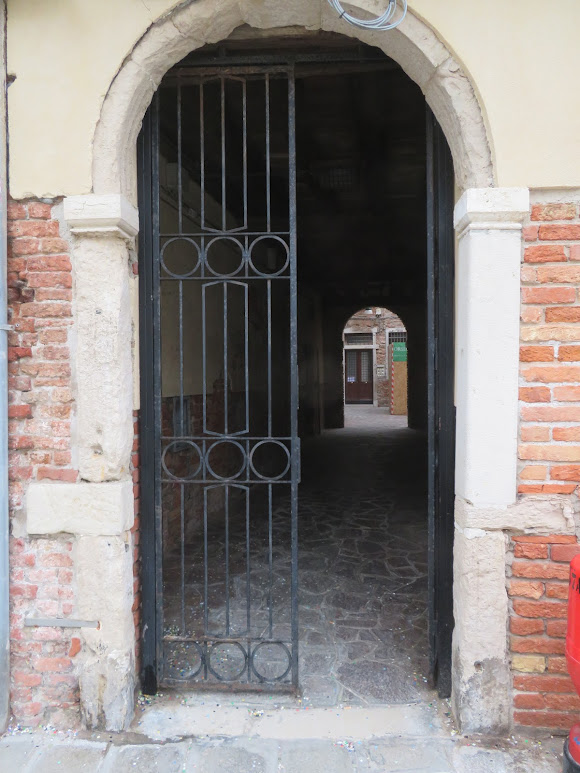
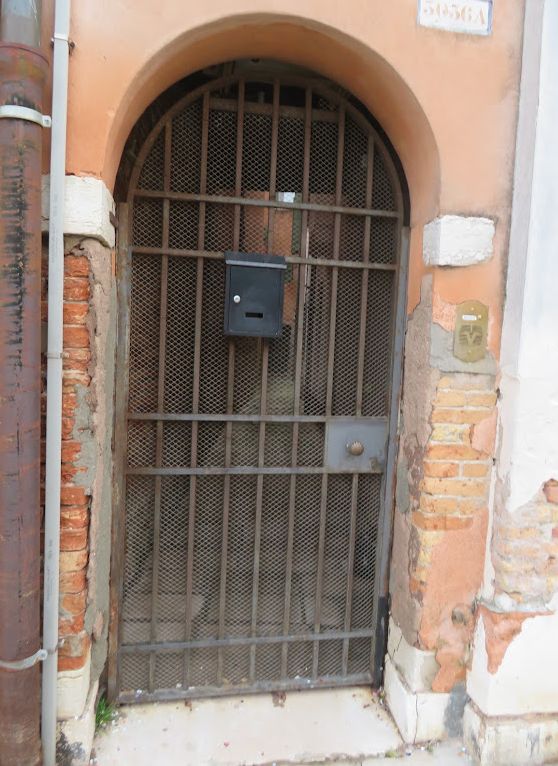
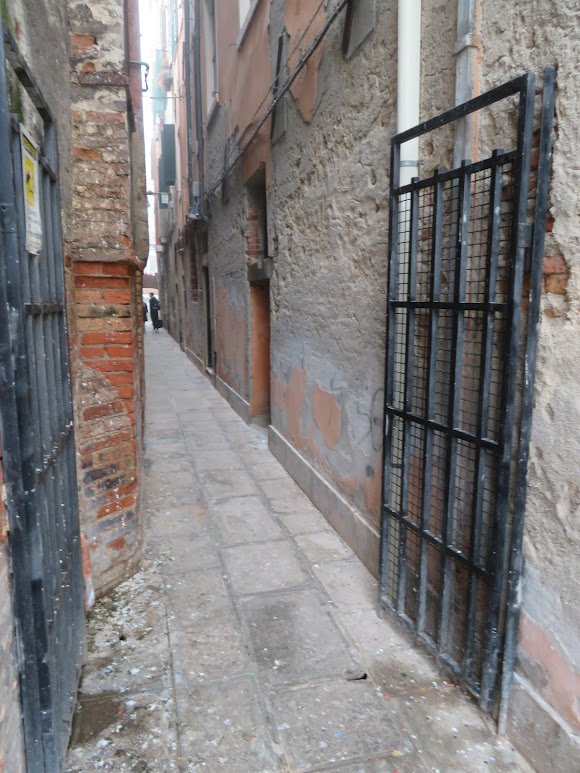
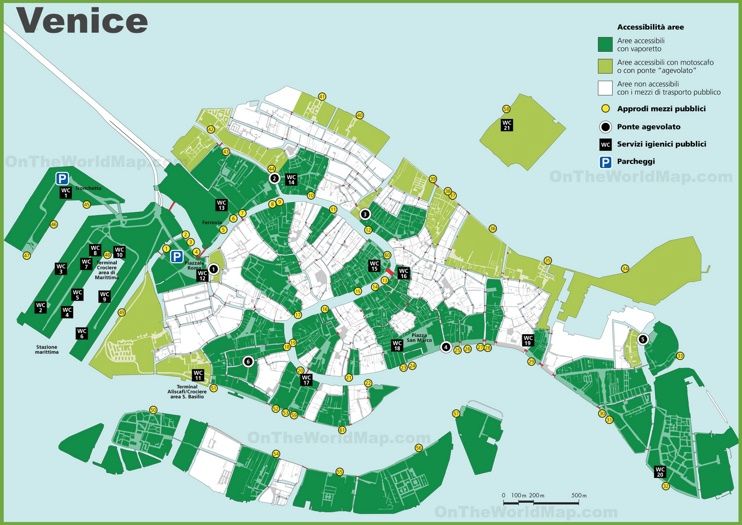
But the choice is not kiosks or nothing. There are permanent public loos in Venice. But there aren’t very many, their hours vary WIDELY — 8:00 AM to 8:30 PM is rational, so is 9:00 AM to 9:00 PM, but 11:00 AM to 4:30 PM or 10 AM – 7:30 PM is not. And they aren’t always open. The WC by the Piazza San Marco is scheduled to open at 9:30 AM, and when I passed by at a very reasonable 10:45 AM it was shut up tight. These hours undoubtedly reflect the convenience of the staff, and not the public. Or whether the Comune has paid the water bill?
In an attractive gesture of collaboration, the city has an app to guide you to the nearest public toilet. Perhaps it will be open, perhaps not, but at least you can say you found it.
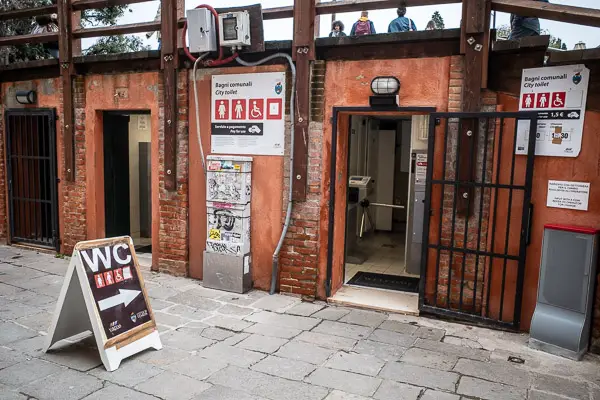
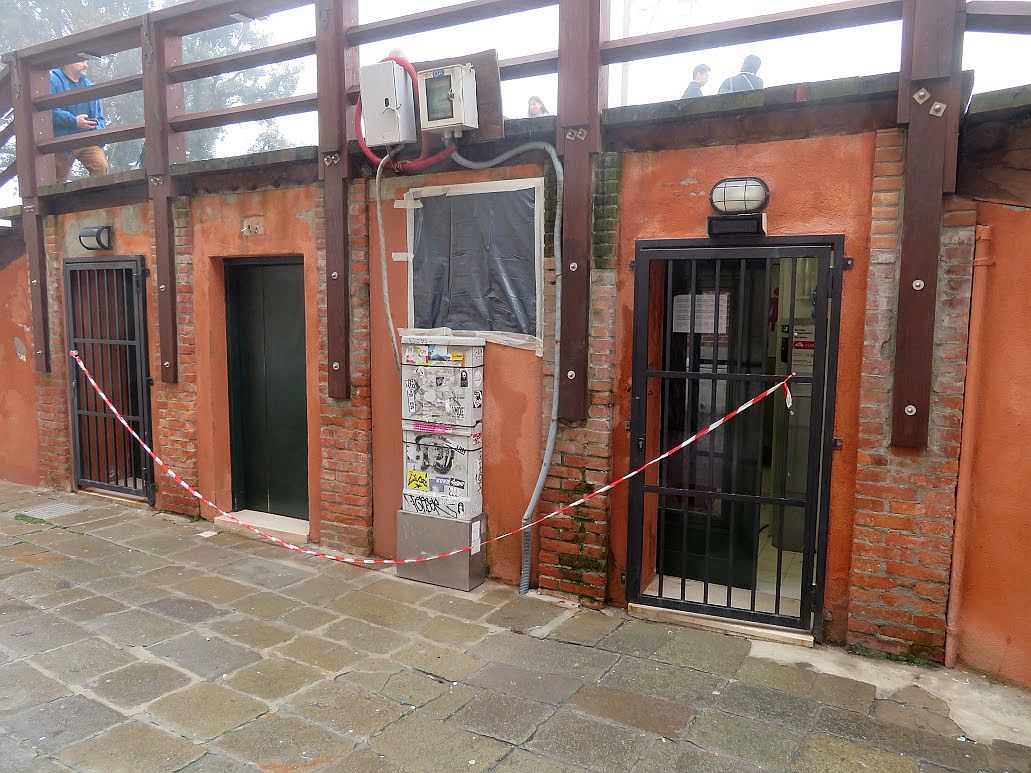
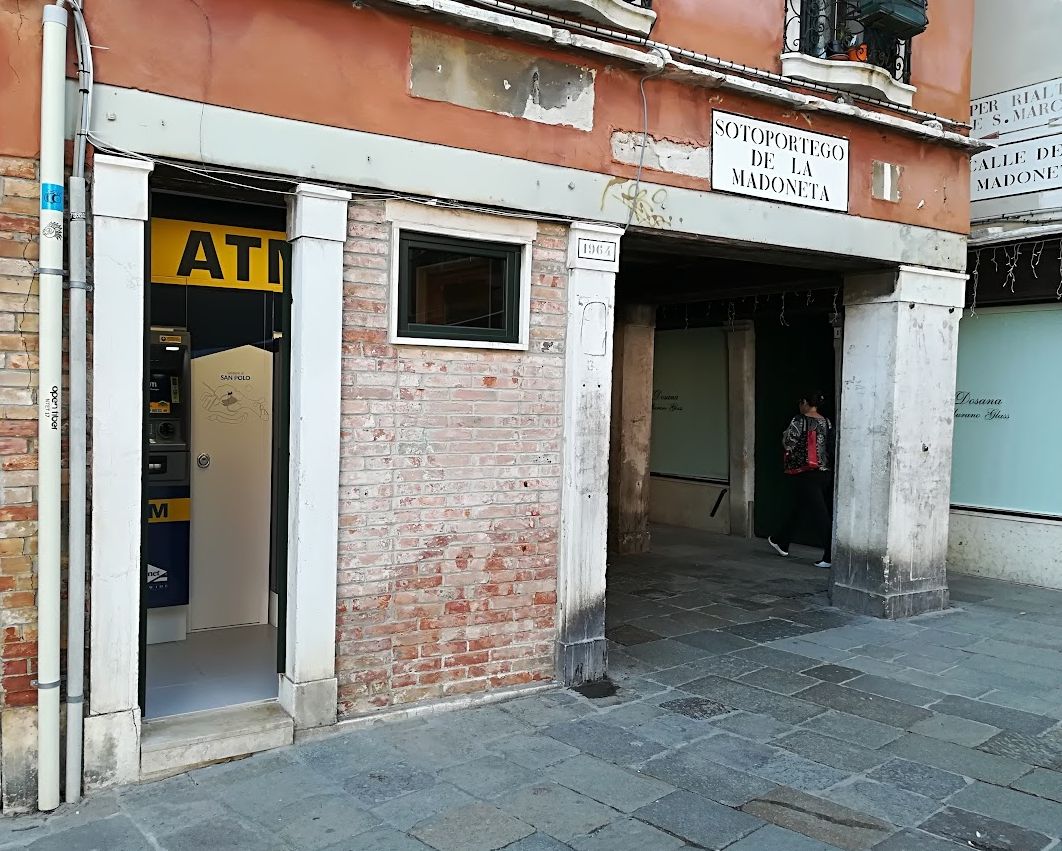
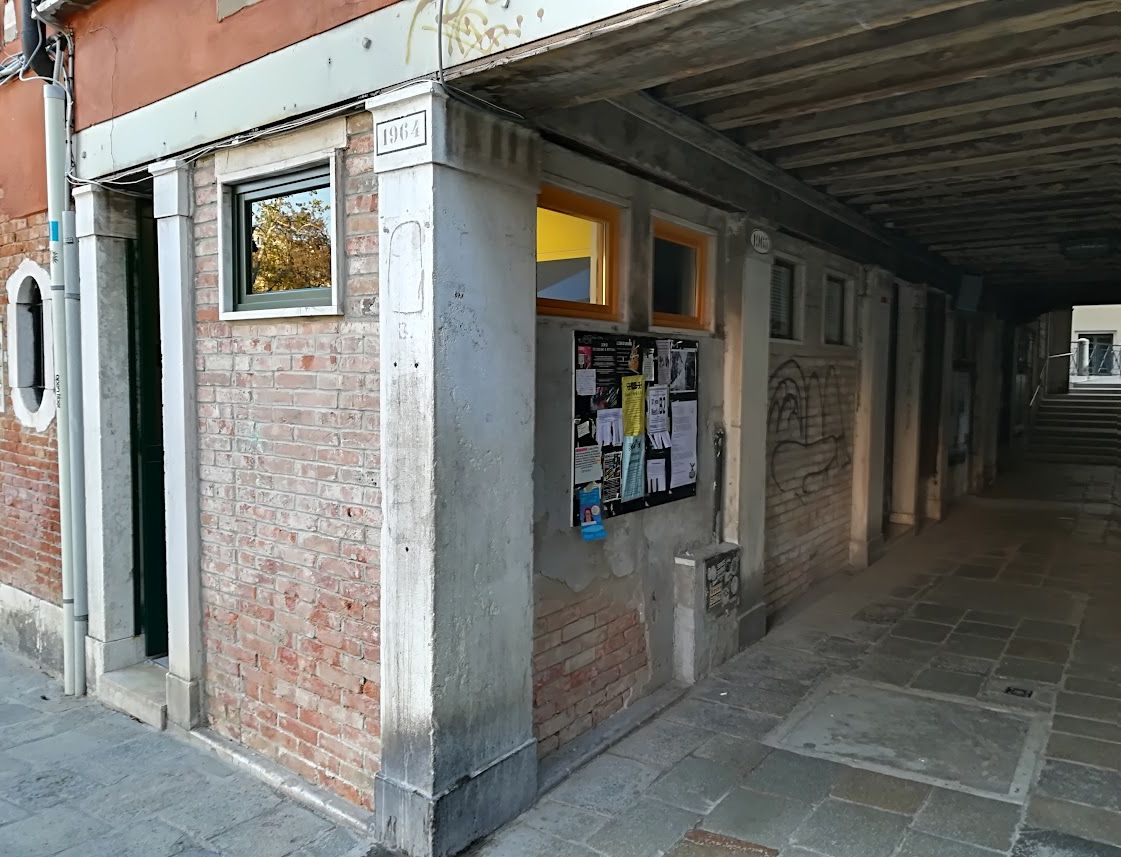
I decided to experiment and went looking for one of the city’s toilets last Saturday afternoon around 5:00 PM. I was near the Arsenal, and wondered where the large sign indicating a nearby loo might lead me. I didn’t need it, and what a good thing that turned out to be.
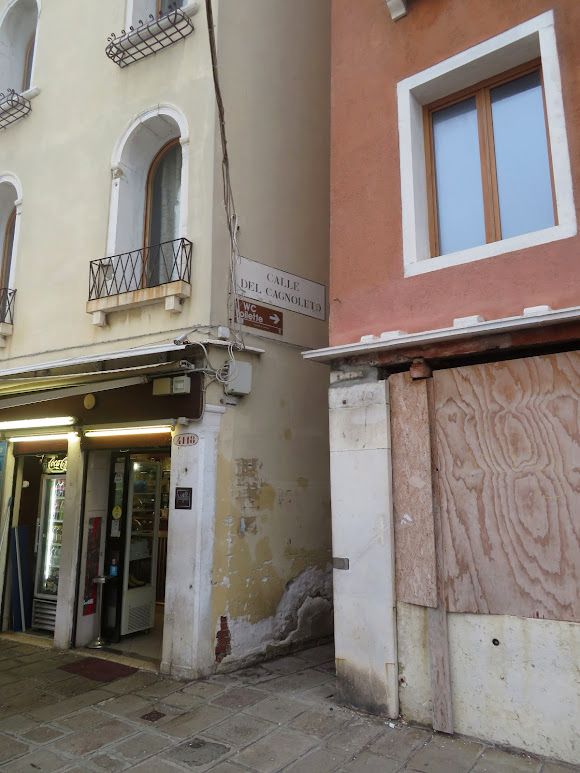
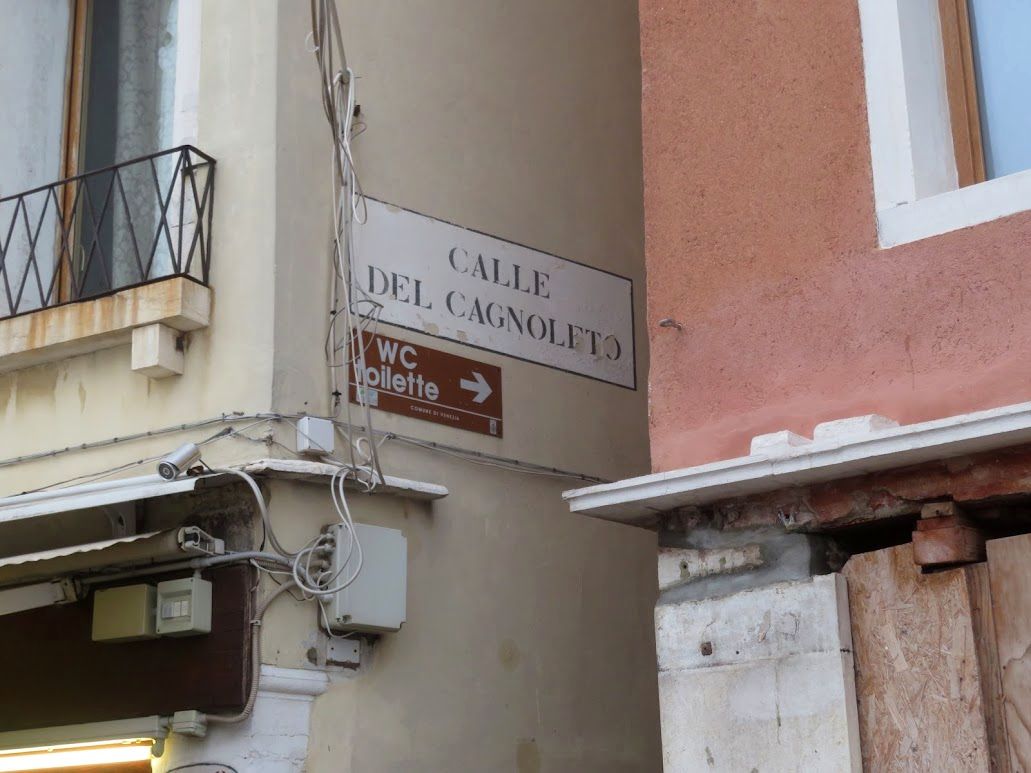
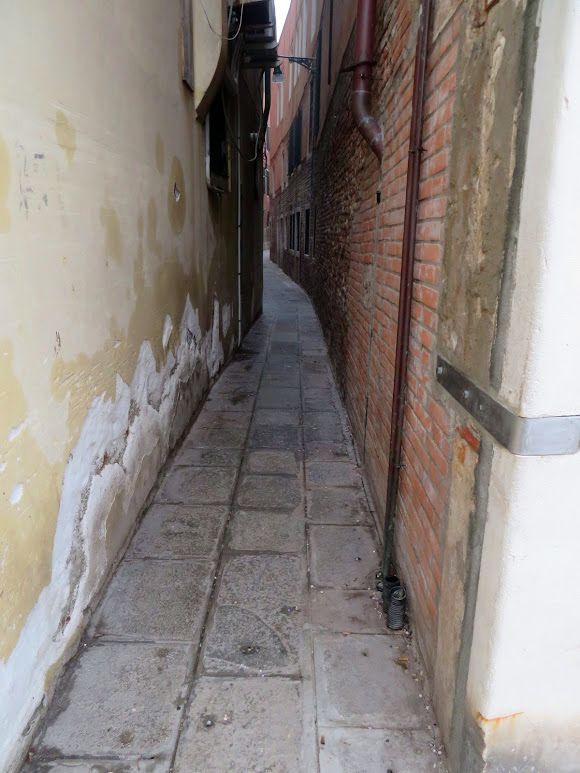
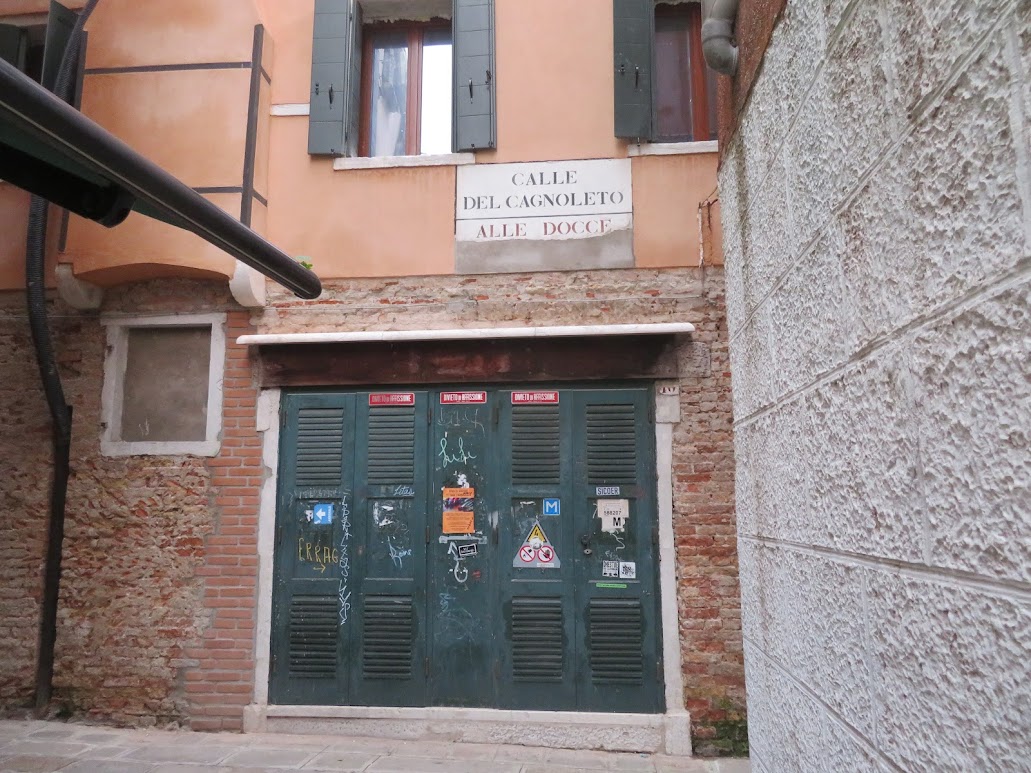
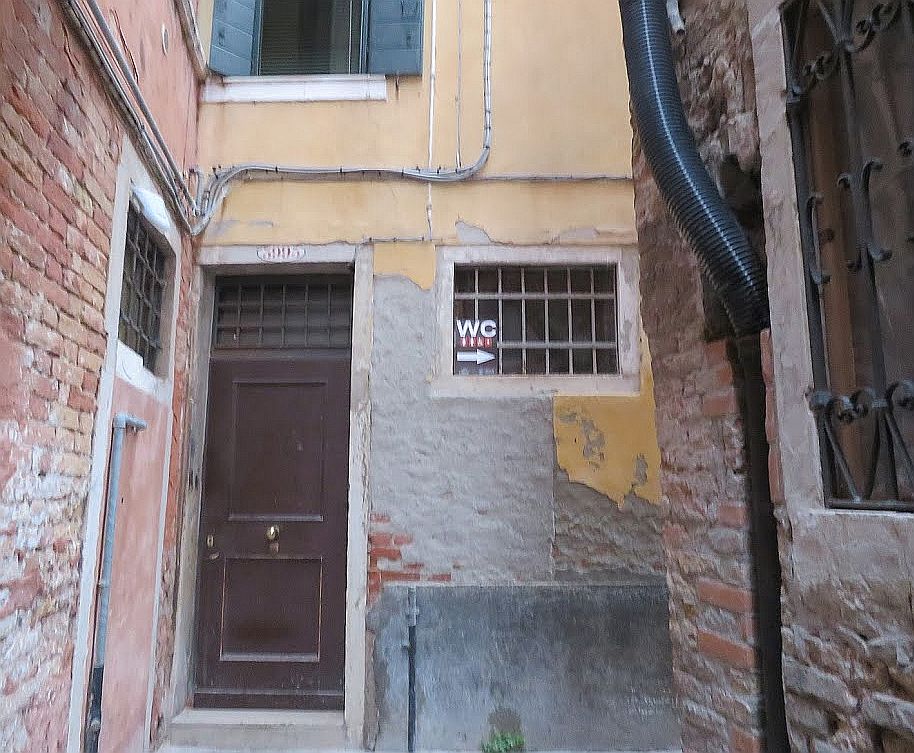
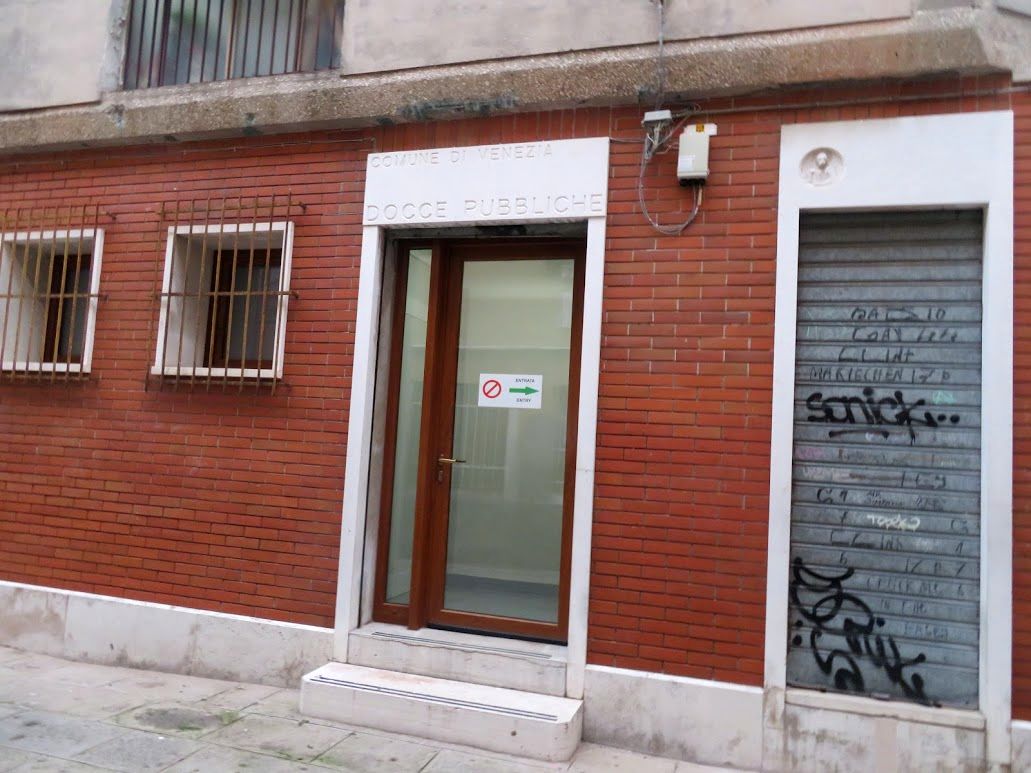
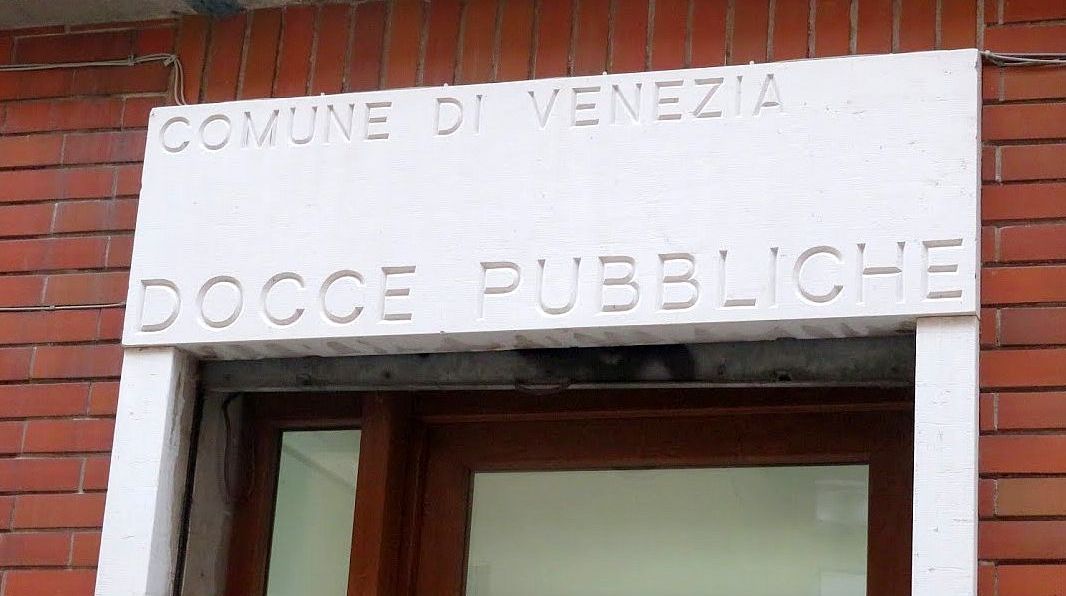
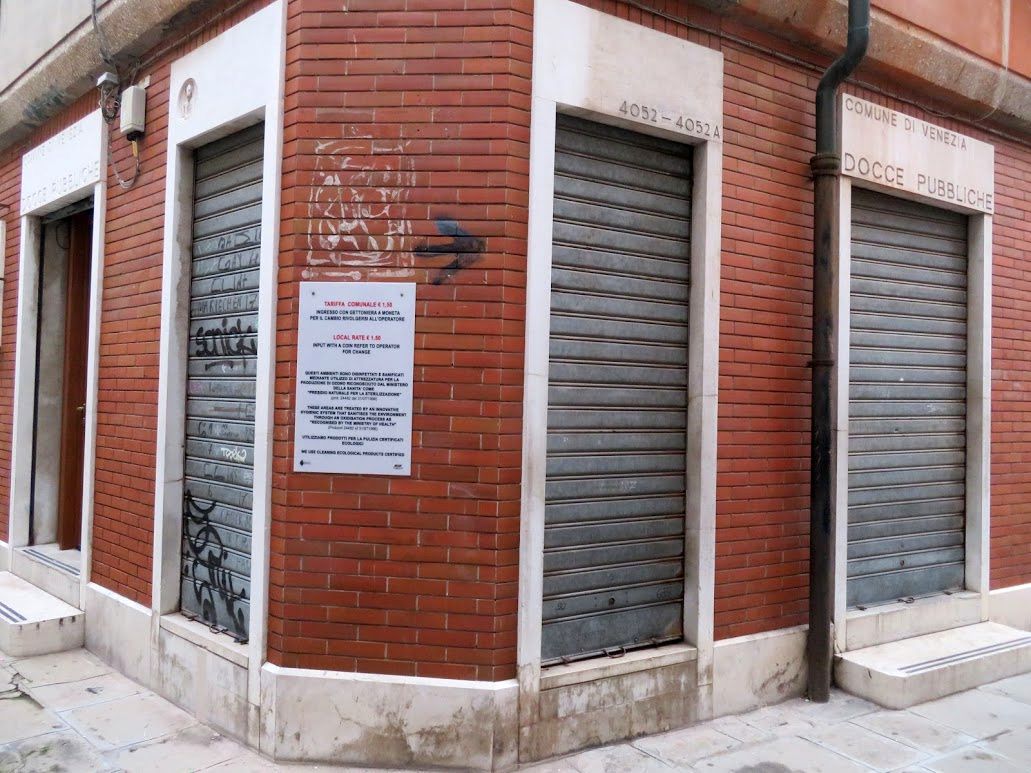
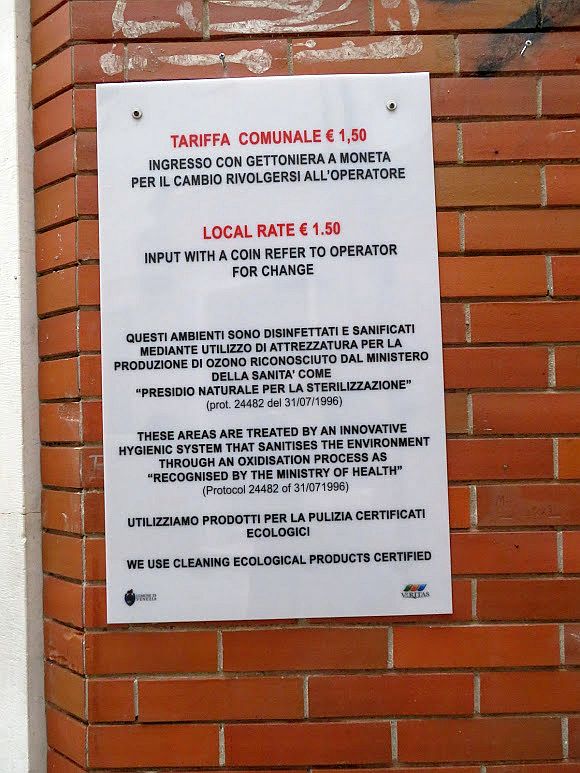
So to review: The options for needy travelers are: Resort to one of the numberless bars/cafes, when available either geographically or according to time of day; or public toilet, when available either geographically or according to time of day. Or wall. Or canal.
Let’s return to the kiosk. 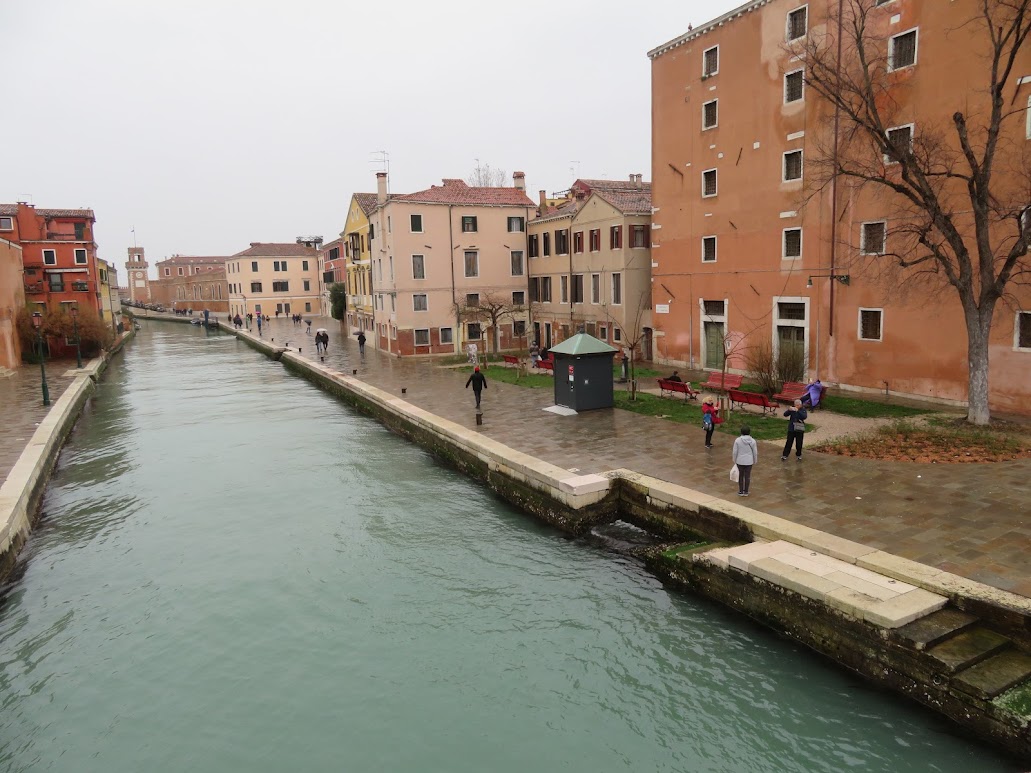 The Comune opened the public-toilet project for bids in 2019, with a budget of 5 million euros, and only one company submitted a proposal. Hygien Venezia was prepared to proceed, then the pandemic intervened. So now, three years later, the company has finally installed its creation for a two-week trial. Then all the reports and analyses and opinions and pros and cons will be thrown into a box and shaken (I’m making that up), and some decision will be made on installing the 20 more that the company is ready to place strategically around town.
Don’t assume that decision will inevitably be in the positive. This being Venice, some people have complained. From shops and hotels and other enterprises, some people have objected. The Nuova Venezia only referred to the protesters as “the categories.” What category? The Worshipful Company of Environmental Cleaners? (It exists, but not in Italy.)
Whatever the “categories” might be, eight city councilors have spoken up, expressing a desire to inquire of the mayor “on the basis of what information is it considered that Venice possessed the characteristics to manage the cleaning (removal of waste) of 28 chemical toilets.” It occurs to me that Hygien Venezia probably has foreseen the problem and the solution, and described the plan on the bid itself. I’ll bet that they will be able to provide answers as needed, without bothering the mayor.
Perhaps the NIMBY (Not In My Back Yard) phenomenon has arrived in Venice. There may well be those who do not wish to see one of these kiosks near their homes or places of business. I will grant you that the general lack of space here means that there is a risk that a new structure, however modest, could make the immediate area even more crowded. However, there are also campos and fondamentas that can boast of space. But let’s not quibble. Essentially, there seems to be an innate propensity to assume something new won’t work rather than consider ways in which in might perhaps be configured to work.
In my view, this is another of the many situations in which Venice’s perplexity as to how to manage the city comes to the fore. Lots of real cities have public toilets in the streets. Paris comes to mind, obviously — if there’s a city with bars/cafe’s at every turn, that would be Paris, and yet there are 420 cubicles on the streets of the City of Light, used 3 million times a year. I grant that Parisian streets tend to be more spacious than your average calle. But the port of Piraeus has concise public toilets, as do Madrid, and Oslo, and Berlin, and so on. Or at the very least, reorganize the public toilets in Venice with rational hours and doors that can be opened.
“The categories” want tourists, and then people grumble at how demanding those tourists can be. It seems to me that Venice might occasionally consider dismounting from its high horse on certain issues. Give the horse a rest.