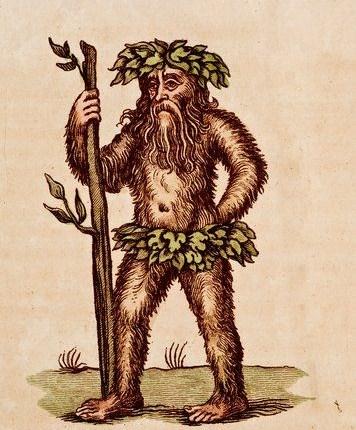
The wodewose is not some tiny creature burrowing into the walnut paneling. It’s the Middle English term for a character that has been around since the ancient of days: The “wild man,” or Wilder Mann, homme sauvage, or in Italian uomo selvadego, “forest man” (the same etymology of wodewose). If anyone is keeping track, this personage was first seen as “Enkidu” in the Epic of Gilgamesh c. 2100 BC.
The forest man (sometimes a woman) was well-known in the art and literature of medieval Europe. They are generally shown as large, covered with hair, and living in the wilderness or woods. They usually wield a club or hold an uprooted tree as a staff. They’re more of a mountain phenomenon; you don’t tend to see them around Venice.
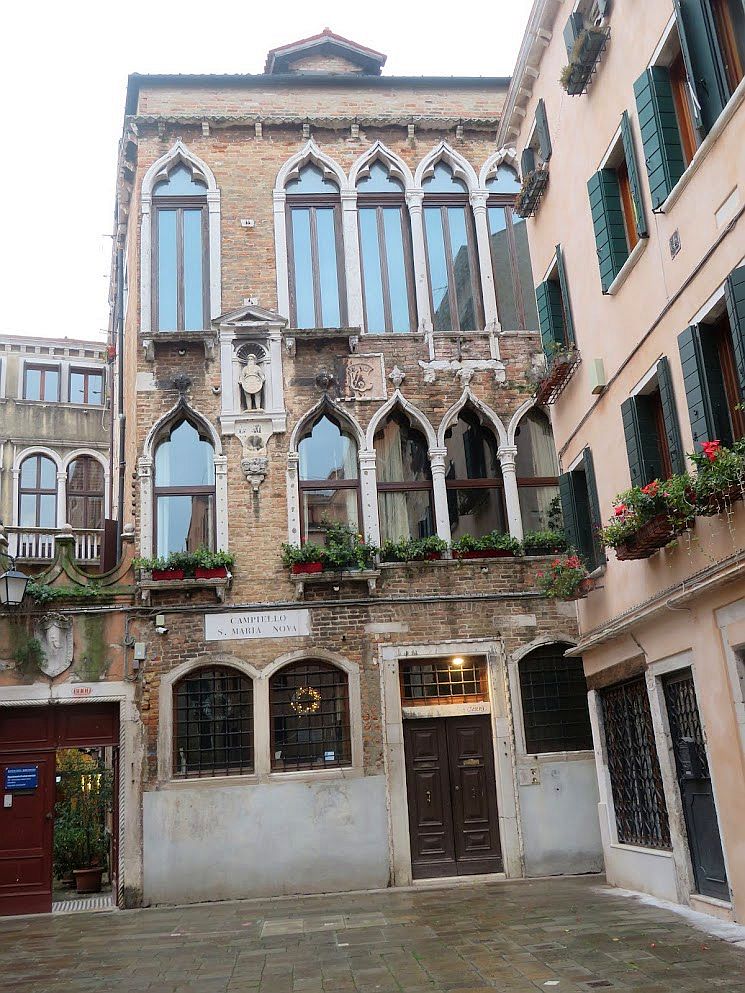
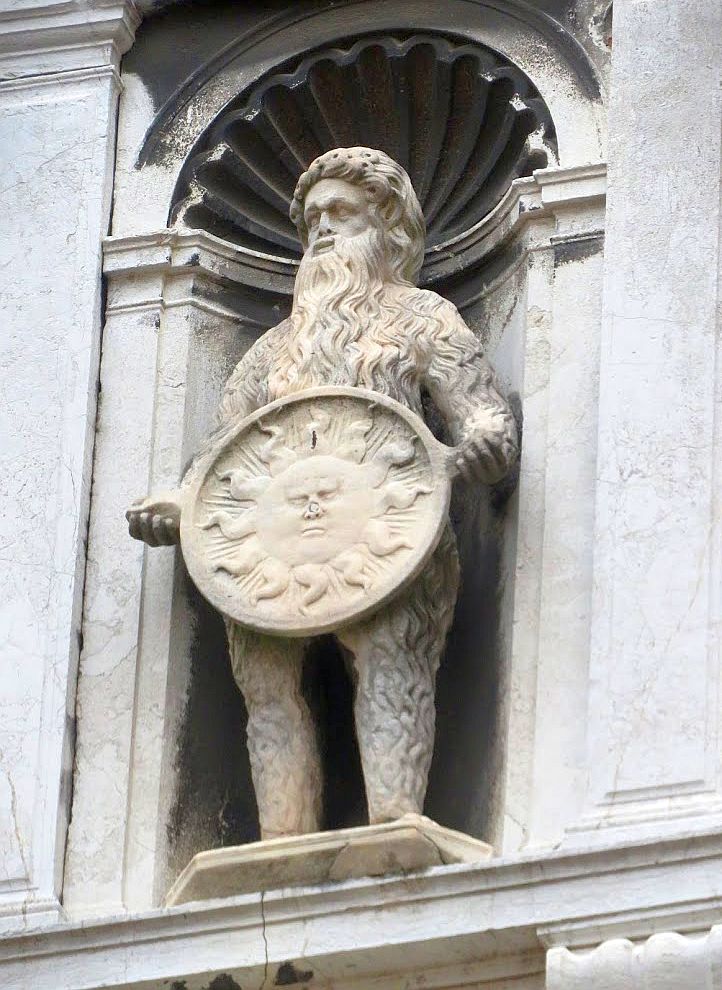
All this wondering started one morning when I was innocently loitering in Campiello Santa Maria Nova and noticed what I supposed to be a very hairy Bembo perched on his eponymous palace. Note to self: If you’ll just put your dang phone away for a few minutes and look around, Venice is one place in the world where you can count on discovering something a little, or even a lot, wild.
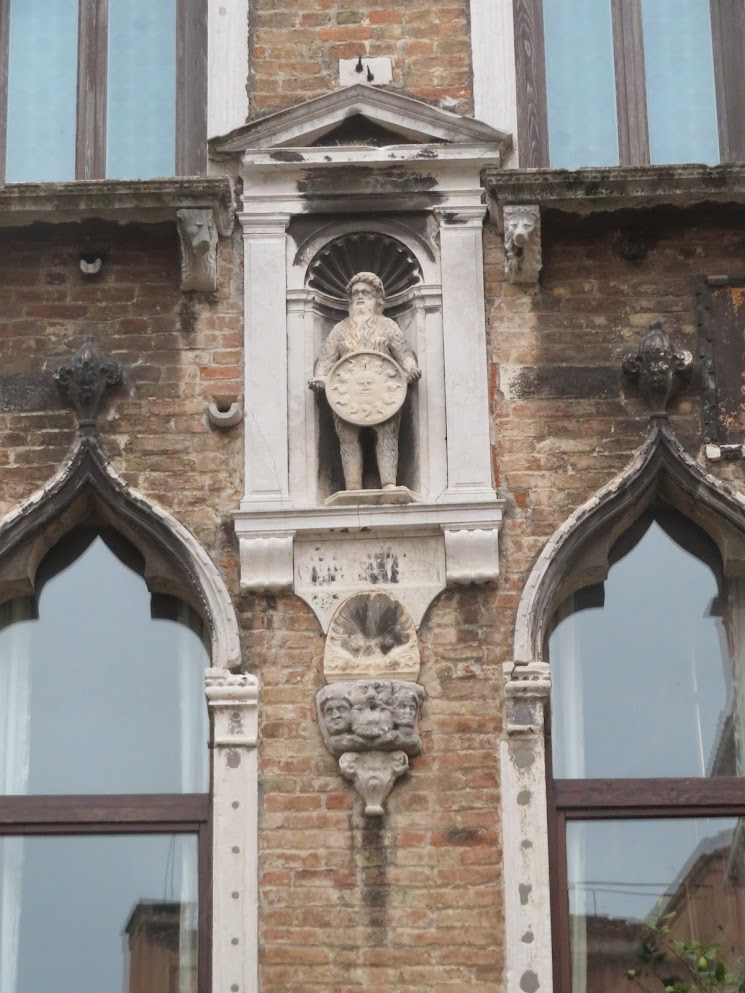
Giovanni Matteo Bembo (1491-1570) was reasonably remarkable, but that seems not to be why he commissioned this monument. This is not a literal portrait, you understand; it may represent Saturn, or Time. He was known to be very interested in alchemy, and this construction contains recognizeable references, not only for the depiction of an old man but the scallop-shell shape of the top of the niche, and the shell beneath the marble tablet at his feet. Alchemists used the scallop shell as a coded sign of recognition among them, symbolizing their search for universal consciousness. Or so I’ve been told.
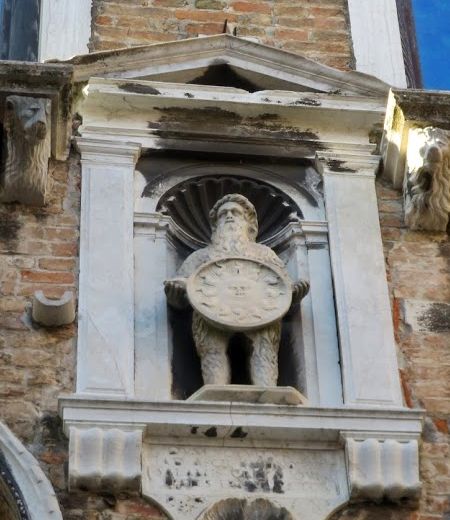
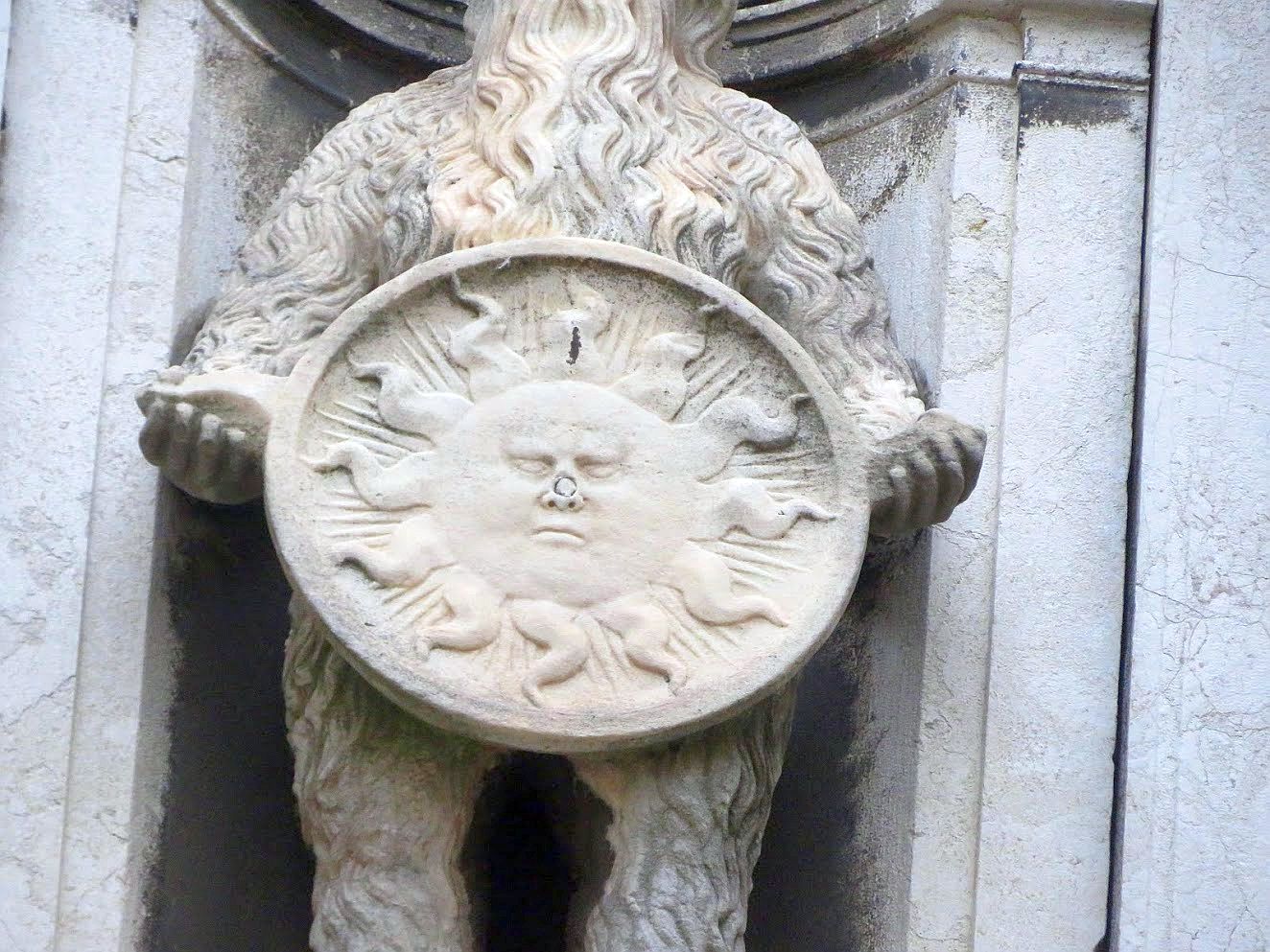
I’m all for mythic elements, but patting yourself on your back was very un-Venetian; whatever you did was for the glory of Venice, not you. The inscription at his feet gives the game away.
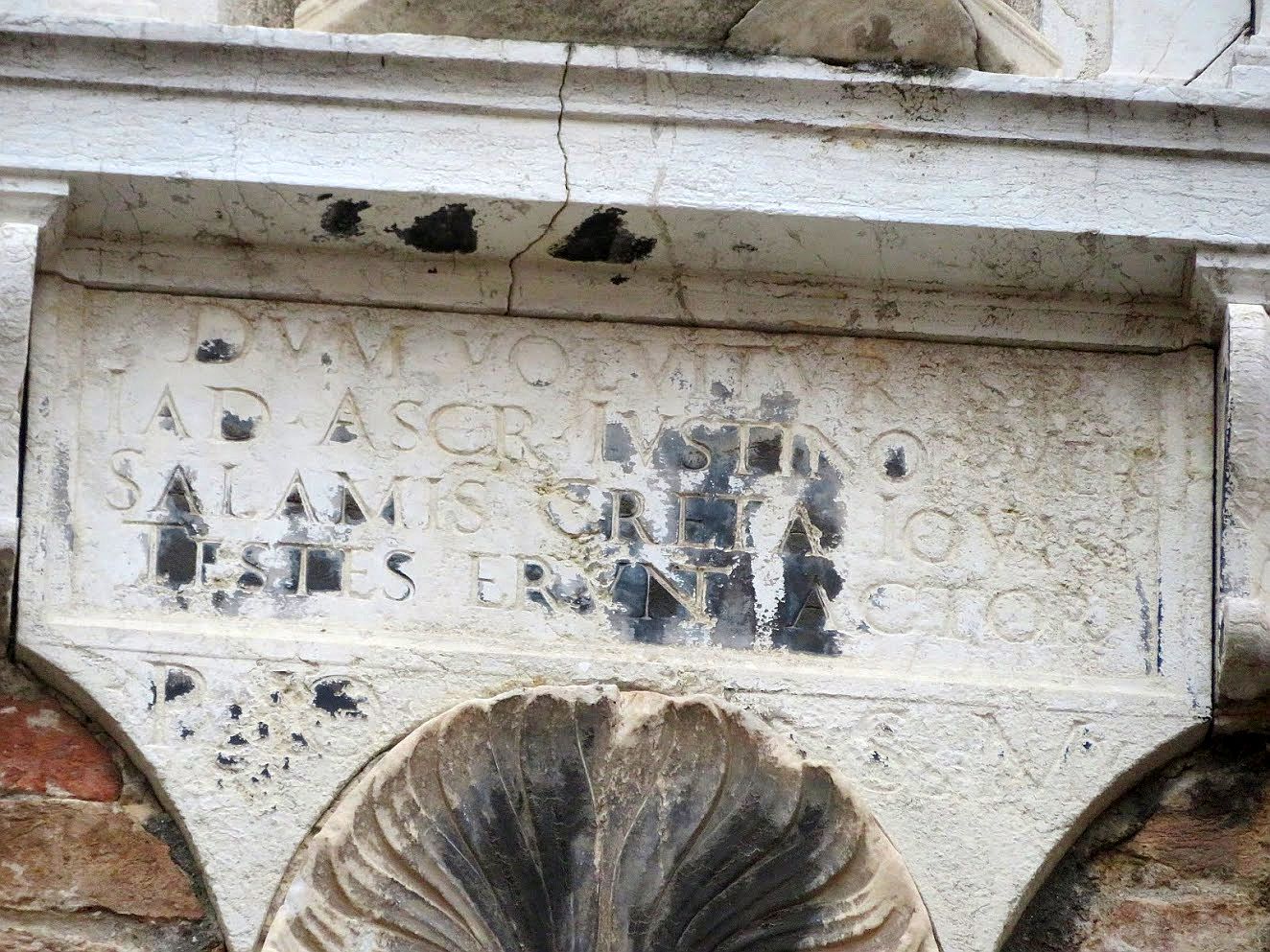
Interpretation: “As long as the sun turns around the poles, the cities of Iadera (Zadar), Ascrivium (Kotor), Iustinopolis (Capodistria), Verona (Verona), Salamis (Cyprus), and Creta Iovis (Crete, the cradle of Jove) will testify to his actions (Actorum).” The final four abbreviations are for the names Paolo Iovio, or Giovio, and Sebastiano Munstero, who in their histories had mentioned Bembo’s accomplishments.
Alchemy aside, Bembo was a conscientious and capable administrator. As governor of Heraklion, the capital city of Crete (“the cradle of Jove”), he showed himself at his best. Between 1552-54 he built not only the city’s first aqueduct but also this lovely and very useful fountain in Cornaro Square. It was the first time that running water was seen in the city, so big respect to him for this. Anyone who has ever spent a blazing summer day in Greece doesn’t need to be told what a glorious thing this fountain was. Note: Undoubtedly there was water already in the city, probably via wells. Not fountains.
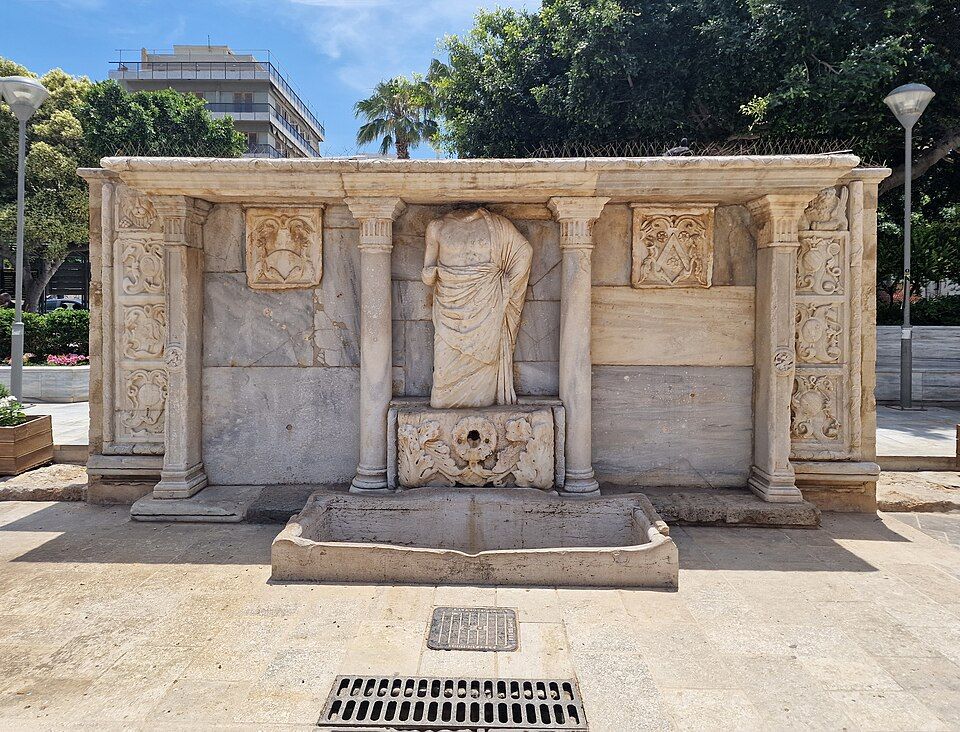
But back to our man on his plinth.
Why so hairy? The wodewose represents the Id, the indomitable antagonist of culture, civilization, rationality, and his pelt perfectly symbolizes his animalistic nature. Unfettered, untrammeled, un-whatever you want. He is humanity’s natural self — raw strength, passion, aggression — the opposite of civilized society, but also embodying deep, primal energy, an image of our darker, instinctual side. You know — before razors.
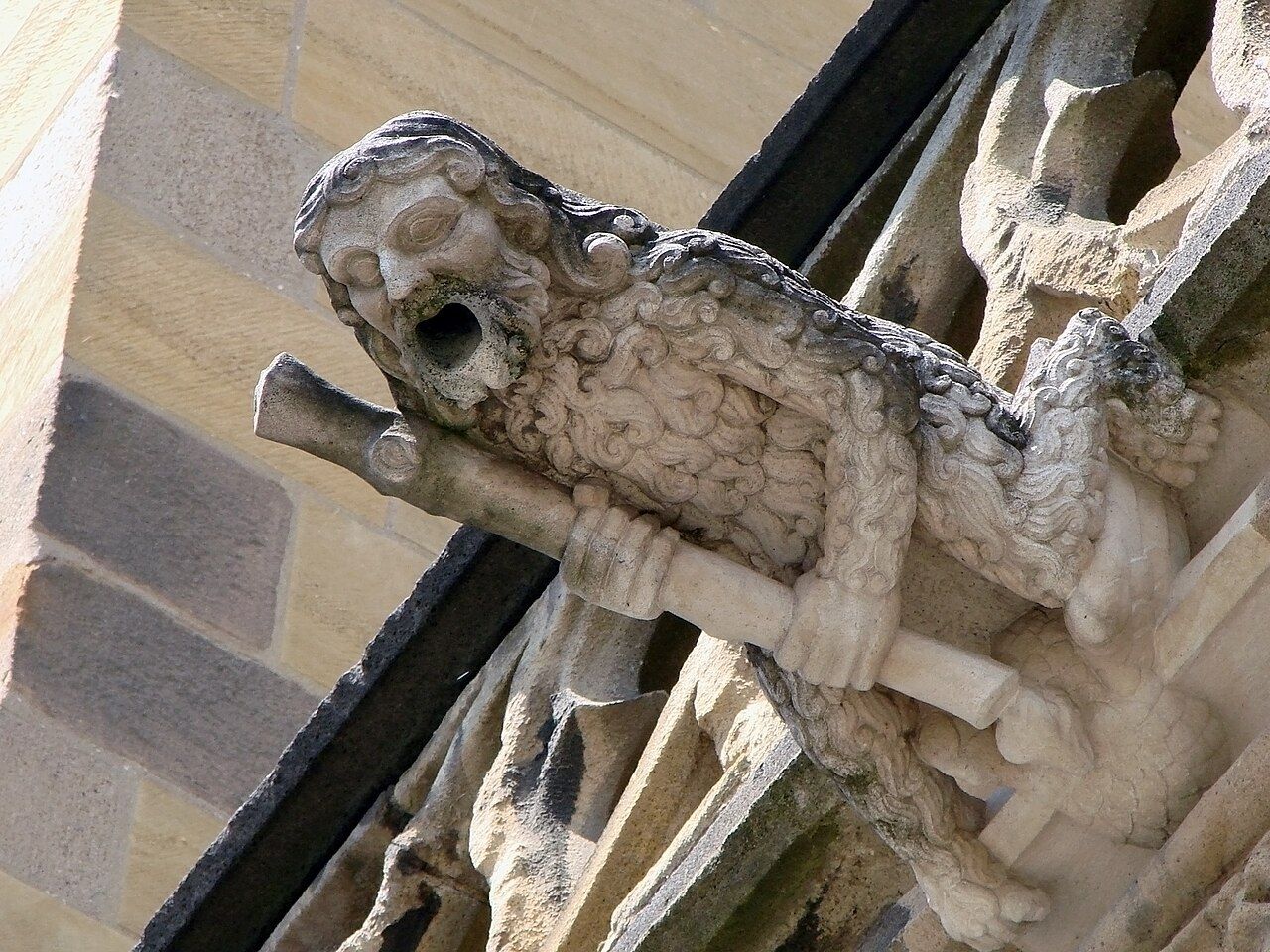
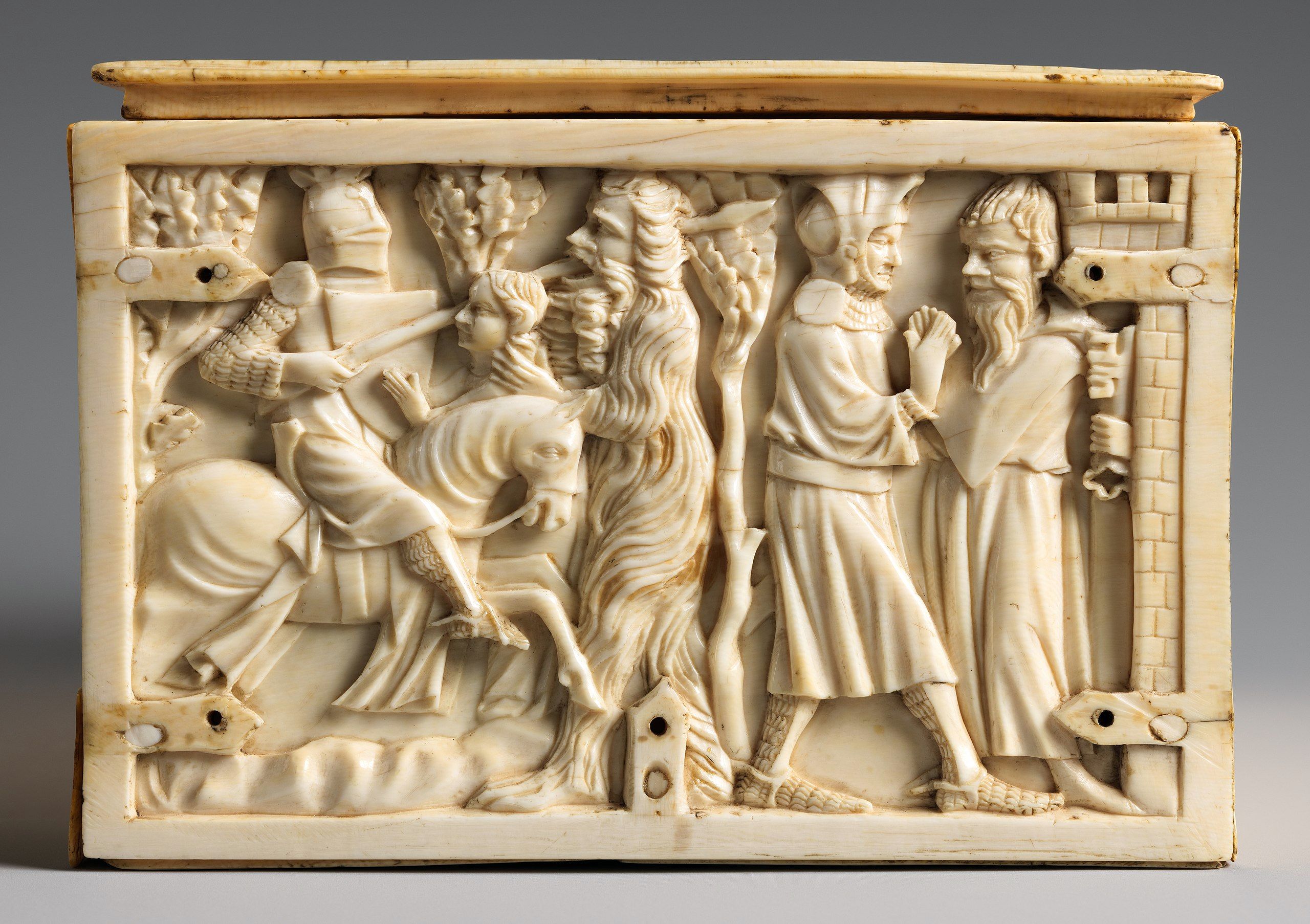
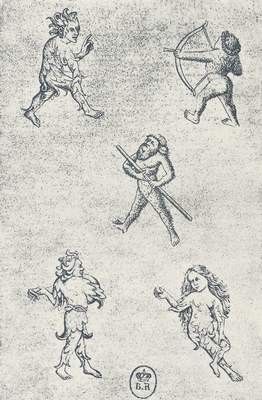
I’m glad I discovered a worthy Venetian and his equally worthy alter ego. A day without learning something useless is a day just thrown away. And I’m guessing that woodwoses (wosi?) throw nothing away.
22 Comments
What a fascinating and wide-ranging post.
It really is the most beautiful place on earth Thank you for letting me see this
Shave legs??? But it’s inverno!!!
I have to go see this fascinating gentleman.
Here until 18 gennaio.
🤣😊😄🧌
Enjoy, Venice as always, Barbara. Give ERla a hug from me, please.
And I thank you for presenting something new I learned today. This wild man figure is with us all the time in the present…The yin and yang of all male contention…..Eroticized ……The motorcycle bad guy in old movies. What Jungian arch type is he??? A new search…For some reason our species seems to need him….of course this primal urge can go off track as we watch the mean spirited find favor in modern politics…. perhaps flailing about in a certain president in a collapsing country….
Again thank you for new insights…
Very interesting ! The thin line we must walk or dance or paint or just build or write or be a waiter or a politician. What did it take for us to get here ?
… you know, before razors” absolutely cracked me up. Beautiful images. I had no idea the wodewose existed, nothing beyond ‘Green Men’ faces of the British Isles.
But does he dress up as Babbo Natale and join in with the Christmas voga? Who could tell under the costume?
Brilliant. I love your observance and knowledge of the most beautiful city that you have the pleasure of living in but, even more, that you never take it for granted.
Thanks so very much for the historical essay.
Currently, I believe the gallerista Pietro Scarpa lives on 0ne of the two floors- maybe the first, whilst the other floor has been recently sold .
The palazzo’s bricks are quite thin making it super recognizable.
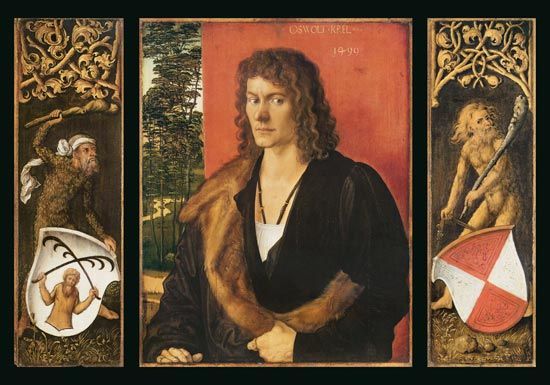
Oswolt Krell looks decidedly unhappy with his wodewosian side lights.
Palazzo Bembo-Boldu is one of my favourites, but I’ve never zoomed in that far.
Lovely to hear from you Erla. Buon Natale and keep on zooming.
Julie J
Thanks, Julie. Oswolt being a Northern European, this expression may actually be his most cheerful. (No offense intended to any Northern Europeans.) Buon Natale to you too.
The UK has “the green man”. Similar concept and a popular pub name.
Yes, there is a relation. Here’s what Google told me: “While the Green Man emphasizes the verdant, life-giving aspect (like the Oak King) and the Wild Man emphasizes the raw, untamed force (often with a club), they are two facets of the same ancient nature spirit.” As Last Call approaches, I’m guessing some patrons have evolved from the “life-giving aspect” to the “just tear it all down” aspect of our fascinating human spirit.
“She said she’d like me better if I shave my legs…”
LOL
LOL
LOL
Your post is well timed for me. I was recently wondering about the date of the green man face with vines coming out of his head on the stemma of our palazzo. Not sure that I can add a photo to the comments.
Thanks so much for this. I deliberately didn’t mention the Green Man because I didn’t want to get into possibly pedantic distractions. Google summarizes the relationship between the Wild (or Forest) Man and the Green Man thus: While the Green Man emphasizes the verdant, life-giving aspect (like the Oak King) and the Wild Man emphasizes the raw, untamed force (often with a club), they are two facets of the same ancient nature spirit.
Your connections of the Wild Man / woman, and the Green Man ( very rarely woman) seem very correct to me. So good to hear from you, again, by the way, I must admit I’ve not checked into your site since early December .
The wild person, rather like the Sheila-na-Nog [ woman with exposed genitals] and similar(often found carved half-hidden in churches in Northern Europe, especially celtic areas ) are often thought to hark back to our most primitive forebears, I’m told.
Thanks for all your images and comments. I’m just going to look now at your more recent posts….
Ella B
Thanks so much for responding. Pack a snack if you’re going in search of my more recent posts — it may take a little while, seeing that production has slowed down considerably. New Year’s Resolution: To do better.
Oooh… Wodewoses are not often the topic of conversation these days but it sure is fascinating were they turn up. Another lovely observation by you, Erla.
The coat of arms of the Royal Westrobotnian (infantry) Regiment, since 1624 but now unfortunately disbanded, that was garrisoned in my home town of Umeå featured a red wodewose carrying a club over it’s shoulder.
All the best for the new year!
A RED woodwose? You guys in Westrobotnia are amazing! And thanks — the New Year would have a better chance if we had more red woodwosi (woses?) to take the situation in hand.